
theIAShub
02 Aug, 2025
Article List
- National Agriculture Policy of India 2025 – Objectives, Components & Recent Growth
- Impact of Flash Floods in India – Causes, Effects & Government Initiatives
- Can ICJ Ruling Compel Rich Nations to Pay for Historical Emissions? | Climate Justice Explained
- Himalayan Clouds Found Carrying Toxic Metals – Study Reveals Rising Pollution Threat
- ISRO to Launch Block 2 BlueBird Communications Satellite – Features & Coverage
- VEGF-C: A Nanotechnology-Based Breakthrough for Advanced Liver Cirrhosis Treatment
- Mithun (Bos frontalis): Origin, Habitat, Cultural Significance & Conservation Status
- India’s HOPE Station in Ladakh – Simulating Lunar and Martian Missions
- 71st National Film Awards – Full Winners List & Key Highlights
- BHASKAR Platform – India’s Largest Digital Startup Registry under Startup India
1. National Agriculture Policy of India 2025 – Objectives, Components & Recent Growth
Context
- Recently, the Minister of Agriculture informed the Parliament about the Vision of New Agriculture policy and Government Priorities.
Government Integrated Strategy for Comprehensive Agriculture Sector
Government Aims to
- Increase crop production/ productivity
- Reduce cost of production
- Remunerative prices for farmer’s produce to enhance their incomes.
- Agricultural diversification
- Developing post-harvest value addition infrastructure.
- Adaptation to climate change for sustainable agriculture and mitigate against crop losses
Recent growth in Agriculture Sector
- The Gross Value Added (GVA) agricultural growth rate in the Agriculture & allied sector in 2024-25 over 2023-24 is 4.6%, as per provisional estimate of Ministry of Statistics and Programme Implementation.
About Agriculture Policy of India
- The Government designs agricultural policies of India to raise agricultural production and productivity and enhance farmers’ income and living standards within a definite time frame.
- The Agricultural Policy of India is formulated for the all-round and comprehensive development of the agricultural sector.
- The Agricultural Policy aims to address key issues such as resource management, technology adoption, and market access.
- By promoting sustainable practices, improving infrastructure, and supporting innovation, the Agricultural Policy seeks to create a robust and resilient agricultural sector that can meet both current and future challenges.
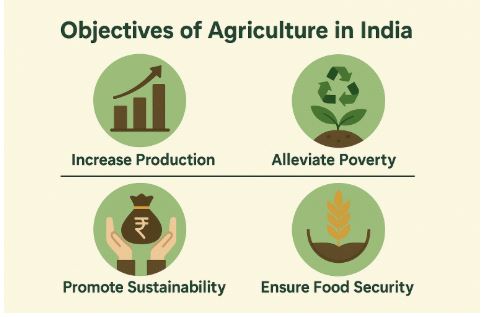
Objectives of Agriculture policy in India
- Raising the Productivity of Inputs such as HYV seeds, fertilisers, pesticides, and irrigation projects.
- Raising Value-added per Hectare by improving agricultural productivity in general and the productivity of small and marginal holdings in particular.
- Protecting the Interests of Poor and Marginal Farmers by abolishing intermediaries through land reforms and expanding institutional credit support to poor farmers.
- Modernising the Agricultural Sector involves introducing modern technology into agricultural operations and applying improved farm inputs like HYV seeds and fertilisers.
- Checking Environmental Degradation of the natural base of Indian agriculture.
- Promoting Agricultural Research and Training Facilities and disseminating the benefits of such research among farmers by establishing a close linkage between research institutions and farmers.
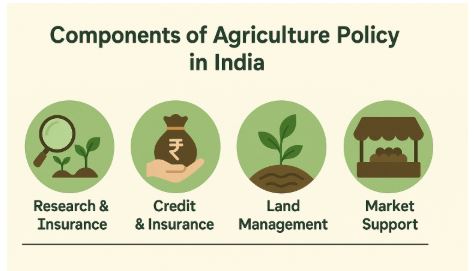
Major Components of Agriculture Policy in India
- Improving Input Productivity – The Agricultural Policy involves enhancing the efficiency and effectiveness of agricultural inputs such as High-Yielding Variety (HYV) seeds, fertilizers, pesticides, and irrigation.
- By optimizing the use of these inputs, the policy aims to increase crop yields and overall productivity.
- Value Addition and Crop Diversification – Value addition refers to increasing the value of agricultural products through processing, packaging, and other means, which helps farmers achieve better prices and higher incomes.
- Crop diversification involves growing a variety of crops rather than relying on a single crop.
- Supporting Poor and Marginal Farmers – The Agricultural Policy aims to address the needs of poor and marginal farmers through various measures.
- This includes land reforms to abolish intermediaries, expanding institutional credit to provide financial support, and providing subsidies or incentives to make farming more accessible and sustainable for those with limited resources.
- Modernizing Agricultural Practices – Modernizing agricultural practices involves introducing and adopting advanced technologies and methods in farming.
- The Agricultural Policy includes the use of precision agriculture, mechanization, and modern irrigation systems.
- Environmental Protection and Soil Health – Ensuring environmental protection involves implementing practices that prevent soil erosion, water depletion, and pollution.
- Soil health is maintained through techniques like crop rotation, organic farming, and the use of cover crops.
- The Agricultural Policy aims to sustain agricultural productivity over the long term while minimizing negative impacts on the environment.
- Agricultural Research and Extension Services – Agricultural research focuses on developing new technologies, crop varieties, and farming techniques to improve productivity and sustainability.
- Extension services involve disseminating this research to farmers through training programs, advisory services, and demonstration plots.
- Removing Bureaucratic Obstacles – This component of the Agricultural Policy addresses the need to streamline administrative processes and reduce bureaucratic hurdles that hinder agricultural progress.
- By simplifying procedures related to land acquisition, subsidy distribution, and credit access, the Agricultural Policy aims to make it easier for farmers and agricultural institutions to operate effectively and independently.
Spatial Pattern of Agriculture Development
- Distinct spatial patterns of endowments, cultures, and histories have conditioned the evolution of different agricultural development practices across India.
- After Independence, the Government’s immediate goal was to boost foodgrain production by:
- Shifting focus from cash crops to food crops.
- Intensifying cropping on existing cultivated land.
- Expanding cultivated areas by bringing uncultivated and fallow land into production.
- This strategy initially led to increased foodgrain production, but by the late 1950s, agricultural output began to stagnate.
- To overcome this problem, the Intensive Agricultural District Programme (IADP) and the Intensive Agricultural Area Programme (IAAP) were launched.
- However two consecutive droughts during the mid-1960s resulted in a a food crisis in the country.
- As a result, the food grains were imported from other countries across the world.
- Then, a significant step in the form of the ‘Green Revolution’ was taken to ensure food security in the country.
Conclusion
- The Agriculture of India represents a strategic effort to transform the agricultural sector through targeted reforms and initiatives.
- By emphasizing improvements in input productivity, crop diversification, and environmental protection, the policy aims to foster a more productive and sustainable agricultural landscape.
- As India continues to navigate the complexities of economic liberalization and global competition, the policy’s focus on enhancing productivity, supporting farmers, and addressing bureaucratic barriers will be crucial for securing a prosperous future for agriculture and ensuring the well-being of the nation’s farmers.
2. Impact of Flash Floods in India – Causes, Effects & Government Initiatives
Context
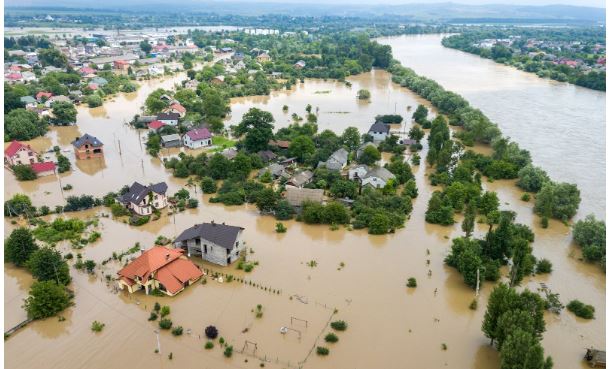
- A new study by researchers at IIT Gandhinagar has warned that flash floods are becoming more frequent and severe across India.
About the Study and its Findings
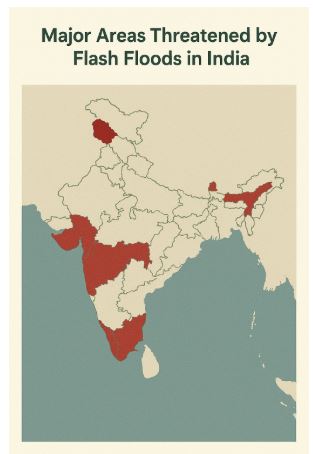
- The study, ‘Drivers of flash floods in the Indian sub-continental river basins’, identifies the Himalayas, western coast, and Central India as key hotspots, using hydrological and geomorphological data to map sub-basin susceptibility.
- In the Himalayas, steep terrain and elevation drive flood risk, while in the West Coast and Central India, rapid runoff—termed “flashiness”—plays a key role.
- The study finds that nearly 75% of flash floods result from a combination of extreme rainfall and already saturated soil, with only 25% due to precipitation alone.
Key Drivers behind Flash Floods In India
- The study reveals that only 25% of flash floods in India are caused solely by extreme rainfall.
- Most incidents result from a combination of heavy precipitation and pre-existing soil saturation.
- When the ground is already wet, it cannot absorb additional rainfall, leading to rapid runoff and increased flood risk.
- Notably, only 23% of extreme rainfall events trigger flash floods within six hours. Instead, prolonged periods of both low- and high-intensity rain are more likely to cause such disasters.
- The study also highlights regional variations.
- In the western coast and Central India, sub-basins react quickly to rainfall due to their high “flashiness” — the tendency of water levels to rise rapidly.
- In the Himalayan region, steep terrain and high relief further elevate the risk.
- Within major river basins like the Ganga, flash flood susceptibility differs — sub-basins in the southern Himalayan stretch are more prone, while central areas show lower risk.
About Flash Floods
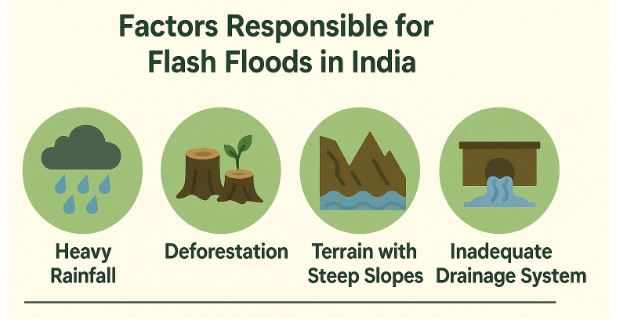
- Flash floods are sudden, intense floods that occur within six hours of a heavy rainfall event, usually in regions with steep slopes, poor drainage, or saturated/dry soil.
- Unlike riverine floods, they offer little warning, making them particularly deadly.
Impact of Flash Floods
- Human and Livelihood Impact: Flash floods lead to significant casualties due to their sudden onset.
- The 2023 flash floods in Himachal Pradesh claimed over 400 lives and displaced thousands.
- Damage to Public Utilities: Flash floods damage power lines, drinking water systems, and mobile networks, making post-disaster recovery slower and more expensive.
- Land Degradation: Torrential runoff erodes topsoil, degrades fertility, and increases sedimentation in rivers and reservoirs.
- Urban Challenges: Cities like Mumbai, Hyderabad, and Bengaluru experience rapid runoff due to concretised surfaces and encroached stormwater drains.
Initiatives by Government
- Central Water Commission (CWC) is the nodal organisation entrusted with the task of flood forecasting & early flood warnings in the country.
- Indian Meteorological Department (IMD) in joint collaboration with the US National Weather Service, has developed a Flash Flood Guidance System (FFGS) for the South Asian region.
- The Central Government has approved the National Glacial Lake Outburst Flood Risk Mitigation Programme (NGRMP) in four Himalayan States viz. Himachal Pradesh, Uttarakhand, Sikkim and Arunachal Pradesh with a total budget of Rs.150.00 crore.
3. Can ICJ Ruling Compel Rich Nations to Pay for Historical Emissions? | Climate Justice Explained
Context
- Recent, landmark request to the International Court of Justice (ICJ) by a coalition of small island states (led by Vanuatu and supported by over 130 countries) seeking an advisory opinion on whether wealthy nations can be held legally liable for their historical greenhouse gas emissions driving climate change.

Climate justice
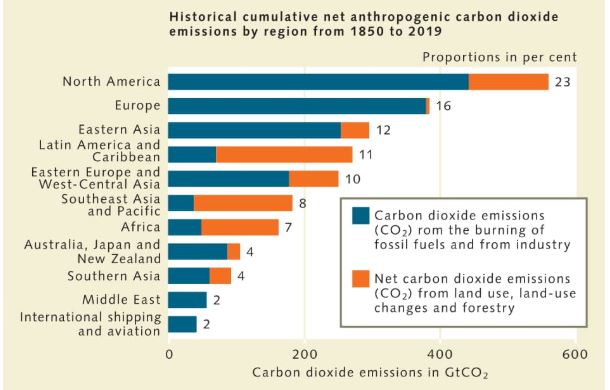
- Small island developing states (SIDS) and many poorer nations bear the brunt of climate impacts (sea-level rise, extreme weather) despite contributing minimally to cumulative historical emissions.
- Rich, industrialized nations (US, EU, UK, etc.), responsible for the vast majority of emissions since the Industrial Revolution, are seen as owing a "climate debt" for the damage caused.
Significance of ICJ Advisory Opinion
- While ICJ advisory opinions are non-binding, the article argues they carry immense moral, political, and legal weight.
- A ruling recognizing historical liability could: Strengthen the legal basis for climate lawsuits in national and international courts.
- Empower developing nations in climate negotiations. Create significant pressure on wealthy nations to provide compensation and finance for loss and damage.
- Solidify the "polluter pays" principle in international environmental law.
Major Hurdles & Challenges faced by ICJ
- Non-binding Nature: The ICJ cannot force countries to pay; implementation relies on political will and pressure.
- Defining Historical Responsibility: Pinpointing a start date (e.g.,1850, 1992) and quantifying the exact share of responsibility for each nation's past emissions is scientifically and legally complex.
- Attribution & Causation: Proving direct legal causation between a specific country's historical emissions and specific climate damages suffered by another nation is extremely difficult under traditional international law.
- Legal Precedent: International law traditionally focuses on preventing current harm and future risks. Establishing liability for past actions contributing to a global, cumulative problem is largely untested.
- Political Resistance: Wealthy nations strongly oppose the concept of historical liability, fearing massive financial claims. They emphasize current and future emissions reductions and existing (often inadequate) climate finance mechanisms.
About ICJ
- The International Court of Justice (ICJ), established in 1945 as the principal judicial organ of the United Nations, is based in The Hague, Netherlands. It adjudicates disputes between states and provides advisory opinions on legal questions referred by UN organs or specialized agencies. Its significance lies in:
- Settling State Disputes: The ICJ resolves legal conflicts between countries, such as territorial or maritime disputes, fostering peaceful resolutions under international law.
- Advisory Role: Its non-binding advisory opinions, like the recent July 23, 2025, ruling on climate emissions, guide global policy and moral obligations, influencing international cooperation.
- Upholding International Law: It reinforces treaties and UN charters, promoting accountability among nations.
- Global Influence: Though its rulings are binding only for consenting states, they carry diplomatic weight, shaping norms on issues like human rights, environmental protection, and sovereignty.
4. Himalayan Clouds Found Carrying Toxic Metals – Study Reveals Rising Pollution Threat
Context
- A recent Study by the Bose Institute, Kolkata under Department of Science and Technology has shattered the myth of “clean” mountain rain.
Key Points of the Study
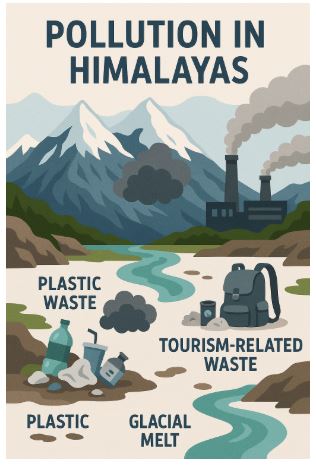
- Toxic Heavy Metals: Low level clouds are polluted with heavy toxic metals in India.
- Key Contaminants: Cadmium (Cd), copper (Cu), zinc (Zn), and chromium (Cr) detected in non-precipitating clouds over Western Ghats and Eastern Himalayas.
- Higher Pollution in Eastern Himalayas: 1.5 times more pollution with 40–60% higher toxic metal loading.
- Health Risks: Children face 30% higher risk than adults, dissolved Cr increases the risk of carcinogenic diseases, etc.
- Major Causes: Vehicular emissions from foothill regions, Industrial pollution from nearby lowlands, etc.
About Heavy Metals (HM) and HM Pollution
- Characteristics of HM: High atomic weight ranging from 63.5 to 200.6 and a density greater than 4000 kg/m3. E.g., zinc, copper, cadmium, cobalt, arsenic, lead, chromium, etc.
- Comprise over 50 elements on the periodic table of which about 17 are extremely lethal.
- Occurrence: Naturally occurring in the Earth’s crust since its formation.
- Causes of Pollution: Anthropogenic activity, particularly metal-based industrial activities such as smelting, mining, foundries, and the leaching of metals, etc.
Key Measures taken to curb Pollution in Himalayan Regions
- National Mission for Sustaining the Himalayan Ecosystem: To Scientifically assess the vulnerability of the Himalayan regions.
- SECURE Himalaya Project: Under “Global Partnership on Wildlife Conservation and Crime Prevention for Sustainable Development” (funded by Global Environment Facility (GEF).
- Himalayan State Regional Council: Established by NITI Aayog.
About Himalayas
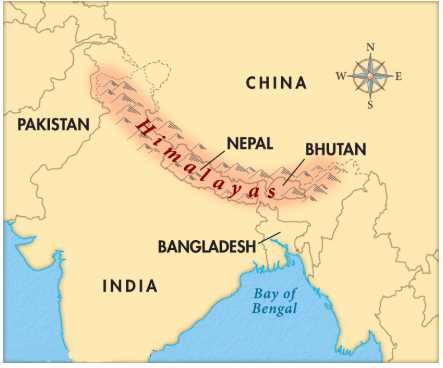
- The Himalayas are young fold mountains formed by the convergence of two tectonic plates.
- They constitute one of the 5 physiographic divisions of India.
- Along with acting as a grand barrier guarding India’s frontiers, they also act as a dividing range between the Tibetan Plateau in the north and India in the south.
Formation of the Himalayas
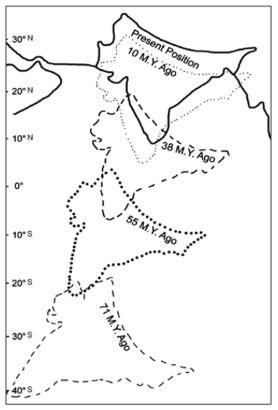
- The Himalayas were formed several million years ago as a result of the convergence of the Indo-Australian Tectonic Plate with the Eurasian (Asian) Tectonic Plate.
- Breaking of Pangea: Around 150 million years ago, the supercontinent Pangea began to break into different parts. First of all, it broke into two parts:
- Laurasia or Angaraland: The northern part of the Pangea was called Angaraland or Laurasia.
- It consisted of landmasses that contained present-day North America, Europe, and Asia.
- Formation of Tethys Sea: Due to the breaking down of Pangea, a long narrow sea was created between Angaraland and Gondwanaland, occupying the area where the Himalayas stand today. This sea was known as the Tethys Sea.
- Convergence of Indo-Australian and Eurasian Plates: The convectional currents generated in the Mantle of the Earth made the Indo-Australian Plate drift northwards towards the Eurasian Plate. This drift continued for millions of years, leading to the convergence of the two plates across the Tethys Sea.
Significance of Himalayas
- Climatic Influence: These ranges significantly affect the climate of India.
- Owing to their high altitude, length, and direction, they effectively interrupt the summer monsoonal winds coming from the Bay of Bengal and the Arabian Sea and trigger precipitation in the form of rain or snow.
- They also prevent cold winter winds from the Siberian region from entering India.
- Security: These ranges have been protecting India from outside forces and intruders since ancient times thus serving as a defense barrier for India.
- Perennial Source of Water: They are the source of the majority of large rivers of India, which form the footing of life in the entire north India.
- Forest Wealth: They host the base of a rich forest that provides fuel wood and a huge diversity of raw materials for forest-based industries.
- Agriculture: Though the Himalayan ranges do not provide extensive plains for agricultural activities, some of the slopes have been terraced for cultivation.
- Minerals: The Himalayan region is a source of many valuable minerals such as Copper, Lead, Zinc, Nickel, Cobalt, Antimony, Tungsten, Gold, Silver, Limestone, Semi-Precious and Precious Stones, Gypsum, and Magnetite.
- Hydroelectricity: Due to the presence of rugged topography and fast-flowing rivers, these mountain ranges hold a huge potential for Hydroelectricity.
5. ISRO to Launch Block 2 BlueBird Communications Satellite – Features & Coverage
Context
- Recently, building on the momentum of the successful NISAR mission, the Indian Space Research Organisation (ISRO) announced its next major launch. In the coming three to four months, it will launch the Block 2 BlueBird communications satellite, developed by U.S.-based AST SpaceMobile.
About Block 2 BlueBird Communications Satellite
- Designed to accelerate the goal of providing 24/7 continuous cellular broadband service coverage from space.
Enhanced Capability
- Offers up to 10 times more bandwidth than existing BlueBird satellites currently in orbit.
Coverage
- Targets approximately 100% U.S. nationwide coverage using over 5,600 coverage cells.
Performance Specs
- Beam capacity: Up to 40 MHz
- Peak data speed: Up to 120 Mbps
- Supports voice, full data, and video applications
Satellite Design
- Features up to 2,400 sq. ft. communications arrays, set to become the largest ever commercially deployed in low Earth orbit (LEO).
Total Mass
- 6500 Kg
6. VEGF-C: A Nanotechnology-Based Breakthrough for Advanced Liver Cirrhosis Treatment
Context
- Recently, a team of Indian scientists proposed an innovative nanotechnology-based approach to treat advanced liver cirrhosis, which involves the use of VEGF-C-loaded nanocarriers.
About VEGF-C
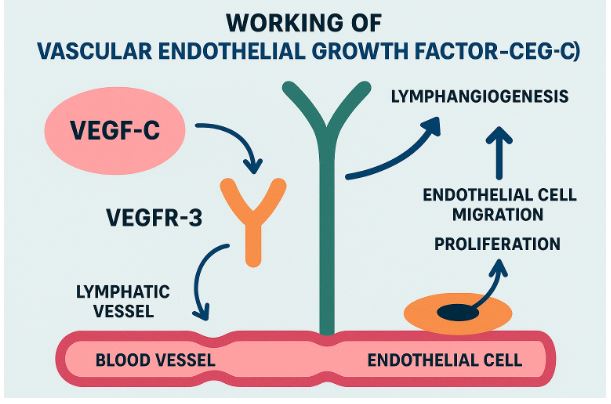
- A protein with powerful therapeutic potential that stimulates the growth of new lymphatic vessels (lymphangiogenesis).
How It Works
- Activates the VEGFR-3 receptor on cell membranes, promoting lymphatic vessel formation and function.
Therapeutic Potential
- Repairs lymphatic vessels in the liver and intestines ✓
- Enhances lymphatic drainage
- Reduces ascites (abdominalfluid accumulation), a major complication in liver cirrhosis.
Clinical Limitations
- Hydrophilic nature limits its ability to cross cell membranes
- Short half-life reduces its effectiveness in the body.
- Risk of systemic side effects in uncontrolled delivery.
Nanocarrier Solution
- Encapsulating VEGF-C in nanocarriers helps overcome these challenges by enabling targeted, sustained, and safer delivery to damaged liver tissues.
About Chronic Liver Disease
- When a healthy tissue is gradually replaced by scar tissue, impairing liver function over time.
Disease Progression
- Repeated liver injury and attempts at repair lead to fibrosis, vessel distortion, and fluid buildup, especially in advanced stages.
Lymphatic Involvement
- Damage is not limited to blood vessels-lymphatic vessels also become dysfunctional, particularly in the intestinal area.
- Lymph production can increase up to 30 times due to liver congestion and portal hypertension, overwhelming the drainage system.
- This contributes significantly to ascites (fluid accumulation in the abdomen), yet no current treatment specifically targets lymphatic dysfunction.
Common symptoms
- Fatigue, jaundice, abdominal pain, swelling in the limbs and abdomen, itchy skin, unexplained weight loss, easy bruising or bleeding, mental confusion, dark urine, pale stools, and spider-like blood vessels on the skin.
7. Mithun (Bos frontalis): Origin, Habitat, Cultural Significance & Conservation Status
Context
- Recently, scientists and tribal farmers from the Northeast have jointly urged the central government to include mithun (Bos frontalis), under key central sector schemes like the National Livestock Mission (NLM).
- They emphasized that such inclusion is crucial for promoting sustainable mithun farming and reversing the species' declining population.
About Mithun
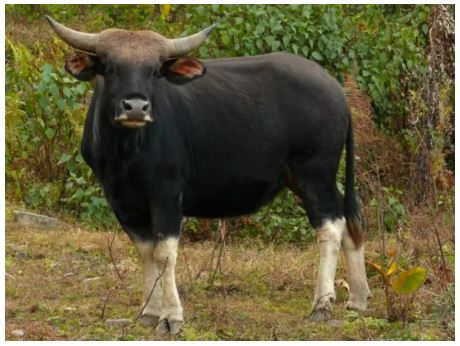
- Also known as Gayal, is a heavily built, semi-domesticated bovine species.
- Believed to have originated over 8,000 years ago, it is considered a descendant of the wild Indian gaur (bison).
- Referred to as the "cattle of the mountain", symbolizing strength and cultural significance in the Northeast.
Geographical Distribution
- Found mainly in the Northeastern region of India, especially in Arunachal Pradesh, which has the highest population.
- Also found in Nagaland, and parts of Southeast Asia including Bangladesh, Bhutan, and Myanmar. Inhabits tropical evergreen rainforests.
Cultural Significance
- State animal of Arunachal Pradesh and Nagaland.
- The Adi tribes of Arunachal Pradesh celebrate the 'Soulung' festival annually to commemorate the arrival of Mithun on Earth.
Physical Characteristics
- Resembles the Indian gaur, but is smaller in size.
- Strongly built with an average weight of 400-650 kg
- Notable for its broad frontal bone, flat-shaped face, and horns that form an inverted triangle shape from the front.
- The body color is typically blackish-brown, with a creamy white or yellowish forehead.
Conservation Status
- IUCN Red List: Vulnerable; CITES: AppendixI; WPA: Schedule I
8. India’s HOPE Station in Ladakh – Simulating Lunar and Martian Missions
Context
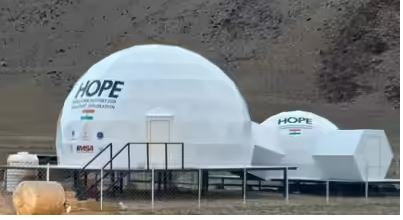
- Recently, Bengaluru-based space company Protoplanet under the guidance of ISRO launched the Human Outer Planetary Exploration (HOPE) station.
About HOPE
- A simulation research station located in the Tso Kar basin of Ladakh, designed to replicate lunar and Martian terrains and conditions (the surface conditions of the Moon and Mars).
- It serves as a testbed for off-Earth human exploration in extreme environments.
Objectives
- To study psychological, physiological, and epigenetic responses of humans in extreme isolation.
- To support India's long-term space goals, including: A crewed lunar mission by 2040 and establishment of a space station by 2035.
Significance
- A critical step in developing India's human spaceflight capability.
- Strengthens India's participation in the global space research community, joining countries like the USA, Canada, and Russia.
- Will generate valuable data to aid upcoming missions like Bharatiya Antariksh Station and Gaganyaan.
9. 71st National Film Awards – Full Winners List & Key Highlights
Context
- Recently, the 71st National Film Awards, celebrating the cinematic excellence of 2023, were announced by the Ministry of Information and Broadcasting.
- This edition received 332 entries in the feature film category, 115 in non-feature films, 27 books, and 16 critics' submissions.

Major Awards: Best Feature Film:
- 12th Fail (Hindi) - Based on IPS officer Manoj Kumar's life.
Best Actor
- (Joint Winners): Shah Rukh Khan - Jawan (Hindi) (Maiden National Award) & Vikrant Massey - 12th Fail (Hindi)
Best Actress
- (Joint Winners): Rani Mukerji - Mrs Chatterjee vs Norway (Hindi), Nithya Menen - Thiruchitrambalam (Tamil) & Manasi Parekh - Kutch Express (Gujarati)
Best Director
- Sudipto Sen - The Kerala Story (Hindi).
About National Film Awards
- Instituted in 1954, the awards were first given for films released in 1953.
Administered by
- The Directorate of Film Festivals (since 1973), which also manages the International Film Festival of India and Indian Panorama.
Award Components
- Each winner receives a medallion, cash prize, and a certificate of merit.
Top Awards
- Swarna Kamal (Golden Lotus Award): Given in 6 Feature Film categories and 2 each from Non-Feature Films and Best Writing on Cinema.
- Rajat Kamal (Silver Lotus Award): Given in all other categories.
Objective
- To promote films of aesthetic and technical excellence and foster national integration and cultural appreciation.
Eligibility Criteria
- Production: Films must be produced in India.
- Nationality: The director and key creative personnel must be Indian nationals.
- Certification: Must be certified by the Central Board of Film Certification (CBFC) between January 1 and December 31 of the award year.
10. BHASKAR Platform – India’s Largest Digital Startup Registry under Startup India
Context
- Recently, the Bharat Startup Knowledge Access Registry (BHASKAR) has emerged as a key national platform to strengthen India's entrepreneurial ecosystem by fostering collaboration among startups and stakeholders.
- As of June 2025, around 1.98 lakh startups are registered on the platform across all States and Union Territories.

About BHASKAR Platform
- A flagship initiative under the Startup India Mission.
- Aims to strengthen India's startup ecosystem by creating a centralized, digital registry of stakeholders.
- Provides a collaborative space for startups, investors, mentors, service providers, academic institutions, and government bodies.
Objectives
- Build the world's largest digital startup registry.
- Facilitate collaboration and networking among ecosystem players.
- Enhance discoverability, access to resources, and policy support.
Key Features
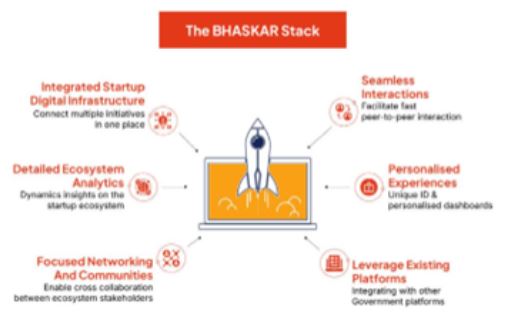
- Networking & Collaboration: Seamless interaction among startups, investors, and other stakeholders.
- Centralized Resources: Quick access to tools, knowledge, and support services.
- Unique BHASKAR ID: Personalized stakeholder identification for tailored engagement.
- Smart Discoverability: Powerful search for finding relevant collaborators & opportunities.

2026-27 UPSC Mains English QEP Power Pages
View DetailsSubmit Your Details to Learn More



