Can ICJ Ruling Compel Rich Nations to Pay for Historical Emissions? | Climate Justice Explained

Explore whether the International Court of Justice (ICJ) can legally hold wealthy nations accountable for their historical greenhouse gas emissions, the hurdles in enforcing climate liability, and its impact on global climate justice debates.

upsc-daily-current-affairs
THEIASHUB
Get an Instant Call Back from Our Expert Mentors Now!
+91

Context

  • Recent, landmark request to the International Court of Justice (ICJ) by a coalition of small island states (led by Vanuatu and supported by over 130 countries) seeking an advisory opinion on whether wealthy nations can be held legally liable for their historical greenhouse gas emissions driving climate change.

Climate justice

  • Small island developing states (SIDS) and many poorer nations bear the brunt of climate impacts (sea-level rise, extreme weather) despite contributing minimally to cumulative historical emissions. 
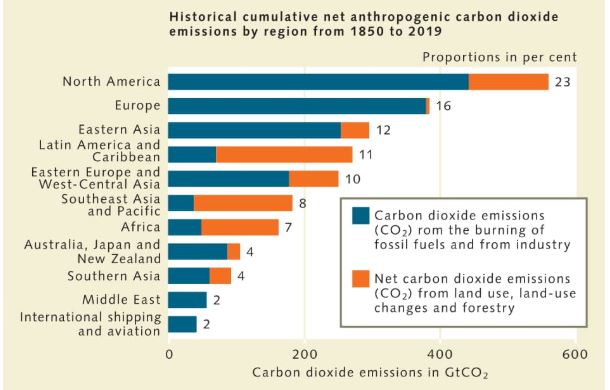
  • Rich, industrialized nations (US, EU, UK, etc.), responsible for the vast majority of emissions since the Industrial Revolution, are seen as owing a "climate debt" for the damage caused. 
Significance of ICJ Advisory Opinion

  • While ICJ advisory opinions are non-binding, the article argues they carry immense moral, political, and legal weight. 
  • A ruling recognizing historical liability could: Strengthen the legal basis for climate lawsuits in national and international courts. 
  • Empower developing nations in climate negotiations. Create significant pressure on wealthy nations to provide compensation and finance for loss and damage. 
  • Solidify the "polluter pays" principle in international environmental law. 

Major Hurdles & Challenges faced by ICJ

  • Non-binding Nature: The ICJ cannot force countries to pay; implementation relies on political will and pressure.
  • Defining Historical Responsibility: Pinpointing a start date (e.g.,1850, 1992) and quantifying the exact share of responsibility for each nation's past emissions is scientifically and legally complex.
  • Attribution & Causation: Proving direct legal causation between a specific country's historical emissions and specific climate damages suffered by another nation is extremely difficult under traditional international law.
  • Legal Precedent: International law traditionally focuses on preventing current harm and future risks. Establishing liability for past actions contributing to a global, cumulative problem is largely untested.
  • Political Resistance: Wealthy nations strongly oppose the concept of historical liability, fearing massive financial claims. They emphasize current and future emissions reductions and existing (often inadequate) climate finance mechanisms.

About ICJ

  • The International Court of Justice (ICJ), established in 1945 as the principal judicial organ of the United Nations, is based in The Hague, Netherlands. It adjudicates disputes between states and provides advisory opinions on legal questions referred by UN organs or specialized agencies. Its significance lies in:
  • Settling State Disputes: The ICJ resolves legal conflicts between countries, such as territorial or maritime disputes, fostering peaceful resolutions under international law.
  • Advisory Role: Its non-binding advisory opinions, like the recent July 23, 2025, ruling on climate emissions, guide global policy and moral obligations, influencing international cooperation. 
  • Upholding International Law: It reinforces treaties and UN charters, promoting accountability among nations. 
  • Global Influence: Though its rulings are binding only for consenting states, they carry diplomatic weight, shaping norms on issues like human rights, environmental protection, and sovereignty. 


UPSC QEP 2026 Batch 5 - English
Buy now View Details
Submit Your Details to Learn More
I agree to give my consent to receive updates through SMS/Email & WhatsApp*.

NEEV GS + CSAT Foundation 2026/27
Buy now View Details


Join theIAShub’s Mains Answer Writing Program

Refine your answer writing skills and elevate your UPSC preparation with personalized support and expert feedback.

Fill out the form to get started with the program or any other enquiries !

I agree to give my consent to receive updates through SMS/Email & WhatsApp*.

Best IAS Coaching In Delhi, UPSC Online & Offline Classes by IAShub

Are you dreaming of becoming an IAS officer? Then, IAShub can be your best guide. It is one of the Best IAS Coaching in Delhi. Many students who want to clear the UPSC exam join IAShub for learning. The institute gives both online and offline classes. Their teachers are experienced and helpful. They easily explain every topic. Students also get notes, tests, and tips to do well in the exam.

UPSC Online Classes by IAShub

IAShub is in Delhi and is trusted by many UPSC students. It offers coaching for every part of the UPSC exam – Prelims, Mains, and Interview. The classes are simple and easy to understand. The teachers are experts and guide students in the right way. IAShub is also known for its helpful notes, test series, and answer-writing practice. IAShub is the best coaching in Delhi and also gives UPSC Online Classes. This helps students from any place in India to learn. The online classes are live and also recorded. So, students can watch them anytime. These classes cover the full UPSC syllabus.

Key Offerings Provided by IAShub

Here are some important services provided by IAShub:

  • UPSC Prelims: IAShub teaches for Prelims with a focus on basics. It also gives daily current affairs and monthly magazines.
  • Classroom Courses: IAShub has classroom learning for students in Delhi. The environment is good and peaceful for study.
  • Live Classes: Students who live far can join live UPSC online classes. These classes are just like real classes.
  • QEP for Mains: The Quality Enrichment Program (QEP) is special for Mains preparation. It helps students write better and faster.
  • Answer Writing: Regular answer writing practice is given. Teachers also check answers and give tips to improve.
  • Free Resource: IAShub gives free notes by toppers and helpful Main Booster material.
  • Test Series: Test series are available for every subject. These help students know their weak points and improve.
  • Interview Guidance Session: IAShub also gives interview practice sessions with experts. These help students feel confident.

UPSC Exam Overview

The UPSC Civil Services Exam has three parts:

  • Prelims: It has two papers: General Studies and CSAT.
  • Mains: It has nine papers, including essays and optional subjects.
  • Interview: It tests the personality and confidence of the student.

This exam is tough, but with the right guidance, it becomes easy to manage. Students must study smart and stay regular.

How IAShub Helps in the UPSC Journey

IAShub supports students from the beginning to the end. It gives the right books, tests, and notes. The classes are easy to follow, and the teachers are always ready to help. Students get personal doubt sessions too. The test series and answer checking help students learn where they need to do better. Also, free study materials save time and money.
IAShub also guides students during the final stage – the interview. Experts take mock interviews and give useful tips. This full support makes IAShub one of the best IAS coaching in Delhi.

Best IAS Coaching In Delhi FAQs

Yes, IAShub offers live and recorded online classes. Students can attend from any part of India.

Classes are available in both English and Hindi, so students can choose the language they are comfortable with.

The classroom centre is located in Delhi. Students can visit and join offline batches there.

IAShub gives interview guidance sessions to help students prepare for the final round of UPSC.