
theIAShub
02 Aug, 2025

Table of Contents

Get an Instant Call Back from Our Expert Mentors!
Context
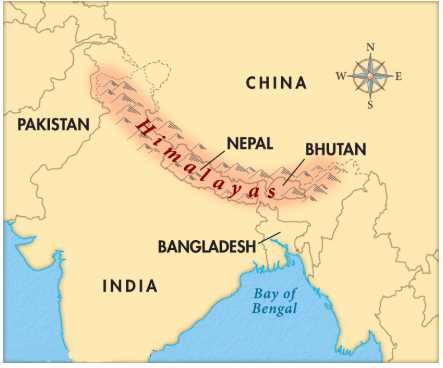
- A recent Study by the Bose Institute, Kolkata under Department of Science and Technology has shattered the myth of “clean” mountain rain.
Key Points of the Study
- Toxic Heavy Metals: Low level clouds are polluted with heavy toxic metals in India.
- Key Contaminants: Cadmium (Cd), copper (Cu), zinc (Zn), and chromium (Cr) detected in non-precipitating clouds over Western Ghats and Eastern Himalayas.
- Higher Pollution in Eastern Himalayas: 1.5 times more pollution with 40–60% higher toxic metal loading.
- Health Risks: Children face 30% higher risk than adults, dissolved Cr increases the risk of carcinogenic diseases, etc.
- Major Causes: Vehicular emissions from foothill regions, Industrial pollution from nearby lowlands, etc.
About Heavy Metals (HM) and HM Pollution
- Characteristics of HM: High atomic weight ranging from 63.5 to 200.6 and a density greater than 4000 kg/m3. E.g., zinc, copper, cadmium, cobalt, arsenic, lead, chromium, etc.
- Comprise over 50 elements on the periodic table of which about 17 are extremely lethal.
- Occurrence: Naturally occurring in the Earth’s crust since its formation.
- Causes of Pollution: Anthropogenic activity, particularly metal-based industrial activities such as smelting, mining, foundries, and the leaching of metals, etc.
Key Measures taken to curb Pollution in Himalayan Regions
- National Mission for Sustaining the Himalayan Ecosystem: To Scientifically assess the vulnerability of the Himalayan regions.
- SECURE Himalaya Project: Under “Global Partnership on Wildlife Conservation and Crime Prevention for Sustainable Development” (funded by Global Environment Facility (GEF).
- Himalayan State Regional Council: Established by NITI Aayog.
About Himalayas
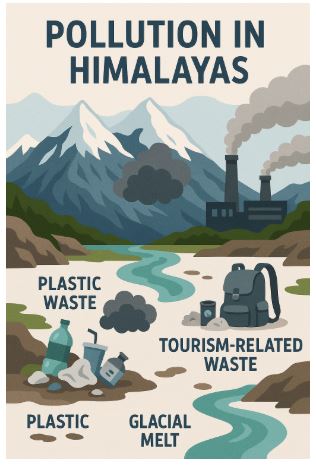
- The Himalayas are young fold mountains formed by the convergence of two tectonic plates.
- They constitute one of the 5 physiographic divisions of India.
- Along with acting as a grand barrier guarding India’s frontiers, they also act as a dividing range between the Tibetan Plateau in the north and India in the south.
Formation of the Himalayas
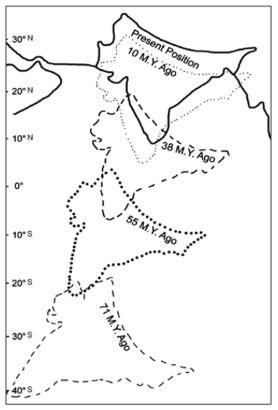
- The Himalayas were formed several million years ago as a result of the convergence of the Indo-Australian Tectonic Plate with the Eurasian (Asian) Tectonic Plate.
- Breaking of Pangea: Around 150 million years ago, the supercontinent Pangea began to break into different parts. First of all, it broke into two parts:
- Laurasia or Angaraland: The northern part of the Pangea was called Angaraland or Laurasia.
- It consisted of landmasses that contained present-day North America, Europe, and Asia.
- Formation of Tethys Sea: Due to the breaking down of Pangea, a long narrow sea was created between Angaraland and Gondwanaland, occupying the area where the Himalayas stand today. This sea was known as the Tethys Sea.
- Convergence of Indo-Australian and Eurasian Plates: The convectional currents generated in the Mantle of the Earth made the Indo-Australian Plate drift northwards towards the Eurasian Plate. This drift continued for millions of years, leading to the convergence of the two plates across the Tethys Sea.
Significance of Himalayas
- Climatic Influence: These ranges significantly affect the climate of India.
- Owing to their high altitude, length, and direction, they effectively interrupt the summer monsoonal winds coming from the Bay of Bengal and the Arabian Sea and trigger precipitation in the form of rain or snow.
- They also prevent cold winter winds from the Siberian region from entering India.
- Security: These ranges have been protecting India from outside forces and intruders since ancient times thus serving as a defense barrier for India.
- Perennial Source of Water: They are the source of the majority of large rivers of India, which form the footing of life in the entire north India.
- Forest Wealth: They host the base of a rich forest that provides fuel wood and a huge diversity of raw materials for forest-based industries.
- Agriculture: Though the Himalayan ranges do not provide extensive plains for agricultural activities, some of the slopes have been terraced for cultivation.
- Minerals: The Himalayan region is a source of many valuable minerals such as Copper, Lead, Zinc, Nickel, Cobalt, Antimony, Tungsten, Gold, Silver, Limestone, Semi-Precious and Precious Stones, Gypsum, and Magnetite.
- Hydroelectricity: Due to the presence of rugged topography and fast-flowing rivers, these mountain ranges hold a huge potential for Hydroelectricity.

2026-27 UPSC Mains English QEP Power Pages
View DetailsSubmit Your Details to Learn More



