Impact of Flash Floods in India – Causes, Effects & Government Initiatives

Learn about the rising threat of flash floods in India, their key causes, major impacts on lives and infrastructure, and government measures like the Flash Flood Guidance System (FFGS) to mitigate risks.

upsc-daily-current-affairs
THEIASHUB
Get an Instant Call Back from Our Expert Mentors Now!
+91

Context

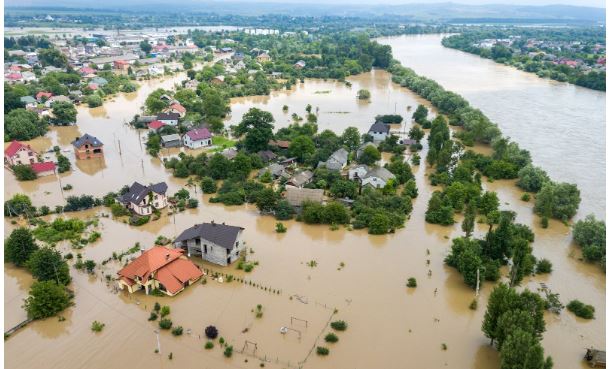
  • A new study by researchers at IIT Gandhinagar has warned that flash floods are becoming more frequent and severe across India. 
About the Study and its Findings

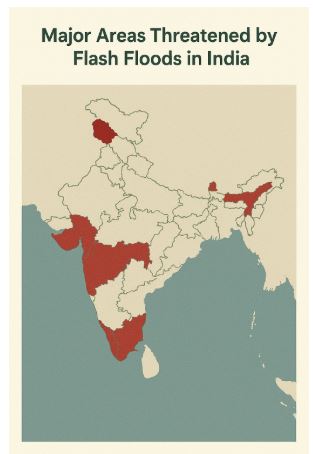
  • The study, ‘Drivers of flash floods in the Indian sub-continental river basins’, identifies the Himalayas, western coast, and Central India as key hotspots, using hydrological and geomorphological data to map sub-basin susceptibility. 
  • In the Himalayas, steep terrain and elevation drive flood risk, while in the West Coast and Central India, rapid runoff—termed “flashiness”—plays a key role. 
  • The study finds that nearly 75% of flash floods result from a combination of extreme rainfall and already saturated soil, with only 25% due to precipitation alone.

Key Drivers behind Flash Floods In India

  • The study reveals that only 25% of flash floods in India are caused solely by extreme rainfall. 
  • Most incidents result from a combination of heavy precipitation and pre-existing soil saturation. 
  • When the ground is already wet, it cannot absorb additional rainfall, leading to rapid runoff and increased flood risk.
  • Notably, only 23% of extreme rainfall events trigger flash floods within six hours. Instead, prolonged periods of both low- and high-intensity rain are more likely to cause such disasters.
  • The study also highlights regional variations. 
  • In the western coast and Central India, sub-basins react quickly to rainfall due to their high “flashiness” — the tendency of water levels to rise rapidly. 
  • In the Himalayan region, steep terrain and high relief further elevate the risk. 
  • Within major river basins like the Ganga, flash flood susceptibility differs — sub-basins in the southern Himalayan stretch are more prone, while central areas show lower risk.
About Flash Floods

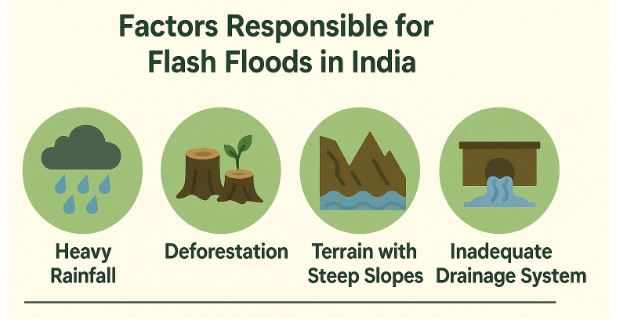
  • Flash floods are sudden, intense floods that occur within six hours of a heavy rainfall event, usually in regions with steep slopes, poor drainage, or saturated/dry soil. 
  • Unlike riverine floods, they offer little warning, making them particularly deadly.

Impact of Flash Floods

  • Human and Livelihood Impact: Flash floods lead to significant casualties due to their sudden onset.
    • The 2023 flash floods in Himachal Pradesh claimed over 400 lives and displaced thousands.
  • Damage to Public Utilities: Flash floods damage power lines, drinking water systems, and mobile networks, making post-disaster recovery slower and more expensive.
  • Land Degradation: Torrential runoff erodes topsoil, degrades fertility, and increases sedimentation in rivers and reservoirs.
  • Urban Challenges: Cities like Mumbai, Hyderabad, and Bengaluru experience rapid runoff due to concretised surfaces and encroached stormwater drains.
Initiatives by Government 

  • Central Water Commission (CWC) is the nodal organisation entrusted with the task of flood forecasting & early flood warnings in the country.
  • Indian Meteorological Department (IMD) in joint collaboration with the US National Weather Service, has developed a Flash Flood Guidance System (FFGS) for the South Asian region.
  • The Central Government has approved the National Glacial Lake Outburst Flood Risk Mitigation Programme (NGRMP) in four Himalayan States viz. Himachal Pradesh, Uttarakhand, Sikkim and Arunachal Pradesh with a total budget of Rs.150.00 crore.


UPSC QEP 2026 Batch 5 - English
Buy now View Details
Submit Your Details to Learn More
I agree to give my consent to receive updates through SMS/Email & WhatsApp*.

NEEV GS + CSAT Foundation 2026/27
Buy now View Details


Join theIAShub’s Mains Answer Writing Program

Refine your answer writing skills and elevate your UPSC preparation with personalized support and expert feedback.

Fill out the form to get started with the program or any other enquiries !

I agree to give my consent to receive updates through SMS/Email & WhatsApp*.

Best IAS Coaching In Delhi, UPSC Online & Offline Classes by IAShub

Are you dreaming of becoming an IAS officer? Then, IAShub can be your best guide. It is one of the Best IAS Coaching in Delhi. Many students who want to clear the UPSC exam join IAShub for learning. The institute gives both online and offline classes. Their teachers are experienced and helpful. They easily explain every topic. Students also get notes, tests, and tips to do well in the exam.

UPSC Online Classes by IAShub

IAShub is in Delhi and is trusted by many UPSC students. It offers coaching for every part of the UPSC exam – Prelims, Mains, and Interview. The classes are simple and easy to understand. The teachers are experts and guide students in the right way. IAShub is also known for its helpful notes, test series, and answer-writing practice. IAShub is the best coaching in Delhi and also gives UPSC Online Classes. This helps students from any place in India to learn. The online classes are live and also recorded. So, students can watch them anytime. These classes cover the full UPSC syllabus.

Key Offerings Provided by IAShub

Here are some important services provided by IAShub:

  • UPSC Prelims: IAShub teaches for Prelims with a focus on basics. It also gives daily current affairs and monthly magazines.
  • Classroom Courses: IAShub has classroom learning for students in Delhi. The environment is good and peaceful for study.
  • Live Classes: Students who live far can join live UPSC online classes. These classes are just like real classes.
  • QEP for Mains: The Quality Enrichment Program (QEP) is special for Mains preparation. It helps students write better and faster.
  • Answer Writing: Regular answer writing practice is given. Teachers also check answers and give tips to improve.
  • Free Resource: IAShub gives free notes by toppers and helpful Main Booster material.
  • Test Series: Test series are available for every subject. These help students know their weak points and improve.
  • Interview Guidance Session: IAShub also gives interview practice sessions with experts. These help students feel confident.

UPSC Exam Overview

The UPSC Civil Services Exam has three parts:

  • Prelims: It has two papers: General Studies and CSAT.
  • Mains: It has nine papers, including essays and optional subjects.
  • Interview: It tests the personality and confidence of the student.

This exam is tough, but with the right guidance, it becomes easy to manage. Students must study smart and stay regular.

How IAShub Helps in the UPSC Journey

IAShub supports students from the beginning to the end. It gives the right books, tests, and notes. The classes are easy to follow, and the teachers are always ready to help. Students get personal doubt sessions too. The test series and answer checking help students learn where they need to do better. Also, free study materials save time and money.
IAShub also guides students during the final stage – the interview. Experts take mock interviews and give useful tips. This full support makes IAShub one of the best IAS coaching in Delhi.

Best IAS Coaching In Delhi FAQs

Yes, IAShub offers live and recorded online classes. Students can attend from any part of India.

Classes are available in both English and Hindi, so students can choose the language they are comfortable with.

The classroom centre is located in Delhi. Students can visit and join offline batches there.

IAShub gives interview guidance sessions to help students prepare for the final round of UPSC.