Updated on 2025-06-10 18:48:47 | By Ankita Sen, Manager-Editorial

Get an Instant Call Back from Our Expert Mentors Now!
 Trending Searches
- UPSC CSE Overview
- UPSC CSE Admit Card
- UPSC CSE Analysis
- UPSC CSE Cut off
- UPSC CSE Pattern
- UPSC CSE Syllabus
- UPSC CSE Application Form
- UPSC CSE Selection Process
- UPSC CSE Result
- UPSC CSE Answer Keys
- UPSC CSE Vacancies
- UPSC CSE News
- UPSC CSE Preparation
- UPSC CSE Centre
- UPSC CSE Dates
- UPSC CSE Marksheet
- UPSC CSE Books
- UPSC CSE Salary
- UPSC CSE FAQs
- UPSC CSE Toppers
- UPSC CSE Age Limit
- UPSC CSE Calendar
- UPSC CSE Age Calculator
- UPSC CSE Prelims Marks Calculator
UPSC Toppers Marksheet, Study Plan, Strategies, Optional Subjects, Biography
UPSC Civil Services Examination isn’t just an exam, it’s a process that builds focus and grit. Toppers didn’t just get lucky, they stayed consistent through pressure and setbacks. Their journeys show that it’s more about staying on track than being perfect.
From choosing the right optional to adjusting their plans when things went wrong, they figured out what worked for them. You don’t need to follow them exactly, just learn, adapt, and stay clear on your why.
UPSC Toppers AIR 1 Year Wise
Talking to UPSC toppers is like listening to someone who’s cracked the code for the examination. They reveal the mindset, habits, and a real look into the way they think that sets them apart from everyone else. Here is the list of UPSC Toppers from the past ten years.
|
Name |
Rank |
Background |
|
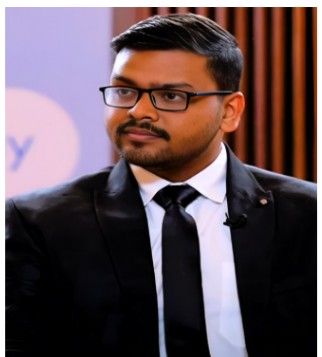
Shakti Dubey |
AIR 1 in UPSC 2024–25 |
She didn’t come from a fancy background. No full-time coaching. Just relentless discipline, a clear plan, and laser focus. In her interview, she didn’t drop big philosophical lines. She said this: “If you are consistent with the basics, you don’t need to study 15 hours a day. You just need to hit the right notes daily.” |
|
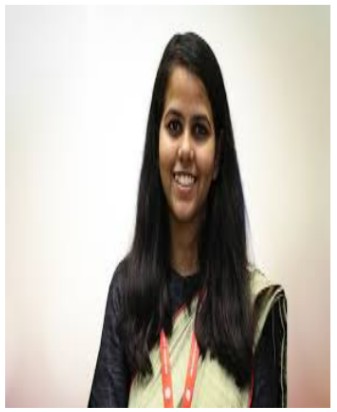
Aditya Srivastava |
AIR 1 in UPSC 2023–24 |
An IIT Kanpur graduate who left a high-paying job at Goldman Sachs to chase his civil services dream. Cleared it in his fifth attempt, not because he studied more, but because he studied smarter. He said this: “Don’t measure preparation in hours. Measure it in clarity. One solid reading is better than ten confused ones.” |
|
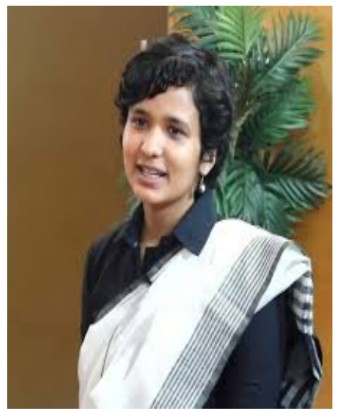
Ishita Kishore |
AIR 1 in UPSC 2022–23 |
An Economics graduate from SRCC, Delhi University, and a former corporate employee. She didn’t come from a bureaucratic family or have any special privilege, just a razor-sharp mindset and brutal consistency. In her interview, she kept it real and calm. She said this: “Motivation fades. What stays is routine. Build a routine that survives your bad days.” |
|
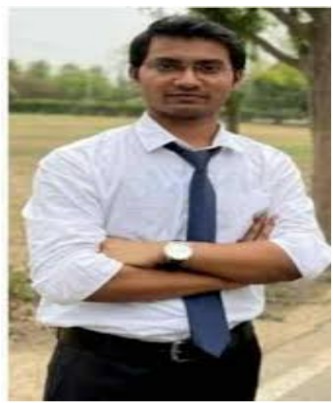
Shruti Sharma |
AIR 1 in UPSC 2021–22 |
A History graduate from St. Stephen’s College and prepared at Jamia’s Residential Coaching Academy. Her journey wasn’t perfect, she missed out on mains in her first attempt due to a technical issue but bounced back with quiet determination. In her interview, she stayed composed, precise, and rooted. She said this: “The goal isn’t to cover everything. It’s to understand what you cover deeply and meaningfully.” |
|
Shubham Kumar |
AIR 1 in UPSC 2020–21 |
An IIT Bombay civil engineering graduate from a modest background, he cracked the exam in his third attempt. No fancy distractions, just grit, humility, and laser focus on self-improvement. His interview reflected his grounded approach and deep understanding of rural development. He said this: “It’s not about how much you read, it’s about how well you revise what truly matters.” |
|
Pradeep Singh |
AIR 1 in UPSC 2019–20 |
Son of a farmer and village Sarpanch, he had already joined the Indian Revenue Service before topping the exam in his fourth attempt. His journey wasn’t glamorous, it was built on discipline, sacrifice, and an unshakable belief in his goal. In his interview, he stayed humble but sharp. He said this: “Failure isn’t the opposite of success here, it’s part of the process. Learn, reset, and move again.” |
|
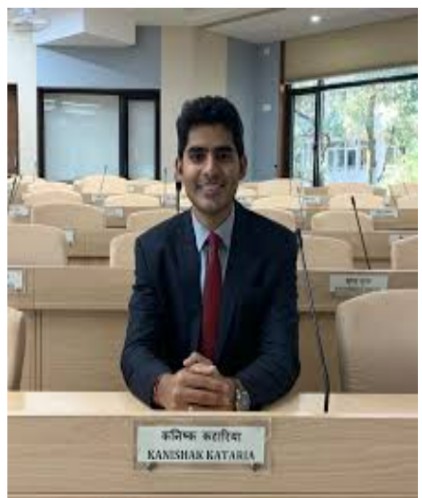
Kanishak Kataria |
AIR 1 in UPSC 2018–19 |
An IIT Bombay graduate and data scientist in South Korea before he decided to come back and pursue civil services. A quiet, methodical mind who stayed away from distractions, even social media. He prepared mostly from home with help from online resources. In his interview, he was clear, logical, and honest. He said this: “I didn’t aim to top the exam. I just aimed to give it my best, every single day, without fail.” |
|
Anudeep Durishetty |
AIR 1 in UPSC 2017–18 |
An engineering graduate from BITS Pilani and a serving IRS officer when he topped the exam in his fifth attempt. He balanced his full-time job with preparation, no shortcuts, no excuses. His journey was filled with failures, but he turned each one into fuel. In his interview, he was calm, clear, and deeply self-aware. He said this: “You don’t need to be extraordinary. You just need to be consistent especially when things don’t go your way.” |
|
Nandini K.R. |
AIR 1 in UPSC 2016–17 |
A civil engineering graduate from MS Ramaiah Institute, she was already in the Indian Revenue Service when she cracked the exam in her fourth attempt. Coming from a modest background, she leaned on sheer determination, smart planning, and self-belief. In her interview, she stayed confident without pretending to know it all. She said this: “Hard work works, but only when you know where to put it. Don’t run blindly. Study with purpose.” |
|
Tina Dabi |
AIR 1 in UPSC 2015–16 |
A Political Science graduate from Lady Shri Ram College, she cleared the exam in her very first attempt at just 22 years old. What set her apart wasn’t genius, it was discipline, structured planning, and self-awareness. In her interview, she was articulate, composed, and deeply in touch with ground realities. She said this: “UPSC isn’t a sprint. It’s a test of patience, planning, and how well you understand yourself.” |

UPSC Toppers Preparation Strategies
Clearing UPSC isn’t everyone’s cup of tea but it’s also not the work of a genius, it’s about being consistent, focused, and honest with your preparation. There are many similarities in how UPSC toppers over the years approached the exam, despite different backgrounds, optional subjects, or attempts.
- The most important is a foundation-first approach. Toppers built strong basics from standard books, followed a structured schedule, and avoided moving around too many sources. Whether it was Tina Dabi (AIR 1, 2015) or Shakti Dubey (AIR 1, 2024), all of them emphasized more on depth over breadth.
- Another key point was answer writing, not as a last-minute Mains strategy, but a consistent habit from early on. From Kanishak Kataria (AIR 1, 2018) to Shruti Sharma (AIR 1, 2021), toppers credited daily or weekly writing practice with helping them sharpen fluency, time management, and presentation.
- Current affairs were never separate. It was integrated. Whether through monthly magazines, or daily notes, toppers kept portions linked with static subjects. This allowed them to deal with evolving paper patterns without panic.
- They also respected the CSAT paper, which most of the aspirants take lightly. Toppers like Aditya Srivastava (AIR 1, 2023) and Ishita Kishore (AIR 1, 2022) practiced it routinely, fully aware of how important it is along with GS Paper 1.
- Mock tests and post-test analysis. Practicing test series came out to be a crucial part of many toppers’ success from Pradeep Singh (AIR 1, 2019) to Shakti Dubey (AIR 1, 2024). It wasn’t just about testing knowledge but preparing under constant pressure.
- And finally, the mental game. This is one of the most crucial aspects of preparation. From full-time jobs (like Anudeep Durishetty) to repeated failures (like Nandini K.R.), they all pushed through because they planned smartly, stayed calm, and didn’t give up.
|
YEAR |
TOPPER NAME |
OPTIONAL SUBJECT |
KEY STRATEGY |
|
2024 |
Shakti Dubey |
PSIR |
Consistent with basics, focused on minimum resources and maximum revision for preparation |
|
2023 |
Aditya Srivastava |
Electrical Engg. |
Measured preparation by clarity, not hours |
|
2022 |
Ishita Kishore |
PSIR |
Relying on routine over motivation |
|
2021 |
Shruti Sharma |
History |
Emphasis on deep understanding, not coverage |
|
2020 |
Shubham Kumar |
Anthropology |
Kept it simple, focused on revision |
|
2019 |
Pradeep Singh |
PSIR |
Treated failure as part of the process |
|
2018 |
Kanishak Kataria |
Mathematics |
Avoided distractions, stuck to core sources |
|
2017 |
Anudeep Durishetty |
Anthropology |
Balanced full-time job with steady preparation |
|
2016 |
Nandini K.R. |
Kannada Lit. |
Studied with purpose, not volume |
|
2015 |
Tina Dabi |
PSIR |
Built a calm, consistent routine from day one |
UPSC Toppers Marksheet Last 10 Years
Here is a list of UPSC Toppers Marksheet Last 10 Years;
|
YEAR |
TOPPER NAME |
OPTIONAL SUBJECT |
MARKS OBTAINED |
INTERVIEW MARKS |
|
2024 |
Shakti Dubey |
PSIR |
1043 |
182 |
|
2023 |
Aditya Srivastava |
Electrical Engg. |
1099 |
200 |
|
2022 |
Ishita Kishore |
PSIR |
1094 |
179 |
|
2021 |
Shruti Sharma |
History |
1105 |
173 |
|
2020 |
Shubham Kumar |
Anthropology |
1054 |
176 |
|
2019 |
Pradeep Singh |
PSIR |
1072 |
158 |
|
2018 |
Kanishak Kataria |
Mathematics |
1121 |
179 |
|
2017 |
Anudeep Durishetty |
Anthropology |
1126 |
176 |
|
2016 |
Nandini K.R. |
Kannada Lit. |
1120 |
193 |
|
2015 |
Tina Dabi |
PSIR |
1063 |
195 |
UPSC Toppers Study Plan
UPSC toppers study plan provides key points for smart revision techniques and efficient time management. It focuses on the value of discipline and regularity by following well-structured schedules to achieve successful results.
What aspirants can learn from the UPSC Topper’s daily routine:
- Discipline and Consistency: UPSC toppers follow a strict and consistent study schedule, usually starting their day very early in the morning. They maintain constant pace throughout their preparation to avoid the pressure of last-minute study sessions.
- Subject Prioritization: Toppers divide their study hours according to subject weightage, focusing more on difficult areas while making sure every part of the syllabus is covered thoroughly.
- Revision and Practice: Regular revision, frequent mock exams, and answer writing are key elements in a topper’s timetable. This method helps in memory recall and boosts exam confidence.
- Breaks and Self-Care: The UPSC Topper Study Plan also includes planned breaks for recovery and rest. Activities like fitness routines and leisure help them stay mentally and physically balanced, which is essential for sustained preparation.
- Flexibility and Adjustment: Toppers are aware that different phases of the UPSC exam demand different strategies. They modify their schedules according to shifting goals and personal needs to keep their preparation efficient and realistic.
Here’s a quick example of AIR 1, 2015 Tina Dabi’s study plan for your reference:
|
TIME |
ACTIVITY |
|
7:00 AM |
Wake up and Freshen up |
|
7:30 AM |
Newspaper Reading |
|
8:30 AM |
Breakfast |
|
9:00 AM - 12:00 PM |
Study Slot 1 |
|
12:00 PM - 1:00 PM |
Current Affairs Revision |
|
1:00 PM - 2:00 PM |
Lunch |
|
2:00 PM - 3:00 PM |
Break/Leisure time |
|
3:00 PM - 5:00 PM |
Study Slot 2 |
|
5:00 PM - 8:00 PM |
Revision of Previously Studied Topics |
|
8:00 PM - 9:00 PM |
Dinner |
|
9:00 PM - 11:00 PM |
Study Slot 3 |
|
11:00 PM - 12:00 AM |
Social Media/Leisure time |
|
12:00 AM |
Sleep |
UPSC Topper Biography
Who are these toppers? Their backgrounds are as diverse as India itself, yet their stories share a common thread: GRIT.
Here’s a look at the last decade’s toppers:
Shakti Dubey (2024), a Biochemistry grad from Allahabad University, overcame financial hurdles with free online resources, choosing PSIR as her optional. From a small town, she took five attempts to secure AIR 1.
Aditya Srivastava (2023), an IIT Kanpur alum, leveraged his Electrical Engineering background. He balanced technical prep with GS, cracking it in his third attempt.
Ishita Kishore (2022), from Greater Noida, studied Economics at Shri Ram College of Commerce. She cleared it in her third attempt.
Shruti Sharma (2021), a St. Stephen’s and JNU grad from Bijnor, chose History. She took two attempts to crack the exam.
Shubham Kumar (2020), a civil engineer from IIT Bombay, picked Anthropology. From Katihar, Bihar, he cleared it in his second attempt.
Pradeep Singh (2019), an IRS officer from Sonipat, cracked it in his fourth attempt with Public Administration.
Kanishak Kataria (2018), an IIT Bombay grad, chose Mathematics. He cleared it in his first attempt.
Anudeep Durishetty (2017), a software engineer from Hyderabad, picked Anthropology. He took five attempts.
Nandini K.R. (2016), a civil engineering graduate from MS Ramaiah Institute, she was already in the Indian Revenue Service when she cracked the exam in her fourth attempt.
Tina Dabi (2015), a Delhi University grad, topped in her first attempt at 22, choosing PSIR.
UPSC Toppers Optional Subjects
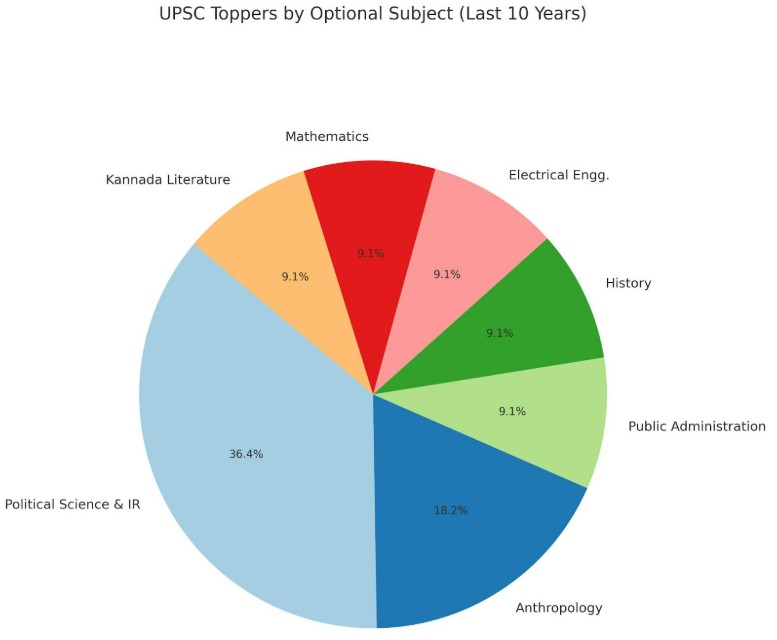
Here’s how optional subjects shaped up over 10 years:
|
SUBJECT |
NO. OF TOPPERS (Last 10 years) |
|
Political Science & IR |
4 |
|
Anthropology |
2 |
|
Public Administration |
1 |
|
History |
1 |
|
Electrical Engg. |
1 |
|
Mathematics |
1 |
|
Kannada Literature |
1 |
- PSIR and Anthropology continue to dominate because of syllabus overlap with GS.
- Maths and Tech optional can still top if done with precision.
- Regional Literature remains a dark horse, few takers, high return for those who master it.
Don’t pick your optional based on trends. Choose what you can stick with for 12 months, revise thrice, write like a pro and ace the exam.
This exam will not reward perfection. It rewards the process. Toppers aren’t the smartest people, but they’re the ones who didn’t quit, kept learning, stayed calm.
If you’re prepping, don’t just watch topper interviews for motivation. Learn and dissect their study plans. Copy their discipline. And build your own value in answer writing.
You don’t need 15-20 hours a day. You need 5-7 hours done well. For 300 days. That’s the real secret.
And if you're still doubting whether you're cut out for this, remember, so were they.
You just haven’t topped it yet.
Registration
Exam Date
Results
Cutoff
Counselling
- On 25 April 2024, the UPSC Annual Calendar 2025 was officially released.
- The UPSC Revised Calendar 2025 was released later on 22 August 2024.
- The UPSC Notification 2025 was released on 22 January 2025.
- The UPSC Vacancy 2025 included 1129 total posts, out of which 979 were for UPSC CSE and 150 for UPSC IFoS.
- The UPSC application process for 2025 began on 22 January 2025.
- The last date to fill the UPSC application form was initially 11 February 2025.
- The UPSC last date to fill the form was extended to 21 February 2025.
- The UPSC Correction Window 2025 was open from 22 February to 28 February 2025
- The UPSC Prelims Admit Card 2025 was released on 13 May 2025.
- The UPSC Prelims Exam 2025 was conducted on 25 May 2025.
- The UPSC DAF-I (Detailed Application Form) 2025 is yet to be announced.
- The UPSC Mains Exam 2025 is scheduled to begin on 22 August 2025.
- The UPSC CSE Result 2024 was declared on 22 April 2025.
- On 25 April 2025, UPSC released the UPSC marksheets 2024 of all qualified candidates from UPSC CSE 2024.
- Shakti Dubey was declared the UPSC Topper 2024 with AIR 1 in the UPSC Civil Services Examination 2024.
- The UPSC Exam Calendar 2026 was also released, stating that the UPSC Prelims 2026 will be held on 24 May 2026.
- The UPSC Mains Exam 2026 is scheduled to begin from 21 August 2026.

UPSC Preparation Courses

2026 UPPCS Integrated English QEP B3
View Details
2026 UPPCS Integrated Hindi QEP B3
View Details
2026-27 UPSC Mains English QEP Power Pages
View Details
2026-27 UPSC Mains English QEP Power Pages
View DetailsSubmit Your Details to Learn More



0 Comment