Updated on 2025-06-10 18:48:47 | By Ankita Sen, Manager-Editorial

Get an Instant Call Back from Our Expert Mentors Now!
 Trending Searches
- UPSC CSE Overview
- UPSC CSE Admit Card
- UPSC CSE Analysis
- UPSC CSE Cut off
- UPSC CSE Pattern
- UPSC CSE Syllabus
- UPSC CSE Application Form
- UPSC CSE Selection Process
- UPSC CSE Result
- UPSC CSE Answer Keys
- UPSC CSE Vacancies
- UPSC CSE News
- UPSC CSE Preparation
- UPSC CSE Centre
- UPSC CSE Dates
- UPSC CSE Marksheet
- UPSC CSE Books
- UPSC CSE Salary
- UPSC CSE FAQs
- UPSC CSE Toppers
- UPSC CSE Age Limit
- UPSC CSE Calendar
- UPSC CSE Age Calculator
- UPSC CSE Prelims Marks Calculator
UPSC Exam Analysis 2025: Trends, Cut-Offs, Prelims and Mains Review, Question Types & More
UPSC Exam Analysis 2025 is a must-read for anyone preparing for the Civil Services Examination. It gives you a full picture of what the exam looked like — from subject-wise question distribution to the overall difficulty level. For UPSC Prelims 2025, students found the paper moderately tough, with Economy and Polity getting the most attention. This analysis will help you understand what topics were covered, how the pattern may have changed, and what kind of preparation is expected going forward. You’ll also find expert reviews, a section-wise breakdown, and tips for both Prelims and Mains.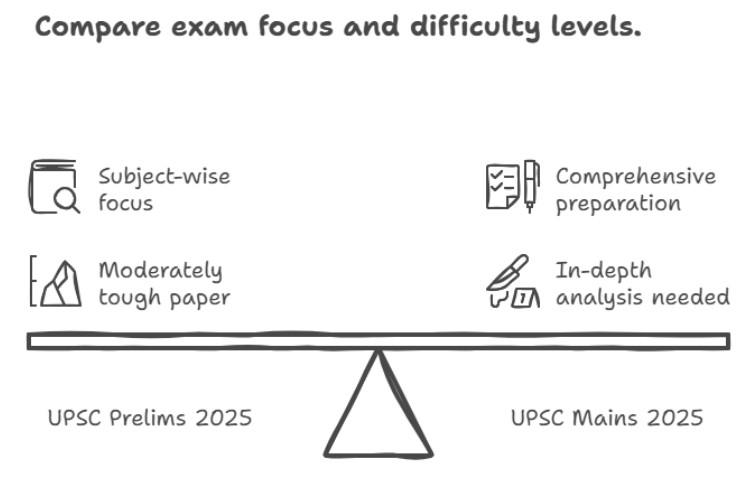
This article is not just for 2025 aspirants but also for future candidates looking to plan smarter. Whether you are focusing on GS, CSAT, or the Mains, this UPSC Exam Analysis 2025 will give you a clear idea of what to expect and how to prepare better.
UPSC Exam Analysis 2025
The UPSC Exam Analysis 2025 highlights major subject-wise trends, question types, and changes in the approach of the UPSC in assessing candidates. UPSC has once again tested conceptual clarity, critical reasoning, and interdisciplinary knowledge. The overall difficulty level ranged from moderate to slightly tough, especially in CSAT. UPSC Exam Analysis confirms a continued emphasis on current affairs-based conceptual application.
FAQs: What is UPSC Exam Analysis?
Q1. What is UPSC Exam Analysis?
Ans. It is a review of the exam that tells you about question types, topics, and difficulty level.
Q2. Who should read the UPSC Exam Analysis?
Ans. Anyone preparing for UPSC or planning to give the exam next year.
Q3. How can UPSC Exam Analysis help me?
Ans. It shows what to focus on while studying and how UPSC changes its question style.
Q4. Is UPSC Exam Analysis reliable?
Ans. Yes, it is based on student feedback, expert opinions, and question paper review.
UPSC Prelims 2025 Exam Review
The UPSC Prelims 2025 consisted of two papers:
- General Studies Paper I (GS 1): Topics from Polity, History, Geography, Economy, Science & Technology, Environment, and Current Affairs.
- CSAT (Paper II): Aptitude-based testing with comprehension, reasoning, numeracy, and analytical skills.
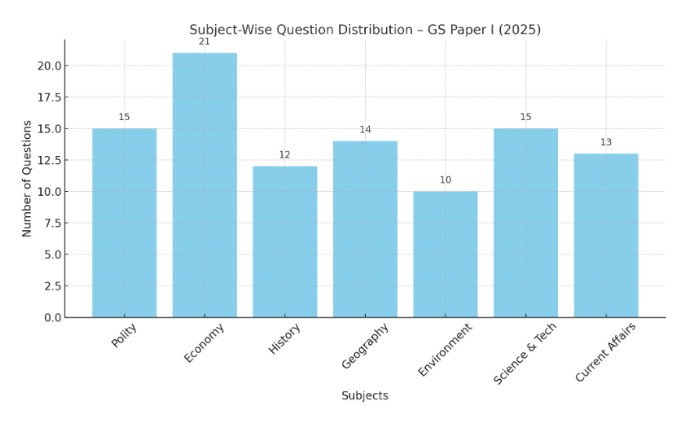
Subject-Wise Question Distribution – GS Paper I
|
Subject |
No. of Questions (2025) |
|
Polity |
15 |
|
Economy |
21 |
|
History |
12 |
|
Geography |
14 |
|
Environment |
10 |
|
Science & Tech |
15 |
|
Current Affairs |
13 |
The UPSC Exam Analysis shows a clear dominance of Economy and Polity in 2025, while Environment and Science & Tech maintained their weightage.
FAQs: UPSC Prelims 2025
Q1. Which subjects had the most questions in 2025?
Ans. Economy and Polity had the highest number of questions.
Q2. Was the paper easy or difficult?
Ans. The GS paper was moderate, but CSAT was tougher for many students.
Q3. What type of questions were asked?
Ans. Mostly concept-based and related to current events.
Q4. Did any subjects have fewer questions?
Ans. Art & Culture and Medieval History had fewer questions this year.
UPSC Prelims CSAT 2025 Review
The CSAT (Paper II) of UPSC Prelims 2025 was held on 25th May, in the afternoon shift. Many students found it tricky and time-consuming. While it is only qualifying in nature, scoring 33% (66 marks out of 200) is necessary to move on to the Mains stage. The comprehension section was lengthy, with complex passages and indirect questions. Reasoning questions were moderate, and numeracy required fast calculation. Unlike earlier years, guesswork did not help much, and even confident candidates found it slightly tougher than expected.
Topics such as data interpretation, Venn diagrams, seating arrangement, and paragraph-based logical reasoning were seen in bulk. Many candidates who ignored CSAT thinking it’s easy were caught off guard. The key takeaway for future aspirants is to not take CSAT lightly — regular practice, mock tests, and previous years’ questions are crucial.
FAQs: UPSC CSAT 2025
Q1. Was CSAT tough this year?
Ans. Yes, many students found it harder than last year.
Q2. Is CSAT important even though it’s qualifying?
Ans. Yes, without clearing CSAT, your GS Paper I won’t be evaluated.
Q3. What were the most difficult CSAT questions?
Ans. Comprehension passages and numeracy questions were tough.
Q4. How to prepare for CSAT 2026?
Ans. Practice basic math, logical reasoning, and comprehension daily.
UPSC Prelims 2025 Expected Cut-Off
The expected cut-off for UPSC Prelims 2025 will depend on the difficulty level of both GS Paper I and CSAT. Based on initial analysis, the paper was moderately difficult, so the expected cut-off for the General category may range between 82–88 marks. For OBC, SC, and ST categories, it’s likely to be slightly lower. The number of vacancies and performance of aspirants also play a key role in determining the final cut-off.
Here’s a comparison of expected vs past cut-offs:
|
Category |
2025 (Expected) |
2024 |
2023 |
|
General |
82–88 |
88.2 |
87.5 |
|
OBC |
79–84 |
85.3 |
85.5 |
|
SC |
72–77 |
74.1 |
75.3 |
|
ST |
69–74 |
69.4 |
70.2 |
FAQs: UPSC Prelims Cut-Off
Q1. What is the expected cut-off for the General category?
A1. It is expected to be around 82–88 marks.
Q2. Is the CSAT score included in the cut-off?
A2. No, CSAT is only qualifying. Cut-off is based on GS Paper I only.
Q3. Why do cut-offs change every year?
A3. They depend on paper difficulty, number of students, and vacancies.
Q4. Will coaching classes give accurate cut-off predictions?
A4. They can give a close estimate but final cut-off is declared by UPSC only.
UPSC Prelims Result 2025 Date & Updates
The UPSC Prelims 2025 result was declared on June 11, 2025 on the official UPSC website. Candidates who qualify both GS Paper I (based on cut-off) and CSAT (33% minimum) will be eligible to appear for the Mains exam starting September 20, 2025. You’ll need your roll number or registration ID to check the result.
The results are usually released as a PDF with roll numbers of selected candidates. After the results, UPSC will release the Detailed Application Form (DAF) for Mains, which must be filled carefully. Keep your documents ready in advance.
FAQs: UPSC Prelims Result 2025
Q1. When will UPSC release the Prelims result?
Ans. It is expected by mid-July 2025.
Q2. How will I know if I’ve cleared the Prelims?
Ans. Your roll number will be in the official result PDF.
Q3. What’s next after the Prelims result?
Ans. Fill the DAF and prepare for the Mains starting in September.
Q4. Will UPSC inform me personally about the result?
Ans. No, you have to check the result online on UPSC’s official site.
UPSC Mains Paper Difficulty Analysis
The UPSC Mains exam 2025 is scheduled to be held from September 20 to 29, 2025, as per the official UPSC calendar. It is known to be more challenging than Prelims because it tests not only your knowledge but also your writing skills and clarity of thought. In 2025, questions were more focused on current issues and real-world applications. Ethics (GS Paper IV) and Governance (GS Paper II) were among the toughest papers. 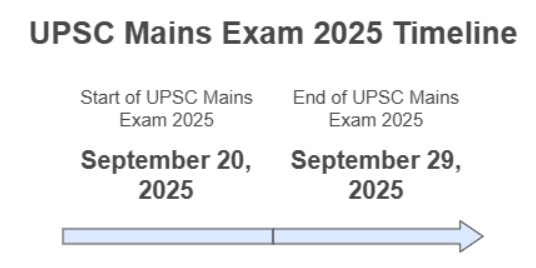
The questions required deep understanding, critical thinking, and clear answers. Candidates needed to show both factual knowledge and an analytical mindset. Overall, the Mains exam is shifting toward more practical and opinion-based questions, which means you must be well-read and able to express your ideas clearly.
FAQs: UPSC Mains Paper
Q1. Is UPSC Mains harder than Prelims?
Ans. Yes, it needs in-depth knowledge and good writing skills.
Q2. Which Mains paper is the toughest?
Ans. Many students find GS Paper II (Polity & Governance) and Paper IV (Ethics) tough.
Q3. How to prepare for Mains papers?
Ans. Practice answer writing, read newspapers, and revise standard books.
Q4. Has the Mains exam changed recently?
Ans. Yes, questions now focus more on real-world issues and analysis.
UPSC Question Paper Trend Analysis
Over the years, the UPSC question paper pattern has seen noticeable shifts. In 2025, the focus was on analytical and concept-based questions rather than just factual recall. UPSC continued using assertion-reason formats, Roman numerals in options, and blended current affairs with static topics. This trend shows that UPSC now expects students to apply their knowledge, not just memorize facts.
UPSC Exam Analysis reveals a consistent pattern:
- Increase in assertion-reason type questions.
- Use of Roman numeral options.
- Integration of static and current affairs.
- Focus on regional geopolitics, governance, and climate issues.
UPSC Question Paper Trend Year-wise Focus Area Comparison
|
Year |
Focus Area |
|
2021 |
Environment & Polity |
|
2022 |
Science & Tech, History |
|
2023 |
Geography, Current Affairs |
|
2024 |
Governance, Digital Economy |
|
2025 |
Economy, Polity, Climate Tech |
UPSC 2025 Analysis Expert Review
Our experts at IASHub coaching and subject professionals from the field of civil services preparation have decoded UPSC 2025:
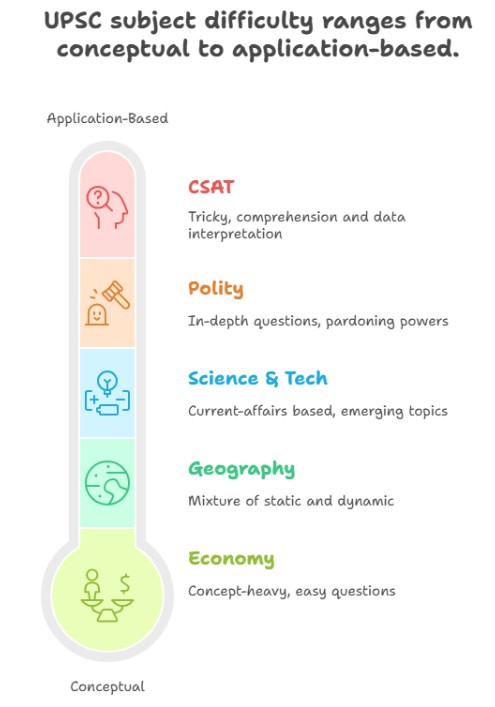
- Economy: Concept-heavy with easy questions on fiscal policy and agriculture.
- Polity: In-depth questions on pardoning powers, ordinances, anti-defection.
- Science & Tech: Mostly current-affairs based with emerging topics like EVs and space.
- Geography: Mixture of static (NCERT) and dynamic (time zones, INSTC).
- CSAT: Remains tricky – especially in comprehension and data interpretation.
FAQs: What did experts say about UPSC Prelims 2025?
Q1. What was the toughest part in 2025?
Ans. CSAT was tough, especially for non-math students.
Q2. Was Polity easy this year?
Ans. It was moderate, but questions needed strong basics.
Q3. Any new topics seen this year?
Ans. Yes, climate tech and the digital economy were new focus areas.
Q4. How did IASHub help students?
Ans. Their regular test series and current affairs classes helped a lot.
UPSC Prelims Section-Wise Review
The section-wise analysis of UPSC Prelims 2025 shows a balanced paper with moderate difficulty overall. Polity, Economy, and History followed standard patterns. Geography included both static and map-based questions. Science & Technology and Environment sections had more questions linked to current developments. CSAT remained challenging, especially in comprehension and logic.
|
Subject |
Level |
Comments |
|
Polity |
Moderate |
Static topics with some governance questions |
|
Economy |
Easy |
Budget, markets, agriculture |
|
History |
Moderate |
Focus on ancient & modern history |
|
Geography |
Moderate |
Mix of NCERT topics and map-based questions |
|
Environment |
Moderate |
Climate-related and tech-based topics |
|
Science & Tech |
Tough |
Focus on current innovations |
|
Current Affairs |
Moderate |
Mixed with static topics |
UPSC Exam Pattern 2025 Change Analysis
UPSC Exam Analysis of 2025 indicates certain shifts in the exam design:
- Roman numeral format in MCQs.
- More assertion-reason types.
- Reduced Art & Culture questions.
- Integration of IR with Current Affairs.
These changes necessitate adaptive strategies by aspirants. Based on UPSC Exam Analysis, coaching experts at IASHub recommend a focus on:
- Conceptual clarity over rote learning.
- Practicing CSAT mock tests regularly.
- Reading daily editorials and government reports.
UPSC Prelims vs Mains Differences
It’s important to understand the difference between UPSC Prelims and Mains to plan your preparation well. Prelims is an objective-type screening test, while Mains is a descriptive exam that decides your final merit. Here’s a quick comparison:
|
Feature |
Prelims |
Mains |
|
Type of Exam |
Objective (MCQ) |
Descriptive (Essay-style) |
|
Number of Papers |
2 (GS & CSAT) |
9 (incl. GS, Optional, Essay) |
|
Qualifying/Scoring |
Screening Test |
Scoring for merit |
|
Duration |
2 Hours each |
3 Hours each |
|
CSAT Role |
Qualifying (33% required) |
Not Applicable |
FAQs: UPSC Prelims vs Mains
Q1. Which exam is more difficult?
Ans. Mains is tougher because it tests depth and writing skills.
Q2. Can I appear for Mains without clearing CSAT?
Ans. No, you must pass CSAT to qualify for Mains.
Q3. Is the syllabus the same for both?
Ans. Some topics overlap, but Mains is more detailed.
Q4. How should I prepare differently?
Ans. Focus on MCQs for Prelims and answer writing for Mains.
Common Mistakes Aspirants Should Avoid
Even serious aspirants make small mistakes that cost them success. Here are some key ones to avoid:
- Ignoring CSAT: Many fail Prelims due to overconfidence in Paper II.
- Depending on just one source: Use multiple sources and test series.
- Lack of revision: Without regular revision, you’ll forget key facts.
- Delaying answer writing: Start writing practice early for Mains.
FAQs: Mistakes to Avoid in UPSC
Q1. What’s the most common mistake in UPSC prep?
Ans. Not practicing enough mock tests.
Q2. Should I start answer writing from day 1?
Ans. Not necessarily day 1, but definitely after 2–3 months of study.
Q3. Is it okay to skip coaching?
Ans. Yes, but you must be very disciplined with self-study.
Q4. Can I ignore CSAT if I’m from a math background?
Ans. No, CSAT needs practice regardless of background.
How IASHub Coaching Can Help You Succeed
IASHub has helped thousands of UPSC aspirants with expert faculty, structured guidance, and a focus on smart preparation.
- Daily Current Affairs Classes: Cover newspapers, PIB, and editorials
- Prelims & Mains Test Series: Real exam-like practice with feedback
- Answer Writing Practice: Model answers and mentor feedback
- Interview Preparation: DAF analysis, mock interviews, and expert panels
Join IASHub Coaching Today:
- Online and Offline Classes Available
- Bilingual Content (English & Hindi)
- Discount for Early Joiners
Enroll Now and download a free CSAT workbook.
UPSC Subject-Wise Strategy for 2026
Based on the UPSC 2025 paper trends, here’s how you should plan subject-wise for UPSC 2026. The key change is focus on basics + current affairs integration.
- Polity: Stick to Laxmikanth and cover governance, ED/DRI roles, anti-defection law.
- Economy: Read Budget & Economic Survey. Focus on the digital economy, agriculture, and stock markets.
- History: Prioritize Ancient and Modern history. Art & Culture may see a comeback.
- Geography: NCERTs + mapping practice. Time zones, climate zones, INSTC.
- Environment: Link static content with current tech like air capture, climate talks.
- S&T: Focus on space, defense, EVs, biotech. Skip outdated content.
- CSAT: Regular practice of comprehension and math — don’t ignore it.
FAQs: Strategy for UPSC 2026
Q1. How should I prepare for Polity in 2026?
Ans. Focus on the Constitution, governance topics, and practice MCQs.
Q2. Will current affairs still dominate the paper?
Ans. Yes, current topics are blended with all subjects now.
Q3. Should I join a test series for 2026?
Ans. Yes, joining one from IASHub or others helps improve speed and accuracy.
Q4. What is the most ignored subject that I should focus on?
Ans. Many ignore Environment and S&T — but they are scoring and current-linked.
Conclusion
The UPSC Exam Analysis 2025 clearly shows how the pattern is evolving each year. With increasing emphasis on concept-based and current-affairs-linked questions, candidates must focus on understanding over memorizing. The difficulty level this year ranged from moderate to tough, especially in CSAT and Mains papers like Ethics and Governance.
By using this detailed UPSC Exam Analysis, aspirants can fine-tune their strategies, avoid common pitfalls, and stay updated with trend shifts. Whether you're planning for Prelims, Mains, or both, ensure your preparation is holistic and revision-oriented. Regular mock tests, strong fundamentals, and staying current with national and international affairs will help you stay ahead.
 Commonly asked Questions
Registration
Exam Date
Results
Cutoff
Counselling
- On 25 April 2024, the UPSC Annual Calendar 2025 was officially released.
- The UPSC Revised Calendar 2025 was released later on 22 August 2024.
- The UPSC Notification 2025 was released on 22 January 2025.
- The UPSC Vacancy 2025 included 1129 total posts, out of which 979 were for UPSC CSE and 150 for UPSC IFoS.
- The UPSC application process for 2025 began on 22 January 2025.
- The last date to fill the UPSC application form was initially 11 February 2025.
- The UPSC last date to fill the form was extended to 21 February 2025.
- The UPSC Correction Window 2025 was open from 22 February to 28 February 2025
- The UPSC Prelims Admit Card 2025 was released on 13 May 2025.
- The UPSC Prelims Exam 2025 was conducted on 25 May 2025.
- The UPSC DAF-I (Detailed Application Form) 2025 is yet to be announced.
- The UPSC Mains Exam 2025 is scheduled to begin on 22 August 2025.
- The UPSC CSE Result 2024 was declared on 22 April 2025.
- On 25 April 2025, UPSC released the UPSC marksheets 2024 of all qualified candidates from UPSC CSE 2024.
- Shakti Dubey was declared the UPSC Topper 2024 with AIR 1 in the UPSC Civil Services Examination 2024.
- The UPSC Exam Calendar 2026 was also released, stating that the UPSC Prelims 2026 will be held on 24 May 2026.
- The UPSC Mains Exam 2026 is scheduled to begin from 21 August 2026.

UPSC Preparation Courses

2026 UPPCS Integrated English QEP B3
View Details
2026 UPPCS Integrated Hindi QEP B3
View Details
2026-27 UPSC Mains English QEP Power Pages
View Details
2026-27 UPSC Mains English QEP Power Pages
View DetailsSubmit Your Details to Learn More



0 Comment