
theIAShub
31 Jul, 2025
Article List
- Ganga Water Treaty: Future of India-Bangladesh Water Sharing Explained
- India-UAE Defence Partnership 2025: Key Highlights of JDCC Meeting
- India’s Third Voluntary National Review 2025 on SDGs: Key Highlights by NITI Aayog
- NISAR Satellite: India-USA Joint Earth Observation Mission Launched Successfully
- Kamchatka Peninsula: Location, Geography, Volcanoes, and Key Facts
- Divya Drishti Exercise: Indian Army Tests AI-Enabled Warfare Technologies in Sikkim
- Global Gas Flaring Tracker Report 2025: Record Emissions and Key Findings
- Study Reveals COVID-19 and Flu Can Reactivate Dormant Breast Cancer Cells
- CRIB Blood Group Discovered in India: A New Global Medical Breakthrough
- New Schemes for Women Cooperatives: Swayamshakti and Nandini Sahakar Yojana
- Right to Information (RTI) vs DPDP Act 2023: Transparency and Privacy Concerns
1. Ganga Water Treaty: Future of India-Bangladesh Water Sharing Explained
Context
- During Former Bangladesh's Prime Minister Sheikh Hasina's visit to India Dhaka and New Delhi agreed on some crucial matters related to the transboundary river water issues. However the real challenge is the Ganges Water Treaty of 1996. which will expire in 2026
Background and Historical Context
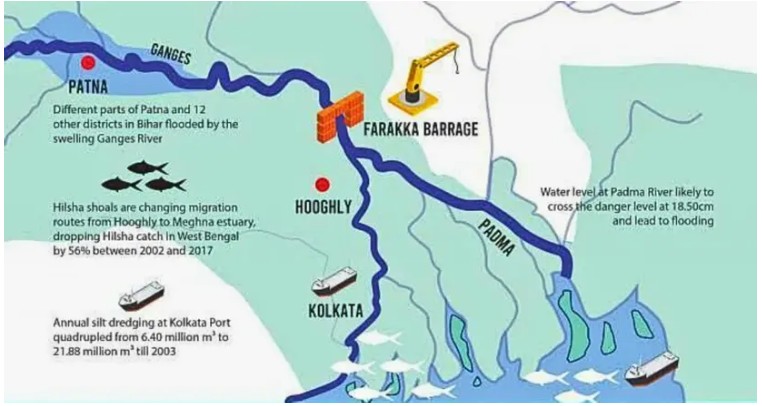
- The GWST, signed on December 12, 1996, between India and Bangladesh, governs the sharing of the Ganges River's waters at the Farakka Barrage, located in West Bengal, India, approximately 18 km from the Bangladesh border.
- The treaty was a significant diplomatic achievement, resolving decades of disputes over the Ganges waters that had strained bilateral relations since Bangladesh's independence in 1971.
Historical Tensions
- The Ganges water dispute began with India's construction of the Farakka Barrage, completed in 1975, to divert water to the Hooghly River to improve navigation at the Kolkata port by flushing out silt.
- Bangladesh, downstream, argued that the barrage reduced water flow, adversely affecting its agriculture, fisheries, navigation, and causing environmental issues like salinity intrusion in the Sundarbans.
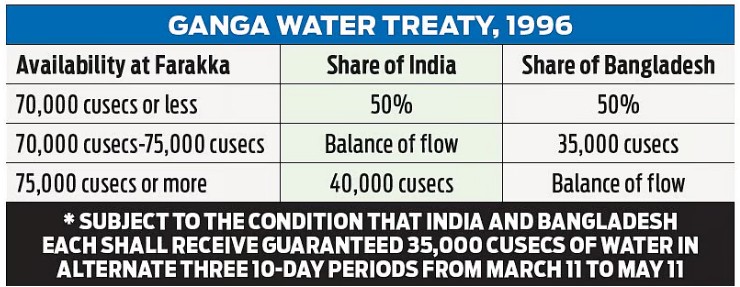
- 1996 Treaty: Signed during a period of improved India-Bangladesh relations, the treaty establisheda30-year framework (1996-2026) for sharing Ganges waters during the dry season (January 1 to May31).
- It allocates water based on the river's flow at Farakka, measured in 10- day periods, with a 50:50 sharing when flows are around 70,000-75,000 cusecs.
Water Shortages in Bangladesh
- Bangladesh has frequently received less water than stipulated, particularly during the driest months (March-April).
- For instance, in 2016 and 2018, Bangladesh received significantly less than its allocated share due to low river flows, impacting agriculture and livelihoods in the Ganges-dependent southwest region.
- Environmental and Socioeconomic Impacts: Reduced water flow has led to increased salinity in Bangladesh's coastal regions, affecting agriculture, fisheries, and the Sundarbans ecosystem.
- Navigation and groundwater availability in Bangladesh have also been compromised, exacerbating economic challenges in the Ganges-dependent regions.
India's Upstream Activities
- India's construction of upstream dams, barrages, and irrigation projects (e.g., in Bihar and Uttar Pradesh) has reduced the Ganges' flow at Farakka, impacting the treaty's efficacy.
- Bangladesh has raised concerns about India's National River Linking Project, particularly the proposed diversion of water from the Ganges to other Indian rivers, which could further reduce downstream flows.
Geopolitical and Bilateral Dynamics
- India's Position: As the upper riparian state, India holds significant control over the Ganges' flow. Its domestic water needs (e.g., for agriculture and urban use in Uttar Pradesh and Bihar) often take precedence, complicating negotiations. India has also resisted internationalizing water disputes, preferring bilateral talks.
- Bangladesh's Concerns: As the lower riparian state, Bangladesh is vulnerable to India's upstream actions. The country seeks a legally binding, long-term agreement that guarantees minimum flows and addresses environmental impacts.
- Political Context: The article notes that the GWST was signed during a period of strong bilateral ties under Bangladesh's Awami League government and India's supportive stance.
- However, political changes in either country could affect negotiations. For instance, Bangladesh's push for a Teesta water-sharing agreement (still unresolved due to India's internal political constraints) could influence GWST talks.
Steps that can be taken to ensure Sustainable Water Flow post 2026
- Early Negotiations: India and Bangladesh should begin talks well before 2026 to avoid last-minute disputes. These talks should involve technical experts, policymakers, and stakeholders from both countries.
- Climate-Resilient Framework: The treaty should account for climate change impacts, with flexible allocation mechanisms and provisions for joint climate adaptation projects.
- Data Sharing and Transparency: Real-time data exchange on water flows and upstream activities would enhance trust and compliance.
- Stakeholder Engagement: Involving local communities, environmentalists, and scientists in both countries could ensure that the treaty addresses socioeconomic and ecological concerns.
2. India-UAE Defence Partnership 2025: Key Highlights of JDCC Meeting
Context
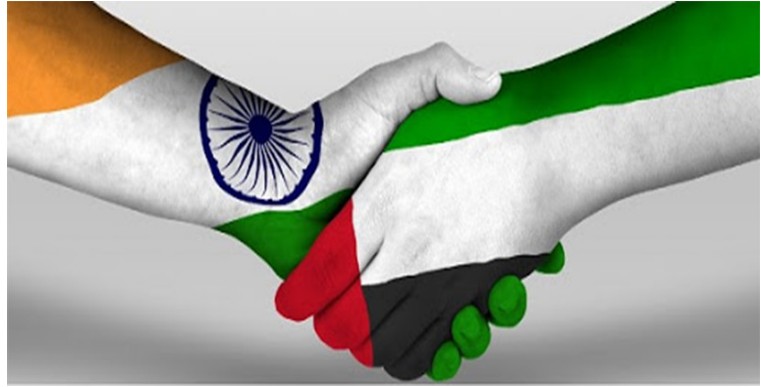
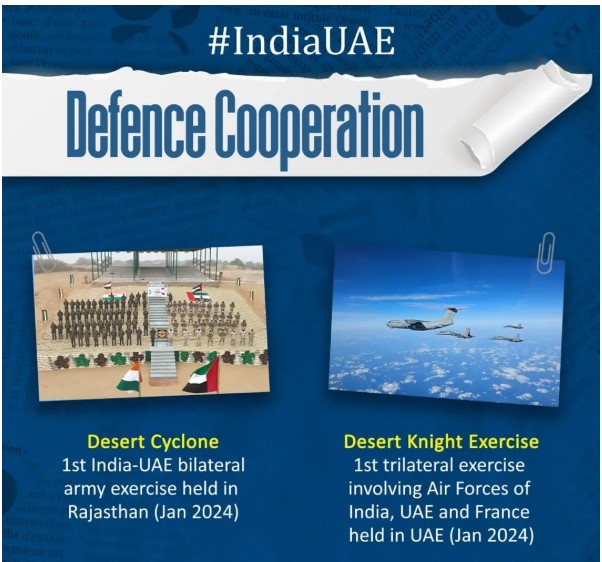
- India and the United Arab Emirates (UAE) reaffirmed their commitment to strengthening bilateral defence cooperation during the 13th India-UAE Joint Defence Cooperation Committee (JDCC) meeting.
About the News
- The two sides agreed to enhance military training cooperation and discussed their respective training requirements.
- India offered to provide customised training courses tailored to the UAE’s needs. They also agreed to cooperate on maritime security through sharing of information.
- In a bid to explore new avenues of defence collaboration, both countries held discussions on training cooperation, defence industrial partnerships, and Service-to-Service engagements.
- A Memorandum of Understanding was signed between the Indian Coast Guard and the UAE National Guard to establish a framework for enhanced cooperation in search and rescue operations, pollution response, anti-piracy efforts, and related maritime security domains.
About India-UAE Relations
Diplomatic
- India and the United Arab Emirates (UAE) established diplomatic relations in 1972.
- UAE opened its Embassy in Delhi in 1972 & India opened its Embassy in Abu Dhabi in 1973.
- The traditionally strong bilateral relations enjoyed by India & UAE received impetus with the visit of PM Modi to UAE on 16-17 August 2015 that marked the beginning of a new strategic partnership between the two countries.
Economic & Commercial Relations
- India and UAE have shared trade links through the centuries.
- Trade, which was dominated by traditional items such as dates, pearls and fishes, underwent a sharp change after the discovery of oil in the UAE (oil exports began from Abu Dhabi in 1962).
- The real impetus, however, started after Dubai positioned itself as a regional trading hub by the early 1990s and about the same time, the economic liberalisation process started in India.
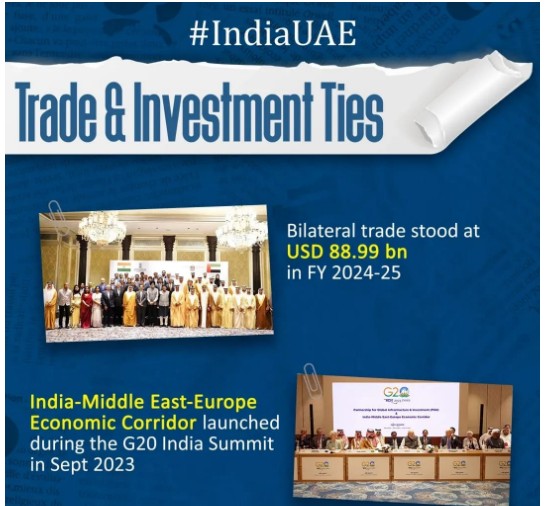
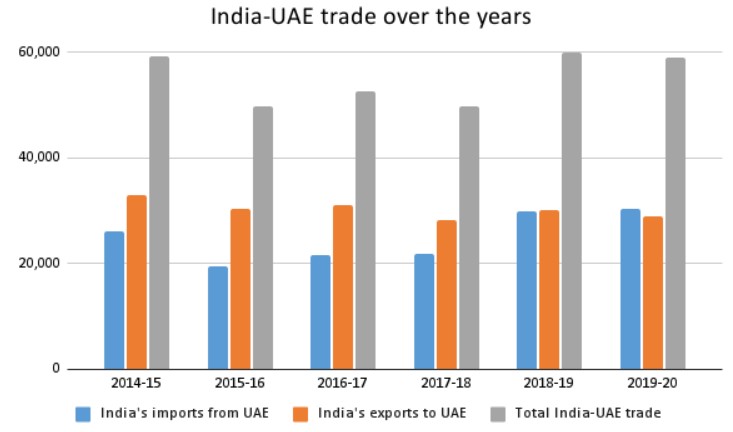
- Bilateral trade in FY 2021-22 was about US$ 72 billion. UAE is India’s third largest trade partner and second largest export destination.
- UAE’s FDI in India has increased over the past few years and currently stands at over $12 billion.
Technology Partnerships
- India and the UAE have signed a number of digital innovation, technology partnerships, and also plans for ISRO and UAESA to cooperate on missions like the Red Moon mission.
- The Emirates has offered “golden visa” residency permits for doctors, engineers, PhD scholars and specialists in high-end technology fields such as artificial intelligence (AI), Big Data, virology and epidemiology, and brought over the former ISRO chief K. Radhakrishnan to their space agency.
Indian Community
- The Indian expatriate community of approximately 3.4 million is the largest ethnic community in UAE constituting roughly about 35% of the country’s population.
Challenges in India-UAE relationship
- Migration and Labor Issues: The UAE's Kafala system has been criticized for contributing to labor abuses and forced labor.
- The Kafala system is a sponsorship-based labor system in Gulf countries, where employers have control over foreign workers' legal status, including their visas and employment conditions.
- Energy Pricing and OPEC Disagreements: As an OPEC member, the UAE supports policies that may not align with India's stance as a major oil importer, especially when it comes to controlling oil prices.
- Air Services Agreement Disputes: The UAE wants to increase the number of flights and destinations to India, but India has limited the expansion to protect its domestic airlines.
- Regional Crises: The war in Gaza and Houthi attacks in the Red Sea have affected some regional cooperation, including the India-Middle East Corridor.
- India-Iran vs. UAE-China Dynamics: India's strategic relationship with Iran, especially over regional security and energy interests, can sometimes clash with the UAE's growing ties with China.
Conclusion
- India-UAE relations have evolved into a strategic partnership, marked by strong trade ties and cooperation. However, challenges like geopolitical balancing, energy debates, and labor concerns must be navigated carefully.
3. India’s Third Voluntary National Review 2025 on SDGs: Key Highlights by NITI Aayog
Context
- NITI Aayog presented India’s Third Voluntary National Review (VNR) Report on SDGs at the Ministerial Segment of the High-Level Political Forum (HLPF) on SDGs, convened by the Economic and Social Council (ECOSOC) of the United Nations.
About
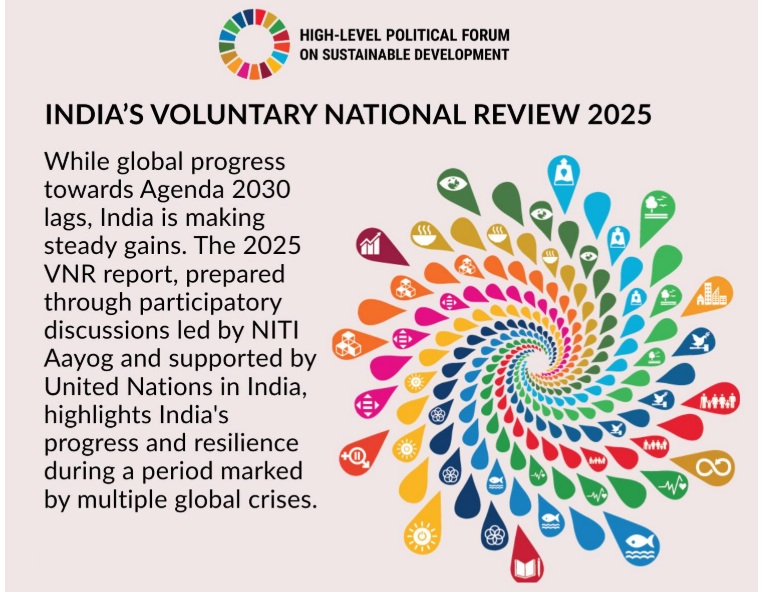
- The VNR 2025, prepared under the stewardship of NITI Aayog and was developed through a wide-ranging consultative process involving state and Union Territory governments, civil society organisations, development partners, and the private sector.
- The report outlines India’s achievements over the past ten years across a wide spectrum of development indicators.
- This VNR marks India’s third submission to the HLPF, reaffirming the country’s sustained commitment to the UN 2030 Agenda for SDGs.
Key Highlights
- Progress on Agenda 2030: While global progress lags, India is making steady gains.
- SDG 1 (No poverty): Around 248 million individuals estimated to have escaped Multidimensional Poverty (MPI) between 2013-14 and 2022-23.
- SDG 2 (Zero Hunger): PM Garib Kalyan Anna Yojana has ensured nutritional support for millions.
- SDG 3 (Good Health and Wellbeing): Out of pocket expenditure as a percentage of Total Health Expenditure has declined from 48.8% in 2017-18 to 39.4% in 2020-21.
- Clean Energy: Programmes like the National Green Hydrogen Mission, PM-KUSUM, and PM Surya Ghar Muft Bijli Yojana are strengthening India’s transition to clean energy.
- Digital Public Infrastructure: Digital India, Aadhaar, and Unified Payments Interface (UPI) have empowered India's diverse population.
- UPI accounts for 49% of global real-time payments.
SDG Implementation in India
- India has made significant strides in localising Sustainable Development Goals (SDGs) through robust, data-driven governance frameworks. Tools such as the SDG India Index, the North-Eastern Region District SDG Index, and the National Multidimensional Poverty Index have enhanced monitoring and evaluation mechanisms at national and sub-national levels.
- Flagship initiatives like the Aspirational Districts Programme (ADP) and the Aspirational Blocks Programme (ABP) further exemplify India’s commitment to ensuring last-mile delivery and saturation of essential government services, particularly in underserved and developmentally lagging regions.
About High-Level Political Forum (HLPF)
- Genesis: Established in 2012 at United Nations Conference on Sustainable Development (Rio+20) in its outcome "The Future We Want".
- Objective: It is the central United Nations platform for the follow-up and review of the 2030 Agenda for Sustainable Development and its 17 SDGs.
- Meeting: It meets every year under the auspices of the Economic and Social Council, and every four years under the auspices of the General Assembly.
Conclusion
- Agenda 2030 is aligned with India’s long-term vision of Viksit Bharat @2047 – a developed India by its 100th year of independence – underscoring an integrated development strategy grounded in inclusion, innovation, and institutional strength.
4. NISAR Satellite: India-USA Joint Earth Observation Mission Launched Successfully
Context
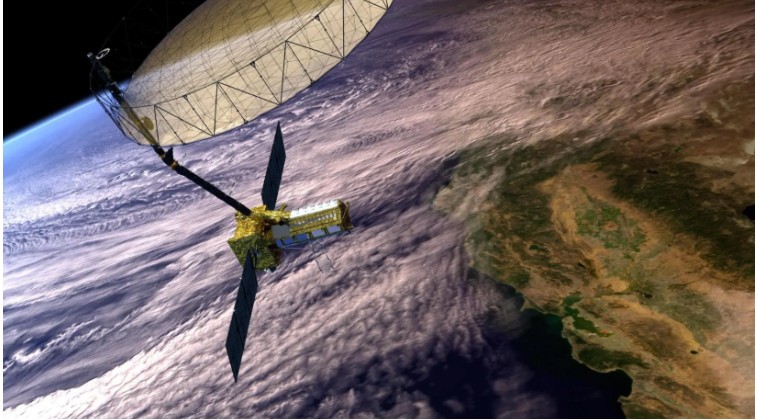
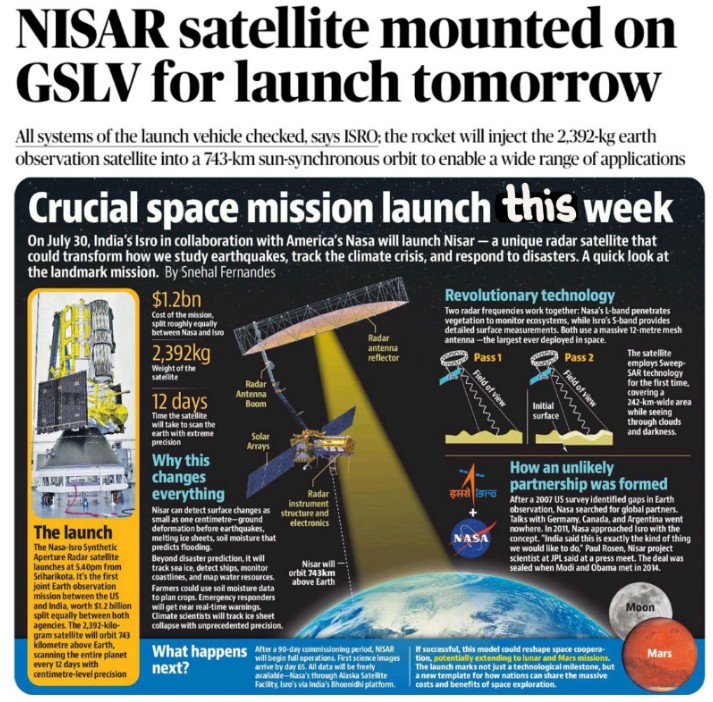
- The NASA - ISRO Synthetic Aperture Radar(NISAR) was successfully launched from Satish Dhawan Space Centre at Sri-Harikota in Andhra Pradesh.
About NISAR Satellite
- NISAR is an Earth-observation satellite that stands for NASA-ISRO Synthetic Aperture Radar.
- It is Jointly developed by the National Aeronautics and Space Administration (NASA) and the Indian Space Research Organisation under a partnership agreement signed in 2014.
- It will be launched into a polar Sun-synchronous dawn-dusk orbit at 747 km altitude and an inclination of 98.4º.
- NISAR is the first satellite mission to collect radar data in two microwave bandwidth regions, called the L-band and the S-band.
- The S-band payload has been made by the ISRO and the L-band payload by the U.S.
Application of NISAR satellite
- Solid Earth Processes – Tracking earthquakes, landslides, and land deformation.
- Ecosystems – Monitoring forests, woody biomass, and biodiversity.
- Ice and Snow Dynamics – Measuring glacial movements and polar ice thickness.
- Coastal and Ocean Monitoring – Tracking shoreline erosion, oil spills, and storm surges.
- Disaster Response – Providing near-real-time damage maps after floods, quakes, or cyclones.
- Agriculture and Infrastructure – Supporting food security and monitoring subsidence near dams, roads, and reservoirs.
Working of NISAR
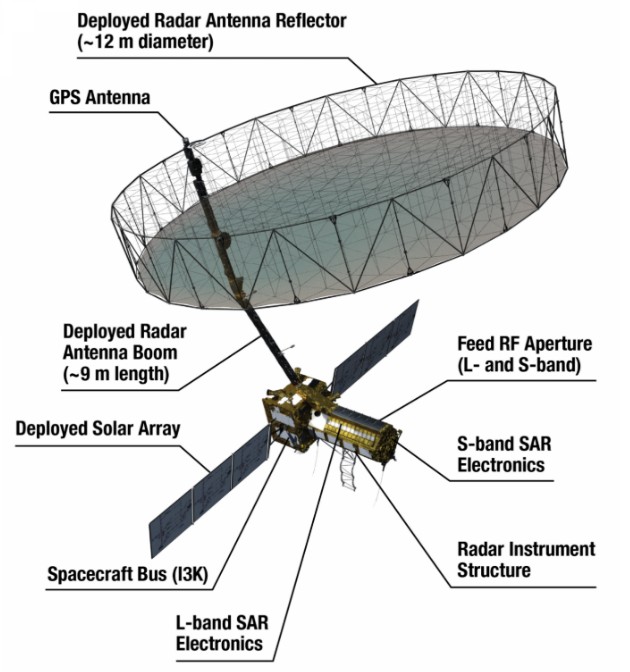
- NISAR combines two types of Synthetic Aperture Radar (SAR) systems:
- The L-band SAR (1.257 GHz) uses longer-wavelength radio waves that can penetrate thick vegetation and even soil, making it ideal for observing ground deformation beneath forests.
- The S-band SAR (3.2 GHz) uses shorter-wavelength radio waves that are more effective at detecting surface details such as crops, water surfaces, and urban infrastructure.
- The satellite also uses polarimetric radar technology, which involves sending and receiving radar signals in both horizontal and vertical polarizations.
- Satellite operations and commanding will be managed by ISRO, while NASA will provide the orbit maneuver plan and radar operations plan.
Objectives of the Mission
- NISAR can measure tectonic plate movements accurately. So a lot of geological, agricultural and water-related observations can be obtained from this satellite.
- It can study the water-stressing, climate change-related issues, agricultural changes through patterns, yield, desertification and continental movements precisely with respect to annual water cycle movements.
- NISAR’s data can help people worldwide better manage natural resources and hazards, as well as providing information for scientists to better understand the effects and pace of climate change.
India - USA Contributions
- ISRO contributed the spacecraft bus, the entire S-band radar system, Ka-band telemetry systems, and launch support via GSLV Mk-II.
- NASA provided the L-band radar, radar structure, antenna, onboard avionics, and high-capacity data systems.
About Geosynchronous Satellite Launch Vehicle (GSLV)
- GSLV is larger and more powerful than ISRO's Polar Satellite Launch Vehicle (PSLV).
- GSLV-F16 is the 18th launch of India's GSLV and 12th launch using India's cryogenic upper stage, which helps carry heavier satellites.
- The rocket used a 4-metre wide, dome-shaped (ogive) nose cone to protect the NISAR satellite during launch.
- This is the first time a GSLV rocket has placed a satellite (NISAR) into a Synchronous Polar Orbit, instead of its usual Geosynchronous Transfer Orbit.
5. Kamchatka Peninsula: Location, Geography, Volcanoes, and Key Facts
Context
- Recently, a powerful 8.8-magnitude earthquake struck Russia's remote Kamchatka Peninsula, marking one of the strongest quakes in recent history.
- The tremor triggered widespread tsunami warnings across the northern Pacific, leading to alerts in Hawaii, Alaska, Japan, and several other coastal regions.
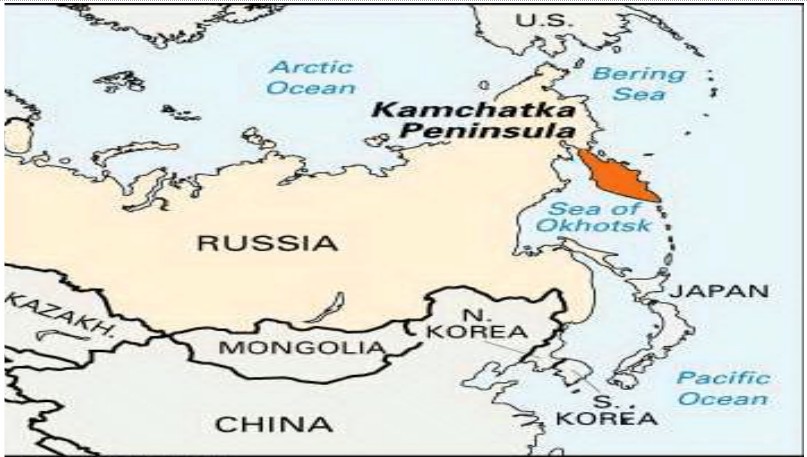
About Kamchatka Peninsula
- Situated in far eastern Russia, between the Sea of Okhotsk (west) and the Pacific Ocean and Bering Sea (east).
Geological Significance
- One of the world's most concentrated areas of geothermal activity.
Volcanic Zone
- Located on the Pacific Ring of Fire; home to over 150 volcanoes, including 29 active ones.
Administrative Region
- Part of Kamchatka Krai
Nickname
- Known as the "land of fire and ice" due to its volcanic and glacial landscape.
Population
- One of the world's lowest population densities (less than 1 person per sq. km)
Climate
- Very harsh, with long, cold winters that have a lot of snow, and cool, wet summers.
Highest Point
- Klyuchevskaya Sopka (a stratovolcano in the Eastern Range).
Regional Capital
- Petropavlovsk-Kamchatsky.
Kurli Islands
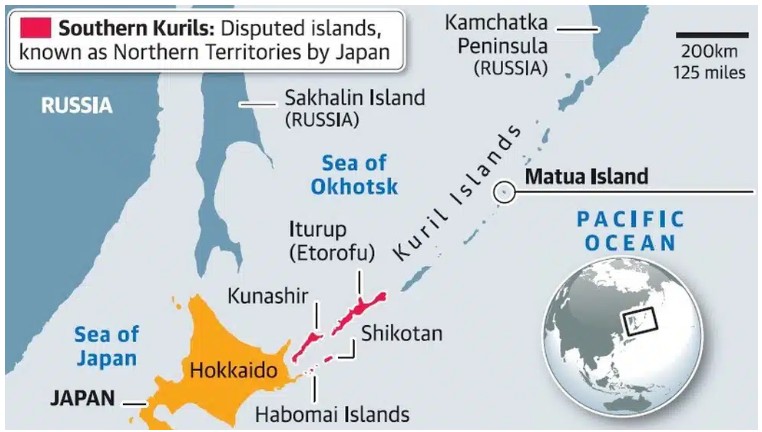
- The Kuril Island chain extends from the southern tip of Kamchatka toward Japan's northern Hokkaido Island.
6. Divya Drishti Exercise: Indian Army Tests AI-Enabled Warfare Technologies in Sikkim
Context
- Recently, the Indian Army conducted a high-altitude technology demonstration exercise called "Divya Drishti" in East Sikkim.
About Divya Drishti Exercise
- Aimed to validate cutting-edge battlefield technologies including artificial intelligence (Al)-enabled sensors, UAVs, and real-time command systems.

Technologies Demonstrated
- Al-enabled sensor networks for real-time threat detection and situational awareness.
- Integration of drones and UAVs with ground-based platforms for advanced surveillance and targeting.
- Sensor-to-shooter systems to ensure swift and precise battlefield responses.
- Secure communication networks enabling seamless, encrypted data flow between troops and command centres.
Participants
- Executed by troops from the Trishakti Corps, headquartered in Sukna, West Bengal.
Significance
- Part of the Indian Army's "Decade of Transformation" roadmap.
- ]Supports the Atmanirbhar Bharat initiative (indigenous technology).
- Reinforces India's readiness for future warfare and operations in complex terrains.
7. Global Gas Flaring Tracker Report 2025: Record Emissions and Key Findings
Context
- Recently, the World Bank's 2025 Global Gas Flaring Tracker Report raised concerns over a sharp rise in global emissions from gas flaring.
Key Findings
- According to the report, 2024 recorded the highest flaring volumes since 2007, leading to the release of 389 million tonnes (Mt) of CO2-equivalent emissions.
- Of this, 46 MtCO2e came from unburnt methane, a highly potent greenhouse gas.
- The flare volume rose to 151 billion cubic metres (bcm) in 2024, up from 148 bcm in 2023.
- This gas loss is nearly equal to Africa's total annual gas consumption (162 bcm).
- The top nine flaring countries (Russia, Iran, Iraq, US, Venezuela, Algeria, Libya, Mexico, Nigeria) accounted for 76% of global flaring in 2024 (up from 65% in 2012).
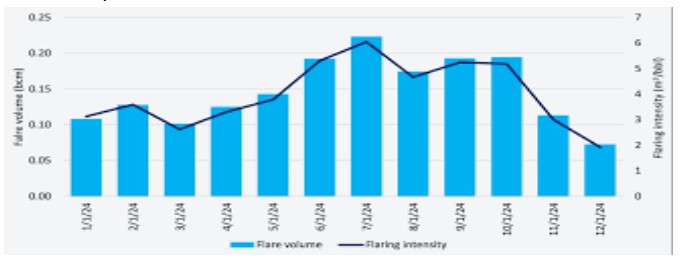
- Iran, Nigeria, US, Iraq, and Russia saw the largest volume increases, together contributing an extra 4.6 bcm in 2024.
About Gas Flaring
- Practice of burning off natural gas that is released during crude extraction (known as associated gas). oil
- It is commonly carried out in oil fields, especially remote or offshore sites where infrastructure to capture, store, or transport the gas is unavailable.
- Despite being wasteful and polluting, flaring continues because it is a relatively safe disposal method for excess gas.
8. Study Reveals COVID-19 and Flu Can Reactivate Dormant Breast Cancer Cells
Context
- Recently published in Nature, a groundbreaking study has revealed that common respiratory infections like COVID-19 and influenza can awaken dormant breast cancer cells lodged in the lungs.
About Breast Cancer
- One of the most common cancers in women and people assigned female at birth (AFAВ).
- Caused by uncontrolled growth of cancerous cells in the breast.
- About 80% of cases are invasive, meaning the cancer can spread to other parts of the body.
Key Findings
- Using mouse models that mimic human breast cancer metastasis, researchers discovered that SARS-CoV-2 and influenza infections reawaken dormant cancer cells (DCCs) in the lungs.
- This reactivation led to rapid development of aggressive metastatic tumors within days.
Molecular Trigger
- Interleukin-6 (IL-6), a pro-inflammatory molecule released during infections, was identified as the key driver of DCC reactivation.
- Blocking IL-6 could potentially prevent metastasis following respiratory infections.
Human Data Reinforces the Risk
- Among cancer survivors (in remission 25 years), those infected with COVID-19 had nearly twice the risk of cancer-related death (excluding COVID fatalities).
- Among 36,000+ breast cancer patients, those with COVID-19 were 50% more likely to develop lung metastases compared to uninfected peers. •
- The study highlights the importance of vaccinations and continued medical follow-up for cancer survivors.
- The research deepens awareness of how post-viral effects extend beyond the acute illness.
9. CRIB Blood Group Discovered in India: A New Global Medical Breakthrough
Context
- Recently, a new blood group called CRIB, previously unidentified anywhere in the world, has been discovered in a South Indian woman from Kolar district, Karnataka.
About CRIB Blood Group
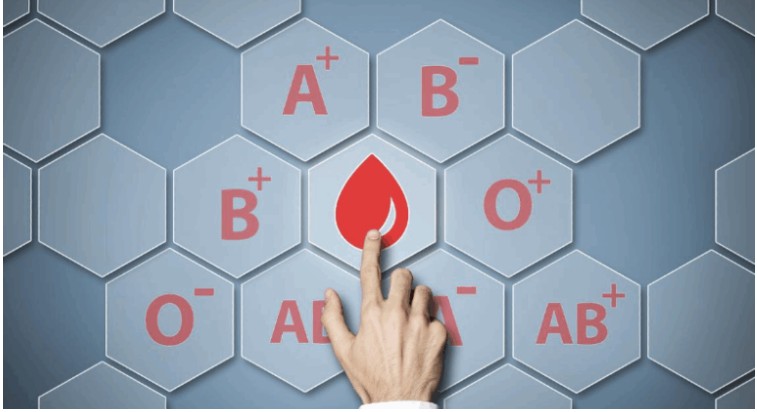
- A newly identified blood group that belongs to the Cromer (CR) blood group system.
- The name CRIB stands for 'Cromer India Bangalore', acknowledging its discovery in India.
- This is the first time this blood group has been identified anywhere in the world.
- The discovery was officially announced at the 35th Regional Congress of the International Society of Blood Transfusion (ISBT) in Milan, Italy.
- After 10 months of molecular testing and research, international experts confirmed the presence of a new antigen within the Cromer system.
- The naming and classification of new blood antigens are governed by the International Society of Blood Transfusion (ISBT).
Importance
- The Cromer blood group system includes 12 high-frequency and 3 low-frequency antigens found on a protein called decay-accelerating factor (DAF).
- Identifying new antigens like CRIB improves: Global transfusion safety, Compatibility testing and Donor-recipient matching in critical situations such as surgeries, organ transplants, and emergencies.
10. New Schemes for Women Cooperatives: Swayamshakti and Nandini Sahakar Yojana
Context
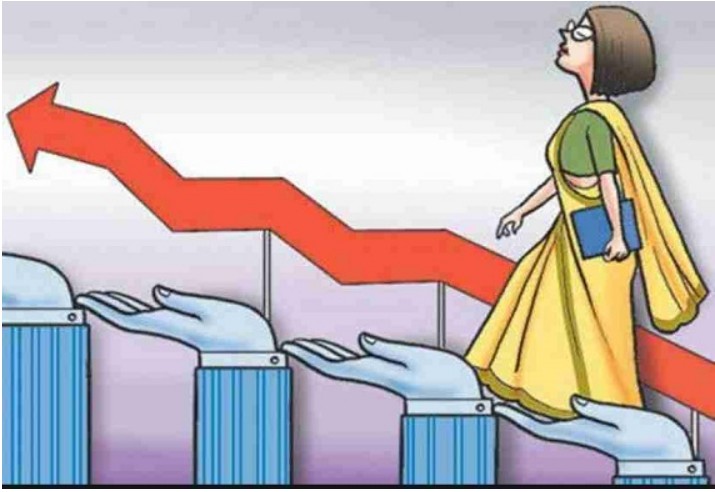
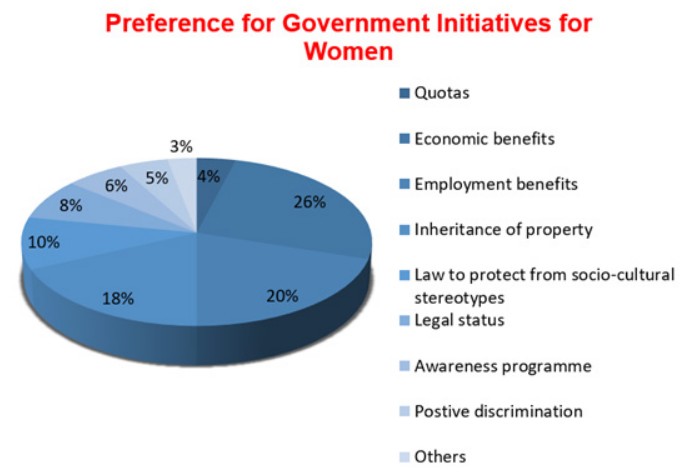
- Recently, the National Cooperative Development Corporation (NCDC) has launched dedicated schemes to advance women-led development and cooperative entrepreneurship, aligning with the broader vision of Atmanirbhar Bharat.
Key Schemes for Women Cooperatives
Swayamshakti Sahakar Yojana
- Aimed at enhancing access to affordable and reliable financial services for poor women, this scheme:
- Enables Self Help Groups (SHGs) and federated cooperatives to access bank credit Supports collective economic activities and sustainable livelihoods
- Eligible institutions include Primary Agricultural Credit Societies, District Central Cooperative Banks, State Cooperative Banks, and SHG Federations
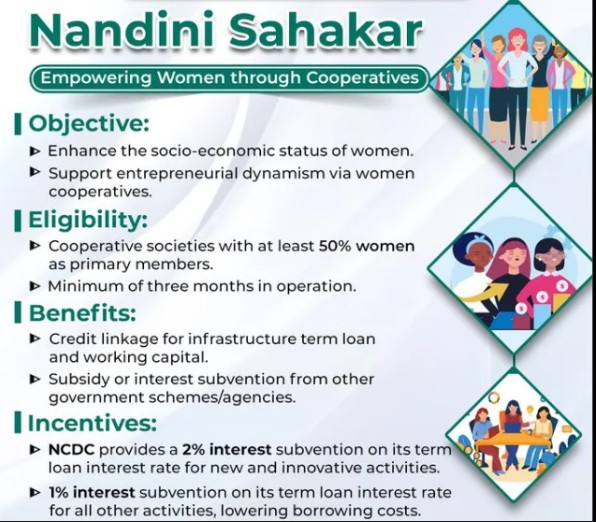
Nandini Sahakar Scheme
- Designed as a women-focused entrepreneurial support framework, this scheme provides:
- Financial assistance, interest subvention, and credit support Guidance on business model development, enterprise planning, and capacity building
- Support for women cooperatives in all sectors except urban housing.
11. Right to Information (RTI) vs DPDP Act 2023: Transparency and Privacy Concerns
Context
- Recently, civil society groups and media organizations have raised serious concerns over the Digital Personal Data Protection (DPDP) Act, 2023, claiming that it undermines India's Right to Information (RTI) framework.
About RTI
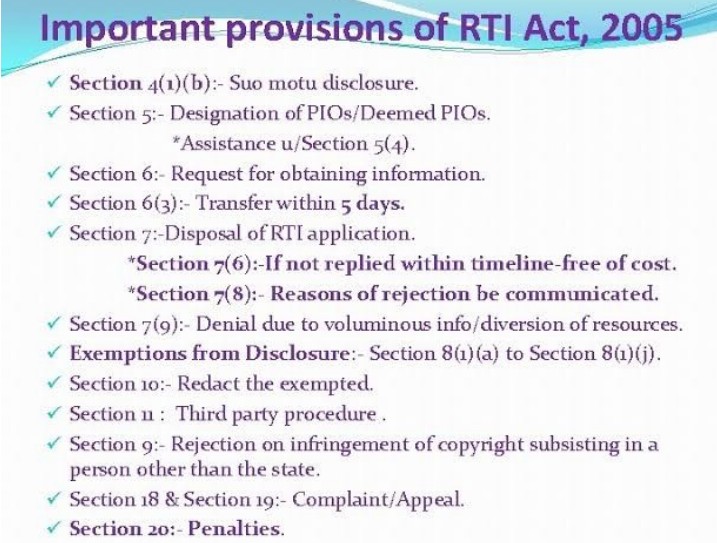
- A key legislation that promotes transparency and accountability in government functioning. It allows Indian citizens to seek information from public authorities, reinforcing the democratic right to know.
- Introduced through the RTI Act, 2005, it ensures transparent and responsible governance.
About DPDP Act, 2023
- It is a legal framework enacted to protect the personal data of individuals in the digital age.
- It ensures that personal data is processed only with the individual's consent, safeguarding privacy and data rights.
Key Objectives
- To regulate the processing of digital personal data.
- To establish provisions ensuring privacy, consent, and data protection for individuals.
- Applicable to the processing of digital personal data: Within India, whether collected online or offline (and later digitized).
- Outside India, if related to offering goods or services to individuals in India (data principals).

2026-27 UPSC Mains English QEP Power Pages
View DetailsSubmit Your Details to Learn More



