
theIAShub
29 Jul, 2025
Article List
- Textile Sector in India: Growth, Challenges & Government Initiatives
- India’s Nuclear Strategy: Policy, Challenges & Future Outlook
- Five Years of National Education Policy 2020: Key Reforms, Achievements & Challenges
- Pendency of Cases in Indian Courts: Causes, Impact & Solutions
- New Species of Wolf Spider and Parasitic Wasps Discovered in West Bengal
- State of Food Security and Nutrition in the World (SOFI) 2025: Key Global and India Findings
- Heavy Water (D₂O) in India’s Nuclear Energy Programme: Uses, Importance & New Test Facility
- Veer Parivar Sahayata Yojana: Free Legal Aid for Defence Personnel & Families
- Indians in Flood-Prone Slums: 158 Million at Risk from Urban Flooding
- NASA's TRACERS Mission: Exploring Solar Activity and Earth's Magnetic Field
- Gavri Festival: 40-Day Bhil Tribal Folk Celebration in Rajasthan
1. Textile Sector in India: Growth, Challenges & Government Initiatives
Context
- Prime Minister in his Mann Ki Baat Programme remarked that Textile Sector has became a strength of the Countries Economy.
About the News
- He mentioned that over 3,000 textile start-ups are now active in India, many of which are promoting India’s handloom identity on a global scale.
- The Prime Minister pointed out that this year marks the 10th anniversary of National Handloom Day.
About Textile Sector in India
- Cotton Production and Employment
- India is the second-largest cotton producer globally, contributing 24% of global production.
- Cotton farming involves around 60 lakh farmers, primarily in Gujarat, Maharashtra, and Telangana.
- The cotton textile value chain, from fibre processing to garment manufacturing, employs over 4.5 crore people.
Man-Made Fibre (MMF) Industry
- India is also the second-largest producer of MMF, with Reliance Industries leading in polyester and Grasim Industries being the sole domestic producer of viscose.
- However, MMF consumption in India remains low at 3.1 kg per capita, compared to 12 kg in China and 22.5 kg in North America.
- Overall fibre consumption, including natural and synthetic fibres, is 5.5 kg per capita, below the global average of 11.2 kg.
MSME Clusters and Specialisations
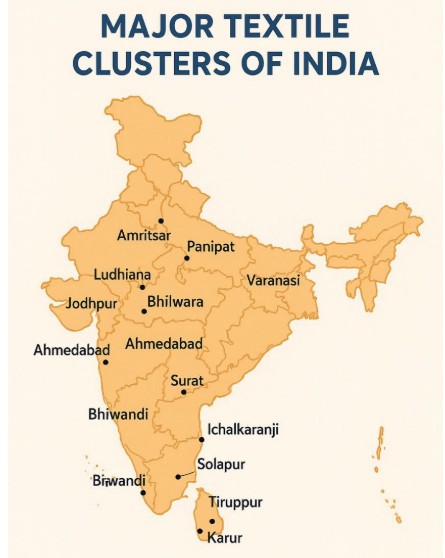
- Around 80% of India’s textile value chain operates within MSME clusters, each specializing in different textiles:
- Bhiwandi (Maharashtra) – Fabric production
- Tiruppur (Tamil Nadu) – T-shirts and undergarments
- Surat (Gujarat) – Polyester and nylon fabrics
- Ludhiana (Punjab) – Woolen garments.
Other Facets of the Sector
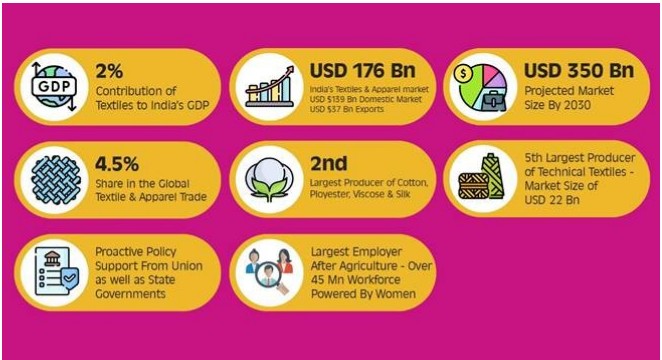
- Contribution: The textile and apparel industry contributes 2.3% to our GDP, 13% to industrial production, and 12% to exports.
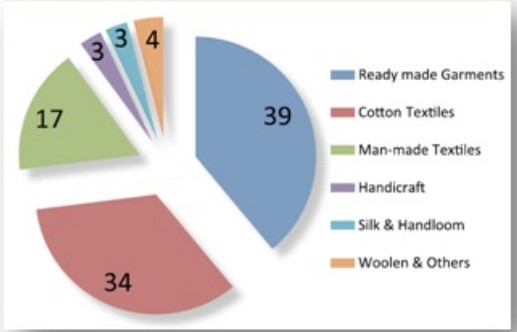
- Export Basket: India exported textile items worth US$ 34.4 billion in 2023-24, with apparel constituting 42%, followed by raw materials/semi-finished materials at 34% and finished non-apparel goods at 30%.
- Employment: It is the second largest employment generator, after agriculture, with over 45 million people employed directly.
- Nearly 80% of its capacity is spread across Micro, Small and Medium Enterprises (MSME) clusters in the country.
- Future Projections: Indian textile market currently ranks fifth globally, and the government is actively working to accelerate this growth to a rate of 15-20% over the next five years.
Challenges Faced by the Sector
- Fragmented Structure: Predominantly unorganised and decentralised, especially in the powerloom and handloom sectors.
- Outdated machinery in many units leads to: Low productivity, poor quality output and higher operational costs compared to global competitors (e.g., China, Bangladesh).
- Inadequate Infrastructure: Poor logistics, power shortages, and high cost of electricity.
- Environmental Concerns: Textile processing is water- and chemical-intensive.
- Non-compliance with environmental norms leads to factory closures and export bans.
- India trails China, Vietnam, and Bangladesh in textile exports due to higher production costs and a fragmented supply chain.
- In contrast, Vietnam exported $40 billion worth of apparel in 2023, benefiting from vertically integrated supply chains that lower manufacturing costs.
- India’s man-made fibre (MMF) sector suffers from high raw material costs.
- Quality control orders (QCOs) restrict imports of polyester and viscose fibres, forcing domestic yarn makers to rely on costlier local alternatives.
Government Initiatives for the Sector
- The Make in India initiative has catalyzed textile manufacturing and exports through key policy interventions, enhanced infrastructure, and incentives.
- Production Linked Incentive (PLI) Scheme for Textiles: To increase manufacturing in man-made fibre (MMF) and technical textiles.
- Financial incentives for large-scale textile manufacturers.
- PM MITRA (Mega Integrated Textile Region and Apparel) Parks: For developing integrated large scale and modern industrial infrastructure facilities for the total value-chain of the textile industry like spinning, weaving, processing, garmenting, textile manufacturing, processing & textile machinery industry.
- Current Status: A total of 7 Parks established in states of Gujarat, Maharashtra, Madhya Pradesh, Tamil Nadu, Karnataka, Uttar Pradesh, and Telangana.
- Amended Technology Upgradation Fund Scheme (ATUFS): It provides capital subsidies for technology upgradation.
- Samarth (Scheme for Capacity Building in Textile Sector): To provide skill training to workers in the textile industry, in partnership with the Ministry of Skill Development & Entrepreneurship.
- Textile Cluster Development Scheme (TCDS): To create an integrated workspace and linkages-based ecosystem for existing as well as potential textile units/clusters to make them operationally and financially viable.
2. India’s Nuclear Strategy: Policy, Challenges & Future Outlook
Context
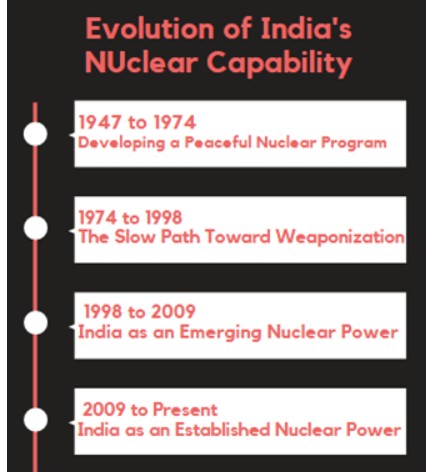
- While Pakistan has always been India's greatest security concern, China's nuclear journey has played a considerable role in the evolution of its strategic outlook.
About Recent Developments
- At the recent BRICS Summit in Kazan, Russia, India and China held formal talks for the first time in five years.
- While Beijing and New Delhi are major trading partners, that partnership is characterized by a lopsidedness that weighs in China's favor.
- In recent years, their relationship has also been tense. Unsettled border disputes led to skirmishes in 2020, 2021, and 2022, with the former arguably the worst confrontation between the regional powers in decades.
India's Nuclear Policy: The Three Pillars
- India's commitment to a retaliatory posture is reflected in the three pillars guiding its nuclear policy.
- No First Use (NFU): India publicly commits to not using nuclear weapons first. However, the article notes significant ambiguity and potential caveats, especially regarding responses to chemical/biological attacks, creating deliberate uncertainty for adversaries.
- Credible Minimum Deterrence: India seeks a nuclear force just large and capable enough to credibly deter nuclear attacks, explicitly rejecting a nuclear arms race or war-fighting posture. This drives ongoing modernization.
- The final pillar of India's nuclear posture is that under no condition would India ever conventionalize its nuclear forces.
- India's nuclear weapons are designed to prevent aggression, not initiate it.
- As India's declaratory doctrine makes clear, its strategic objectives are to "deter the use and threat of nuclear weapons." aggression, not initiate it.
Force Modernization & Nuclear Triad
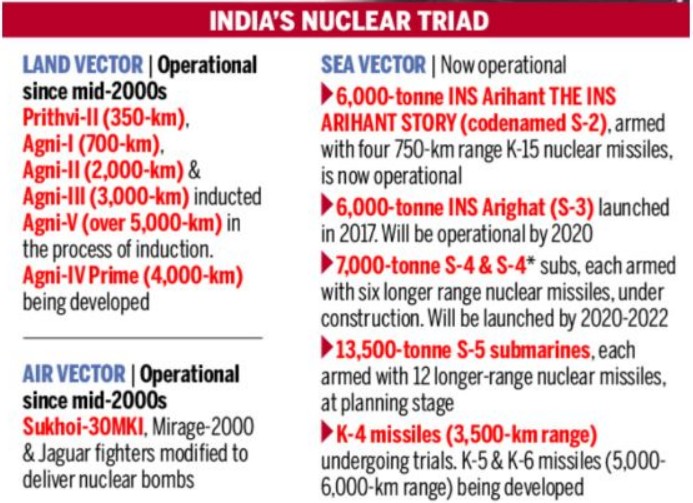
- India is actively building a robust and survivable nuclear triad (land-based missiles, aircraft, submarine-launched missiles).
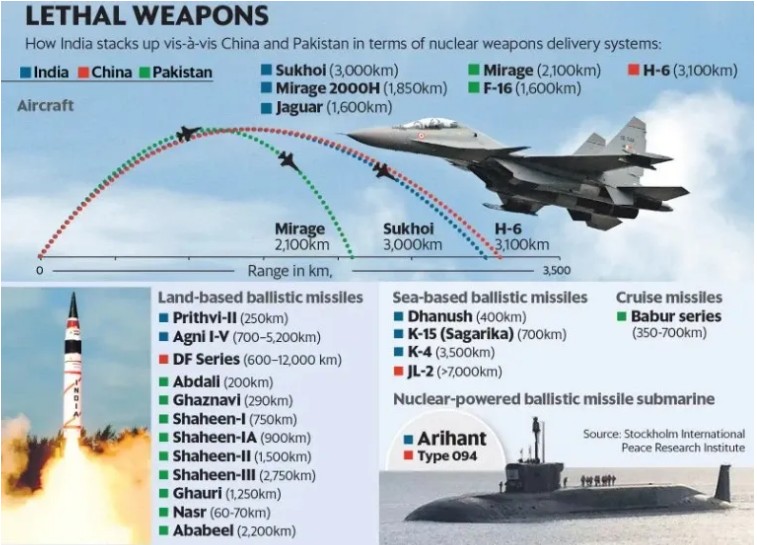
- Key developments include the induction of the INS Arihant-class SSBNs (ballistic missile submarines) and advancements in long-range missiles (Agni-V, Agni-P, potentially Agni-VI) to deter both Pakistan and China.
- Modernization aims to ensure second-strike capability (surviving a first strike and retaliating), particularly against China.
Command and Control
- Strict civilian control is maintained through the Nuclear Command Authority (NCA), with the Prime Minister having sole authority to authorize use.
- Emphasis on safety and security (e.g., keeping warheads de-mated from delivery systems in peacetime) to prevent accidental or unauthorized launches.
Issues and Challenges
- Managing the Pakistan Threat: Pakistan's development of tactical nuclear weapons (TNWs) blurs the nuclear threshold and challenges India's NFU doctrine. India counters with threats of massive retaliation, but the risk of escalation remains high.
- Deterring China: China's rapidly growing and more advanced arsenal is the primary driver for India's own modernization (especially longer-range missiles and SSBNS).
- NFU Debate: There's ongoing domestic debate about the utility and longevity of the NFU policy, particularly concerning Pakistan's TNWs and China's conventional superiority.
- Avoiding Arms Race: Balancing credible deterrence against two nuclear neighbors while avoiding an open-ended, costly arms race is a constant challenge.
Way Ahead
- To protect its vital interests against threats emanating from Pakistan and China, strategists in New Delhi will have to adapt their outlook to meet the challenges of the present.
- As the adage goes, when the facts change, opinions change with them. As the Asian geostrategic landscape continues to evolve, so too will India's nuclear strategy.
3. Five Years of National Education Policy 2020: Key Reforms, Achievements & Challenges
Context
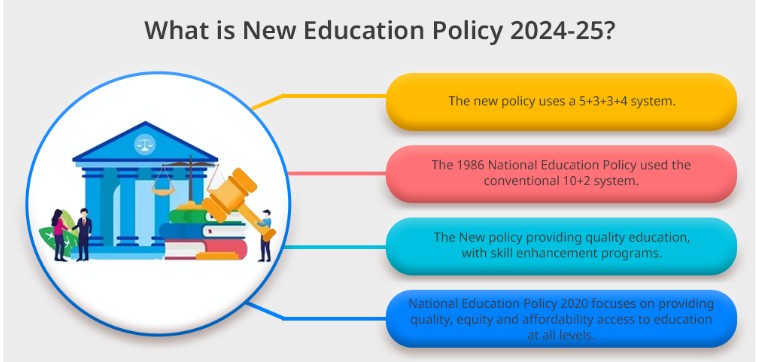
- The Government of India has completed five years of implementation of the National Education Policy 2020, marking substantial progress in curriculum reforms, digital integration, teacher training, and equitable access to quality education.
- However, much of its ambitious vision for overhauling school and higher education remains unfulfilled.
- Delays caused by Centre-state disagreements and institutional bottlenecks have slowed implementation across the country.
Historical Context
- Legacy of Colonial System: The British education model was designed to create clerks, not innovators. It was job-centric and not skill-oriented.
- Need for Reform: Post-independence, minor changes were made, but a comprehensive restructuring was missing.
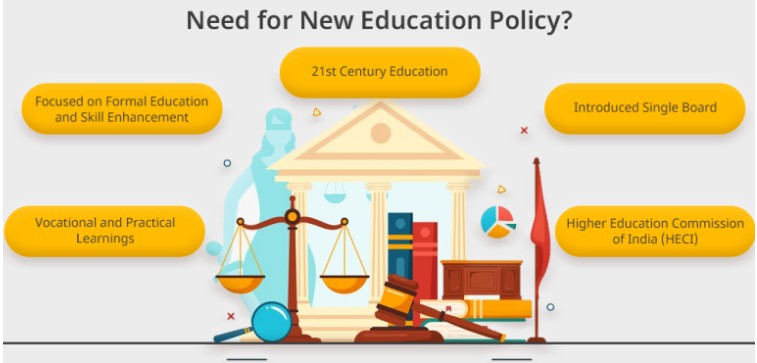
- NEP 2020 was envisioned to address these systemic gaps and align Indian education with 21st-century needs.
Vision and Objectives of NEP 2020
- Practical & Skill-based Education: Move away from rote learning.
- Holistic Development: Build value-based, tech-savvy, and globally competitive citizens.
- Inclusive Access: Bridge rural-urban, gender, and socio-economic divides.
- Public Investment Target: Increase spending to 6% of GDP.
Changes Bought by the Policy
- The traditional 10+2 structure has been replaced by a 5+3+3+4 system: foundational (pre-primary to class 2); preparatory (classes 3–5); middle (6–8), and secondary (9–12).
- The 2023 National Curriculum Framework laid out outcomes for each stage.
- NCERT released new textbooks (classes 1–8), merging subjects like his
- NEP aims for universal pre-primary education by 2030. NCERT’s Jaadui Pitara kits and a national ECCE curriculum are now in use.
- Delhi, Karnataka, and Kerala are enforcing a minimum age of six for class 1, improving readiness but reducing enrolments.
- However, better Anganwadi training and infrastructure are still needed.
- Assessment Reform
- CBSE Class 10 board exams to be conducted twice a year from 2026.
- Introduction of formative assessments and internal assessments.
- Skill Development in Schools
- Skill modules introduced in Classes 9–12.
- 138 skill job roles approved till 2025.
- Vocational education expanded: From 1,850 (2014–15) to 29,342 schools (2024–25).
Higher Education Reforms
- Curriculum and Credit Reforms
- National Higher Education Qualification Framework (NHEQF)
- Multiple Entry-Exit System, Academic Bank of Credits
- PM Vidya Lakshmi for financial aid
- 40% credit transfer through SWAYAM
- Institutional Expansion
- 7 new IITs, 8 IIMs, 13 AIIMS, 354 Eklavya Schools
- MBBS seats nearly doubled in a decade
- 2014: 54,348 seats | 2025: 1,18,190 seats
- Digital Education Ecosystem
- Diksha, SwayamPrabha, PM e-Vidya, e-Pathshala
- Content in 126 Indian and 7 foreign languages
- Over 25,000 hours of broadcast in 29 languages
- Teacher Training and Governance
- NISHTHA 3.0 for teacher training
- Over 26 lakh master trainers trained
- SAMARTH: Digital governance for Higher Education Institutions (HEIs)
- To allow flexibility in higher education, the NEP introduced the Academic Bank of Credits (ABC) and the National Credit Framework (NCrF).
- Learners can exit after one, two, or four years with a certificate, diploma, or degree. CBSE is piloting this credit model in schools as wel
Foundational Learning under NIPUN Bharat
- Launched in 2021, NIPUN Bharat targets literacy and numeracy by class 3.
- A recent survey shows 64% average language proficiency and 60% in math—progress, but still below universal goals.
Challenges
- Implementation gaps at state level
- Digital divide in rural and tribal regions
- Teacher shortages and uneven quality of training
- Alignment of vocational education with employability
Way Forward
- Strengthen decentralised capacity-building at the state and district levels
- Foster public-private partnerships for infrastructure and skilling
- Ensure inclusivity for differently-abled and disadvantaged groups
- Establish strong monitoring and feedback mechanisms
- Promote research and innovation through increased funding and autonomy to institutions.
4. Pendency of Cases in Indian Courts: Causes, Impact & Solutions
Context
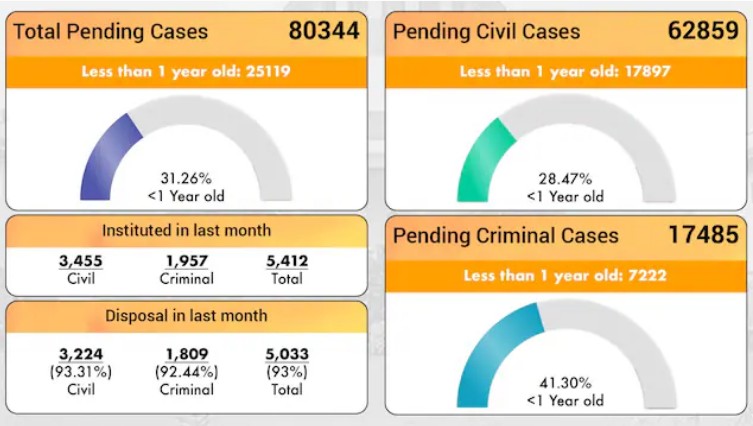
- India’s judiciary faces a pendency crisis with over 5 crore cases across Supreme Court, High Courts, and District Courts.
- The President Of India has termed this as Black Court Syndrome.
Present Pendency of Cases and other Facets
- 4.6 crore in District Courts, 63.3 lakh in High Courts, 86,700 in Supreme Court.
- India operates with just 15 judges per 10 lakh population vs. Law Commission’s 50.
- Only 38.7% civil cases are disposed within a year in district courts vs. 70.6% for criminal cases.
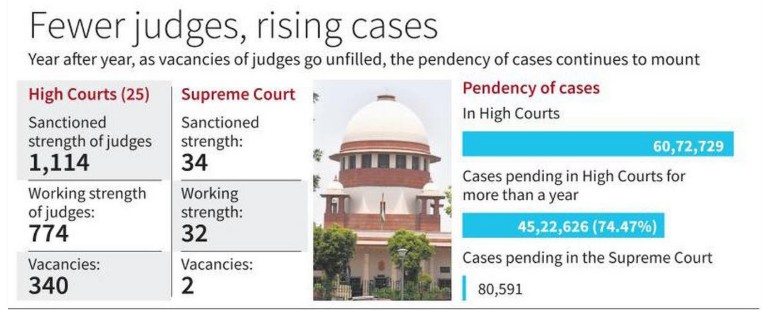
- 5,665 judge positions vacant across courts; only 79% of sanctioned strength filled.
Reasons behind Pendency of Cases
- Insufficient Judges: India has one of the lowest judge-to-population ratios globally.
- Judiciary operates at 79% capacity. 5,665 posts vacant out of 26,927 sanctioned
- Increased Litigation: The growing number of litigants and cases, coupled with the increasing population and socio-economic complexities, contributes to the rise in the number of cases.
- Delays in the Justice System: There are delays due to procedural inefficiencies, adjournments, and delays in filing of evidence, which further prolong case resolutions.
- Lack of Infrastructure: Many courts, especially in rural areas, are under-equipped and under-staffed, making it difficult to handle the growing number of cases efficiently.
- Bureaucratic and Administrative Challenges: The judicial process can sometimes be slowed down by inefficiencies in the system, including paperwork, administrative delays, and a lack of modernization in court processes.
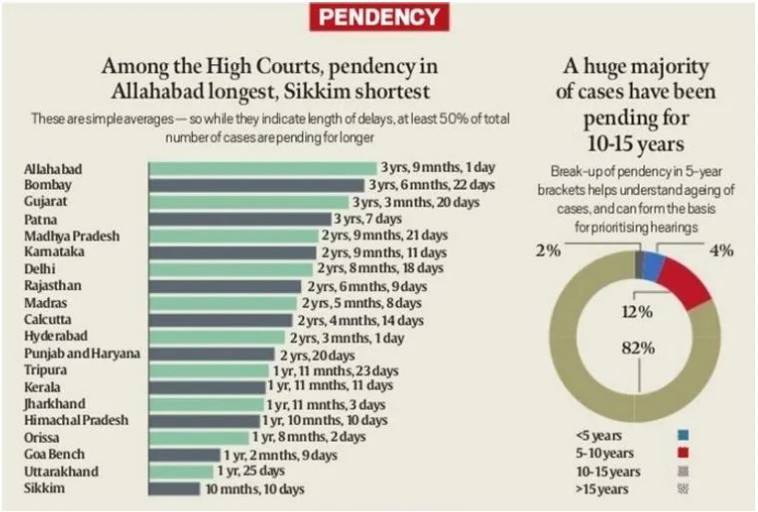
- Only 38.7% of civil cases in district courts resolved within a year.
- 20% stretch beyond 5 years, mainly in property, family, or contract disputes.
Impact of the issue
- Delay in Justice: The backlog results in long delays in cases, and justice is often delayed for years.
- Increased No. of Undertrials: The number of undertrials (accused awaiting trial) in prisons has increased, prisons are running at an over-capacity of 114%.
- Increased Costs: The delay in cases causes financial strain on the litigants and the government. It can also result in the erosion of public confidence in the judicial system.
- Overburdened Judges: Judges are often overburdened with cases, leading to burnout and further delays.
Efforts to Address the issue
- Judicial Reforms: It includes increasing the number of judges, modernizing court infrastructure, and implementing e-courts and technology to speed up hearings.
- Alternate Dispute Resolution (ADR): ADR mechanisms like arbitration, mediation, and conciliation are being promoted to resolve disputes outside of the traditional court system.
- E-Courts and Technology: The E-Courts Project has been an important initiative to digitize court proceedings and allow online hearings. This helps in streamlining case management and reducing physical backlogs.
- Fast Track Courts: Special courts or fast-track courts have been set up to handle specific types of cases like corruption, crimes against women, and long-pending cases to expedite the process.
Efforts that can be taken
- Increase the number of judges: One way to reduce the backlog of cases is to increase the number of judges in the Indian judiciary. This will allow more cases to be heard and decided more quickly.
- The Law Commission of India (1987) recommended increasing the number of judges to 50 per million people. This was reiterated by the Supreme Court (2001) and the Standing Committee on Home Affairs (2002).
- Expand alternative dispute resolution methods: Alternative dispute resolution methods, such as mediation and arbitration, can resolve disputes more quickly and efficiently than traditional court proceedings.
- Streamline the legal process: Efforts can be made to streamline the legal process, such as by using technology to manage cases and eliminate unnecessary steps. Example: e-courts projects.
- Strengthen the enforcement of court orders: Ensuring that court orders are enforced can help to reduce the backlog of cases, as individuals and institutions will be more likely to comply with court orders if they know that they will be held accountable for failing to do so.
5. New Species of Wolf Spider and Parasitic Wasps Discovered in West Bengal
Context
- Recently, scientists from the Zoological Survey of India (ZSI) have discovered a new species of wolf spider and four new species of parasitic wasps in West Bengal, underscoring the region's rich yet largely unexplored biodiversity.

About New Wolf Spider Species (Piratula acuminate)
- Discovered on Sagar Island, located in the Sundarbans delta (a UNESCO World Heritage Site).
- Marks the first-ever record of the genus Piratula in India.
- Belongs to the Lycosidae family - commonly known as wolf spiders, which are nocturnal, ground-dwelling hunters that don't spin webs.
- Medium-sized spider (8-10 mm) with a creamy-white body, brown and chalk-white spots, and distinct genital features.
- Detailed study published in Zootaxa, titled First record of the genus Piratula Roewer, 1960 from India.
About Four New Parasitoid Wasp Species (Idris Genus)
- Discovered by a separate ZSI team between 2021-2023 in agroecosystems and semi-natural habitats of West Bengal.
- Species identified: Idris bianor, Idris furvus, Idris Hyllus and Idris longiscapus o
- These egg parasitoids target jumping spiders (Salticidae) and exhibit gregarious parasitism i.e. multiple wasps emerge from a single egg sac.
- Identification involved a mix of classical taxonomy and DNA barcoding. •
- Published in the European Journal of Taxonomy under Description of four new species of Idris Forsters, 1856 (Hymenoptera: Scelionidae) from India.
6. State of Food Security and Nutrition in the World (SOFI) 2025: Key Global and India Findings
Context
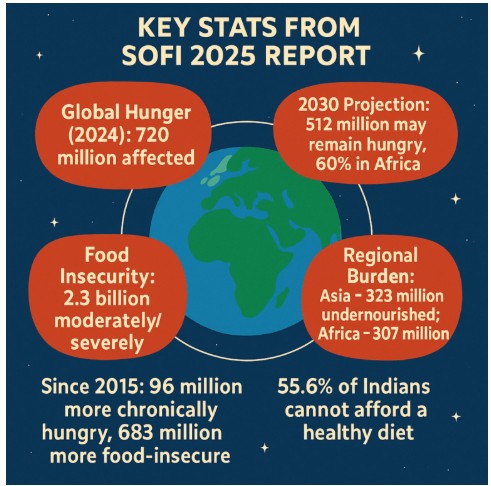
- Recently, the United Nations released the State of Food Security and Nutrition in the World (SOFI) 2025 report, revealing that 720 million people or 8.2% of the global population, were undernourished in 2024.
- This marks a slight improvement from 2023, when 8.5% of the world's population faced undernourishment.
Key Findings
- 2.3 billion people experienced moderate or severe food insecurity, up 335 million from 2019 and 683 million from 2015.
- Asia had the highest number of undernourished people at 323 million, followed by Africa (307 million), and Latin America & Caribbean (34 million).
- Projections suggest that by 2030, 512 million people (6% of the global population) may still remain chronically undernourished.
- By 2030: 60% of the world's undernourished population will be in Africa.
- Undernourishment will fall below 5% in Asia, Latin America, and the Caribbean.
India-Specific Findings
- 12% of India's population (~172 million people) were undernourished in 2024,down from 243 million in 2006.
- Largest number of undernourished people globally, mainly due to population size.
- 18% of Indian children under five were wasted in 2024, the highest rate in the world
- 37 million children under five were stunted, reflecting chronic undernutrition.
- In 2023, anaemia affected 53% of Indian women in the 15-49 age group, impacting around 203 million women nationwide.
- India ranks 4th globally and 1st in Asia in terms of anaemia prevalence among women.
- 42% of India's population could not afford a healthy diet in 2024.
- Double burden of malnutrition is growing: Overweight children under five rose from 2.7 million (2012) to 4.2 million (2024).
- Obese adults doubled from 33 million to 71 million in a decade.
7. Heavy Water (D₂O) in India’s Nuclear Energy Programme: Uses, Importance & New Test Facility
Context
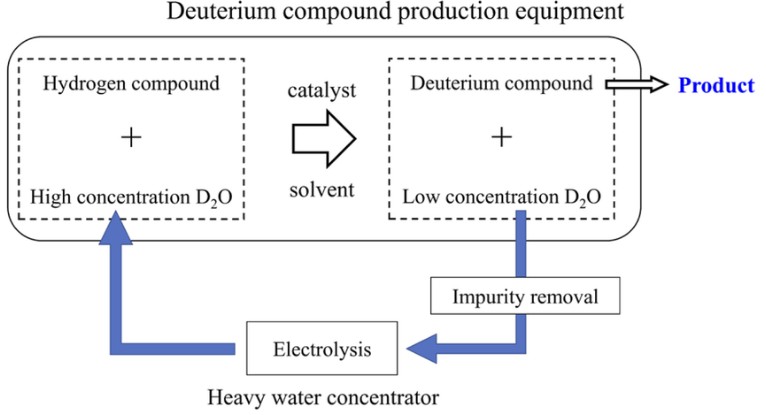
- Recently, India established its first private test facility for upgrading depleted heavy water (D₂O), a crucial process in Pressurised Heavy Water Reactors (PHWRs) that form the backbone of the country's nuclear energy programme.
About Heavy water (Deuterium Oxide (D₂O))
- A variant of regular water in which hydrogen atoms are replaced with deuterium, a heavier isotope of hydrogen.
- This subtle change gives heavy water unique nuclear properties, making it essential specific types of nuclear reactors. in
- Used primarily in Pressurised Heavy Water Reactors (PHWRs) for two critical functions:
As a Moderator
- Slows down neutrons produced during fission, increasing the chances of sustaining the chain reaction. Enables the use of natural (unenriched) uranium as fuel, reducing dependency on costly uranium enrichment.
As a Coolant
- Efficiently absorbs and transfers the heat generated in the reactor core. Delivers this heat to steam generators that convert it into electricity.
Why India Prefers PHWRs
- Utilizes Natural Uranium: Efficiently runs on India's abundant natural uranium, avoiding need for enrichment.
- Supports Self-Reliance: Based on indigenous technology, reducing dependence on foreign nuclear systems.
- Safe and Economical: Offers built-in safety features and lower construction and operating costs.
8. Veer Parivar Sahayata Yojana: Free Legal Aid for Defence Personnel & Families
Context
- Recently, the National Legal Services Authority (NALSA) launched the Veer Parivar Sahayata Yojana, a scheme aimed at providing free legal aid to personnel, ex-servicemen, and their families.
About Veer Parivar Sahayata Yojana
- Joint Initiative of: National Legal Services Authority (NALSA), Kendriya Sainik Board (KSB), Department of Ex-Servicemen Welfare, Ministry Defence, Rajya and Zila Sainik Boards (RSBs & ZSBs)
Implementation Mechanism
- Legal Services Clinics will be set up across Rajya and Zila Sainik Boards in every state and union territory. These clinics will work in close coordination with the Ministry of Defence and respective Sainik Welfare Directorates.
Target Beneficiaries
- Defence personnel in remote postings who face challenges in attending legal proceedings.
- Legal issues such as family property, land disputes, and domestic matters will be addressed.
- Free legal assistance will also be extended to paramilitary forces like BSF, CRPF, and ITBP
Legal Aid Providers
- Panel lawyers and paralegal volunteers from legal services authorities will provide assistance.
9. Indians in Flood-Prone Slums: 158 Million at Risk from Urban Flooding
Context
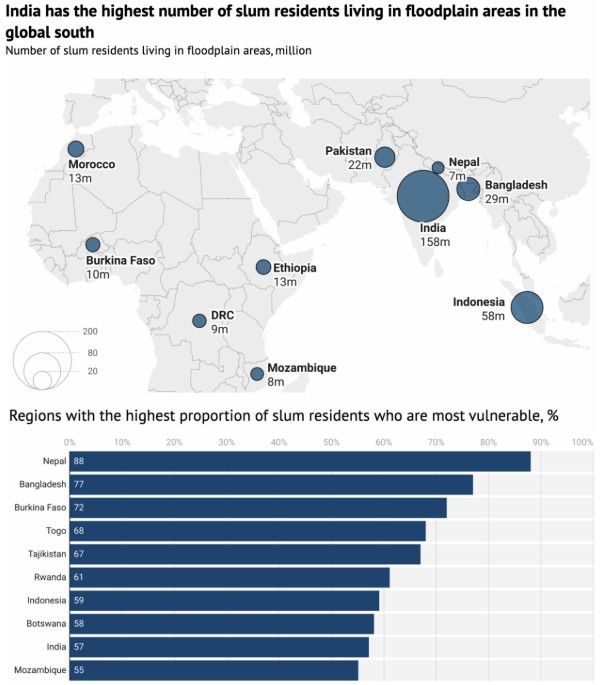
- Recently, a groundbreaking study published in Nature Cities revealed that India has the highest number of slum dwellers living in floodplains worldwide, over 158 million people, surpassing the entire population of Russia.
Key Findings
- 33% of informal settlements in the Global South lie in flood-exposed areas, affecting around 445 million people across 67,500 clusters.
- 2.3 billion people globally are exposed to flooding annually (Moody's 2024)
- Countries with the highest concentrations of slum dwellers in floodplains include India, Indonesia, Bangladesh, Pakistan, Brazil, Rwanda, and parts of North Africa.
India-Specific Findings
- Most vulnerable settlements are concentrated in the Gangetic delta, a naturally flood-prone region.
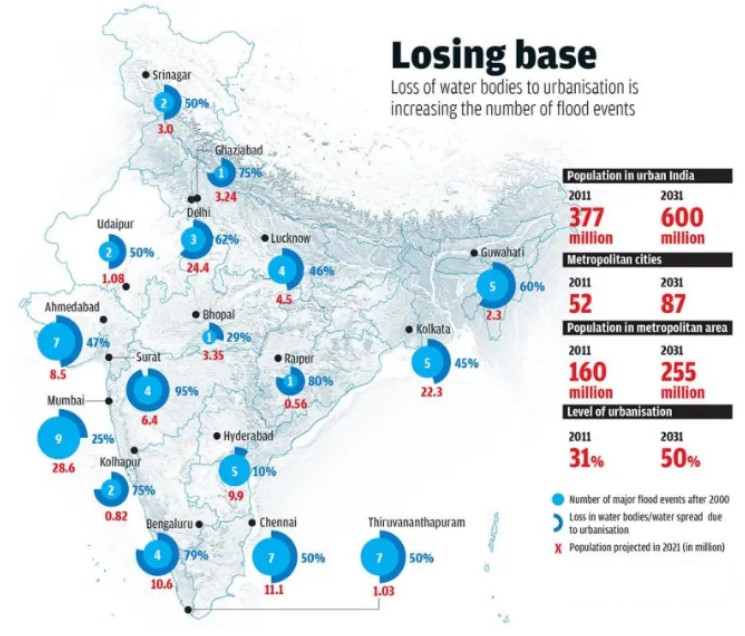
- 600 million people in India are at risk of coastal or inland flooding.
- 40% of India's slum dwellers reside in urban and suburban areas.
- Cities like Mumbai, Bengaluru, and Kolkata show a strong correlation between informal settlements and flood-prone areas.
10. NASA's TRACERS Mission: Exploring Solar Activity and Earth's Magnetic Field
Context
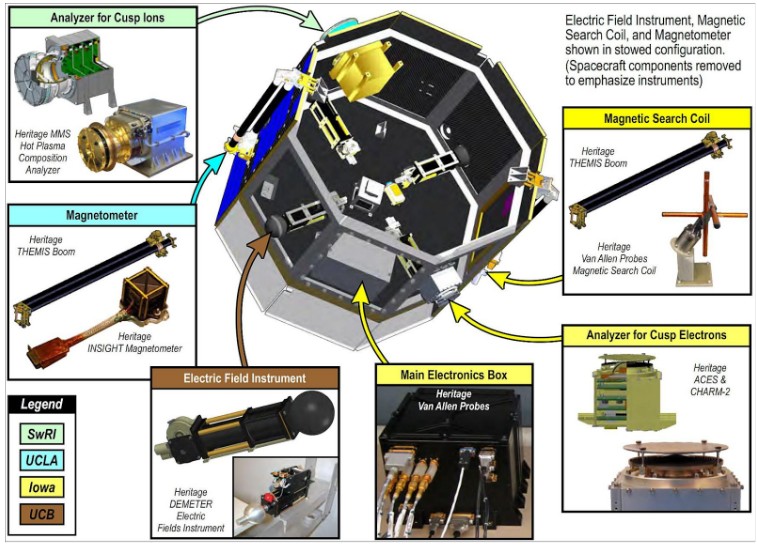
- Recently, NASA successfully launched the TRACERS mission, an ambitious twin-satellite project aimed at exploring how solar activity influences Earth's magnetic environment. The satellites lifted off aboard a SpaceX Falcon 9 rocket from Vandenberg Space Force Base in California.
About TRACERS Mission
- Stands for Tandem Reconnection and Cusp Electrodynamics Reconnaissance Satellites.
- It involves two identical satellites flying in low Earth orbit, focused on the polar cusp regions-funnel-shaped zones where solar particles can directly enter Earth's atmosphere.
- The mission aims to study magnetic reconnection, a key process in space weather dynamics.
Key Objectives
- Investigate magnetic reconnection in Earth's magnetosphere, especially near the polar cusps.
- Understand how solar wind (a stream of charged particles from the Sun) interacts with Earth's magnetic shield.
- Collect data to improve space weather forecasting, helping protect: Satellites, Astronauts, GPS and communication systems
- Record and analyze over 3,000 reconnection events within the first year.
About Magnetic Reconnection
- It occurs when magnetic field lines in Earth's magnetosphere are twisted or broken due to solar wind pressure. These broken field lines reconnect in new configurations, releasing massive amounts of energy.
- This can lead to: Auroras (Northern and Southern Lights)
- Disruption of satellite operations and communication systems Hazards to astronauts in orbit.
11. Gavri Festival: 40-Day Bhil Tribal Folk Celebration in Rajasthan
Context
- Every year, following the full moon of Raksha Bandhan in August month, the Mewar Bhils begin Gavri, a vibrant folk ritual.

About Gavri Festival
- A 40-day seasonal ritualistic folk performance tradition, practiced by the Bhil community in southern Rajasthan, particularly in Udaipur and adjoining districts.
- Who Performs: Male performers, known as khelyas, form troupes that travel from village to village, including the homes of their married sisters and daughters.
- They perform khels (dance-dramas), songs, and sacred rites.
- Divine Dedication: Gavri is performed in honour of Gorkhiya Mata, an incarnation of Goddess Parvati, whom the Bhils regard as their sister.
- It also invokes Lord Shiva and narrates mythological tales like the story of Shiva and the demon Bhasmasur.
- Themes and Symbolism: Celebrates the victory of good over evil, as seen in plays like the battle between Goddess Amba and demon Bhiamwal.
- Despite being a patriarchal society, men perform all roles, including those of women, to honour feminine divinity.
About the Bhil Tribe
- Considered one of the oldest tribal communities in India. •
- They belong to the Australoid racial group and are identified as Dravidian tribes of Western O 이 이 O O India.
- The term 'Bhil' is derived from the Dravidian word villu or billu, meaning bow, their traditional skills as archers
Geographical Distribution
- Madhya Pradesh, Maharashtra, Gujarat, and Rajasthan.
Occupation
- The majority are engaged in agriculture.
- Language: They speak Bhili, an Indo-Aryan language with multiple regional dialects. They worship local deities such as: Khandoba, Kanhoba, Bahiroba, and Sitalmata
- The Tiger God known as Vaghdev is especially revered.

2026-27 UPSC Mains English QEP Power Pages
View DetailsSubmit Your Details to Learn More



