Know about International Olympic Day 2025, its theme, history, and India’s Olympic journey. Learn about key initiatives like the Target Olympic Podium Scheme and why this global celebration matters.
 theIAShub | 23 Jun, 2025 | 10088 | 0 |

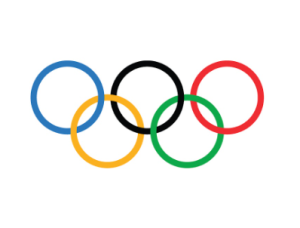
Olympic rings symbolizing global unity in sport. International Olympic Day is celebrated every year on 23 June to commemorate the founding of the International Olympic Committee (IOC) in Paris in 1894. Established by Baron Pierre de Coubertin, the IOC revived the modern Olympic Games, and International Olympic Day first took place on 23 June 1948. Since then, it has become a global event to promote sports, health, and the values of the Olympic Movement. On this day, people of all ages and abilities are encouraged to participate in physical activities and embrace the Olympic ideals of excellence, friendship, and respect. From local fun runs and school sports days to community tournaments and cultural programs, International Olympic Day brings people together in the Olympic spirit.
Also Read: National and International Days 2025
International Olympic Day highlights the Olympic motto and symbols. The famous Olympic rings (five interlocking rings in blue, yellow, black, green, and red) represent the five inhabited continents united by sport. The rings were designed by Coubertin in 1913 and were first flown at the 1920 Antwerp Games. The Olympic flag with these rings, and the motto “Citius, Altius, Fortius – Communiter” (“Faster, Higher, Stronger – Together”), reinforce the movement’s goal of bringing people together through fair competition and unity.
International Olympic Day is celebrated to honor the Olympic Movement and to promote the benefits of sport worldwide. The main reasons include:
Also Read: List of Important Days in June 2025
In essence, International Olympic Day is about coming together to move, learn, and discover. The IOC encourages everyone to Move (be active), Learn (understand sports values and history), and Discover (try new sports and make new friends). These “Move, Learn, Discover” pillars guide Olympic Day programs around the world, making it a celebration of health, culture, and education through sport.
Also Read: World Brain Tumor Day

In 2025, International Olympic Day will again be observed on June 23rd. Each year the IOC or National Olympic Committees promote a theme to focus the celebrations. For example, the 2024 theme was “Let’s Move and Celebrate,” encouraging people to stay active together ahead of the Paris 2024 Games. The official International Olympic Day 2025 theme has not yet been announced by the IOC, but it is expected to build on these ideas of participation and unity. Past Olympic Day themes have emphasized inclusivity, unity, and sustainable development. Given global priorities, the 2025 theme will likely highlight how sport can promote health, social inclusion, and peace – aligning with broader initiatives like the United Nations’ Sustainable Development Goals.
Around the world, National Olympic Committees (NOCs) and sports clubs organize Olympic Day events each year. Common activities include:
Also Read: World Ocean Day
Each country may adapt Olympic Day to its own sports culture. For instance, some nations add traditional games, youth competitions, or inclusive para-sport events. Regardless of format, the goal is universal: to encourage people to be active and to celebrate the values of the Olympic Games.
Also Read: World Food Safety Day
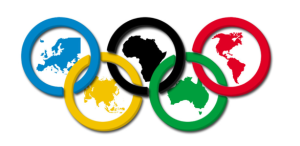
A hand holding a chalk drawing of the Olympic rings, reflecting the spirit of universal sport. The Olympic rings themselves have an interesting history. Designed in 1913 and first used in 1920, the five interlocking rings represent the five inhabited continents of the world (Africa, the Americas, Asia, Europe, and Oceania), while the colors (including the white background) were chosen to appear on every national flag. This emblem reminds athletes and spectators that the Games welcome competitors from across the globe.
Also Read: World Environment Day
The history of the Olympics spans over 2,800 years, beginning with the ancient games of Greece and evolving into today’s global festivals of sport. Key milestones in Olympic history can be presented in the timeline below:
| Year | Event |
| 776 BC | First recorded Ancient Olympic Games held at Olympia, Greece, honoring the god Zeus. |
| 393 AD | Ancient Games ended when Roman Emperor Theodosius I banned pagan festivals. |
| 1894 | International Olympic Committee (IOC) founded in Paris by Pierre de Coubertin on June 23. |
| 1896 | First modern Olympic Games held in Athens; 14 countries participated. |
| 1912 | Olympic torch relay introduced at the Stockholm Games, starting the tradition of lighting the flame. |
| 1920 | Olympic Rings and Flag debuted at Antwerp Games; symbolizing unity of the five continents. |
| 1924 | First Winter Olympics held in Chamonix, France. |
| 1936 | Berlin Olympics (Summer) broadcast globally; Jesse Owens wins 4 golds, challenging Nazi ideology. |
| 1960 | First live Olympic television coverage for worldwide audience (Rome Olympics). |
| 1980 & 1984 | Major Boycotts: Moscow 1980 (US-led boycott) and Los Angeles 1984 (Soviet-led boycott) reflected Cold War tensions. |
| 2000 | Sydney Olympics: Noted for high organization; first time all competing countries had female athletes. |
| 2008 | Beijing Olympics: Largest Olympic Games by participating athletes; iconic ceremonies. |
| 2020 | Tokyo Olympics (held in 2021): First Olympics postponed due to a pandemic; new sports like skateboarding and surfing introduced. |
| 2026 | Milano Cortina 2026 Winter Games (upcoming) continues the Olympic tradition of international competition. |
Throughout this timeline, the Olympic Games have consistently promoted peace and cooperation. For example, at each Games, athletes from over 200 nations gather under one flag of 5 rings, in the Olympic Village. This spirit of unity is further symbolized by traditions like the Olympic Truce, which calls for ceasing conflicts during the Games.
Over time, the Olympics have also expanded in scope. The modern Olympic Movement now includes the Winter Games (first held in 1924), the Paralympic Games (for athletes with disabilities, established 1960), the Youth Olympic Games, and various regional competitions. However, all of these share the same roots in Olympic history: the idea that sport can transcend national and cultural differences.
Also Read: World Day Against Child Labor
[metaslider id=”5575″]
Norman Pritchard
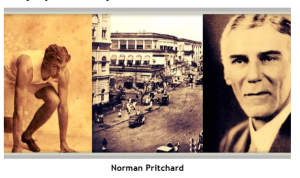
India’s Olympic journey began at the 1900 Paris Games, where Indian-born athlete Norman Pritchard won two silver medals in athletics (100m and 200m sprints). More recently, India has broadened its Olympic achievements beyond hockey. Below is a timeline of key milestones in Indian Olympic history:
| Year | Milestone |
| 1900 | First Olympic medals for India: Norman Pritchard wins 2 silver (Athletics, Paris). |
| 1928 | First Olympic gold: India wins gold in Men’s Field Hockey (Amsterdam). |
| 1952 | Historic six straight hockey golds: India wins gold again (Helsinki), its sixth in a row. |
| 1980 | Eighth Olympic gold: India’s last hockey gold of the golden era (Moscow). |
| 1984 | Men’s hockey silver: India settles for silver (Los Angeles), beginning a long medal drought in hockey. |
| 1996 | First modern hockey medals disappear: India finishes outside medal ranks in hockey (Atlanta). |
| 2000 | First Olympic medal in women’s sports: Karnam Malleswari wins bronze in weightlifting (Sydney). |
| 2004 | Rajyavardhan Singh Rathore: Wins silver in shooting (Double Trap, Athens) – first individual silver. |
| 2008 | Abhinav Bindra wins gold: Shooting (10m Air Rifle, Beijing) – India’s first individual Olympic gold medal. |
| 2012 | Breakthrough medals: 6 medals in London (1 silver, 5 bronze) including a first badminton medal by Saina Nehwal. |
| 2016 | Record haul: 6 medals in Rio (0 gold, 1 silver, 5 bronze) including P.V. Sindhu’s silver (badminton) and Sakshi Malik’s bronze (wrestling). |
| 2020 | Historic athletics gold: Neeraj Chopra wins javelin gold (Tokyo) – India’s first track and field gold, for a total of 7 medals (1 gold, 2 silver, 4 bronze). |
This timeline shows how Indian Olympic history has evolved: from early track medals and hockey dominance, to modern successes in shooting, badminton, wrestling, boxing, weightlifting, and athletics. Today, India fields competitors in many sports and is increasingly winning medals.
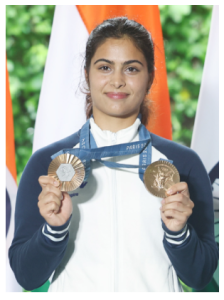
Following is the list of Indian medal winners of 2024 Olympic:
| Medal | Name(s) | Sport | Event |
| Silver | Neeraj Chopra | Athletics | Men’s Javelin Throw |
| Bronze | Manu Bhaker | Shooting | Women’s 10m Air Pistol |
| Bronze | Manu Bhaker & Sarabjot Singh | Shooting | Mixed 10m Air Pistol Team |
| Bronze | Swapnil Kusale | Shooting | Men’s 50m Rifle Three Positions |
| Bronze | India Men’s Hockey Team (Harmanpreet Singh (C), PR Sreejesh, Manpreet Singh, Hardik Singh, Gurjant Singh, Jarmanpreet Singh, Abhishek Nain, Sanjay Rana, Mandeep Singh, Lalit Upadhyay, Sumit Walmiki, Shamsher Singh, Raj Kumar Pal, Amit Rohidas, Vivek Prasad, Sukhjeet Singh) |
Field Hockey | Men’s Tournament |
| Bronze | Aman Sehrawat | Wrestling | Men’s Freestyle 57kg |
Several factors have contributed to India’s growing Olympic presence. Improved training facilities, professional coaching, and government support have all played a role. One landmark initiative is the Target Olympic Podium Scheme (TOPS), launched by the Government of India in 2014 to boost the nation’s medal prospects.
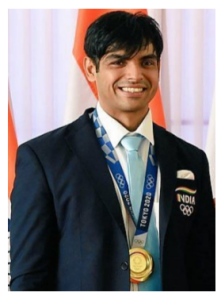
The Target Olympic Podium Scheme (TOPS) was introduced in September 2014 by the Ministry of Youth Affairs and Sports. Its purpose is to identify and financially support India’s best athletes in preparation for the Olympics and other major international competitions. Under TOPS, selected athletes receive:
Since its inception, TOPS has supported several medal-winning athletes. For example, shooters like Gagan Narang, Heena Sidhu, and rifle shooter Abhinav Bindra received TOPS support for Beijing 2008 and London 2012. More recently, boxers Lovlina Borgohain and Shiva Thapa, badminton stars P.V. Sindhu and Saina Nehwal, wrestler Sakshi Malik, and javelin thrower Neeraj Chopra have all been beneficiaries of the scheme. These athletes’ successes at the Rio 2016 and Tokyo 2020 Olympics highlight how TOPS-funded preparation can yield results.
Are you preparing for UPSC Mains 2025? Join IAShub’s UPSC coaching batches to boost your preparation. Enroll now!
International Olympic Day is more than a date on the calendar; it is a worldwide celebration of sport, health, and international friendship. By observing this day every June 23, the Olympic Movement reminds us why International Olympic Day is celebrated: to honor the founding of the IOC and to inspire millions to participate in physical activity. The day’s events – Olympic runs, sports festivals, educational activities, and cultural programs – all work together to promote a healthier, more inclusive society.

The International Olympic Day 2025 theme highlights inclusivity, sustainability, and youth engagement. It focuses on uniting communities through sports and Olympic values.
India first participated in the Olympics in 1900 and has since earned medals in hockey, wrestling, badminton, and athletics. The country has steadily improved its performance in recent editions.
The Target Olympic Podium Scheme (TOPS) is a government initiative aimed at identifying and supporting India’s top athletes. It provides training, financial support, and infrastructure to boost Olympic success.
International Olympic Day promotes awareness about the importance of sports in fostering peace and development. It brings people together through events, education, and sporting activities worldwide.

Refine your answer writing skills and elevate your UPSC preparation with personalized support and expert feedback.
Fill out the form to get started with the program or any other enquiries !



Are you dreaming of becoming an IAS officer? Then, IAShub can be your best guide. It is one of the Best IAS Coaching in Delhi. Many students who want to clear the UPSC exam join IAShub for learning. The institute gives both online and offline classes. Their teachers are experienced and helpful. They easily explain every topic. Students also get notes, tests, and tips to do well in the exam.
IAShub is in Delhi and is trusted by many UPSC students. It offers coaching for every part of the UPSC exam – Prelims, Mains, and Interview. The classes are simple and easy to understand. The teachers are experts and guide students in the right way. IAShub is also known for its helpful notes, test series, and answer-writing practice. IAShub is the best coaching in Delhi and also gives UPSC Online Classes. This helps students from any place in India to learn. The online classes are live and also recorded. So, students can watch them anytime. These classes cover the full UPSC syllabus.
Here are some important services provided by IAShub:
The UPSC Civil Services Exam has three parts:
This exam is tough, but with the right guidance, it becomes easy to manage. Students must study smart and stay regular.
IAShub supports students from the beginning to the end. It gives the right books, tests, and notes. The classes are easy to follow, and the teachers are always ready to help. Students get personal doubt sessions too. The test series and answer checking help students learn where they need to do better. Also, free study materials save time and money.
IAShub also guides students during the final stage – the interview. Experts take mock interviews and give useful tips. This full support makes IAShub one of the best IAS coaching in Delhi.