
















Explore Maharashtra's rich history, vibrant culture, rivers, national parks, political structure & booming economy. Learn about its geography, key industries, festivals, demographics & UNESCO sites. A complete profile of India's dynamic western state.
 theIAShub | 10 Jun, 2025 | 13716 | 0 |
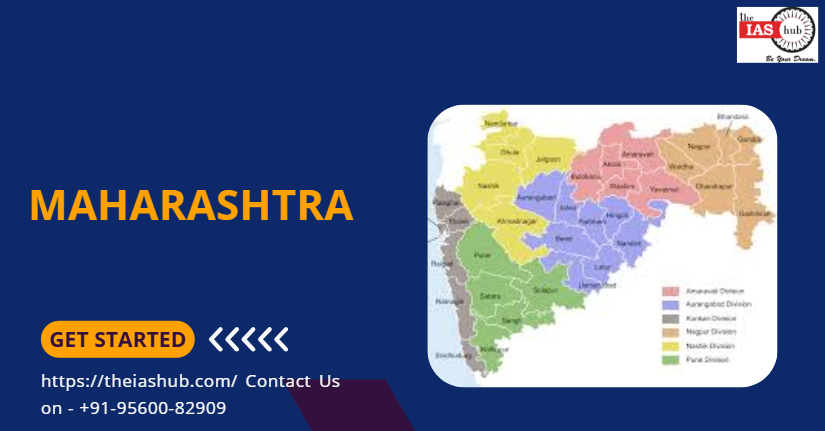

Maharashtra, a key western state of India, plays an important role in the country’s economic and cultural framework. Known for its rich heritage, entrepreneurial spirit, and industrial growth, the state blends historical significance with modern development. Spanning 307,713 square kilometers, it is the third-largest state in India by area. As per the 2011 Census, Maharashtra has a population of over 112 million. Mumbai, the state capital, serves as the financial and entertainment hub, while cities like Pune, Nagpur, and Nashik contribute significantly to the state’s growth.
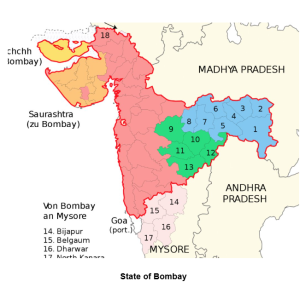
State of Bombay
Maharashtra has a long historical timeline that includes ancient and medieval dynasties such as the Satavahanas, Rashtrakutas, Chalukyas, and Yadavas. The region later saw the rise of the Maratha Empire under Chhatrapati Shivaji Maharaj, which became a dominant power in India.
Also Read: Indian States and Their Capitals
The colonial period saw Maharashtra under British rule, with Mumbai (then Bombay) becoming a major administrative and commercial center. Post-independence, Maharashtra was formed in 1960 under the Bombay Reorganisation Act, separating from the bilingual Bombay State to become a predominantly Marathi-speaking region.
Also Read: Andhra Pradesh
Maharashtra is located in western India, bordered by Gujarat to the northwest, Madhya Pradesh to the north, Chhattisgarh to the east, Telangana to the southeast, Karnataka to the south, and Goa to the southwest, along with the Arabian Sea to the west. The state features diverse geographical regions, including the Western Ghats, fertile Deccan Plateau, and a long coastline.
| Category | Details |
| Geographical Features | – Western Ghats (Sahyadri Range) and Deccan Plateau (central/eastern Maharashtra) – Konkan Coast (western coastal strip) and Vidarbha Plains (eastern Maharashtra) – River systems: Godavari, Krishna, Tapi, Bhima, Wardha – Longest river: Godavari (~1,465 km total; ~700 km in Maharashtra) – Shortest major river: Ulhas (~122 km) – Highest peak: Kalsubai (1,646 m in Sahyadris) – Lowest point: Coastal plains (near sea level) – Rich in minerals (coal, bauxite, iron ore) and biodiversity (Western Ghats forests, Tadoba, marine ecosystems in Konkan) |
| Climate Type | Tropical Wet & Dry (most regions), Hot Semi-Arid (Marathwada, Vidarbha), Tropical Monsoon (Konkan coast) |
| Seasons | – Summer (Mar–Jun): Hot (up to 45°C in Vidarbha) – Monsoon (Jun–Sep): Heavy rainfall (SW monsoon; Konkan gets >3,000 mm) – Post-Monsoon (Oct–Nov): Retreating monsoon (occasional thunderstorms) – Winter (Dec–Feb): Mild (12–28°C; colder in Western Ghats) |
| Climate Variation | – Konkan Coast: Humid (>2,500 mm rainfall) – Western Ghats: Heavy rainfall (3,000–4,000 mm) – Deccan Plateau (Pune, Nashik): Moderate (600–1,000 mm) – Vidarbha & Marathwada: Semi-arid (700–900 mm; drought-prone) – Coastal areas (Mumbai, Ratnagiri): Prone to cyclones and flooding |
Also Read: Arunachal Pradesh
Demographics of Maharashtra
As per the 2011 Census, Maharashtra had a population of 112.4 million (highest in India). The population density stands at 365 persons per square kilometer, higher than the national average. The sex ratio is 929 females per 1000 males, slightly below the national average but improving in urban areas.
Literacy Rate: The state recorded a literacy rate of 82.3%, with male literacy at 88.4% and female literacy at 75.9%.
Languages Spoken:
Also Read: Chattisgarh
[metaslider id=”5575″]
Each state has its own symbols. Following are the state symbols of Maharashtra:
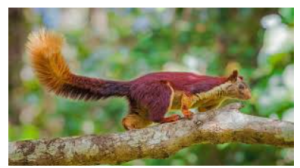
| Symbol | Name |
| State Animal | Indian Giant Squirrel (Shekru) |
| State Bird | Yellow-footed Green Pigeon (Hariyal) |
| State Tree | Mango Tree (Aamra) |
| State Flower | Jarul (Pride of India) |
These symbols reflect Maharashtra’s ecological diversity (e.g., Western Ghats’ Shekru, deciduous forests) and cultural significance (e.g., Mango as a staple in Konkan cuisine).
Also Read: Assam
Maharashtra follows a bicameral legislature, consisting of the Legislative Assembly (Vidhan Sabha) and Legislative Council (Vidhan Parishad).
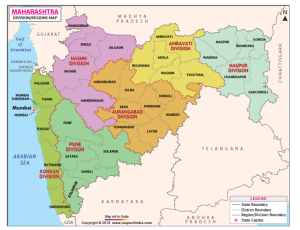
Courtesy: Maps of India
| Category | Details |
| State Formation | Formed on May 1, 1960, after the division of Bombay State under the Bombay Reorganisation Act, 1960. Originally part of the Bombay Presidency during British rule. |
| Chief Minister | Eknath Shinde (Since June 2022) – Party: Shiv Sena (Shinde faction) – Focus: Infrastructure, agriculture, urban development |
| Governor | Ramesh Bais – In office since February 18, 2023 |
| Chief Justice (High Court) | Hon’ble Justice Devendra Kumar Upadhyaya – Assumed office: October 12, 2023 – High Court located in Mumbai (Bombay High Court) |
| Legislature Type | Bicameral (Legislative Assembly + Legislative Council) |
| Legislative Assembly Members | 288 elected members |
| Legislative Council Members | 78 members (indirectly elected) |
| Lok Sabha Representation | 48 Members (largest in India) |
| Rajya Sabha Representation | 19 Members |
| Districts | 36 (as of 2024) |
| Local Governance Units | Divided into districts, tehsils, and gram panchayats |
Key Notes:
Also Read: Bihar
Maharashtra’s culture reflects a blend of Maratha heritage, Bollywood influence, and cosmopolitan diversity, shaped by empires like the Satavahanas, Rashtrakutas, and Marathas.
| Category | Details |
| Classical Dance | Lavani and Tamasha are the most prominent. |
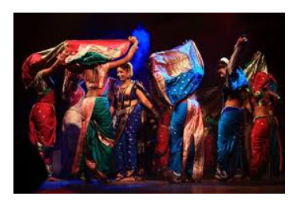
| Lavani | – A high-energy dance with rhythmic footwork and expressive gestures. – Features: Performed to dholki beats, often with poetic lyrics. – Themes: Love, social issues, and empowerment. – Unique Aspect: Traditionally performed by women in nine-yard sarees (Nauvari). |
| Tamasha | – A folk theatre form combining dance, drama, and music. – Features: Satirical dialogues, humor, and social commentary. – Unique Aspect: Includes Vag (comic) and Sangeet Bari (musical) styles. |
| Theatre Art | Maharashtra has a rich tradition of Sangeet Natak (musical plays) and Dashavatar (mythological performances). |
| Puppetry (Kalapathak) | – String and shadow puppetry narrating Puranic tales. – Unique Aspect: Popular in Konkan and Vidarbha regions. |
| Folk Music | Reflects rural life and devotional traditions. |
| Powada | – Ballads glorifying Maratha warriors like Shivaji Maharaj. – Instruments: Dhol, tuntune. |
| Bharud | – Devotional songs by Sant Tukaram and Dnyaneshwar. – Themes: Bhakti (devotion) and social reform. |
| Classical Music | Strong influence of Hindustani classical (Pandit Bhimsen Joshi, Lata Mangeshkar). |
| Festivals | – Ganesh Chaturthi: Mumbai’s grand public celebrations. – Gudi Padwa: Marathi New Year. – Pola: Farmer’s festival honoring bullocks. – Ellora Festival: Classical music/dance at UNESCO caves. |
| Arts & Crafts | Maharashtra is renowned for its handicrafts and textiles. |
| Paithani Sarees | – Gold-woven silk from Aurangabad. |
| Warli Painting | – Tribal art depicting rural life (UNESCO-recognized). |
| Kolhapuri Chappals | – Handcrafted leather footwear. |
| Architecture | Maharashtra showcases cave temples, forts, and colonial structures. |
| Ajanta-Ellora Caves | – UNESCO-listed rock-cut Buddhist, Hindu, Jain temples. |
| Raigad Fort | – Capital of Chhatrapati Shivaji’s empire. |
| Gateway of India | – Iconic Indo-Saracenic arch in Mumbai. |
Key Notes:
Maharashtra National Parks and Wildlife Sanctuaries
Maharashtra is home to diverse ecosystems, ranging from arid deserts to coastal wetlands, preserved in its national parks and sanctuaries.
| Category | Details |
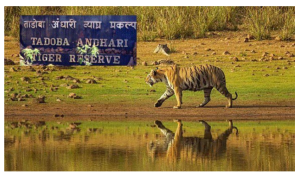
| National Parks in Maharashtra | Tadoba Andhari Tiger Reserve (Chandrapur district) – Known for: Bengal tigers, leopards, and dry deciduous forests. – Area: 1,727 sq km (largest in Maharashtra) |
| Sanjay Gandhi National Park (Mumbai) – Known for: Leopards, macaques, and ancient Kanheri caves. – Area: 104 sq km |
|
| Largest National Park | Tadoba Andhari Tiger Reserve – Area: 1,727 sq km – Location: Chandrapur district – Key features: One of India’s best tiger reserves. |
| Smallest National Park | Gugamal National Park – Area: 167.34 sq km – Location: Amravati district – Key features: Part of Melghat Tiger Reserve, known for biodiversity. |
| Notable Wildlife Sanctuaries | Bhimgad Wildlife Sanctuary (Kolhapur) – Home to Wroughton’s free-tailed bat. Koyna Wildlife Sanctuary (Satara) – Protects Western Ghats’ flora/fauna. Radhanagari Wildlife Sanctuary (Kolhapur) – Famous for Indian bison (gaur). |
| Neighboring States and Boundaries | Gujarat to the northwest, Madhya Pradesh to the north, Chhattisgarh to the east, Telangana to the southeast, Karnataka to the south, Goa to the southwest, Arabian Sea to the west. Maharashtra has a 720 km coastline (Konkan region). |
| Ramsar Sites in Maharashtra | Lonar Lake (2020) – Known for: Meteorite-impact crater lake with unique microbial life. Thane Creek (2022) – Known for: Flamingos and mangrove ecosystems. |
| UNESCO World Heritage Sites | Ajanta & Ellora Caves (1983) – Known for: Ancient Buddhist, Hindu, and Jain rock-cut temples. Chhatrapati Shivaji Maharaj Terminus (2004) – Known for: Victorian Gothic architecture. |
| Tiger Reserves in Maharashtra | Tadoba-Andhari Tiger Reserve – Area: 1,727 sq km Melghat Tiger Reserve – Area: 2,768 sq km (includes Gugamal NP) Sahyadri Tiger Reserve – Area: 1,165 sq km |
Key Notes:
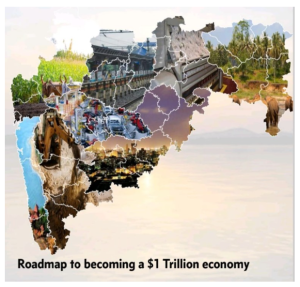
The economy of Maharashtra is highly industrialized, with strong petrochemicals, textiles, pharmaceuticals and renewable energy sectors, supported by world-class infrastructure and business-friendly policies.
| Category | Details |
| Key Sectors | Financial Services: “Financial Capital of India” with Mumbai hosting RBI, SEBI, and BSE. Automobiles: Pune is the “Detroit of India” (Tata Motors, Bajaj, Volkswagen). IT & Tech: Mumbai-Pune corridor (TCS, Infosys, Tech Mahindra). Pharmaceuticals: Produces 25% of India’s medicines (Cipla, Sun Pharma, Lupin). Renewable Energy: Leading in wind power (Suzlon) and solar projects. Port-led Economy: JNPT (Nhava Sheva) handles 50% of India’s container traffic. |
| Major Projects | Mumbai Trans Harbour Link (MTHL): ₹17,840 crore sea bridge (22 km). Navi Mumbai International Airport: ₹16,700 crore project (2025 completion). Delhi-Mumbai Industrial Corridor (DMIC): ₹3 lakh crore investment in logistics. Nagpur-Mumbai Super Expressway (Samruddhi Mahamarg): ₹55,335 crore (701 km). Pune Metro: ₹11,400 crore Phase-I operational (2022). |
| Economic Overview | GSDP for 2023-24: ₹38.79 lakh crore (highest in India, 7.5% growth). Sector-wise Contribution (2023-24): – Agriculture: 12% – Industry: 30% – Services: 58% Maharashtra contributes 15% to India’s GDP with 9.3% of the population. |
| Major Economic Centres | Mumbai: Finance, entertainment, and ports. Pune: Auto, IT, and education. Nagpur: Logistics and oranges (Mihan SEZ). Nashik: Wine capital and electronics. Aurangabad: Manufacturing (Skoda, Bajaj). |
| District-wise Economic Contribution | Mumbai (Suburban): ₹12.5 lakh crore Pune: ₹6.8 lakh crore Thane: ₹4.2 lakh crore Nagpur: ₹2.9 lakh crore Nashik: ₹2.3 lakh crore |
| Important Industrial Infrastructure | Jawaharlal Nehru Port (JNPT): India’s largest container port. Chakan Industrial Belt: Auto hub (Mercedes, BMW). Aurangabad Industrial City (AURIC): Smart manufacturing hub. Mumbai-Pune Expressway: India’s first 6-lane expressway. Navi Mumbai SEZ: 2,140-acre multi-product zone. |
Key Notes:
[metaslider id=”5575″]
Following is the list of all major and minor ports of Maharashtra:
| Port Name | Type | Location | Key Features |
| Jawaharlal Nehru Port (JNPT) | Major | Navi Mumbai | – India’s largest container port (handles ~50% of container traffic). – Connected to Delhi-Mumbai Industrial Corridor (DMIC). – Features SEZ and FTWZ (Free Trade Warehouse Zone). |
| Mumbai Port | Major | Mumbai | – One of India’s oldest ports (British-era). – Handles bulk cargo, crude oil, and passenger ships. – Gateway to India Arch landmark. |
| Dighi Port | Major | Raigad | – Private port (Balaji Infra Projects). – Focuses on coal, bauxite, and chemicals. |
| Ratnagiri Port | Minor | Ratnagiri | – Key fishing and coastal trade hub. – Supports Konkan’s cashew and mango exports. |
| Dahanu Port | Minor | Palghar | – Small fishing and cargo port. – Serves local industries and thermal power plants. |
Following is the list of major and minor minerals found in Maharashtra:
| Mineral Resource | Major Mining Areas / Districts | Details / Notes |
| Coal | Nagpur, Chandrapur (Wardha Valley) | – Used for thermal power generation. – Western Coalfields Ltd. operates major mines. |
| Bauxite | Kolhapur, Raigad | – Key for aluminium production (Hindalco). – Deposits in Western Ghats. |
| Iron Ore | Gadchiroli, Chandrapur | – Supplies steel plants in Maharashtra & Chhattisgarh. |
| Limestone | Solapur, Yavatmal | – Used in cement manufacturing (ACC, UltraTech). |
| Manganese | Nagpur, Bhandara | – Essential for steel and battery industries. |
| Salt | Mumbai, Thane | – Produced along coastal areas. – Small-scale production compared to Gujarat. |
| China Clay | Kolhapur, Sindhudurg | – Used in ceramics, paint, and paper industries. |
Key Notes:
Unique and Notable Facts about Maharashtra

Important rivers include the Godavari (largest in the state, flowing through Nashik), Krishna (southern Maharashtra), Bhima (a Krishna tributary), and Tapi (in the north). These rivers support agriculture, drinking water, hydroelectricity, and industry.
Known for Lavani and Tamasha folk arts, Warli paintings, Paithani sarees, and Ganesh Chaturthi celebrations. The state is home to rich Marathi theatre, classical music traditions, and hill forts associated with Maratha history.
Major sectors include financial services (Mumbai is India’s financial capital), manufacturing (Pune, Nagpur, Nashik), IT (Pune and Navi Mumbai), film industry (Bollywood), and agriculture (sugarcane, cotton, horticulture, grapes, and onions).
Prominent protected areas include: Tadoba-Andhari Tiger Reserve: Major tiger habitat in Vidarbha, Sanjay Gandhi National Park (Mumbai): Urban biodiversity hotspot with leopards, Melghat Tiger Reserve: In Amravati district, part of Satpura ranges, Koyna Wildlife Sanctuary: Part of Western Ghats, rich in biodiversity, Navegaon-Nagzira Tiger Reserve: Important central Indian tiger corridor

Refine your answer writing skills and elevate your UPSC preparation with personalized support and expert feedback.
Fill out the form to get started with the program or any other enquiries !



Are you dreaming of becoming an IAS officer? Then, IAShub can be your best guide. It is one of the Best IAS Coaching in Delhi. Many students who want to clear the UPSC exam join IAShub for learning. The institute gives both online and offline classes. Their teachers are experienced and helpful. They easily explain every topic. Students also get notes, tests, and tips to do well in the exam.
IAShub is in Delhi and is trusted by many UPSC students. It offers coaching for every part of the UPSC exam – Prelims, Mains, and Interview. The classes are simple and easy to understand. The teachers are experts and guide students in the right way. IAShub is also known for its helpful notes, test series, and answer-writing practice. IAShub is the best coaching in Delhi and also gives UPSC Online Classes. This helps students from any place in India to learn. The online classes are live and also recorded. So, students can watch them anytime. These classes cover the full UPSC syllabus.
Here are some important services provided by IAShub:
The UPSC Civil Services Exam has three parts:
This exam is tough, but with the right guidance, it becomes easy to manage. Students must study smart and stay regular.
IAShub supports students from the beginning to the end. It gives the right books, tests, and notes. The classes are easy to follow, and the teachers are always ready to help. Students get personal doubt sessions too. The test series and answer checking help students learn where they need to do better. Also, free study materials save time and money.
IAShub also guides students during the final stage – the interview. Experts take mock interviews and give useful tips. This full support makes IAShub one of the best IAS coaching in Delhi.
Join 50,000+ UPSC Aspirants! 🚀
Get Free UPSC/IAS Study Materials, Daily Current Affairs, Editorial Summaries & Exam Updates.
Join Telegram Channel