Explore Uttarakhand, the Land of Gods, known for its Char Dham pilgrimage, rich biodiversity, adventure tourism, and scenic rivers like the Ganga and Yamuna.
 theIAShub | 05 May, 2025 | 6664 | 0 |

pilgrimage sites, including the Char Dham—Badrinath, Kedarnath, Gangotri, and Yamunotri—which attract millions of pilgrims every year.
Uttarakhand’s rich biodiversity, including national parks like Jim Corbett and Rajaji, makes it a paradise for wildlife enthusiasts and nature lovers. Uttarakhand also offers adventure activities such as trekking, river rafting, and skiing, attracting tourists from around the globe. Its natural beauty and spiritual significance make it a unique destination.
Uttarakhand, historically part of the northern regions of India, was initially a part of Uttar Pradesh. The region has been inhabited since ancient times and holds deep connections to Hindu mythology, with renowned pilgrimage sites such as Haridwar, Kedarnath, and Badrinath. During the medieval period, Uttarakhand was governed by various local kingdoms before coming under the control of the Mughals and, later, the British Empire. After India gained independence in 1947, it continued to be a part of Uttar Pradesh.
Over time, the people of the region sought a separate identity due to Uttarakhand’s unique geographical, cultural, and economic characteristics. The demand for a distinct state grew, driven by the challenges of governance, infrastructure, and development in this hilly region. Finally, on November 9, 2000, Uttarakhand was officially formed as a separate state, fulfilling the aspirations of its people and marking a new chapter in its history.
Also Read: Indian States and Their Capitals
Uttarakhand came into existence on November 9, 2000, when it was carved out from the northern region of Uttar Pradesh. Located at the foothills of the mighty Himalayan mountain ranges, it is one of India’s most scenic and diverse states.
Geographically, Uttarakhand is largely hilly, with an international boundary to the north with China (Tibet) and to the east with Nepal. It also shares its borders with Himachal Pradesh to the northwest and Uttar Pradesh to the south. The state’s terrain is characterized by snow-capped mountain peaks, glaciers, rivers, and dense forests. The presence of various altitudes gives rise to a wide variety of climates, making it a habitat for a diverse range of flora and fauna.
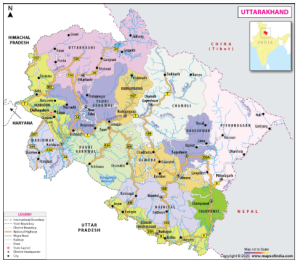
Uttarakhand’s topography is dominated by two primary regions: the Garhwal and Kumaon divisions. Each of these regions offers distinct experiences, from trekking in the Garhwal mountains to exploring the serene lakes of Kumaon.
Uttarakhand has two capitals: Dehradun and Gairsain. Dehradun is located in the Dun Valley, known for its mild climate and scenic beauty. The valley, situated at the confluence of the Yamuna and Ganges rivers, is fertile and rich in biodiversity. Gairsain, located in the Garhwal region, was declared the summer capital in 2020, aiming to promote balanced development in both regions of the state. Together, these capitals play a crucial role in Uttarakhand’s governance and development.
Also Read: Treaties in Indian History
One of the most iconic features of Uttarakhand is its Char Dham pilgrimage circuit, which consists of four revered Hindu temples—Badrinath, Kedarnath, Gangotri, and Yamunotri. These shrines are nestled amidst the towering peaks of the Himalayas and are considered the ultimate spiritual destinations for millions of devotees. Each of these temples is associated with specific myths and legends, and the journey to them is seen as a journey toward spiritual liberation.
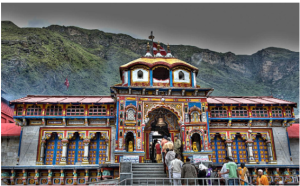
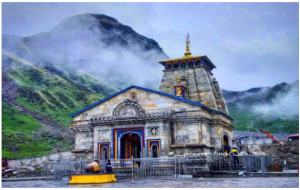
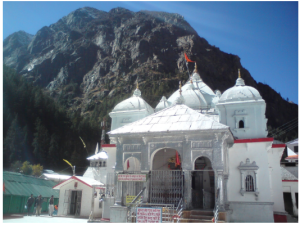
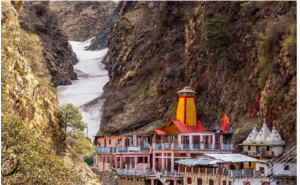
The Char Dham pilgrimage is not only a spiritual journey but also an adventure in itself, as it takes travelers through some of the most rugged and challenging terrains in the world.
Also Read: Important Battles in Indian History
[metaslider id=”5575″]
Uttarakhand’s natural beauty is complemented by its rich biodiversity. The state is home to an impressive variety of flora and fauna, making it a favorite destination for wildlife enthusiasts, ornithologists, and botanists. The state has established several national parks, wildlife sanctuaries, and conservation reserves that protect its unique ecosystem.
Apart from these, Uttarakhand has several lakes, such as Nainital, Bhimtal, and Sattal, which are known for attracting migratory birds and serve as prime birdwatching spots. The state also has two conservation reserves—Asan Barrage and Jhilmil Tal—which further protect its wildlife and provide habitats for a variety of species.
Also Read: Important Battles in Modern History
Uttarakhand, often referred to as the “Land of Gods,” is blessed with a rich network of rivers that not only enhance its scenic beauty but also hold significant cultural, religious, and ecological importance. The rivers in Uttarakhand are predominantly Himalayan in origin, with most of them emerging from glaciers and snow-capped peaks.
Uttarakhand is a haven for adventure tourism, offering a range of outdoor activities like trekking, camping, river rafting, paragliding, and skiing. The state’s diverse landscape, from dense forests and river valleys to snow-clad peaks, provides an ideal backdrop for adventure sports.
Are you preparing for UPSC 2025? Join IAShub’s UPSC coaching batches to boost your preparation. Enroll now!
Related Articles |
|
|---|---|
| National Parks In India | Major Rivers in India |
| UPSC Syllabus | Dams in India |
| Tiger Reserves In India | Public Administration Optional |

The Char Dham—Badrinath, Kedarnath, Gangotri, and Yamunotri—are sacred pilgrimage sites in Uttarakhand, attracting millions of Hindu devotees seeking spiritual liberation and blessings from the gods.
Uttarakhand is home to several wildlife sanctuaries like Jim Corbett National Park, Rajaji National Park, Govind National Park, and Nanda Devi National Park, known for their rich biodiversity.
Uttarakhand is home to picturesque lakes such as Nainital, Bhimtal, Sattal, and Roopkund, which are known for their natural beauty and offer opportunities for boating and birdwatching.
The major rivers flowing through Uttarakhand are the Ganga, Mandakini, Yamuna, Bhagirathi, Alaknanda, and Saraswati, which are crucial for the region’s religious and ecological significance.


Refine your answer writing skills and elevate your UPSC preparation with personalized support and expert feedback.
Fill out the form to get started with the program or any other enquiries !






Are you dreaming of becoming an IAS officer? Then, IAShub can be your best guide. It is one of the Best IAS Coaching in Delhi. Many students who want to clear the UPSC exam join IAShub for learning. The institute gives both online and offline classes. Their teachers are experienced and helpful. They easily explain every topic. Students also get notes, tests, and tips to do well in the exam.
IAShub is in Delhi and is trusted by many UPSC students. It offers coaching for every part of the UPSC exam – Prelims, Mains, and Interview. The classes are simple and easy to understand. The teachers are experts and guide students in the right way. IAShub is also known for its helpful notes, test series, and answer-writing practice. IAShub is the best coaching in Delhi and also gives UPSC Online Classes. This helps students from any place in India to learn. The online classes are live and also recorded. So, students can watch them anytime. These classes cover the full UPSC syllabus.
Here are some important services provided by IAShub:
The UPSC Civil Services Exam has three parts:
This exam is tough, but with the right guidance, it becomes easy to manage. Students must study smart and stay regular.
IAShub supports students from the beginning to the end. It gives the right books, tests, and notes. The classes are easy to follow, and the teachers are always ready to help. Students get personal doubt sessions too. The test series and answer checking help students learn where they need to do better. Also, free study materials save time and money.
IAShub also guides students during the final stage – the interview. Experts take mock interviews and give useful tips. This full support makes IAShub one of the best IAS coaching in Delhi.