
theIAShub
23 Jul, 2025
Article List
- National Mission Sustainable Agriculture
- National Sports Policy
- From SAGAR to MAHASAGAR: India's Strategic Evolution in the Indian Ocean Region
- India’s Nuclear Power Potential: Unlocking it by 2047
- Beetle-fungi Alliance
- Brahmaputra
- Sickle Cell Disease (SCD)
- Fusariosis
- Devadasi System
- WIFEX-II
- Smart Nano-Materials
1. National Mission Sustainable Agriculture
Context
- Indian Council of Agricultural Research (ICAR) has released a total of 2900 varieties during last 10 years (2014-2024), out of which, 2661 varieties are tolerant to one or more biotic and/or abiotic stresses under National Mission On Sustainable Agriculture
About NMSA
- National Mission for Sustainable Agriculture (NMSA) is an initiative under India’s National Action Plan on Climate Change aimed at promoting climate-resilient and sustainable farming practices.
- The National Mission for Sustainable Agriculture (NMSA) was launched in 2014-15.
- This scheme majorly focused on integrating farming, water use efficiency, soil health management, and resource conservation to enhance agricultural productivity, especially in areas where irrigation is less than or equal to 30% of the total area used for cultivation.
- NMSA aims to improve agricultural productivity while promoting sustainability and environmental conservation.
- NMSA derives its mandate from Sustainable Agriculture Mission which is one of the eight Missions outlined under National Action Plan on Climate Change (NAPCC)
Objective of NMSA
- To promote agricultural practices that enhance productivity while being sustainable.
- To make agriculture adaptive to climatic variations and extreme weather conditions.
- To encourage location-specific integrated and composite farming systems.
- To improve soil health, conserve moisture, and promote efficient water management practices.
- To strengthen rainfed agriculture through appropriate technologies and systems.
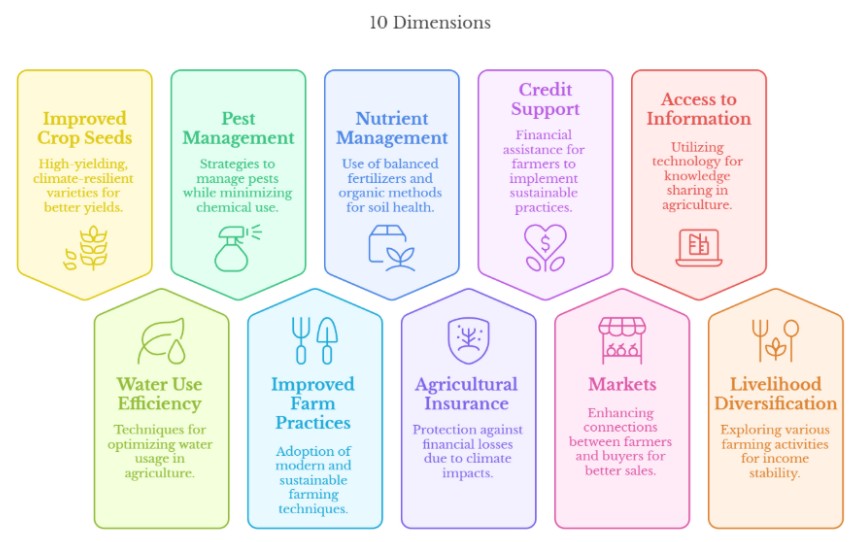
- Improved crop seeds, livestock and fish cultures’, ‘Water Use Efficiency’, ‘Pest Management’, ‘Improved Farm Practices’, ‘Nutrient Management’, ‘Agricultural insurance’, ‘Credit support’, ‘Markets’, ‘Access to Information’ and ‘Livelihood diversification’ are major objective of the mission.
Structure of the Mission
- Rainfed Area Development (RAD) will adopt an area based approach for development and conservation of natural resources along with farming systems. This component has been formulated in a ‘watershed plus framework’, i.e., to explore potential utilization of natural resources base/assets available/created through watershed development and soil conservation activities / interventions under MGNREGS, NWDPRA, RVP&FPR, RKVY, IWMP etc.
- Soil Health Management (SHM) will aim at promoting location as well as crop specific sustainable soil health management including residue management, organic farming practices by way of creating and linking soil fertility maps with macro-micro nutrient management, appropriate land use based on land capability, judicious application of fertilizers and minimizing the soil erosion/degradation.
- Sub-Mission on Agroforestry has been launched in 2016-17 to encourage tree plantation on farm land “Har Medh Par Ped”, along with crops/ cropping system. The scheme is being implemented in the States which have liberalized transit regulations for selected tree species.
Benefits of the Mission
- Integrated farming and water management techniques to boost overall farm productivity.
- Helps farmers in managing risks from extreme weather events like droughts or floods.
- Provides income opportunities through activities that are related to agriculture but are not traditional crop cultivation.
- Promotes efficient and effective use of water, soil, and fertilizers, reducing wastage and ensuring long-term agricultural sustainability.
- Initiatives like the Soil Health Card Scheme empower farmers with actionable insights to optimize agricultural practices.
Achievements of the Mission
- Water conservation and micro-irrigation techniques have significantly reduced water wastage while increasing productivity.
- Integrated farming systems have created diversified income sources, mitigating risks associated with monoculture.
- The Soil Health Card Scheme has helped many farmers related to balanced fertilizer usage, improving crop yields and soil fertility.
Conclusion
- NMSA will cater to key dimensions of ‘Water use efficiency’, ‘Nutrient Management’ and ‘Livelihood diversification’ through adoption of a sustainable development pathway by progressively shifting to environmental friendly technologies, adoption of energy efficient equipment, conservation of natural resources, integrated farming.
- Besides, NMSA aims at promoting location specific improved agronomic practices through soil health management, enhanced water use efficiency, judicious use of chemicals, crop diversification, progressive adoption of crop-livestock farming systems and integrated approaches like crop-sericulture, agro-forestry, fish farming, etc.
2. National Sports Policy
Context
- India, a country with immense talent and growing ambitions in the global sporting arena, is poised for a strategic transformation with the introduction of the National Sports Policy 2025.
About the Policy
- The new policy supersedes the existing National Sports Policy, 2001.
- It lays out a visionary and strategic roadmap to establish India as a global sporting powerhouse and a strong contender for including the 2036 Olympic Games.
Pillars of the Policy
- Excellence on Global Stage: Strengthen sports programs from grassroots to elite levels, enhance capacity and governance of National Sports Federation, etc.
- Economic Development: Promoting the economic potential of sports through sports tourism, promoting Start up and entrepreneurship, etc.
- Social Development: Ensuring social inclusion through the participation of women, weaker sections, etc.
- Sports as a People’s Movement: Driving mass participation, promoting a culture of fitness, universal access to sports facilities, etc.
- Integration with National Education Policy 2020: By integrating sports into school curricula, specialised training for teachers, etc.
Strategic Framework
- Governance: Establish a robust regulatory framework for sports governance, including legal framework.
- Private Sector Funding & support: Develop innovative financing mechanisms and engage private sector participation through PPPs and CSR.
- Technology & Innovation: Leverage emerging technologies, including AI and data analytics, for performance tracking, research, and program implementation.
- National Monitoring Framework: Create a national framework with well-defined benchmarks, Key Performance Indicators (KPIs), and time-bound targets.
- Model Policy for States: The NSP 2025 will serve as a model for States and Union Territories, encouraging them to revise or formulate their own policies in alignment with national objectives.
- Whole-of-Government Approach: The policy calls for integration of sports promotion into the activities, schemes, and programs of all Ministries and Departments to achieve a holistic impact.
Significance of the Policy
- Focuses on identifying and nurturing talent from a young age through structured pathways.
- Advocates for Public-Private Partnerships (PPP) in infrastructure development.
- Recognizes the economic potential of sports—including job creation, tourism, and manufacturing.
- Integrates sports science, medicine, psychology, and nutrition for athlete development.
- Aligns with Fit India Movement, Khelo India, and Viksit Bharat @2047 goals.
India and Sports
- Constitution: Sports is a ‘State’ subject under Seventh Schedule.
- Ministry: Dedicated Ministry of Youth Affairs and Sports (MYAS) with two separate Departments, i.e., Youth Affairs and Sports.
- Key Bodies: Sports Authority of India set up in 1984 under the Societies Act, 1860 under the Department of Sports.
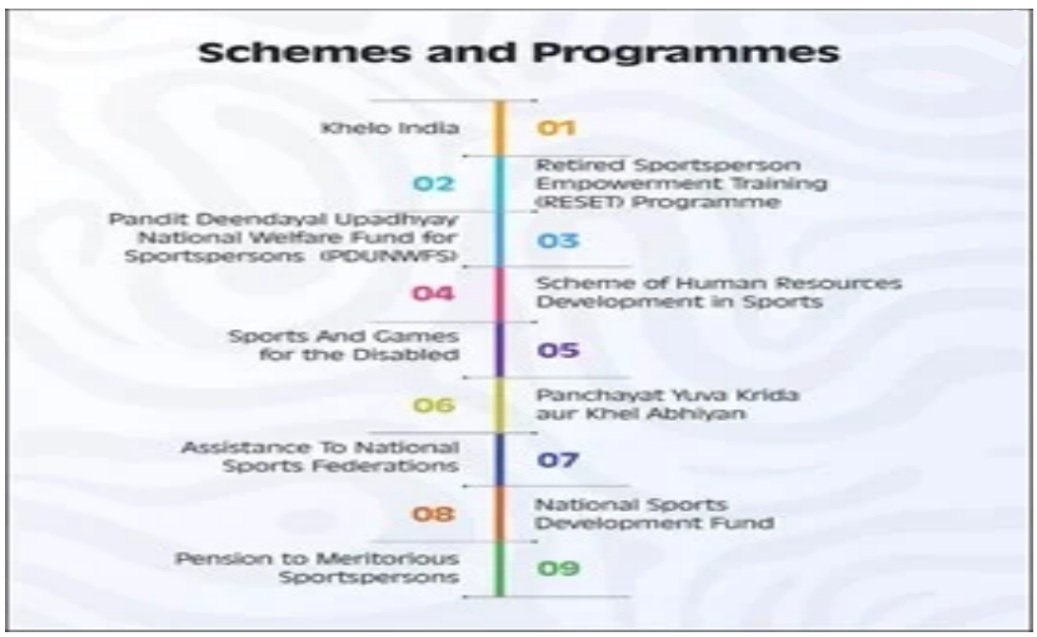
- Government Schemes: TOPS (Target Olympic Podium Scheme 2014), Khelo India (2017), Fit India Movement (2019), etc.
3. From SAGAR to MAHASAGAR: India's Strategic Evolution in the Indian Ocean Region
Context
- India retreated its commitment to the Global South by moving from SAGAR to MAHASAGAR, showing India’s Strategic move towards a more sustainable Waters in Indian Ocean and around the globe.
About Mahasagar Initiative
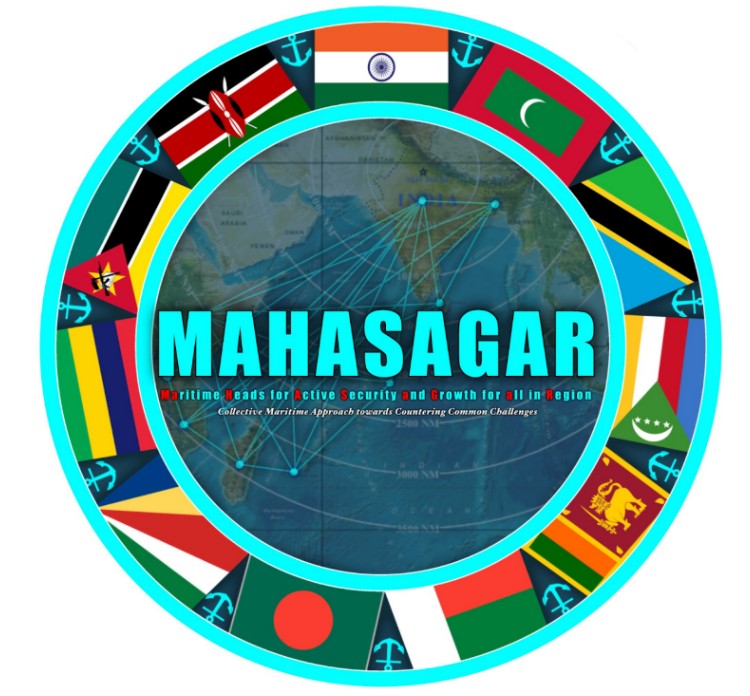
- MAHASAGAR (Maritime Initiative for Security And Growth for All in the Region) is India's flagship strategic framework for engagement in the Indian Ocean Region (IOR).
- Foundational Principle: Built upon Prime Minister Modi's 2015 SAGAR (Security and Growth for All in the Region) vision, emphasizing that maritime security and sustainable economic development in the IOR are fundamentally interconnected and require cooperative solutions.
Primary Objectives
- Enhance Maritime Security: Counter transnational threats like piracy, terrorism, illegal fishing, trafficking (arms, drugs, humans), and maritime pollution.
- Promote Sustainable Economic Growth: Foster a stable maritime environment conducive to trade, resource exploration (e.g.,fisheries, minerals), and the "Blue Economy."
- Strengthen Regional Capacity: Build the capabilities of IOR littoral states to manage their own maritime domains effectively and respond to challenges.
- Establish India as the Net Security Provider: Position India as the primary, reliable, and cooperative security partner for IOR nations.
- Counter Strategic Competition: Offer a transparent, inclusive, and sovereignty-respecting alternative to China's Belt and Road Initiative (BRI), particularly countering perceptions of "debt-trap diplomacy" and strategic encirclement ("String of Pearls").
MAHASAGAR Vision and Global Strategic Dynamics
- MAHASAGAR aims to strengthen ties with smaller states, enhancing maritime domain awareness and curbing illegal activities.
- Medium and smaller powers are seeking credible partners, given their experiences with China and the US.
- India is perceived as a more benign partner in the Indo-Pacific, offering long-term opportunities in the maritime domain.
Maritime Domain Awareness (MDA): Components and Activities
- Capacity Building:Providing training programs for maritime security forces of partner nations.Supplying patrol vessels, surveillance aircraft, and other essential equipment (often through grants or concessional loans).Sharing technology and expertise in areas like hydrography, oceanography, and maritime law enforcement.
- Establishing information fusion centers (e.g., IFC-IOR in Gurugram) to facilitate real-time maritime data sharing.Deploying coastal surveillance radar systems in partner countries (e.g., Mauritius, Seychelles, Sri Lanka, Maldives).Enhancing satellite surveillance and reconnaissance capabilities over the IOR.
- Humanitarian Assistance and Disaster Relief (HADR):Leading coordinated regional responses to natural disasters (cyclones, tsunamis).Providing rapid deployment of naval assets, medical aid, relief supplies, and evacuation support.
- Infrastructure Development:Conducting joint HADR exercises with regional partners.Supporting the development and modernization of ports and harbors in partner nations (e.g., Chabahar in Iran, Duqm in Oman, Agaléga in Mauritius, Sabang in Indonesia).
Way Forward for MAHASAGAR
- Blue Economy Leadership: Positioning MAHASAGAR as the key facilitator for sustainable development of fisheries, marine resources, renewable energy, and tourism in the IOR, linking security directly to prosperity.
- Seamless Information Sharing: Overcoming bureaucratic and trust hurdles to make the Information Fusion Centre - Indian Ocean Region (IFC-IOR) and other MDA networks truly effective for real-time, actionable intelligence sharing.
- Countering Strategic Competition:Consistently emphasizing and demonstrating the advantages of MAHASAGAR's model - transparency, respect for sovereignty, sustainability, lack of debt traps - versus alternatives like China's BRI.
4. India’s Nuclear Power Potential: Unlocking it by 2047
Context
- India targets 100 GW nuclear power by 2047 for a more sustainable energy future and for the Viksit Bharat Goal by 2047.
About India’s Nuclear Power for 2047
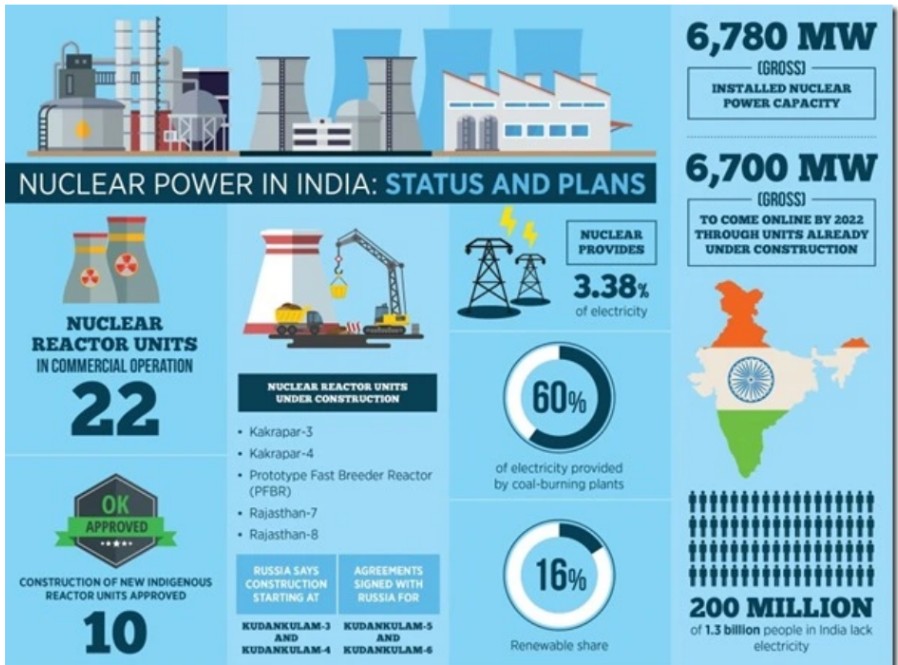
- The Union Budget 2025–26 signals a major shift in India’s energy strategy by setting an ambitious target of 100 GW nuclear power capacity by 2047, a sharp rise from the current 8.18 GW.
- This aligns with the dual national goals of Viksit Bharat by 2047 and achieving net-zero emissions by 2070.
- To advance this vision, the Nuclear Energy Mission has earmarked ₹20,000 crore to develop at least five indigenous Small Modular Reactors (SMRs) by 2033.
- Achieving these goals will require private sector participation, which in turn demands reforms in the Atomic Energy Act, 1962 and the Civil Liability for Nuclear Damage Act, 2010.
- Beyond legal reforms, a broader mindset shift is essential to transition nuclear energy from a government-led domain to a public-private growth engine.
India’s Nuclear Power Journey
- India’s nuclear programme began early, with the Apsara reactor established in 1956 and nuclear power development initiated at Tarapore in 1963.
- Dr. Homi Bhabha had envisioned 8 GW of nuclear power by 1980.
- However, geopolitical events such as the 1962 war with China, India’s refusal to join the Nuclear Non-Proliferation Treaty in 1968, and its 1974 Peaceful Nuclear Explosion led to international isolation and export restrictions.
- India focused on indigenising nuclear technology, eventually developing 220 MW Pressurised Heavy Water Reactors (PHWRs), which used natural uranium.
- Post-1998 nuclear tests and subsequent diplomatic engagement led to India being recognised as a responsible nuclear power.
- It culminated in a waiver from the Nuclear Suppliers Group (NSG), allowing renewed international cooperation.
- Despite this, India’s Civil Liability for Nuclear Damage Act (CLNDA) discouraged foreign participation in building new nuclear plants, leaving Russia as the only active partner under a pre-CLNDA agreement, constructing six VVER-1000 reactors at Kudankulam.
Nuclear Power: Key to India Green Transition
- To achieve developed nation status by 2047, India must grow its per capita income from $2,800 to $22,000 and its GDP from $4 trillion to over $35 trillion.
- Since economic growth is closely linked with energy consumption, India’s electricity generation capacity — currently 480 GW, split equally between fossil fuels and renewables — must grow fivefold.
- However, renewable energy sources like solar and wind are intermittent and currently contribute only a fraction of total electricity generation.
- In 2024, despite comprising half the capacity, renewables generated just 240 TWh, while coal plants provided 75% of the total power.
- India’s climate commitments — including net zero emissions by 2070, 500 GW of non-fossil energy by 2030, and 50% energy demand met through renewables — restrict future dependence on fossil fuels.
- With renewables expected to meet only 20-25% of demand even with advanced storage solutions, nuclear energy emerges as a crucial alternative.
Challenges to India’s Nuclear Expansion
Restrictive Measures
- Atomic Energy Act, 1962 restricts nuclear operations to government entities.
- CLNDA, 2010’s supplier liability clause deters foreign/private participation
Regulatory Gaps
- Atomic Energy Regulatory Board (AERB) lacks legal independence and previous reform Bill lapsed in 2011.
Financing Hurdles
- Capital cost of $2 million/MW for PHWRs vs. <$1 million/MW for coal.
- Lack of green financing eligibility; limited PPP/JV frameworks.
Tariff Disputes and Regulation
- Disputes like NPCIL vs Gujarat Urja Vikas Nigam raise questions about whether nuclear tariffs should follow the Electricity Act framework.
- With private players entering, clear and predictable tariff-setting mechanisms are essential.
Incentivising Nuclear Investments
- Reclassify as Renewable: Though low-carbon, nuclear is not officially labelled “renewable.” Reclassifying it would unlock tax benefits and access to green financing instruments.
- Viability Gap Funding & PPAs: Long-term power purchase agreements and targeted funding support will make nuclear investments more attractive.
- Foreign Direct Investment (FDI): The sector should be opened up to FDI — possibly up to 49% — to maintain Indian control while bringing in global capital.
Conclusion
- India’s civil nuclear journey must now transition from cautious evolution to bold reform. With strategic, legislative, and financial restructuring, nuclear energy can be India’s backbone for green, secure, and inclusive growth. Achieving 100 GW by 2047 is not just an energy target — it’s a cornerstone of India’s aspiration for development and climate leadership.
5. Beetle-fungi Alliance
Context
- Recently, researchers from the Kerala Forest Research Institute (KFRI) uncovered a serious ecological and economic threat facing Kerala, which produces 90% of India's natural rubber. A destructive alliance between the ambrosia beetle (Euplatypus parallelus) and two fungal pathogens-Fusarium ambrosia and Fusarium solani, has begun decimating rubber plantations across the state.
About Ambrosia Beetle
- Belong to the wood-boring insect families. Found in Eastern Africa, India, Sri Lanka, China, Japan, Southeast Asia, Central and South Americа.
- Feeding Behavior: Prefer dead or dying trees to cultivate ambrosia fungi, which serve as their primary food source. •
- Attraction Mechanism: Drawn to trees that emit volatile organic compounds (like ethanol) when stressed or weakened.
- First reported in India in 2012 in cashew plantations of Goa. Recently detected in the Irrity-Kannur rubber belt of Kerala.
- Fungal Association: Carries fungal pathogens into host trees and cultivates them within tunnels (galleries) bored into the bark.
About Fusarium Ambrosia
- It is cultivated by beetles inside host trees as a food source.
- Considered weakly pathogenic but plays a role in tree decline when beetles bore stressed trees.
- Carried in mycangia (specialized organs) of beetles and inoculated into inoculated tree xylem.
- Reported in Asia, Africa, and recently in India, often associated with invasive ambrosia beetles.
About Fusarium Solani
- Fusarium solani species complex (FSSC)
- A soil-borne fungus found globally and pathogenic to plants, humans, and animals.
- Plant Pathogen: Causes root rot, stem canker, and fruit rot in crops like legumes, cucurbits, and potatoes.
- Human Pathogen: Opportunistic infections in immunocompromised individuals.
6. Brahmaputra
Context
- Recently, China officially commenced construction on a massive $170 billion hydropower project on the Yarlung Zangbo River, just before it enters India's Arunachal Pradesh and becomes the Brahmaputra.
- The development has raised serious concerns in India, especially in Arunachal Pradesh, due to potential risks of sudden flooding, ecological degradation, and disruption to India's own hydropower initiatives in the Northeast.
About Brahmaputra
- A major Himalayan river system in Asia, vital for water, agriculture, and biodiversity. It stretches over 2,900 km, flowing through Tibet, India, and Bangladesh.
- Originates from the Chemayungdung Glacier in southwestern Tibet near the sources of the Indus and Satluj rivers. In Tibet, it is known as Yarlung Tsangpo.
- India (Arunachal Pradesh): Enters as Dihang; after merging with Lohit and Dibang rivers near Sadiya, it becomes the Brahmaputra.
- Assam: Flows westward, forming river islands like Majuli and Umananda.
- Bangladesh: Known as the Jamuna, it merges with the Ganga and Meghna, forming the Sundarbans Delta.
- Major tributaries: Subansiri, Manas, Teesta, Lohit, Dibang, Kameng etc.
7. Sickle Cell Disease (SCD)
Context
- Recently, India achieved a major milestone under the National Sickle Cell Anemia Elimination Mission, having screened over 6 crore individuals for Sickle Cell Disease (SCD) out of the targeted 7 crore.
About SCD
- A hereditary blood disorder caused by mutations in the gene responsible for producing hemoglobin.
- Cell Shape Abnormality: Unlike healthy disc-shaped red blood cells, affected individuals have red blood cells shaped like a crescent or sickle.
- Health Impact: Leads to reduced red blood cell lifespan and chronic anemia.
- Causes poor oxygen delivery and blockages in blood vessels.
- Can result in acute pain episodes, severe infections, and tissue death (necrosis). Long-term damage to organs like the heart, lungs, and kidneys is common.
- Prevalence in India: Primarily affects tribal populations in Odisha, Jharkhand, Chhattisgarh, Madhya Pradesh, and Maharashtra.
- Treatment: Gene therapy and stem cell transplantation.
National Sickle Cell Anaemia Elimination Mission
- Vision: To eliminate SCD as a public health problem in India by the year 2047.
- Objective: Improve healthcare access and outcomes for all SCD patients.
- Reduce the prevalence of the disease, especially among tribal populations.
- Promote awareness, screening, behavioural change, and counselling.
- Target Population: Universal screening of 7 crore individuals aged 0-40 years in high prevalence tribal regions.
- Key Activities: Awareness generation campaigns, large-scale screening and testing, Genetic counselling and community engagement, Inter-ministerial and state collaboration coordinated efforts.
- Focus States (17 high-prevalence states): Gujarat, Maharashtra, Rajasthan, Madhya Pradesh, Jharkhand, Chhattisgarh, West Bengal, Odisha, Tamil Nadu, Telangana, Andhra Pradesh, Karnataka, Assam, Uttar Pradesh, Kerala, Bihar, and Uttarakhand.
8. Fusariosis
Context
- Recently, Indian researchers at the Bose Institute developed a fungus-resistant variety of pineapple by overexpressing the AcSERK3 gene, providing a sustainable and effective solution against Fusariosis.
About Fusariosis
- Caused by the aggressive fungus Fusarium moniliforme and considered one of the most serious threats to pineapple cultivation.
Impact on Crop
- Deforms the plant's stem.
- Causes blackening of leaves.
- Rots the fruit internally, making it unfit for consumption.
- Leads to significant crop losses and highly unreliable harvests.
Key Highlights
- Scientists have discovered a key gene: Somatic Embryogenesis Receptor Kinase (SERK), which helps activate plant immune responses.
- By overexpressing AcSERK3, researchers boosted the pineapple's natural defence system.
- The genetically enhanced plants showed greater resistance to Fusarium fungus compared to normal varieties.
About Pineapple
- Most economically important fruit of the Bromeliaceae family.
- Grows best at low elevations with temperatures between 15-30°С.
- Highly drought-tolerant, due to special water-storage cells.
- Rainfall : Tolerates 600-2500 mm/year (Optimum range: 1000-1500 mm/year) •
- Soil Conditions: Adaptable to various soils but cannot tolerate waterlogging.
- Can be cultivated as a monocrop or intercrop (especially with coconut).
- India: Assam, Meghalaya, Tripura, Manipur, West Bengal, Kerala, Karnataka and Goa
- World: Thailand, Philippines, Brazil, China etc
9. Devadasi System
Context
- Recently, in a landmark move to enhance protection and rehabilitation for women affected by the Devadasi system, the Karnataka government is finalising a new draft law titled the Karnataka Devadasi (Prevention, Prohibition, Relief and Rehabilitation) Bill.
- This proposed legislation aims to replace the outdated Karnataka Devadasi (Prohibition of Dedication) Act, 1982.
About Devadasi system
- A cultural and religious practice historically prevalent in South and parts of Western India.
- Meaning of Devadasi: A girl who is "dedicated" to the worship and service of a deity or temple for life.
- Age of Dedication: Typically, girls between the ages of 8 and 16 years were inducted into the system.
- Original Role: Maintained temples and performed religious rituals. Trained in and performed classical Indian art forms such as Bharatanatyam and Odissi.
- Need For Protection: The Devadasi system leads to sexual exploitation and violates child rights and constitutional protections.
- It targets young Dalit girls, reinforcing patriarchal and caste-based discrimination. Devadasis face poor health, economic marginalization, and lack of social security.
10. WIFEX-II
Context
- Recently, the Indian Institute of Tropical Meteorology (IITM) announced the launch of WIFEX-II, an advanced phase of its decade-long Winter Fog Experiment, aimed at providing accurate, runway-specific fog forecasts for additional airports across north India.
About Winter Fog Experiment
- Launched in winter 2015 at Indira Gandhi International Airport
- (IGIA), New Delhi and led by Indian Institute of Tropical Meteorology (IITM), under the Ministry of Earth Sciences (MOES).
Supported by
- India Meteorological Department (IMD) and National Centre for Medium Range Weather Forecasting (NCMRWF).
Significance
- One of the world's few long-term open-field experiments focused exclusively on fog, a major winter hazard in the Indo-Gangetic Plain.
Objectives
- To improve now-casting (next 6 hours) and forecasting of winter fog at various temporal and spatial scales.
- To reduce the adverse impact of fog on aviation, transportation, and the economy.
- To help prevent loss of human life caused by fog-induced accidents.
11. Smart Nano-Materials
Context
- Recently, scientists at the Centre for Nano and Soft Matter Sciences (CeNS), Bengaluru, developed multi-layer nanomaterials capable of detecting hazardous chemicals and explosives such as TNT and RDX, even at extremely low concentrations.
About Experiment
- A trilayer nanomaterial comprising: Reduced Graphene Oxide (rGO), Silver Nanoparticles (Ag) and Cerium Oxide (CeO2).
Unique Role of Each Layer
- Silver Nanoparticles (Ag): Enhance Raman signals, enabling high-sensitivity detection through Surface-Enhanced Raman Spectroscopy (SERS).
- Cerium Oxide (CeO2): Prevents silver oxidation, improves stability in hot and humid conditions, and enhances electron transfer for clearer signals.
- Reduced Graphene Oxide (rGO): Suppresses fluorescence noise, allowing for accurate and clean detection of molecular fingerprints.
- Fabrication Method: Developed using Physical Vapor Deposition (PVD) - a scalable and reproducible technique that ensures uniform layering.
Real-World Applications
- Aviation Security: Rapid, reliable detection of explosive traces on luggage or surfaces.
- Forensic Science: Enhanced evidence collection in crime scenes involving explosives toxins.
- Environmental Monitoring: Trace-level detection of industrial pollutants or chemical leachates.

2026-27 UPSC Mains English QEP Power Pages
View DetailsSubmit Your Details to Learn More



