
theIAShub
14 Jul, 2025
Article List
- Rajya Sabha Nominations
- International Financial Services Centres Authority (IFSCA)
- Artificial Intelligence: Transforming the Manufacturing Landscape
- BRICS Currency to BRICS Pay: A New Paradigm
- Livestock Sector: Workshop on Breed Development in India
- Informal Credit in India
- Tadoba Andheri Tiger Reserve
- Aircraft Accident Investigation Bureau (AAIB): India’s Air Crash Probe Authority
- Jarawa Tribe
- Talisman Sabre Exercise
- 3I/ATLAS
- Mucormycosis
- Mapping the Application of Artificial Intelligence in Traditional Medicine
1. Rajya Sabha Nominations
Context
- The Prime Minister, Shri Narendra Modi has extended heartfelt congratulations and best wishes to four distinguished individuals who have been nominated to the Rajya Sabha by the President of India.
About Rajya Sabha
- The Rajya Sabha is the Upper House of India’s bicameral Parliament.
- Literally meaning the “Council of the States“, the Rajya Sabha has been envisaged as the House that represents the interests of the various States and Union Territories of the Union of India.
Composition Of Rajya Sabha
- The Constitution of India has fixed the maximum strength of the Rajya Sabha at 250 members, of which
- 238 members are to be representatives of the States and Union Territories (UTs), and
- 12 members are to be nominated by the President Of India.
Representation of States In Rajya Sabha
- The representatives of States in the Rajya Sabha are elected by the elected members of State Legislative Assemblies.
- The election in the Rajya Sabha is held in accordance with the System of Proportional Representation by means of the Single Transferable Vote.
- The seats are allotted to the States in the Rajya Sabha based on the population of that particular State.
- Hence, the number of representatives varies from State to State.
- Union Territories Representations: The representatives of each Union Territory in the Rajya Sabha are indirectly elected by members of an Electoral College specially constituted for the purpose.
- This election is also held in accordance with the System of Proportional Representation by means of the Single Transferable Vote.
NOTE: Out of the eight Union Territories (UTs), only Delhi, Puducherry, and Jammu & Kashmir have representation in the Rajya Sabha. The populations of the other five Union Territories are too small to have any representative in the Rajya Sabha.
Nominated Members in Rajya Sabha
- The President of India nominates 12 members to the Rajya Sabha from people who have special knowledge or practical experience in the field of:
- art,
- literature,
- science, and
- social service.
- The rationale behind this principle of nomination of members to the Rajya Sabha is to provide eminent persons with a place in the House without going through the process of elections.
2. International Financial Services Centres Authority (IFSCA)
Context
- The largest privately owned bank in Taiwan, CTBC Bank, is the latest to apply to the International Financial Services Centres Authority (IFSCA) for setting up a IFSC Banking Unit (IBU) in GIFT City.
About
- It is a statutory authority established under the International Financial Services Centres Authority Act, 2019 (IFSCA Act).
- The IFSCA is a unified authority for the development and regulation of financial products, financial services, and financial institutions in the International Financial Services Centre (IFSC) in India.
- The IFSCA aims to develop a strong global connection and focus on the needs of the Indian economy as well as to serve as an international financial platform for the entire region.
- Prior to the establishment of IFSCA, the domestic financial regulators, namely, RBI, SEBI, Pension Fund Regulatory and Development Authority (PFRDA), and Insurance Regulatory and Development Authority (IRDAI), regulated the business in IFSC.
- It is headquartered at GIFT City, Gandhinagar, in Gujarat.
- At present, the GIFT IFSC is the maiden IFSC in India.
Members of IFSCA
- It consists of nine members, appointed by the central government.
- They will include the chairperson of the authority, a member each from the RBI, SEBI, IRDAI, and PFRDA.
- Two members from the Ministry of Finance.
- In addition, two other members will be appointed on the recommendation of a Selection Committee.
- Term: All members of the IFSC Authority will have a term of three years, subject to reappointment.
3. Artificial Intelligence: Transforming the Manufacturing Landscape
Context
- The manufacturing sector is going towards a powerful revolution, powered by algorithms and Artificial Intelligence System.
About AI in Manufacturing
- AI is used to create a virtual replica of processes, production lines, factories and supply chains that are used to simulate, analyze and predict performance in real time.
- AI is transforming operations from legacy facilities to state-of-the-art plants.
- It enables higher output, lower waste, real-time adaptability, and smarter design.
Current Status and Projections
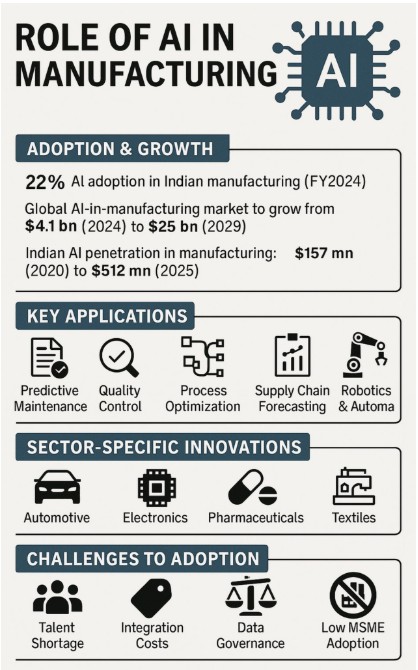
- Globally, the AI-in-manufacturing market is poised to grow from $4.1 billion in 2024 to more than $25 billion by 2029.
- In India, AI adoption in manufacturing jumped from 8% to 22% in just one year (FY2024).
- Data and AI could add $450-$500 Bn to India’s GDP by 2025.
Key application of AI in Manufacturing
- Predictive Maintenance: Reduces downtime by up to 30% using sensor data and machine learning (McKinsey).
- Quality Control: AI vision systems detect micro-defects in real time.
- Process Optimization: AI adjusts workflows dynamically to reduce waste and boost efficiency.
- Supply Chain Forecasting: Enhances agility and responsiveness by over 20% (IBM).
- Robotics & Automation: Cobots assist workers in repetitive or high-risk tasks, improving safety and productivity.
- Sector-Specific Innovations:
- Automotive: AI-powered robotics streamline assembly and inspection.
- Electronics: Machine vision ensures precision in component assembly.
- Pharmaceuticals: AI monitors large-scale production and ensures regulatory compliance.
- Textiles: CAD/CAM systems optimize cutting, stitching, and inspection.
Challenges to Adaptation
- Talent Shortage: Need for upskilling in AI and machine learning.
- Integration Costs: High initial investment slows adoption among MSMEs.
- Data Governance: Concerns over transparency and explainability of AI models.
- Reliable connectivity and cloud access remain uneven, especially in tier-2 and tier-3 cities.
- Low MSME Adoption: Only about 15% of SMEs currently use AI in manufacturing.
- Cautious Optimism: About 44% of manufacturing leaders hesitate to scale generative AI due to concerns about explainability and accuracy.
Government Initiatives
- National Program on AI (MeitY): It promotes responsible AI use across sectors including manufacturing.
- Samarth Udyog Bharat 4.0: Supports smart factory development and Industry 4.0 adoption.
- IndiaAI Mission: ₹10,300 crore allocated to build AI infrastructure and indigenous models.
- Centres of Excellence (CoEs): Focused on AI in healthcare, agriculture, education, and sustainable cities.
4. BRICS Currency to BRICS Pay: A New Paradigm
Context
- The BRICS members are quietly working on an alternative payment channel which will coexist with the dollar.
About
- The BRICS summit 2025 has drawn to a close with the usual commitment to forge cooperation in the Global South and the expected tirade from Donald Trump.
- But there was plenty of drama ahead of the summit, with the Indian government going to great lengths to clarify that members of the bloc are not conspiring to dethrone the dollar.
- The MEA Secretary had clarified that the members are only evaluating alternative channels to trade in national currencies to protect themselves from geopolitical vulnerabilities and that it should not be construed as a move towards 'de-dollarisation'.
BRICS Strategy: Stealthy De-Dollarisation
- Despite denials, BRICS is actively working to reduce dollar dependence. While a common BRICS currency is deemed unlikely soon (due to internal reluctance, especially from India and China, and US pressure), the bloc is pursuing alternatives:
- Increased Local Currency Trade: Members are settling more bilateral trade in their own currencies (e.g., India with Russia, UAE, Iran; China settling 30% in Yuan).
- BRICS Pay: An operational alternative to SWIFT, spearheaded by Russia and China, linked to 75 countries and enabling settlements in 23 currencies (including members' currencies and the dollar).
- It uses domestic payment systems for speed.
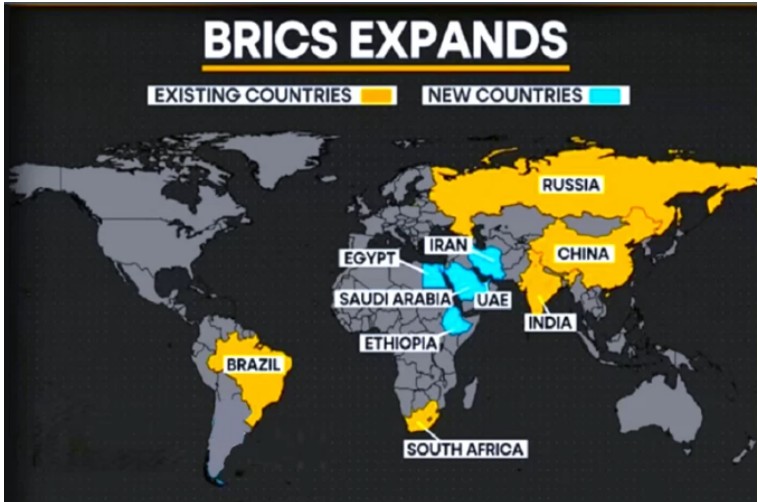
- BRICS Expansion & Growing Clout: The bloc's power has surged significantly due to recent additions (Egypt, Ethiopia, Indonesia, Iran, Saudi Arabia, UAE) bring total membership to 10.
- Combined, they represent 29% of global GDP (PPP), 48.5% of the world's population, 36% of Earth's territory, 72% of critical rare earth minerals, 43.6% of global oil, and 36% of natural gas production.
- The Russia-Ukraine war acted as a catalyst for the bloc's importance.A new "Partner Countries" category (10 nations) was also created.
Significance of BRICS Currency
- BRICS aims to increase the Global South's influence in international institutions (UN, IMF, World Bank, WTO), making them more legitimate and equitable. This goal resonates with many developing nations.
- Future Outlook: BRICS is methodically building alternative financial channels ("brick by brick"), focusing on reducing dollar reliance without direct confrontation.
- Finance ministers are tasked to continue developing payment system interoperability. The long-term success in challenging Western-led institutions remains uncertain and will depend on adoption and effectiveness over time (results expected in ~10 years).
Way Ahead
- Accelerate Adoption: Actively encourage all BRICS members and partner countries to integrate into BRICS Pay for cross-border settlements.
- Expand Functionality: Move beyond trade settlements to include investment flows, remittances, and potentially capital markets over time.
- Enhance Interoperability: Implement the BRICS Payment Task Force's (BPTF) recommendations to seamlessly connect national payment systems (like India's UPI, Brazil's PIX).
- Negotiate more government-to-government and central bank agreements enabling direct trade in national currencies, bypassing the dollar.
- Liquidity Mechanisms: Develop robust currency swap lines between BRICS central banks to ensure sufficient liquidity for LCS and manage exchange rate volatility.
- Incentivize Businesses: Provide tax benefits, simplified regulations, and guarantees to encourage private sector use of LCS.
5. Livestock Sector: Workshop on Breed Development in India
Context
- Recently Deliberations on strategies for strengthening indigenous breed development and Genetic improvement in the Livestock Sector, in Lucknow, Uttar Pradesh
About the Workshop
- The workshop brought together experts from Central and State Governments, research organizations, private institutions, policymakers, and progressive farmers from across the country to deliberate on strategies for strengthening indigenous breed development and genetic improvement in the livestock sector.
- The workshop was attended by more than700 livestock farmers, veterinarians, senior officials from the Centre and States/UTs.
- The workshop was organized with an aim to ideate on the strategies and way ahead to improve the livestock sector in the country.
About Livestock Sector in India
- India has world's largest population of livestock.
- India is largest producer of buffalo meat and 2nd largest producer of goat meat.
Significance of Livestock Sector in India
- Contribution to GDP: Contribution to total Livestock GVA (at constant prices) was 30.19% of Agricultural and Allied Sector GVA and 5.73% of Total GVA in 2021-22.
- Employment Generation: Livestock rearing is a major source of livelihood for over 70% of rural households in India, with a significant proportion being small and marginal farmers and landless laborers.
- Interlinkages with Agri-activities: Livestock sector is crucial for production of organic inputs like manure and agricultural waste is used as fodder for animals.
- Food and Nutritional Security: Livestock products such as milk, meat, and eggs are rich in essential nutrients, playing a crucial role in combating malnutrition, especially among children and women.
- India is ranked 1st in milk production contributing 23% of global milk production.
Issues faced by Livestock Sector in India:
- Health and Veterinary Issues:
- High economic losses due to animal diseases: E.g., Haemorrhagic Septicaemia, Foot and Mouth Disease, Brucellosis, etc.
- Also, zoonotic diseases can be transmitted between animals and humans, as evidenced by recent outbreaks like COVID-19, Ebola, and avian influenza
- Inadequate infrastructure and human resources: India has less than 60 recognized veterinary colleges in India, which are inadequate to turn out the required number of vets.
- Rise of Anti-Microbial Resistance: India ranks 4th in antibiotics use in animals, wherein the poultry sector is the largest reservoir of antibiotics.
- High economic losses due to animal diseases: E.g., Haemorrhagic Septicaemia, Foot and Mouth Disease, Brucellosis, etc.
- Economic Issues:
- Low Productivity: Due to inadequate nutrition, poor management practices, and low genetic potential of local breeds.
- Average annual productivity of cattle in India is 1777 kg/animal/year as against the world average of 2699 kg/animal/year (2019-20).
- Unorganized Sector: About half of total meat production comes from un-registered, make-shift slaughterhouses.
- High Marketing and transaction costs: of livestock products at around 15-20% of sale price.
- Low insurance cover: Only 15.47% of animals are under insurance cover.
- Shortage of fodder: India has only 5% of its cultivable land under fodder production while having 11% of livestock, creating a huge pressure on land, water and other resources.
- Low Productivity: Due to inadequate nutrition, poor management practices, and low genetic potential of local breeds.
- Inadequate attention towards extension services: There is no exclusive livestock extension program, and most services are animal health-focused, not extension-focused.
- Green House Gas emissions: Enteric methane emission from Indian livestock contributed 15.1% total global enteric methane emissions.
Initiatives taken by Government
- Rashtriya Gokul Mission: Focuses on the development and conservation of indigenous breeds through selective breeding and genetic upgradation.
- National Livestock Mission: Aims to ensure quantitative and qualitative improvement in livestock production systems and capacity building of all stakeholders.
- Extension of Kisan Credit Card (KCC) to the sector and establishment of Animal Health Infrastructure Development Fund etc.
- Dairy Development Programs: Schemes like the National Programme for Dairy Development (NPDD) and Dairy Entrepreneurship Development Scheme (DEDS) aim to modernize the dairy sector and promote entrepreneurship.
- Livestock Health and Disease Control Programs: Include the National Animal Disease Control Programme (NADCP) for FMD and Brucellosis, and the Livestock Health and Disease Control Scheme to strengthen disease surveillance and diagnostic services.
Way Forward
- National Animal Disease Reporting System (NADRS) requires to be strengthened with infrastructural support and digitalization for real-time reporting of disease outbreaks.
- Mobile veterinary services for remote areas to provide first aid, artificial insemination, deworming, and vaccination services at farmers' doorstep.
- Promote Livestock-based integrated farming system (IFS) to integrate crop cultivation, livestock rearing, and other agricultural activities to optimize resource use, enhance productivity, and ensure sustainability.
- Facilitating access to markets, establishing efficient value chains, and promoting digital platforms for marketing and information dissemination.
- Increase insurance Coverage in Livestock Sector to shift the livestock owners' risk to insurance companies.
- Formulating Area-specific policy. E.g. policy focus in rain-fed areas should be on livestock rearing or livestock-based integrated farming system.
6. Informal Credit in India
Context
- Despite nearly universal bank account penetration in India, fresh data (CMIE, Piramal Enterprises) show a sharp shift by poor households towards informal borrowing, due to limited access to formal credit Channels.
About Informal Credit: What is it?
- It is a type of credit that is credit from Non-Regulated entities like moneylenders, Pawnshops, friends/family, chit funds.
- It typically lacks documentation or consumer protection.
Why Informal Sector is more Vulnerable
- Consuming households tend to be net savers, while the government, corporates and unincorporated enterprises are net debtors.
- Competition for Funds - A major chunk of saving are held with banks, insurance companies, from which the net debtors borrow from.
- When government borrows considerable sums to finance its deficits, it reduces the lending potential of financial institutions due to a smaller fund pool.
- Hence, while the big corporates can still access capital from the remaining or through the bond/share market, the informal enterprises get left out.
- Notably, informal sector does not have the resources required to access credit from diverse sources and is left to depend on extortionist money lenders.
Recent trends and Shifts
- 96% of Indian households have at least one bank account (NFHS-5, 2021).
- Despite this, credit access remains skewed:
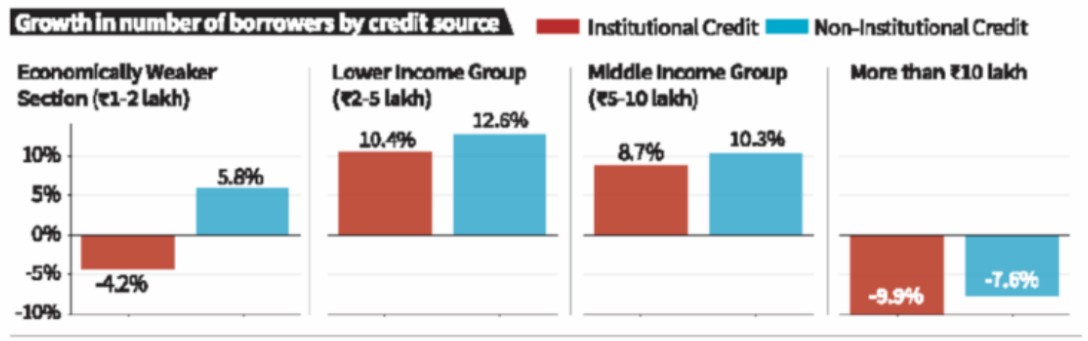
- 4.2% fall in formal credit among poor households (CMIE 2023).
- 5.8% rise in informal borrowing by those earning ₹1–2 lakh annually.
- 75% of rural adults still rely on informal credit in some form (NABARD Financial Inclusion Survey, 2019).
- ₹1.4 lakh crore was the estimated outstanding informal credit as of 2022 (CRISIL report).
Implications
- Banks and NBFC’S reluctant to lend to high-risk low-income groups.
- Lack of documentation, collateral, or stable income proof blocks formal credit access.
- Credit demand–supply mismatch: Formal sector unable to match localised, immediate lending needs.
Way Forward
- Given the anatomy of the private investments slowdown, a macroeconomic stimulus may not be the best policy choice.
- Urgent fiscal deficit reduction, quick clean-up of the bad loans mess, and restoration of banks’ health are more likely to revive private investments.
- The current credit policy seems skew in favour of the visible and large organised enterprises, which needs to be corrected.
- Recognising the credit needs of the unorganised sector is hence crucial.
7. Tadoba Andheri Tiger Reserve
Context
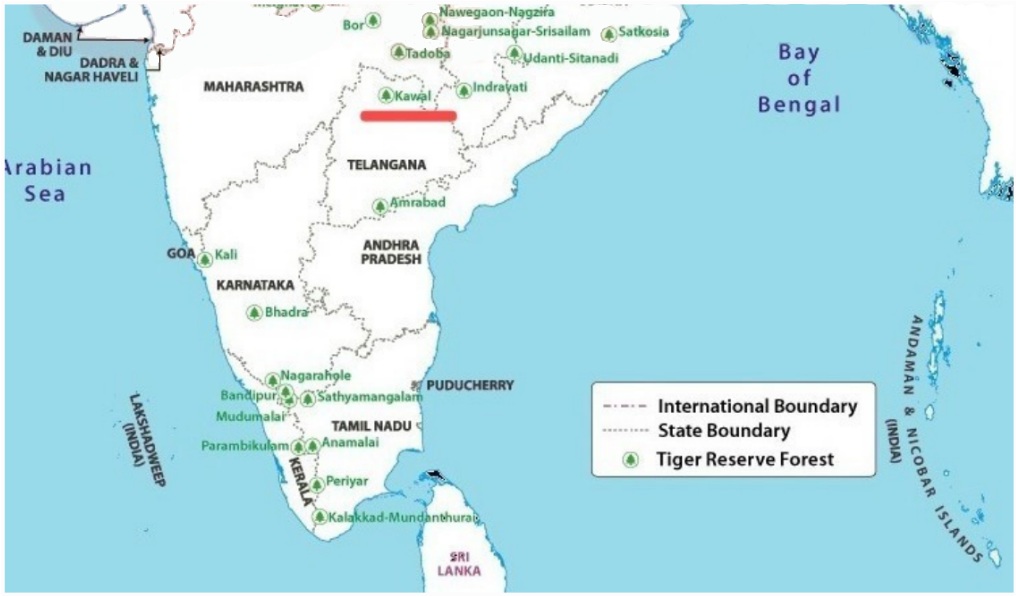
- The National Board for Wildlife (NBWL) has approved coal mining in Maharashtra’s Chandrapur district within a vital tiger corridor connecting three key reserves, sparking ecological concerns.
About Tiger Reserve
- Location: It is located in the Chandrapur district in Maharashtra.
- It is the largest and oldest Tiger Reserve of Maharashtra.
- The origin of the name “Tadoba” lies with the name of the god “Tadoba” or “Taru”, worshipped by the tribes that live in the dense forests of the Tadoba and Andhari regions. “Andhari” refers to the Andhari River that meanders through the forest.
- The total area of the reserve is 625.4 sq. km. This includes Tadoba National Park, covering 116.55 sq. km and Andhari Wildlife Sanctuary, covering 508.85 sq. KM.
- Corridor: The reserve has corridor linkages with Nagzira-Navegaon and Pench Tiger Reserves within the State.
- Habitat:
- Biogeographically, the reserve falls in the Central plateau province of the Deccan Peninsula.
- The habitat has undulating topography in the north and is rich in biodiversity.
- Vegetation: Southern Tropical Dry Deciduous
- There are two lakes and one waterway in the reserve, Tadoba Lake, Kolsa Lake, and the Tadoba River.
Flora
- It is blessed with thick forests covered with teak trees and other vegetation such as crocodile bark, salai, tendu, karaya gum, and mahua madhuca.
- The reserve is adorned with patches of grass and bamboo shrubberies.
Fauna
- The notable faunal species include the tiger, leopard, sloth bear, wild dog, gaur, chital, and sambar.
- As many as 280 species of birds are found, apart from reptiles (54 species), amphibians (11 species), and fishes (84 species).
8. Aircraft Accident Investigation Bureau (AAIB): India’s Air Crash Probe Authority
Context
- A month after the Air India AI 171 crash in Ahmedabad, where 241 of 242 onboard died, the Aircraft Accident Investigation Bureau (AAIB) recently released its preliminary report.
About the Report
- The report revealed both engine fuel control switches moved from ‘RUN’ to ‘CUTOFF’ within seconds of takeoff, raising serious concerns.
- One pilot reportedly questioned the other about cutting off fuel, but the latter denied doing so.
- Since these switches don’t usually move accidentally, the incident has prompted deeper scrutiny, especially of the cockpit voice recorder (CVR) and flight data recorder (FDR), as part of the AAIB’s ongoing investigation process.
Aircraft Crashes and there investigation
- Under the 1944 Chicago Convention, overseen by the International Civil Aviation Organization (ICAO), aircraft crash investigations are primarily conducted by the ‘State of Occurrence’—the country where the accident takes place.
- ICAO is a specialized agency of the United Nations that promotes the safe and orderly development of international civil aviation.
- Established in 1944, it sets standards and recommends practices for aviation safety, security, efficiency, and environmental protection.
- Additionally, the State of Registry, State of the Operator, State of Design, and State of Manufacture have formal rights to participate in the investigation process.
- State of Registry – where the aircraft is registered,
- State of the Operator – which operated the flight,
- State of Design – The country that regulates and oversees the organization responsible for designing and ensuring the airworthiness of an aircraft.
- State of Manufacture – the country or jurisdiction that has authority over the organization responsible for the final assembly of an aircraft.
AAIB: India’s independent Air crash Investigating Body
- The Aircraft Accident Investigation Bureau (AAIB), under India’s Ministry of Civil Aviation, investigates civil aviation accidents and serious incidents.
- It was established in 2012 to ensure investigation independence from regulatory bodies like the Directorate General of Civil Aviation (DGCA), following global standards set by the International Civil Aviation Organization (ICAO).
Legal Framework and Governing Rules
- Under Section 7 of the Aircraft Act, 1934, the Government of India is empowered to make rules for investigating aircraft accidents in India or involving Indian-registered aircraft.
- Initially, the Air Safety Directorate of DGCA handled these investigations under the Aircraft Rules, 1937, aligned with Article 26 of the Chicago Convention.
- The Aircraft (Investigation of Accidents and Incidents) Rules, 2012 were formulated to formalize AAIB’s role.
- These rules were later amended in 2017 and 2021.
- AAIB is now designated as an “Attached Office” of the Ministry of Civil Aviation.
Functions of the Body
- It is empowered with immediate and unrestricted access to all relevant evidence from any agency or organisation, without requiring prior approval from judicial or government authorities.
- It investigates all Accidents and Serious Incidents involving aircraft over 2,250 kg All Up Weight (the total weight of an aircraft with passengers and cargo) and Turbojet aircraft.
- Investigations focus solely on preventing future accidents, not on assigning blame or liability (as per Rule 3 of Aircraft (Investigation of Accidents and Incidents) Rules, 2017).
- Investigation Process
- Immediate site investigation: AAIB sends investigators to collect and preserve perishable evidence, black boxes, wreckage samples, etc.
- Evidence collection: Includes data from operators, regulators, involved personnel, and unrestricted access to all relevant materials.
- Expert analysis: AAIB may engage domain experts and collaborate with agencies like Hindustan Aeronautics Limited and DGCA laboratories.
- Report preparation: After internal review, a final report is published and shared with the ICAO and involved states.
9. Jarawa Tribe
Context
- Recently, the Government of India announced plans to conduct the 16th Census. Experts are confident that the enumeration process will proceed smoothly, even for the sensitive task of counting the Jarawa tribe along with the five other major indigenous tribes of the Andaman and Nicobar Islands.
About Jarawa Tribe
- Classified as a Particularly Vulnerable Tribal Group (PVTG) by the Gol.
- The term "Jarawa" means "stranger" or "outsider" in their native language.
- Ancient Origins: Believed to be among the earliest human populations in Asia. Thought to be descendants of the now-extinct Jangil tribe, and possibly part of the first successful migrations out of Africa.
- They are of Negrito origin, with dark skin, curly hair, and short stature.
Habitat and Territory
- Inhabit the dense tropical forests of South and Middle Andaman Islands, primarily along the western coast.
- Reside within the Jarawa Reserve Forest, a legally protected area to ensure their survival and limit external interference.
Lifestyle and Culture
- Hunter-Gatherers and semi-nomadic, known for their territorial nature and have historically defended their land from intrusions.
- Their small, isolated population makes them extremely vulnerable to extinction.
- Belongs to the Great Andamanese language family.
About PVTG’S
- Most marginalized and vulnerable among the Scheduled Tribes (STs) in India.
- These groups require focused attention and targeted development efforts, as dominant tribal communities often receive a larger share of tribal welfare resources.
- Introduced in 1975 based on the recommendations of the Dhebar Commission.
- 75 PVTGs out of the 705 Scheduled Tribes recognized in India.
- Found across 18 states and 1 Union Territory in India (as per the 2011 Census).
- Odisha has the largest PVTG population, with over 2.5 lakh individuals.
10. Talisman Sabre Exercise
Context
- Recently, India joined 18 other nations in participating in Talisman Sabre 2025, a major multinational military exercise led by Australia.
Key Highlights
- Largest bilateral military exercise between Australia and the United States, featuring multinational participation and held biennially since 2005.
- Its 11th edition includes: Three-week-long exercise with over 35,000 military personnel from participating nations.
- Training activities are being held across Queensland, Northern Territory, Western Australia, New South Wales, and Christmas Island.
- Participating Nations: Full Participants (19 Nations): Australia, United States, India, Japan, France, Germany, the United Kingdom, Canada, Indonesia, South Korea, New Zealand, Singapore, the Philippines, Thailand, Fiji, Tonga, Papua New Guinea, Norway, and the Netherlands.
- Observers: Malaysia and Vietnam.
- Military Activities: Live-fire exercises, Field training, Force preparation drills, Amphibious landings, Ground manoeuvres and Air combat and maritime operations.
- New Capabilities Featured: UH-60M Black Hawk helicopters and Precision Strike Missiles
11. 3I/ATLAS
Context
- Recently, scientists using the ATLAS survey telescope in Chile announced the detection of a new interstellar object, 31/ATLAS.
- This marks just the third recorded instance of an interstellar object passing through our solar system, after 11/'Oumuamua in 2017 and 21/Borisov in 2019.
About 3I/ATLAS
- An active comet, showing a coma (dust & gas halo) and likely forming a tail.
- Appears reddish, with a spectral slope of 1.3% per 100 nm, hinting at complex organics or water ice.
- The nucleus is likely 10-30 km wide, larger than both 'Oumuamua and Borisov.
- Believed to be over 3 billion years old, possibly older than our solar system.
Identified It as Interstellar because:
- Follows a hyperbolic, highly elliptical orbit around the Sun.
- Travels at an extremely high velocity of 57-68 km/s relative to the Sun.
- Trajectory simulations trace its path back to the constellation Sagittarius, indicating it came from outside our solar system.
- NASA has confirmed it poses no danger to our planet.
About Atlas
- An asteroid impact early warning system developed by the University of Hawaii and funded by NASA. It consists of four telescopes (Hawaii x2, Chile, South Africa), which automatically scan the whole sky several times every night looking for moving objects.
- Objective: To detect and track small to medium-sized asteroids on collision courses with Earth, giving time to evacuate or respond if necessary.
- Key Features and Capabilities: Wide-Field Coverage: Each ATLAS Capable of detecting 100- meter asteroids days to weeks before impact and smaller ones hours to days ahead
12. Mucormycosis
Context
- Recently, a large-scale study by the Indian Council of Medical Research revealed that survivors of mucormycosis continue to suffer from severe post-recovery complications.
- Published in Clinical Microbiology and Infection, this is the first national prospective study in India assessing the long-term outcomes of mucormycosis patients.
Key Findings
- The study recorded a 14 % one-year mortality rate, with most deaths occurring during the initial hospitalisation. Risk factors included brain or eye involvement, ICU admission, uncontrolled diabetes, and multiple comorbidities.
- Over 70% of survivors experienced at least one serious post-recovery complication, such as facial disfigurement, speech difficulties, mental health distress, or loss of employment.
About Mucormycosis
- A rare but serious fungal infection caused by a group of molds known as mucormycetes. It is commonly referred to as 'Black Fungus'.
- It primarily affects individuals with weakened immune systems or underlying conditions such as : Uncontrolled diabetes mellitus, Prolonged ICU stay, Use of steroids or immunosuppressants, Organ transplant recipients and Patients on voriconazole theraрy.
- Mode of Infection: Most commonly acquired by inhaling spores present in the air.
- Can also infect through wounds, burns, or skin injuries.
- In severe cases, it may spread to the brain or other internal organs.
Types
- Rhinocerebral: Sinus infection that can reach the brain; common in diabetics.
- Pulmonary: Lung infection in cancer or transplant patients.
- Gastrointestinal: Affects the gut; seen in premature infants.
- Cutaneous: Skin infection through wounds; occurs in healthy individuals.
- Disseminated: Spreads via blood to organs; seen in severely ill patients.
13. Mapping the Application of Artificial Intelligence in Traditional Medicine
Context
- Recently, the World Health Organization (WHO) recognized India's pioneering efforts in integrating Artificial Intelligence (Al) with traditional medicine.
- In its latest technical brief titled "Mapping the Application of Artificial Intelligence Traditional Medicine", WHO highlights India's innovative digital advancements in the Ayush sector and their potential to influence the future of global healthcare.
Key Highlights
- India is the first country to launch a Traditional Knowledge Digital Library (TKDL)-a global model for preserving indigenous medical heritage. India's Ayush market has reached US$43.4 billion, contributing significantly to economic growth.
- Al-Driven Innovations: Ayurgenomics: Integrates Ayurveda and genomics for predictive diagnostics and personalized health.
- Prakriti-based machine learning models for early diagnosis.
- Al analysis of pulse, tongue, and Prakriti assessments using neural networks.
- Decoding molecular basis of herbal drugs for modern use.
- Artificial chemical sensors to assess Ayurvedic parameters like Rasa, Guna, and Virya.
- :: Foundation of India's digital traditional medicine ecosystem.
- SAHI Portal, NAMASTE Portal, and Ayush Research Portal: Used for awareness, research, and practitioner engagement.

2026-27 UPSC Mains English QEP Power Pages
View DetailsSubmit Your Details to Learn More



