World Population Day 2025 will observed on 11 July to highlight population issues, reproductive rights, and sustainability. Know the theme, history, top 10 populous countries, and state-wise population data of India with updated insights.
 theIAShub | 07 Jul, 2025 | 3849 | 0 |
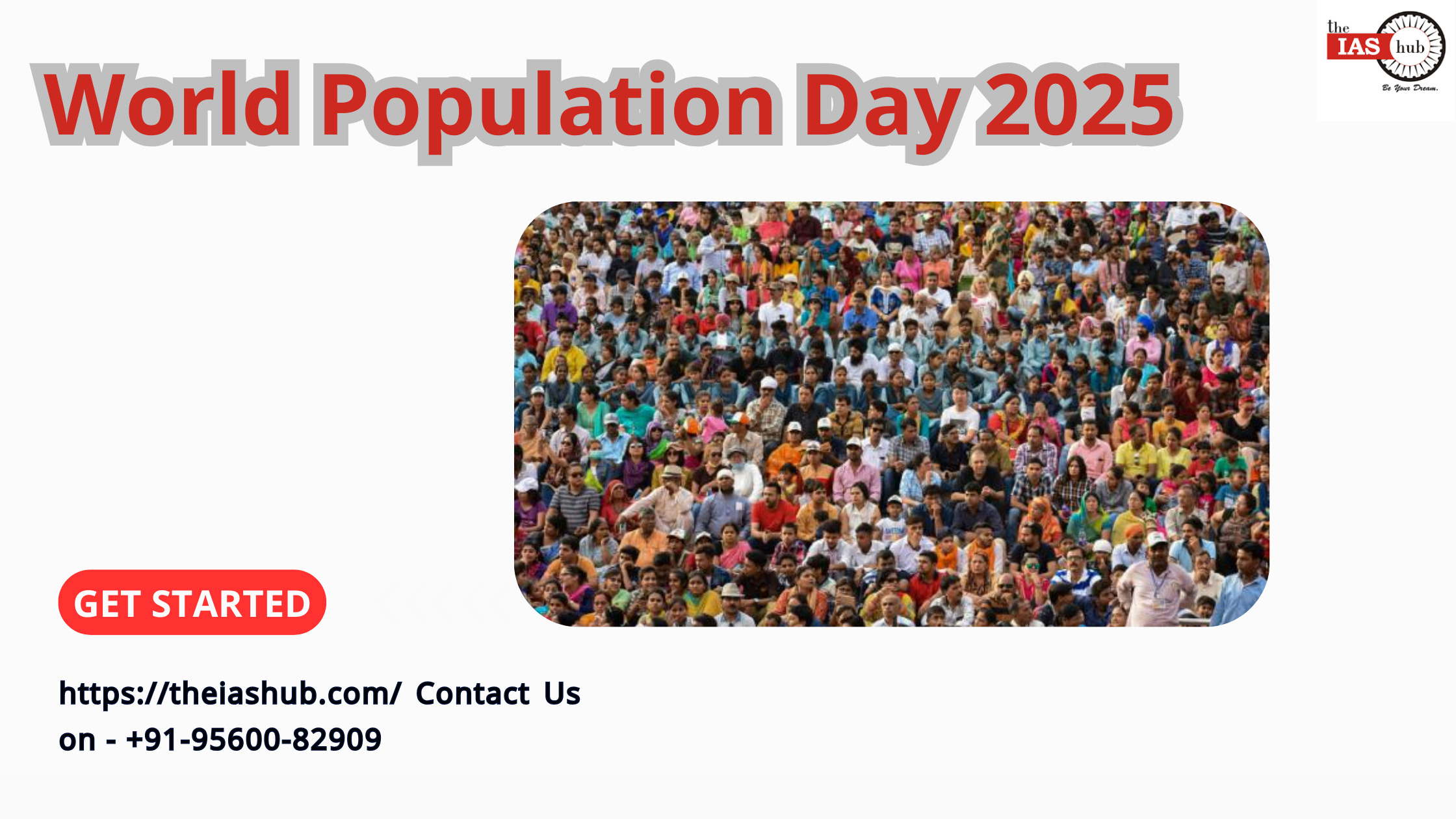

World Population Day 2025 is celebrated on 11th July 2025 to raise awareness about population-related challenges the world is facing and its involvement in development, the environment, and human rights. This day was first established by the United Nations Development Programme (UNDP) in 1989. The World Population Day is a general reminder for governments, institutions and individuals to understand the challenges of growing population and prioritize equal rights for reproductive healthcare, education, and resources essential for sustainable development.
Also Read: Important Days in July 2025
World Population Day is observed on 11th July every year around the globe to raise awareness about global population issues and the challenges associated with overpopulation that include poverty, maternal health, and sustainability. This day was established in 1989 to emphasize the need for population control and education to ensure a balanced and healthy future.
| Event | Details |
| Observance Name | World Population Day 2025 |
| Date | 11th July 2025 |
| Established By | United Nations Development Programme (UNDP) |
| First Observed | 11th July 1989 |
| Inspired By | Five Billion Day (11th July 1987) |
| World Population Day 2025 Theme | Empowering young people to create the families they want in a fair and hopeful world. |
| Purpose | Raise awareness about population issues, reproductive health, and gender equality |
| Focus Area in 2025 | Youth empowerment, reproductive agency, access to healthcare and family planning |
| India’s Population Rank | 1st (Most Populous Country in 2025) |
| Celebrated By | United Nations, governments, NGOs, academic institutions, and individuals |
Also Read: International Plastic Bag Free Day
The World Population Day 2025 theme is “Empowering young people to create the families they want in a fair and hopeful world” to highlight the rights of the largest ever youth generation in history globally to make informed choices about family formation. This theme also encourages governments and societies to ensure equitable rights to education, reproductive healthcare, decent work, and supportive policies that help many young individuals to shape their future.
Also Read: World UFO Day

World Population Day was observed in 1989 by the Governing Council of the United Nations Development Programme (UNDP). Inspired by the global attention drawn to “Five Billion Day” on July 11, 1987, this is the date when the world’s population reached Five Billion. The first official observance happened in 1990 and was marked in around 90 countries in the world. Later that year, the UN General Assembly initialized the event through Resolution 45/216. From then, World Population Day has aimed to raise awareness about critical population issues such as family planning, gender equality, poverty, maternal health, and human rights.
The World Population Day has also emphasized the importance of reliable demographic data and inclusive development. The world has now reached over 8.2 billion people in 2025; this day serves as a reminder of the urgent need for sustainable solutions to population-related challenges.
Also Read: National Postal Worker Day
The global population will have exceeded around 8.1 billion people around the globe in 2025. Some countries play an important role in driving global population growth in terms of total numbers and yearly increase. Understanding the most populous nations is important for policymakers, economiss and planners to create effective strategies for public services, infrastructure development and resource management. India has now topped the list with a 1.464 billion population. Below we have mentioned the list of the top 10 most populous countries in 2025, based on the latest United Nations projections:
| Rank | Country | Population (2025) |
| 1 | India | 1.464 billion |
| 2 | China | 1.416 billion |
| 3 | United States | 347 million |
| 4 | Indonesia | 286 million |
| 5 | Pakistan | 255 million |
| 6 | Nigeria | 238 million |
| 7 | Brazil | 213 million |
| 8 | Bangladesh | 176 million |
| 9 | Russia | 144 million |
| 10 | Ethiopia | 136 million |
Also Read: List of National and International Days 2025
Identifying population density is important for assessing how human settlement patterns influence resource use and urban infrastructure. This also reflects how crowded a country or territory is, directly affecting various areas such as healthcare, transportation, environmental sustainablity and many more. On World Population Day 2025 these density figures add valuable insights into the demographic pressures shaping our world. Below we have mentioned the top 10 most densely populated countries and territories in 2025, measured by people per square kilometer:
| Rank | Country/Territory | Density (people/km²) |
| 1 | Macau | 21,946 |
| 2 | Monaco | 19,171 |
| 3 | Singapore | 8,177 |
| 4 | Hong Kong | 7,044 |
| 5 | Gibraltar | 5,901 |
| 6 | Bahrain | 2,034 |
| 7 | Vatican City | 1,800 |
| 8 | Maldives | 1,759 |
| 9 | Malta | 1,686 |
| 10 | Bangladesh | 1,350 |
Also Read: Swami Vivekanand
To understand the historical growth of India’s population, it is important to look at the official statistics. The 2011 census conducted by the Indian Government provides the detailed data of state-wise population distribution, rural-urban divide, and gender composition. This data will help policymakers and researchers to evaluate the demographic trends over time. Below we have listed the top 10 most populous states in India based on the Census 2011:
| Rank | State | Population | Rural Population | Urban Population |
| 1 | Uttar Pradesh | 199,812,341 | 155,317,278 | 44,495,063 |
| 2 | Maharashtra | 112,374,333 | 61,556,074 | 50,818,259 |
| 3 | Bihar | 104,099,452 | 92,341,436 | 11,758,016 |
| 4 | West Bengal | 91,276,115 | 62,183,113 | 29,093,002 |
| 5 | Madhya Pradesh | 72,626,809 | 52,557,404 | 20,069,405 |
| 6 | Tamil Nadu | 72,147,030 | 37,229,590 | 34,917,440 |
| 7 | Rajasthan | 68,548,437 | 51,500,352 | 17,048,085 |
| 8 | Karnataka | 61,095,297 | 37,469,335 | 23,625,962 |
| 9 | Gujarat | 60,439,692 | 34,694,609 | 25,745,083 |
| 10 | Andhra Pradesh | 84,580,777* | 56,361,702 | 28,219,075 |
In 2025, Uttar Pradesh remains the most populous state in India with over 240 million people, followed by Bihar with around 131 million, recently surpassing Maharashtra, which has approximately 128 million. West Bengal and Madhya Pradesh follow with populations nearing 100 million and 89 million, respectively. These states together form the demographic core of India, significantly influencing national planning and development strategies.
As of 2025, the states with the lowest populations in India include Sikkim, with around 700,000 people, followed by Mizoram and Arunachal Pradesh, each with populations just above 1 million. Other populated states include Nagaland and Goa, with populations ranging from 1.5 to 2 million. These northeastern and smaller coastal states face unique challenges in infrastructure and connectivity but benefit from relatively low population pressure.
Also Read: World Day for International Justice
World Population Day 2025 holds great significance as the global population surpasses 8.2 billion, intensifying the need for sustainable development, reproductive rights, and social equity. The day highlights critical issues such as family planning, gender equality, access to healthcare, and education, particularly for the world’s youth. In 2025, the focus on empowering young people to shape their futures underscores the importance of investing in their rights and opportunities. By raising awareness and promoting informed policies, this observance calls on governments and societies to address the demographic challenges shaping our planet’s future.
Also Read: World Ocean Day
World Population Day 2025 serves as a vital reminder of the challenges and responsibilities that come with a growing global population. As we navigate issues like resource management, reproductive health, education, and environmental sustainability, it becomes increasingly important to empower individuals—especially youth—to make informed choices about their futures. With global cooperation and inclusive policies, we can work toward a more balanced and equitable world for current and future generations.
Are you preparing for UPSC 2026? Join IAShub’s UPSC coaching batches to boost your preparation. Enroll now!

It marks the date in 1987 when the world population reached five billion, known as Five Billion Day. The UNDP established this day in 1989 to spotlight population challenges.
The official World Population Day 2025 theme is “Empowering young people to create the families they want in a fair and hopeful world,” which focuses on youth empowerment and sustainable development, given the growing role of young people in shaping global demographics.
As of 2025, India has the world’s largest population, surpassing China, with over 1.46 billion people.
Key issues include reproductive health, gender equality, education, poverty reduction, and climate impact of population growth.




Refine your answer writing skills and elevate your UPSC preparation with personalized support and expert feedback.
Fill out the form to get started with the program or any other enquiries !


Are you dreaming of becoming an IAS officer? Then, IAShub can be your best guide. It is one of the Best IAS Coaching in Delhi. Many students who want to clear the UPSC exam join IAShub for learning. The institute gives both online and offline classes. Their teachers are experienced and helpful. They easily explain every topic. Students also get notes, tests, and tips to do well in the exam.
IAShub is in Delhi and is trusted by many UPSC students. It offers coaching for every part of the UPSC exam – Prelims, Mains, and Interview. The classes are simple and easy to understand. The teachers are experts and guide students in the right way. IAShub is also known for its helpful notes, test series, and answer-writing practice. IAShub is the best coaching in Delhi and also gives UPSC Online Classes. This helps students from any place in India to learn. The online classes are live and also recorded. So, students can watch them anytime. These classes cover the full UPSC syllabus.
Here are some important services provided by IAShub:
The UPSC Civil Services Exam has three parts:
This exam is tough, but with the right guidance, it becomes easy to manage. Students must study smart and stay regular.
IAShub supports students from the beginning to the end. It gives the right books, tests, and notes. The classes are easy to follow, and the teachers are always ready to help. Students get personal doubt sessions too. The test series and answer checking help students learn where they need to do better. Also, free study materials save time and money.
IAShub also guides students during the final stage – the interview. Experts take mock interviews and give useful tips. This full support makes IAShub one of the best IAS coaching in Delhi.