International Day of the Tropics 2025 will be observed on June 29 to celebrate tropical biodiversity and culture while raising awareness about climate change, poverty, deforestation, and development challenges in tropical regions worldwide.
 theIAShub | 26 Jun, 2025 | 2118 | 0 |
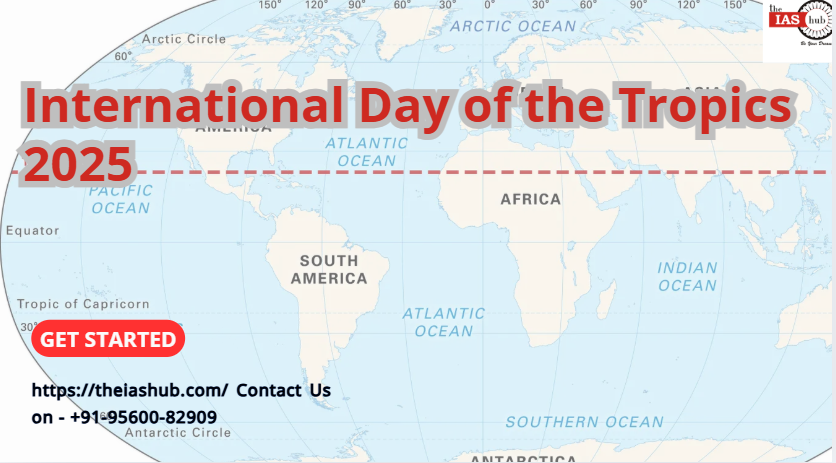


The International Day of the Tropics is observed globally on June 29 each year to celebrate the extraordinary biodiversity, cultural richness, and development potential of tropical regions. It also highlights the pressing challenges these areas face, such as climate change, deforestation, poverty, and rapid urbanization. This day serves as a reminder of the critical role tropical regions play in the planet’s ecological balance and global sustainability efforts.
Also Read: List of Important Days in June 2025
The observance was first marked in 2016, following the launch of the landmark “State of the Tropics” report on June 29, 2014. Recognizing the significance of that report, the UN General Assembly declared June 29 as the International Day of the Tropics, aiming to raise awareness and encourage global collaboration in tackling the challenges in the tropics.
Also Read: National and International Days 2025

Tropical Day, officially known as the International Day of the Tropics, is observed every year on June 29. It is a United Nations-recognized day dedicated to celebrating the unique diversity and development opportunities of tropical areas, while also addressing the socio-economic and environmental challenges faced by tropical nations.
The meaning of Tropical Day lies in recognizing the vital importance of tropical regions. These areas are home to vast ecosystems, nearly 40% of the world’s population, and rich natural resources. The day emphasizes sustainable development, climate resilience, and cultural preservation within the tropics.
The International Day of the Tropics is observed annually on June 29. The fixed date honors the release of the “State of the Tropics” report and aligns with mid-year discussions on climate change, sustainable development, and biodiversity.
Also Read: World Brain Tumor Day

The International Day of the Tropics 2025 will be observed on Sunday, June 29, 2025. While no official theme has been released yet, global observances are expected to focus on climate action, biodiversity preservation, and sustainable growth in tropical regions. Various events including seminars, biodiversity exhibitions, and educational campaigns will be held globally.
Key Details of the International Day of the Tropics 2025
| Feature | Details |
| Date | June 29, 2025 |
| Focus | Tropical biodiversity, climate action |
| Official UN Recognition | Yes, since 2016 |
| Estimated Participants | Governments, NGOs, Universities, Schools |
| Common Activities | Conferences, educational events, media campaigns |
Also Read: World Food Safety Day
International Day of the Tropics 2025 Theme
As of now, the theme for the International Day of the Tropics 2025 has not been officially announced. However, past observances have emphasized digital inclusion, climate resilience, biodiversity, and sustainable development in tropical countries. The 2025 theme is expected to align with ongoing global goals like the SDGs and COP summits.
Also Read: World Environment Day
Tropical areas are defined as the regions located between the Tropic of Cancer (23.5° N) and the Tropic of Capricorn (23.5° S). These regions experience warm temperatures year-round, with distinct rainy and dry seasons depending on the location.
The definition of tropical areas includes regions with consistent average monthly temperatures above 18°C and climatic conditions that support lush biodiversity. These areas span parts of South and Central America, sub-Saharan Africa, Southeast Asia, northern Australia, and many Pacific Islands.
Tropical climates vary based on rainfall and geography. Below is a table summarizing the main types of tropical areas:
| Type of Tropical Area | Characteristics | Examples |
| Tropical Rainforest | High rainfall year-round, dense vegetation | Amazon Basin, Congo Basin |
| Tropical Monsoon | Heavy seasonal rains, short dry spell | Southeast Asia, parts of India |
| Tropical Savanna | Distinct wet and dry seasons | Sub-Saharan Africa, Brazil |
| Tropical Dry Forest | Moderate rainfall, prolonged dry seasons | Central America, parts of India |
| Tropical Desert | Arid, very low rainfall | Sahara Desert, Australian Outback |
Tropical regions are home to over 80% of the planet’s biodiversity and nearly 95% of the world’s mangrove forests and coral reefs. They play a crucial role in climate regulation, water cycles, and food security.
Despite their rich resources, tropical areas face multiple challenges:
Recent wildfires in tropical forests and mass coral bleaching in 2024 have drawn global attention to the urgent need for sustainable management and climate resilience in these regions.

Tropical Regions – Opportunities vs Challenges
| Opportunities | Challenges |
| High biodiversity and natural resources | Climate vulnerability and environmental degradation |
| Cultural heritage and indigenous knowledge | Poverty, inequality, and infrastructure gaps |
| Agricultural potential and eco-tourism | Deforestation and habitat loss |
Celebrations typically involve:
Many organizations use hashtags like #TropicsDay and #WeAreTheTropics to raise awareness online. Schools may organize projects that explore tropical crops, cultures, and conservation methods.
In 2024, tropical regions experienced the highest-ever recorded forest loss due to deforestation and fires, especially in the Amazon. Simultaneously, the fourth global coral bleaching event affected reefs across the tropics, from the Caribbean to the Pacific.
Global conferences in 2024, including the Biodiversity Summit in Colombia and climate action meetings ahead of COP30, placed tropical nations at the center of international environmental discourse.
In June 2025, the UN Ocean Conference co-hosted by Costa Rica and France, is expected to advance marine conservation strategies, especially for tropical coral systems and coastal communities.
Are you preparing for UPSC 2025? Join IAShub’s UPSC coaching batches to boost your preparation. Enroll now!
The International Day of the Tropics stands as a significant reminder that tropical regions are both vibrant and vulnerable. Covering nearly 40% of the Earth’s surface and supporting vast ecosystems and communities, the tropics are essential to global ecological stability and sustainable development. On June 29, 2025, and every year, this observance invites the world to celebrate, learn, and act—ensuring that the diversity and promise of the tropics are preserved for future generations.

It is observed every year on June 29, marking the release of the “State of the Tropics” report. The day encourages global recognition of tropical issues and opportunities.
Tropical areas lie between the Tropic of Cancer and the Tropic of Capricorn. They feature warm climates and rich biodiversity, supporting over 80% of global species.
The official theme has not been announced yet, but it is expected to focus on biodiversity and climate resilience. It will align with global sustainability goals.
Tropical areas include rainforests, monsoons, savannas, dry forests, and deserts. They differ in rainfall, vegetation, and seasonal patterns.




Refine your answer writing skills and elevate your UPSC preparation with personalized support and expert feedback.
Fill out the form to get started with the program or any other enquiries !


Are you dreaming of becoming an IAS officer? Then, IAShub can be your best guide. It is one of the Best IAS Coaching in Delhi. Many students who want to clear the UPSC exam join IAShub for learning. The institute gives both online and offline classes. Their teachers are experienced and helpful. They easily explain every topic. Students also get notes, tests, and tips to do well in the exam.
IAShub is in Delhi and is trusted by many UPSC students. It offers coaching for every part of the UPSC exam – Prelims, Mains, and Interview. The classes are simple and easy to understand. The teachers are experts and guide students in the right way. IAShub is also known for its helpful notes, test series, and answer-writing practice. IAShub is the best coaching in Delhi and also gives UPSC Online Classes. This helps students from any place in India to learn. The online classes are live and also recorded. So, students can watch them anytime. These classes cover the full UPSC syllabus.
Here are some important services provided by IAShub:
The UPSC Civil Services Exam has three parts:
This exam is tough, but with the right guidance, it becomes easy to manage. Students must study smart and stay regular.
IAShub supports students from the beginning to the end. It gives the right books, tests, and notes. The classes are easy to follow, and the teachers are always ready to help. Students get personal doubt sessions too. The test series and answer checking help students learn where they need to do better. Also, free study materials save time and money.
IAShub also guides students during the final stage – the interview. Experts take mock interviews and give useful tips. This full support makes IAShub one of the best IAS coaching in Delhi.