
















Explore the Vice President of India List 2025 with names, terms, powers, and election process. Learn about current and past Vice Presidents, their roles, duties, salaries, removal, and election of Vice President in India.
 theIAShub | 23 Jul, 2025 | 10202 | 0 |

The Vice President of India is the second-highest constitutional authority. The office is established under Article 63 of the Indian Constitution. The Vice President holds office for five years. He can also continue beyond the term until a successor takes over. The Vice President serves as the ex officio Chairman of the Rajya Sabha. He steps in as Acting President if the office of the President falls vacant for any reason.
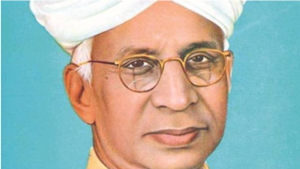
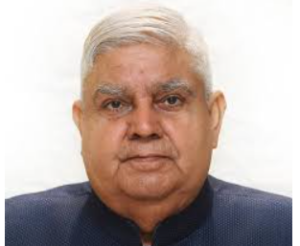
The first Vice President of India was Sarvepalli Radhakrishnan. He took office in 1952. As of 2025, the current Vice President of India is Jagdeep Dhankhar, elected in 2022. He succeeded M. Venkaiah Naidu and continues to serve through the term covering 2023 to 2025.
Also Read: President of India
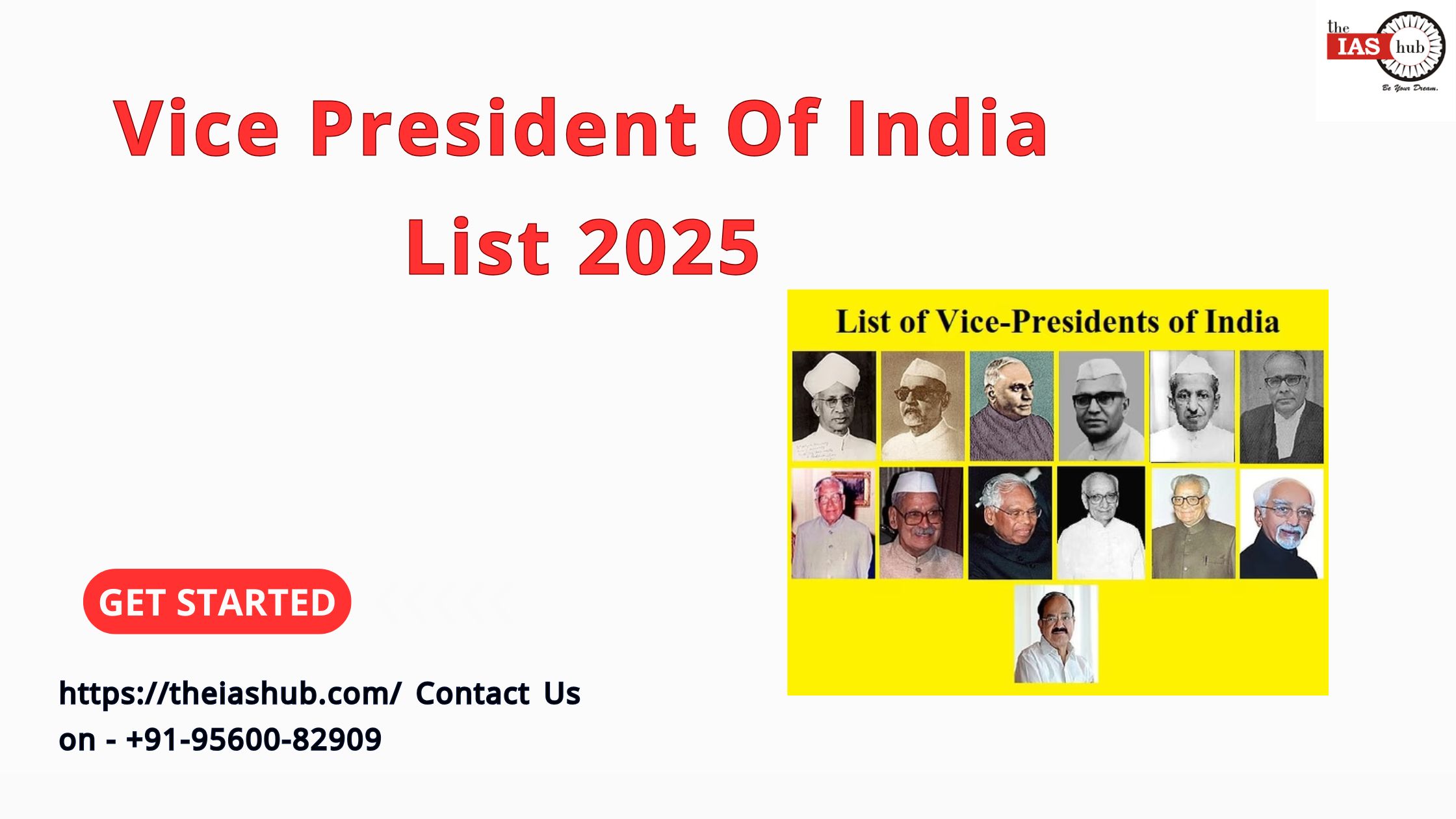
Here is a complete list of the Vice Presidents of India from 1952 to 2025:
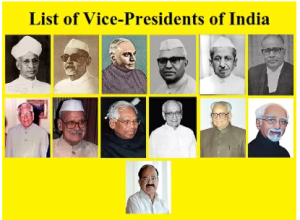
| No. | Name | Term |
| 1 | Sarvepalli Radhakrishnan | 1952–1962 |
| 2 | Zakir Husain | 1962–1967 |
| 3 | Varahagiri Venkata Giri | 1967–1969 |
| 4 | Gopal Swarup Pathak | 1969–1974 |
| 5 | Basappa Danappa Jatti | 1974–1979 |
| 6 | Mohammad Hidayatullah | 1979–1984 |
| 7 | R. Venkataraman | 1984–1987 |
| 8 | Shankar Dayal Sharma | 1987–1992 |
| 9 | K. R. Narayanan | 1992–1997 |
| 10 | Krishan Kant | 1997–2002 |
| 11 | Bhairon Singh Shekhawat | 2002–2007 |
| 12 | Mohammad Hamid Ansari | 2007–2017 |
| 13 | M. Venkaiah Naidu | 2017–2022 |
| 14 | Jagdeep Dhankhar | 2022–2025 |
Also Read: Attorney General of India
Out of all, six individuals later became the President of India. Krishan Kant remains the only Vice President who died in office.
| No. | Name | Vice Presidential Term | Presidential Term | Notes |
| 1 | Sarvepalli Radhakrishnan | 1952–1962 | 1962–1967 | First Vice President; philosopher |
| 2 | Varahagiri Venkata Giri | 1967–1969 | 1969–1974 | Acting President (1969) before election |
| 3 | R. Venkataraman | 1984–1987 | 1987–1992 | Long political career before presidency |
| 4 | Shankar Dayal Sharma | 1987–1992 | 1992–1997 | Former Chief Minister & Union Minister |
| 5 | K. R. Narayanan | 1992–1997 | 1997–2002 | First Dalit President of India |
[metaslider id=”5575″]
Vice President of India 2022
Vice President of India 2023
Vice President of India 2024
Vice President of India 2025
Also Read: Mahatma Gandhi
The Vice President of India is elected indirectly. The process is governed by Articles 66 and 68 of the Constitution. It has been made statutory through the Presidents and Vice President elections Act. The election is conducted by an electoral college consisting of the members of both Houses of Parliament.
Key Features of the Election Process:
This process ensures a balance between political representation and institutional integrity. For example, in the Vice President of India 2022 election, Jagdeep Dhankhar won a clear majority over the opposition’s candidate. He continues as the current Vice President of India in 2025.
Also Read: CAG of India
The Vice President of India takes an oath or affirmation before entering office, as prescribed in the Third Schedule of the Constitution. The oath is administered by the President of India. In it, the Vice President swears to bear true faith and allegiance to the Constitution of India and to faithfully discharge the duties of the office, and to preserve, protect, and defend the Constitution and the law. This oath ensures that the Vice President commits to upholding the sovereignty, integrity, and constitutional values of the country while performing official responsibilities.
The Vice President of India does not receive a separate salary for the role. He is entitled to the salary and allowances of the Chairman of the Rajya Sabha, as laid down in the Salary and Allowances of Officers of Parliament Act. As of recent updates, the Vice President receives a monthly salary along with allowances for housing, travel, and daily expenses. The Vice President is provided an official residence, staff support, medical facilities, security, and transport, including access to air travel for official duties. These perks are aimed at supporting the dignitary in the discharge of constitutional responsibilities and public functions.
The Vice President of India earns a monthly salary of ₹400,000 as the ex‑officio Chairman of the Rajya Sabha—a raise from ₹125,000 in 2018. They also receive full allowances and perks, including:
If the Vice President acts as President, they receive the President’s higher salary and benefits during that period.
After retirement, the Vice President receives:
These arrangements ensure the Vice President is well supported during and after service.
The Constitution allows for the removal of the Vice President, though the process is different from that of the President.
Key Points on Removal:
| Aspect | Details |
|---|---|
| Resignation Submitted To | President of India |
| Constitutional Article | Article 67(b): The Vice-President may resign his office by writing under his hand addressed to the President. |
| Mid-Term Resignation | Allowed, must be in writing to the President |
| Removal Process | Article 67(c) – Removal of Vice-President of India |
| Impeachment | Not applicable (Only for the President) |
| Grounds Required? | No specific grounds mentioned |
Note: No Vice President of India has ever been removed from office through this mechanism.
Also Read: Rabindranath Tagore
[metaslider id=”5575″]
The Vice President performs both legislative and constitutional roles.
The Vice President is the ex officio Chairman of the Rajya Sabha. In this capacity, the Vice President:
The Vice President acts as the President of India when:
In such cases, the Vice President assumes the role of Acting President until a new President is elected within six months.
During this time, the Vice President stops performing duties as Rajya Sabha Chairman and takes over all responsibilities of the President.
Although the Vice President is not part of the Union Council of Ministers, the office plays a ceremonial and advisory role in the functioning of the Parliament. The Vice President does not exercise any executive powers unless serving as Acting President.
Also Read: Jawaharlal Nehru
The Vice President of India is a central figure in the constitutional framework. Acting as the Chair of the Rajya Sabha and the second-highest dignitary after the President, the Vice President ensures legislative continuity and parliamentary integrity. From the first Vice President of India in 1952 to the current Vice President of India in 2025, the office has evolved but remained consistent in its constitutional role.
Are you preparing for UPSC 2026? Join IAShub’s UPSC coaching batches to boost your preparation. Enroll now!
Understanding how the Vice President of India is elected, how the Vice President of India is removed, and the powers and functions of the Vice President of India is essential for anyone studying the Indian political system. With the Vice Presidents of India List 2025 complete, the role continues to hold high constitutional relevance in India’s democracy.

The Vice President of India is elected by an electoral college consisting of members of both the Lok Sabha and Rajya Sabha. The election is conducted through a single transferable vote system using proportional representation.
The Vice President serves as the ex officio Chairman of the Rajya Sabha and acts as the President in case of a vacancy. The Vice President presides over Rajya Sabha proceedings, ensures adherence to parliamentary rules, and plays a role in disqualification cases under the anti-defection law.
The Vice President of India can be removed through a resolution passed by the Rajya Sabha with an effective majority and agreed to by the Lok Sabha. A 14-day notice is required before the resolution is introduced.
Sarvepalli Radhakrishnan was the first Vice President of India. He served from 1952 to 1962 and later became the President of India.
The President is the head of the state and holds executive powers, while the Vice President primarily serves a legislative function as Chairman of the Rajya Sabha and acts as President only in case of a vacancy.
You can find the complete Vice Presidents of India List 2025 in the article above, which includes all individuals who held the office from 1952 to 2025.

Refine your answer writing skills and elevate your UPSC preparation with personalized support and expert feedback.
Fill out the form to get started with the program or any other enquiries !



Are you dreaming of becoming an IAS officer? Then, IAShub can be your best guide. It is one of the Best IAS Coaching in Delhi. Many students who want to clear the UPSC exam join IAShub for learning. The institute gives both online and offline classes. Their teachers are experienced and helpful. They easily explain every topic. Students also get notes, tests, and tips to do well in the exam.
IAShub is in Delhi and is trusted by many UPSC students. It offers coaching for every part of the UPSC exam – Prelims, Mains, and Interview. The classes are simple and easy to understand. The teachers are experts and guide students in the right way. IAShub is also known for its helpful notes, test series, and answer-writing practice. IAShub is the best coaching in Delhi and also gives UPSC Online Classes. This helps students from any place in India to learn. The online classes are live and also recorded. So, students can watch them anytime. These classes cover the full UPSC syllabus.
Here are some important services provided by IAShub:
The UPSC Civil Services Exam has three parts:
This exam is tough, but with the right guidance, it becomes easy to manage. Students must study smart and stay regular.
IAShub supports students from the beginning to the end. It gives the right books, tests, and notes. The classes are easy to follow, and the teachers are always ready to help. Students get personal doubt sessions too. The test series and answer checking help students learn where they need to do better. Also, free study materials save time and money.
IAShub also guides students during the final stage – the interview. Experts take mock interviews and give useful tips. This full support makes IAShub one of the best IAS coaching in Delhi.
Join 50,000+ UPSC Aspirants! 🚀
Get Free UPSC/IAS Study Materials, Daily Current Affairs, Editorial Summaries & Exam Updates.
Join Telegram Channel