
















Explore the life and legacy of Jyotirao Phule, Indian social reformer, thinker, and founder of Satyashodhak Samaj. Learn about his biography, fight against caste discrimination, women’s empowerment, educational reforms, major works, and enduring impact on In India society
 theIAShub | 30 Jun, 2025 | 6749 | 0 |


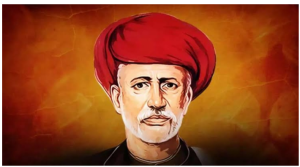
Jyotirao Phule (born April 11, 1827) was an Indian social reformer, writer, and champion of equality for all people, including poor labourers and women, critic of the Hindu caste system, a means by which people are differentiated and ranked according to the social group into which they are born. Phule deplored the discrimination experienced by bottom of the caste system, including the Shudras groups today called Scheduled Castes, or Dalits. He led a movement in India that called for the creation of a new social order in which no one would be subordinate to the upper-caste Brahmans. Phule also fought for women’s rights. Believing that education was essential to bringing about social change, he established schools for girls and for children of lower castes.
Jyotirao Govindrao Phule (1827–1890) was a prominent Indian social reformer, thinker, and anti-caste activist from Maharashtra, often hailed as one of the pioneers of social reform in India. He dedicated his life to challenging caste oppression, promoting education, and advocating for the rights of marginalized communities, particularly the lower castes and women.
| Aspect | Details |
| Full Name | Jyotirao Govindrao Phule |
| Birth | April 11, 1827, Pune, Maharashtra, India
Mali (Shudra) |
| Death | November 28, 1890, Pune, Maharashtra |
| Education | Studied at Scottish Missionary School, Pune |
| Major Contributions | Social reform against caste oppression Promoted education for all,Advocated women’s rights |
| Major Works | Gulamgiri(1873), Shetkaryacha Asud(1881)
Sarvajanik Satya Dharma Pustak ,Satyashodhak Samaj-Founded in 1873 to promote equality, reject caste, and challenge Brahminical authority |
| Spouse | Savitribai Phule, a pioneering feminist and educator |
| Title | Conferred “Mahatma” for contributions to social justice |
Jyotirao Phule (11 April 1827 – 28 November 1890) was an Indian social activist, author, and champion of equal rights for all, including marginalized communities and women. Mahatma Jyotiba Phule was born into a lower-caste Mali family on April 11, 1827, in Pune, Maharashtra. His father, Govindrao Phule, was a produce merchant, and his mother, Chimnabai, passed away during his early childhood.
Mahatma Jyotirao Phule’s philosophy centered on fairness, equity, and reason. He rejected the legitimacy of Brahminical texts, viewing them as tools that upheld social inequalities and discrimination.
Jyotiba Phule’s pioneering work profoundly reshaped Indian society. His tireless efforts in social reform, education, and advocacy for the underprivileged laid the groundwork for a more inclusive and equitable society.
Education was central to Phule’s vision for empowerment and liberation from societal constraints. He established groundbreaking institutions, including the first school for girls, schools for marginalized groups, and evening classes for workers.
[metaslider id=”5575″]
Phule’s social activism focused on dismantling caste-based inequalities and fostering fairness and dignity for all. His writings and orations sparked a movement for social transformation and upliftment.
Phule’s contributions extended to political and economic domains, where he fought for the rights and prosperity of marginalized communities, emphasizing their representation and self-sufficiency.
Phule’s religious and philosophical contributions were defined by his rejection of dogmatic practices and his promotion of an inclusive, rational approach to spirituality.
Jyotiba Phule’s written works played a pivotal role in spreading his vision and championing social change. His notable contributions include Gulamgiri (Slavery), Shetkaryacha Asud, and the publications of the Satyashodhak Samaj. In 1881, Shetkaryacha Asud denounced the exploitation of farmers, pushing for agrarian reforms to uplift cultivators and foster economic independence among disadvantaged groups
On September 24, 1873, Mahatma Jyotiba Phule founded the Satyashodhak Samaj (Society of Truth Seekers) to champion the rights of marginalized groups, including women, Shudras, and Dalits. The organization aimed to eradicate caste-based inequalities and rejected idol worship, fostering social equity and human dignity.
Mahatma Jyotiba Phule’s tireless work in social reform left an indelible mark on Indian society. His enduring contributions significantly advanced the struggle against caste oppression, the upliftment of women, and the expansion of education for disadvantaged groups.
In 1888, Jyotiba Phule was honored with the title Mahatma, meaning “Great Soul” in Sanskrit. That same year, he suffered a stroke that resulted in paralysis. He died in 1890 in Pune.Phule’s writings and reform efforts laid the foundation for subsequent movements aimed at caste equality in India, notably inspiring Dalit leader Bhimrao Ramji Ambedkar. His vision continues to shape ongoing endeavors to eradicate the discriminatory impacts of the caste system in India today.

Phule revolutionized education by establishing India’s first girls’ school in Pune in 1848, alongside his wife, Savitribai Phule. He also founded schools for Dalits and other disadvantaged groups and introduced night classes for working-class individuals, fostering socio-economic upliftment through learning.
Founded by Phule on September 24, 1873, the Satyashodhak Samaj (Society of Truth Seekers) aimed to combat caste-based discrimination and promote social equity. It advocated for the rights of women, Shudras, and Dalits, rejected idol worship, and emphasized rational, inclusive spiritual practices.
Phule’s notable writings include Gulamgiri (Slavery, 1873), which critiqued the caste system, and Shetkaryacha Asud (The Cultivator’s Whipcord, 1881), which addressed farmer exploitation and advocated for agrarian reforms to empower marginalized communities.
Phule challenged patriarchal norms by advocating for women’s education, supporting widow remarriage, and promoting gender equality. His establishment of the first girls’ school and his broader reform efforts laid the foundation for women’s autonomy and empowerment.
Phule fiercely opposed the caste system, criticizing Brahmanical dominance in works like Gulamgiri. Through the Satyashodhak Samaj, he promoted equality across castes and religions, inspiring movements for social justice and the upliftment of oppressed communities.

Refine your answer writing skills and elevate your UPSC preparation with personalized support and expert feedback.
Fill out the form to get started with the program or any other enquiries !



Are you dreaming of becoming an IAS officer? Then, IAShub can be your best guide. It is one of the Best IAS Coaching in Delhi. Many students who want to clear the UPSC exam join IAShub for learning. The institute gives both online and offline classes. Their teachers are experienced and helpful. They easily explain every topic. Students also get notes, tests, and tips to do well in the exam.
IAShub is in Delhi and is trusted by many UPSC students. It offers coaching for every part of the UPSC exam – Prelims, Mains, and Interview. The classes are simple and easy to understand. The teachers are experts and guide students in the right way. IAShub is also known for its helpful notes, test series, and answer-writing practice. IAShub is the best coaching in Delhi and also gives UPSC Online Classes. This helps students from any place in India to learn. The online classes are live and also recorded. So, students can watch them anytime. These classes cover the full UPSC syllabus.
Here are some important services provided by IAShub:
The UPSC Civil Services Exam has three parts:
This exam is tough, but with the right guidance, it becomes easy to manage. Students must study smart and stay regular.
IAShub supports students from the beginning to the end. It gives the right books, tests, and notes. The classes are easy to follow, and the teachers are always ready to help. Students get personal doubt sessions too. The test series and answer checking help students learn where they need to do better. Also, free study materials save time and money.
IAShub also guides students during the final stage – the interview. Experts take mock interviews and give useful tips. This full support makes IAShub one of the best IAS coaching in Delhi.

Join 50,000+ UPSC Aspirants! 🚀
Get Free UPSC/IAS Study Materials, Daily Current Affairs, Editorial Summaries & Exam Updates.
Join Telegram Channel