
















Explore Sikkim’s rich history, unique culture, vibrant festivals, rivers like Teesta, national parks, and fast-growing economy. Discover its biodiversity, tribal traditions, polity, GI-tagged products, and status as India’s first organic state.
 theIAShub | 30 May, 2025 | 9857 | 0 |

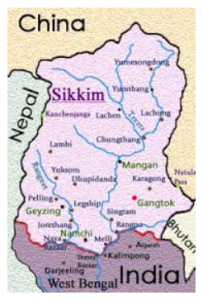
Sikkim, a small but significant northeastern state of India, plays an important role in the country’s ecological and cultural diversity. Known for its breathtaking landscapes, Buddhist heritage, and strategic location, the state blends tradition with sustainable development. Spanning 7,096 square kilometers, it is the second-smallest state in India by area. As per the 2011 Census, Sikkim has a population of over 610,000. Gangtok, the state capital, serves as the cultural and administrative hub, while towns like Namchi and Mangan contribute to regional growth.
Also Read: Operation Sindoor
Sikkim has a rich history shaped by its indigenous tribes and Buddhist influences. The Namgyal dynasty, founded in 1642, ruled the region for over 300 years, establishing Tibetan Buddhism as a core part of Sikkimese identity. The kingdom faced conflicts with Bhutan and Nepal before becoming a British protectorate in the 19th century.
Post-independence, Sikkim remained a protectorate of India until 1975, when it officially became the 22nd state of the Indian Union after a referendum. This merger strengthened its political and economic ties with India while preserving its unique cultural heritage.
Also Read: Andhra Pradesh
Sikkim is located in northeastern India, bordered by Nepal to the west, Bhutan to the east, Tibet (China) to the north, and West Bengal to the south. The state is characterized by its mountainous terrain, with the Himalayas dominating its landscape.
| Category | Details |
| Geographical Features | – Himalayan Mountain Range (dominant landform) – Lower valleys (fertile plains) and glacial lakes – River systems: Teesta, Rangeet – Longest river: Teesta (~309 km in Sikkim) – Shortest major river: Rangeet (~121 km) – Highest peak: Kangchenjunga (8,586 m, world’s 3rd highest) – Smallest peak: Tendong Hill (~2,590 m) – Lowest point: Rangpo (near West Bengal border, ~300 m) – Rich in biodiversity (alpine forests, rare orchids) and hydropower potential |
| Climate Type | Temperate (lower valleys), Alpine/Tundra (higher altitudes) |
| Seasons | – Spring (Mar–May): Mild and blooming – Monsoon (Jun–Sep): Heavy rainfall (SW monsoon) – Autumn (Oct–Nov): Clear skies, cool – Winter (Dec–Feb): Snowfall in high-altitude regions |
| Climate Variation | – Lower valleys (e.g., Gangtok): Moderate (1,500–2,500 mm rainfall) – Mid-altitude regions: Cool and humid – High-altitude zones (e.g., Lachung): Sub-zero temperatures, heavy snow – Southern foothills: Warmer, subtropical influence |
The state experiences a varied climate, from cold winters in the high-altitude regions to moderate temperatures in the lower valleys. Monsoons bring heavy rainfall, making Sikkim one of the wettest regions in India.
Also Read: Arunachal Pradesh
[metaslider id=”5575″]
As per the 2011 Census, Sikkim had a population of 610,577. The population density stands at 86 persons per square kilometer, making it one of the least densely populated states in India. The sex ratio is 890 females per 1000 males, below the national average.
Literacy Rate: The state recorded a literacy rate of 82.2%, with male literacy at 87.3% and female literacy at 76.4%.
Languages Spoken:
Each state has its own symbols. Following are the state symbols of Sikkim:

| Symbol | Name |
| State Animal | Red Panda |
| State Bird | Blood Pheasant |
| State Tree | Rhododendron |
| State Flower | Noble Orchid (Dendrobium nobile) |
These symbols reflect Sikkim’s unique Himalayan biodiversity and cultural identity.
Also Read: Chattisgarh
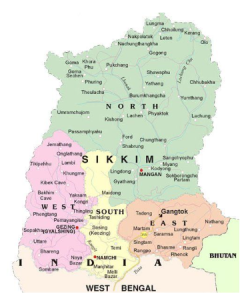
Sikkim follows a unicameral legislature, consisting only of the Legislative Assembly (Vidhan Sabha).
| Category | Details |
| State Formation | Merged with India on May 16, 1975, becoming the 22nd state. |
| Chief Minister | Prem Singh Tamang (PS Golay) (Since 2019) – Party: Sikkim Krantikari Morcha (SKM) – Focus: Infrastructure, tourism, welfare schemes |
| Governor | Lakshman Acharya – In office since February 12, 2023 |
| High Court | Sikkim High Court (Gangtok) – Chief Justice: Hon’ble Justice Biswanath Somadder (as of 2024) |
| Legislature Type | Unicameral (Only Legislative Assembly) |
| Legislative Assembly Members | 32 elected members |
| Lok Sabha Representation | 1 Member |
| Rajya Sabha Representation | 1 Member (indirectly elected) |
| Districts | 6 (as of 2024) |
Also Read: Assam
Sikkim’s culture reflects a unique blend of Himalayan Buddhist traditions, indigenous tribal heritage, and Nepali influences, shaped by its mountainous geography and diverse ethnic communities.
| Category | Details |
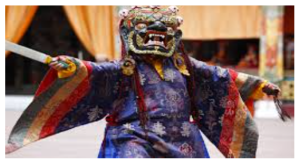
| Classical Dance | Mask Dance (Cham) – Sacred Buddhist dance with ritual masks and symbolic movements Maruni – Traditional Nepali folk dance performed during festivals |
| Theatre Arts | Lho-Kay-Mon – Bhutia folk plays depicting Buddhist legends Tamang Selo Drama – Musical folk theater by Tamang community |
| Folk Music | Lu – Bhutia traditional songs Hakparey – Lepcha folk music with bamboo instruments |
| Festivals | Losar (Tibetan New Year) Saga Dawa (Buddhist festival) Dasain (Nepali Hindu festival) Pang Lhabsol (Kangchenjunga worship) |
| Arts & Crafts | Thangka paintings – Buddhist religious art Handwoven carpets – Woolen rugs with Himalayan designs Bamboo crafts – Eco-friendly baskets and furniture |
| Architecture | Rumtek Monastery – Tibetan-style architecture Pemayangtse Monastery – Ancient murals and sculptures |
Also Read: Bihar
Following is the list of important national parks and wildlife sanctuaries:

| Category | Details |
| National Parks | Khangchendzonga NP (1,784 sq km) – UNESCO site with snow leopards Fambong Lho WS – Himalayan birds and orchids |
| Wildlife Sanctuaries | Barsey Rhododendron (104 sq km) Maenam WS (35 sq km) Kyongnosla Alpine (31 sq km – smallest) |
| UNESCO Sites | Khangchendzonga NP (2016) – Mixed natural/cultural site |
| Key Species | Red Panda (State Animal) Blood Pheasant (State Bird) Snow Leopard |
Sikkim is home to several indigenous tribes, each with unique cultural traditions.
| Tribe | Description |
| Lepcha | Indigenous to Sikkim, also called “Rong” (ravine folk). Known for nature worship and traditional knowledge. |
| Bhutia | Tibetan origin, practice Buddhism. Known for their monasteries, woolen textiles, and cuisine (like momos & thukpa). |
| Nepali | Largest ethnic group; includes sub-groups like Chettri, Bahun, Rai, Limbu, etc. Contributed to Sikkim’s agriculture and festivals (Dashain, Tihar). |
| Limbu | A sub-group of Nepali community; known for “Chyangba” dance and traditional liquor (Tongba). |
| Sherpa | Known for mountaineering skills; practice Tibetan Buddhism. |
| Tamang | Another Nepali sub-group with rich Buddhist traditions and craftsmanship. |
| Gurung | Known for their bravery, traditional “Ghatu” dance, and woolen products. |
Geographical Indication (GI) tags protect products unique to Sikkim’s geography and culture.
| GI Tag Product | Description |
| Sikkim Large Cardamom | Known as “Elachi,” it’s a premium spice grown in high altitudes. |
| Sikkim Mandarin Orange | Unique sweet-tangy flavor due to Sikkim’s climate and soil. |
| Chhurpi | Traditional fermented cheese, used in local dishes and as a snack. |
| Sikkim Red Cherry Pepper | A rare, mildly spicy pepper with high medicinal value. |
| Sikkim Temi Tea | High-quality organic tea grown in Temi Tea Garden. |
Sikkim is among the fastest growing economies of India:
| Category | Details |
| Key Sectors | Tourism (adventure/Buddhist) Organic Farming (cardamom, ginger) Hydropower |
| Infrastructure | NH10 highway Pakyong Airport (only in Sikkim) |
| Economic Indicators | GDP: ₹40,000 crore (2023) Per Capita Income: Highest in NE states |
[metaslider id=”5575″]
Sikkim has limited but significant mineral resources due to its Himalayan geology. Below are the key minerals found in the state:
| Mineral Resource | Major Mining Areas / Districts | Details / Notes |
| Copper | Dikchu, Rangpo, West Sikkim | – Small-scale deposits explored by GSI. – Potential for future mining. |
| Coal | Rangit Valley, South Sikkim | – Sub-bituminous coal deposits. – Limited commercial mining. |
| Limestone | Namchi, West Sikkim | – Used in cement production. – Small-scale extraction. |
| Dolomite | Mangan, North Sikkim | – Used in steel and glass industries. – Minor deposits. |
| Quartz & Silica Sand | Gangtok, East Sikkim | – Used in glass and electronics. – High-purity reserves. |
| Tungsten | Dzongu, North Sikkim | – Rare metal used in alloys. – Explored by geological surveys. |
| Graphite | Singhik, North Sikkim | – Used in batteries and lubricants. – Small deposits. |
| Bauxite | Namchi, South Sikkim | – Minor deposits for aluminium production. |
Sikkim follows strict environmental regulations, limiting large-scale mining. Most resources remain under exploration.
Are you preparing for UPSC 2025? Join IAShub’s UPSC coaching batches to boost your preparation. Enroll now!

The Teesta River is Sikkim's primary waterway, originating from the Tso Lhamo Lake and flowing through the entire state. The Rangeet River, its main tributary, joins the Teesta near the West Bengal border. These rivers are crucial for hydropower generation and irrigation.
Sikkim's culture blends Tibetan Buddhism with Nepali Hinduism. The Cham dance is a sacred monastic performance, while Losar (Tibetan New Year) and Pang Lhabsol (worship of Mount Kangchenjunga) are major festivals. Traditional arts include Thangka painting and handwoven Lepcha textiles.
Tourism contributes significantly to Sikkim's economy, particularly spiritual tourism to Buddhist monasteries and adventure tourism. Hydropower generation is another major sector, with the state producing surplus electricity. Organic farming of cardamom, ginger, and oranges forms the agricultural backbone.
Khangchendzonga National Park, a UNESCO World Heritage Site, protects snow leopards and red pandas. Fambong Lho Wildlife Sanctuary near Gangtok is known for its rhododendron forests, while the Barsey Rhododendron Sanctuary blooms spectacularly each spring.

Refine your answer writing skills and elevate your UPSC preparation with personalized support and expert feedback.
Fill out the form to get started with the program or any other enquiries !



Are you dreaming of becoming an IAS officer? Then, IAShub can be your best guide. It is one of the Best IAS Coaching in Delhi. Many students who want to clear the UPSC exam join IAShub for learning. The institute gives both online and offline classes. Their teachers are experienced and helpful. They easily explain every topic. Students also get notes, tests, and tips to do well in the exam.
IAShub is in Delhi and is trusted by many UPSC students. It offers coaching for every part of the UPSC exam – Prelims, Mains, and Interview. The classes are simple and easy to understand. The teachers are experts and guide students in the right way. IAShub is also known for its helpful notes, test series, and answer-writing practice. IAShub is the best coaching in Delhi and also gives UPSC Online Classes. This helps students from any place in India to learn. The online classes are live and also recorded. So, students can watch them anytime. These classes cover the full UPSC syllabus.
Here are some important services provided by IAShub:
The UPSC Civil Services Exam has three parts:
This exam is tough, but with the right guidance, it becomes easy to manage. Students must study smart and stay regular.
IAShub supports students from the beginning to the end. It gives the right books, tests, and notes. The classes are easy to follow, and the teachers are always ready to help. Students get personal doubt sessions too. The test series and answer checking help students learn where they need to do better. Also, free study materials save time and money.
IAShub also guides students during the final stage – the interview. Experts take mock interviews and give useful tips. This full support makes IAShub one of the best IAS coaching in Delhi.
Join 50,000+ UPSC Aspirants! 🚀
Get Free UPSC/IAS Study Materials, Daily Current Affairs, Editorial Summaries & Exam Updates.
Join Telegram Channel