
















A detailed timeline of Indian aircraft carriers from INS Vikrant to INS Vikramaditya and INS Vikrant (IAC‑1), highlighting military significance, political milestones, and the strategic path toward 2025.
 theIAShub | 10 May, 2025 | 10521 | 0 |

Indian Aircraft Carriers have long been the centerpiece of India’s maritime strategy, acting as floating airbases and symbols of power projection. These massive warships enable the Indian Navy to conduct operations far beyond its shores, especially in the increasingly contested waters of the Indo-Pacific region.
INS Vikrant, India’s first aircraft carrier, marked the beginning of the country’s transformation into a maritime power. Acquired from the UK, this 19,500-tonne Majestic-class carrier allowed India to enforce a naval blockade during the 1971 Indo-Pak war, effectively isolating enemy forces.
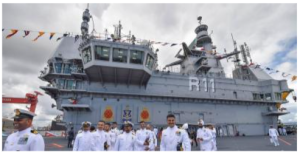
| Year | Milestone |
| 1957 | India purchases British HMS Hercules. |
| 1961 | Commissioned as INS Vikrant – India’s first aircraft carrier. |
| 1961 | Participates in Operation Vijay for Goa’s liberation. |
| 1965 | Deploys during India-Pakistan conflict as a deterrent. |
| 1971 | Conducts air strikes in East Pakistan during the war. |
INS Viraat, formerly HMS Hermes, was commissioned as India’s second carrier. Its long service of over three decades made it an iconic vessel in the Indian Navy. Hosting Sea Harrier jump jets, INS Viraat played significant roles in regional operations and deterrence posturing during tense military standoffs.
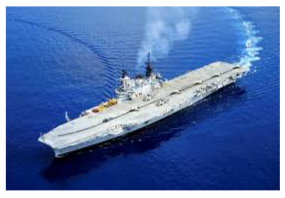
| Year | Milestone |
| 1986 | India purchases British HMS Hermes. |
| 1987 | Commissioned as INS Viraat. |
| 1989 | Supports Operation Jupiter in Sri Lanka. |
| 1999 | Active during Kargil War to secure maritime borders. |
| 2001 | Deploys during Operation Parakram. |
| 2017 | Decommissioned after 30 years of service. |
INS Vikramaditya, formerly a Russian Kiev-class aircraft carrier, was extensively refurbished and commissioned into the Indian Navy in 2013. With a displacement of around 44,500 tonnes, it became India’s largest warship at the time.
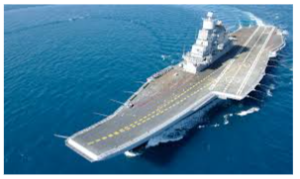
| Year | Milestone |
| 2004 | India signs deal with Russia for Admiral Gorshkov. |
| 2013 | Commissioned as INS Vikramaditya. |
| 2015–20 | Participates in joint exercises like MALABAR. |
Unlike its predecessors, Vikramaditya uses a ski-jump-assisted takeoff system (STOBAR) and houses MiG-29K fighter jets. It represented a crucial capability enhancement during a period when maritime rivalries in the Indo-Pacific were intensifying.
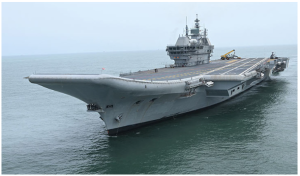
| Year | Milestone |
| 2009 | Keel laid at Cochin Shipyard. |
| 2013 | Launched for sea trials. |
| 2022 | Commissioned as INS Vikrant (IAC‑1). |
INS Vikrant (IAC‑1) represents a watershed moment in Indian naval history as the first indigenous aircraft carrier of India. With a displacement of 45,000 tonnes and a length of 262 meters, Vikrant embodies self-reliance under the “Make in India” initiative.
Equipped with MiG‑29K fighters and indigenous radars and weapons systems, it was designed by the Indian Navy’s Directorate of Naval Design. INS Vikrant is pivotal to India’s aim of fielding multiple operational aircraft carriers simultaneously.
Also Read: List of Missiles of India
[metaslider id=”5575″]
India seeks to develop a new generation of aircraft carriers due increasing risks in the world. INS Vishal is a step towards protecting Indian interests through indigenous innovations.
| Year | Milestone |
| 2015 | Naval Design Bureau begins planning for INS Vishal. |
| 2025 | Two-carrier operational force expected. |
| 2030s | Potential commissioning of INS Vishal. |
Below is a comparison table of all the Aircraft carriers India had till date:
| Carrier | Origin | Commissioned | Displacement | Aircraft Capacity | Status |
| INS Vikrant (R11) | UK | 1961 | ~19,500 tonnes | 20 | Decommissioned |
| INS Viraat (R22) | UK | 1987 | ~28,700 tonnes | 26 | Decommissioned |
| INS Vikramaditya (R33) | Russia (Refit) | 2013 | ~44,500 tonnes | 30+ | Active |
| INS Vikrant (IAC‑1) | India (Indigenous) | 2022 | ~45,000 tonnes | 30+ | Active |
| INS Vishal (Planned) | India (Proposed) | TBD | ~65,000–75,000 t | 55+ | Design Phase |
Indian Aircraft Carriers List with Service Periods
| Carrier Name | Service Period |
| INS Vikrant (R11) | 1961–1997 |
| INS Viraat (R22) | 1987–2017 |
| INS Vikramaditya (R33) | 2013–Present |
| INS Vikrant (IAC‑1) | 2022–Present |
| INS Vishal (IAC‑3) | TBD (Planned) |
Looking ahead to Indian Aircraft Carriers 2025, India is expected to have a dual-carrier capability with INS Vikrant and INS Vikramaditya fully operational. A third aircraft carrier, INS Vishal, is in the conceptual phase. It is expected to feature:
INS Vishal will significantly expand the operational envelope of Indian naval aviation, allowing for sustained presence in the Indo-Pacific. Politically, it aligns with India’s strategic ambition to be a net security provider in the region.
The evolution of Indian Aircraft Carriers reflects India’s changing defense needs, technological advancement, and strategic intent. Starting with foreign acquisitions like INS Vikrant and INS Viraat, India has moved toward indigenous production with INS Vikrant (IAC‑1). The roadmap toward INS Vishal signifies India’s aspirations for global naval presence.
Are you preparing for UPSC 2025? Join IAShub’s UPSC coaching batches to boost your preparation. Enroll now!

The first aircraft carrier of India was INS Vikrant, commissioned in 1961 and played a crucial role in the 1971 war.
INS Vikrant (IAC‑1), commissioned in 2022, is the first aircraft carrier built entirely in India.
By 2025, India operates two aircraft carriers: INS Vikramaditya and INS Vikrant, ensuring continuous maritime deployment.
INS Vishal is a proposed next-generation Indian aircraft carrier, expected to feature advanced technologies and greater aircraft capacity than its predecessors.

Refine your answer writing skills and elevate your UPSC preparation with personalized support and expert feedback.
Fill out the form to get started with the program or any other enquiries !



Are you dreaming of becoming an IAS officer? Then, IAShub can be your best guide. It is one of the Best IAS Coaching in Delhi. Many students who want to clear the UPSC exam join IAShub for learning. The institute gives both online and offline classes. Their teachers are experienced and helpful. They easily explain every topic. Students also get notes, tests, and tips to do well in the exam.
IAShub is in Delhi and is trusted by many UPSC students. It offers coaching for every part of the UPSC exam – Prelims, Mains, and Interview. The classes are simple and easy to understand. The teachers are experts and guide students in the right way. IAShub is also known for its helpful notes, test series, and answer-writing practice. IAShub is the best coaching in Delhi and also gives UPSC Online Classes. This helps students from any place in India to learn. The online classes are live and also recorded. So, students can watch them anytime. These classes cover the full UPSC syllabus.
Here are some important services provided by IAShub:
The UPSC Civil Services Exam has three parts:
This exam is tough, but with the right guidance, it becomes easy to manage. Students must study smart and stay regular.
IAShub supports students from the beginning to the end. It gives the right books, tests, and notes. The classes are easy to follow, and the teachers are always ready to help. Students get personal doubt sessions too. The test series and answer checking help students learn where they need to do better. Also, free study materials save time and money.
IAShub also guides students during the final stage – the interview. Experts take mock interviews and give useful tips. This full support makes IAShub one of the best IAS coaching in Delhi.

Join 50,000+ UPSC Aspirants! 🚀
Get Free UPSC/IAS Study Materials, Daily Current Affairs, Editorial Summaries & Exam Updates.
Join Telegram Channel