Discover Mizoram’s rich history, political evolution, and cultural heritage. Explore its rivers, dams, national parks, and tiger reserves. Learn about Mizo traditions, major festivals like Chapchar Kut, and iconic landmarks including Blue Mountain and Pukzing Cave.
 theIAShub | 06 May, 2025 | 4299 | 0 |

Mizoram, located in northeastern India, is a land of stunning natural beauty, bordered by Myanmar and Bangladesh. Mizoram is known as the “Land of Blue Mountains,” it is characterized by rolling hills, lush forests, and diverse wildlife.
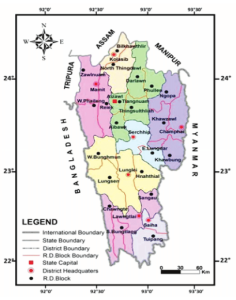
Mizoram’s history is intricately tied to its people’s migration patterns and the political struggles for self-governance. The Mizos are believed to have originated from the Mongolian plateau, with the earliest settlers arriving in the region from China. They initially settled in what is now the Shan State in Myanmar and later moved to the Chin Hills before finally arriving in Mizoram.
During the 18th and 19th centuries, Mizoram faced a series of tribal conflicts and retaliatory expeditions. The British formally annexed Mizoram in 1895, incorporating it into British India. Mizoram was designated as a “Backward Tract” in 1919 and, over time, became part of the Lushai Hills Autonomous District Council in 1952.
However, political instability marked the mid-20th century in Mizoram, with the Mizo National Front (MNF) demanding greater autonomy. The region’s political awakening culminated in the formation of the MNF in 1961, and the subsequent insurgency for an independent Mizo state led to violent confrontations with the Indian government. The Mautam famine of 1959, caused by a bamboo flowering phenomenon that led to a rodent infestation, worsened the situation, and the MNF expanded its influence. In 1986, after years of armed conflict, the Mizoram Peace Accord was signed, bringing an end to the insurgency and leading to the state’s official creation in 1987.
Also Read: Indian States and Their Capitals
Mizoram is a parliamentary democracy with a unicameral legislature:
Mizoram is home to several protected areas that conserve its rich biodiversity:
[metaslider id=”5575″]
In addition to national parks, Mizoram has several wildlife sanctuaries:
Mizoram is located at a latitude between 21°58′ and 24°35′ N, and a longitude between 92°15′ and 93°29′ E. The state spans an area of 21,087 square kilometers, with a north-south stretch of 277 kilometers and an east-west stretch of 121 kilometers. Mizoram shares its borders with Assam, Tripura, and Manipur within India, while it also shares international boundaries with Myanmar and Bangladesh.
Mizoram’s terrain is dominated by hills and valleys, with the highest point being Phawngpui (Blue Mountain) at 2,210 meters. Mizoram enjoys a temperate climate, with winter temperatures ranging from 11°C to 21°C and summer temperatures fluctuating between 20°C and 30°C. The region receives an average annual rainfall of 250 mm, making it lush and fertile. Mizoram’s natural resources, including forests, rivers, and flora, make it an ecological treasure trove.
Mizoram’s mountainous terrain includes several passes that facilitate connectivity within the state and to neighboring regions. Notable passes include:
Mizoram has several dams that support irrigation and hydroelectric power generation:
Mizoram’s population stands at approximately 1,091,014 people, with a relatively balanced sex ratio of 975 females per 1000 males. The capital city, Aizawl, is the largest urban center and the cultural heart of the state. Mizoram’s literacy rate is an impressive 91.85%, reflecting the state’s commitment to education and its relatively high standards of living.
The state’s population is predominantly made up of the Mizos, an ethnic group of Mongoloid origin. The Mizos, who are known for their hospitality and community spirit, follow the code of ethics called “Tlawmngaihna,” which emphasizes kindness, unselfishness, and helping others. This sense of community is further exemplified by the state’s social structure, which values cooperation, mutual respect, and communal activities.
Also Read: International Organisations
Mizoram’s culture is a blend of traditional Mizo practices and the influences of Christianity, which has played a significant role in shaping the state’s societal values. Christian missionaries introduced education and social reforms, leading to an increase in literacy rates. However, despite the Christian influence, many traditional Mizo practices and festivals continue to thrive.
One of the most significant traditions is the bride price, a customary practice in Mizo marriages, where the groom offers goods or money to the bride’s family as a sign of respect and goodwill. The Mizo people also follow a patrilineal inheritance system, where property is passed down to sons, but women can inherit if there are no male heirs.
Mizo dances are an integral part of the culture, and each community has its distinct dance forms that celebrate agricultural events, social bonding, and historical milestones. The Cheraw dance or “bamboo dance” is perhaps the most well-known, where dancers move in and out of horizontal bamboo poles that are rhythmically tapped. This performance symbolizes harmony and community cooperation. Other notable dances include the Khuallam and Sarlamkai, which reflect the state’s deep-seated cultural values of bravery, respect, and celebration.
Also Read: Important Battles in Modern History
Mizoram is home to a variety of festivals, most of which are tied to the agricultural calendar. The Chapchar Kut, celebrated in March, marks the beginning of the harvest season and is characterized by songs, dances, and communal feasts. Similarly, Pawl Kut and Mim Kut are harvest festivals that bring communities together in joyous celebrations. These festivals are a mix of merrymaking, thanksgiving, and paying homage to nature’s abundance.

Image: Chapchar Kut Image: Pawl Kut
Mizo New Year, known as Thalfavang Kut, is another major event. It marks the end of the harvest and the beginning of a new agricultural cycle. During this time, people engage in feasting, socializing, and the performance of traditional dances.
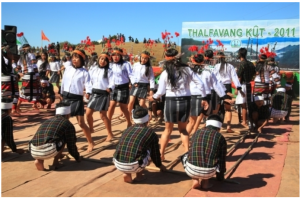
Image: Thalfavang Kut
[metaslider id=”5575″]
Mizoram’s captivating landscapes and rich cultural heritage make it an appealing destination for tourists. Some of the must-visit spots include:
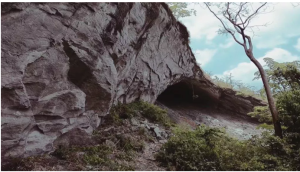
Image: Pukzing Cave
Are you preparing for UPSC 2025? Join IAShub’s UPSC coaching batches to boost your preparation. Enroll now!
Related Articles |
|
|---|---|
| Major Rivers in India | UPSC Syllabus |
| Dams in India | Biosphere Reserves In India |
| National Parks In India | Public Administration Optional |

The official language of Mizoram is Mizo, although English and Hindi are also widely understood and used, especially for education and administration.
Mizoram became a full-fledged state on February 20, 1987, after years of political struggle and negotiations, marking a new chapter in its history.
Mizoram celebrates several festivals, including Chapchar Kut, Pawl Kut, Mim Kut, and Thalfavang Kut, all tied to agricultural cycles and marked by dances, feasts, and community gatherings.
Mizo marriages involve a bride price, where the groom offers money or goods to the bride's family. The ceremony often takes place in churches and includes traditional celebrations.


Refine your answer writing skills and elevate your UPSC preparation with personalized support and expert feedback.
Fill out the form to get started with the program or any other enquiries !






Are you dreaming of becoming an IAS officer? Then, IAShub can be your best guide. It is one of the Best IAS Coaching in Delhi. Many students who want to clear the UPSC exam join IAShub for learning. The institute gives both online and offline classes. Their teachers are experienced and helpful. They easily explain every topic. Students also get notes, tests, and tips to do well in the exam.
IAShub is in Delhi and is trusted by many UPSC students. It offers coaching for every part of the UPSC exam – Prelims, Mains, and Interview. The classes are simple and easy to understand. The teachers are experts and guide students in the right way. IAShub is also known for its helpful notes, test series, and answer-writing practice. IAShub is the best coaching in Delhi and also gives UPSC Online Classes. This helps students from any place in India to learn. The online classes are live and also recorded. So, students can watch them anytime. These classes cover the full UPSC syllabus.
Here are some important services provided by IAShub:
The UPSC Civil Services Exam has three parts:
This exam is tough, but with the right guidance, it becomes easy to manage. Students must study smart and stay regular.
IAShub supports students from the beginning to the end. It gives the right books, tests, and notes. The classes are easy to follow, and the teachers are always ready to help. Students get personal doubt sessions too. The test series and answer checking help students learn where they need to do better. Also, free study materials save time and money.
IAShub also guides students during the final stage – the interview. Experts take mock interviews and give useful tips. This full support makes IAShub one of the best IAS coaching in Delhi.