
















Explore Jyotiba Phule Jayanti 2025, his birth anniversary, biography, and major contributions to social reform in India. Learn about his fight against caste discrimination and advocacy for women's education.
 theIAShub | 10 Apr, 2025 | 8792 | 0 |

Jyotiba Phule Jayanti 2025 is a special day to remember the great social reformer, Jyotiba Phule. He worked tirelessly to fight against caste discrimination and believed in equal education for everyone, especially for women and underprivileged communities. Phule started the first school for girls in India and challenged the unfair social practices of his time. His efforts brought significant change to society, and his ideas continue to inspire people today. On Jyotiba Phule Jayanti, we honor his life and the important work he did to make India a more equal and just society. This day serves as a reminder of the impact of his contributions to social justice and equality.
On Jyotiba Phule Jayanti 2025, April 11, 2025, people across India celebrated the birth anniversary of Jyotiba Phule. It’s a time to reflect on his tireless struggle for equality and his vision of an inclusive society. Schools, social groups, and activists organize events and discussions on Jyotiba Phule Jayanti to honor his contributions and inspire others to continue his mission for a fairer world.
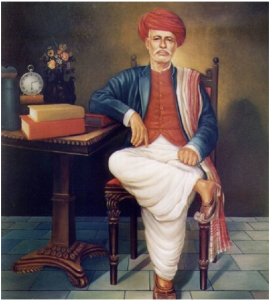
Jyotiba Phule was born in Pune, Maharashtra, on April 11, 1827, Jyotirao Phule’s life is a testament to the enduring power of education and social justice. Jyotiba Phule’s journey from a young boy in a lower-caste family to a social reformer of great repute is an inspiring tale. His early education was instrumental in shaping his ideology. After completing his schooling, Phule was exposed to the rigid social stratification that defined 19th-century India. He was particularly impacted by an incident during the wedding of a Brahmin friend, where he was insulted for participating in the procession, an event that pushed him to challenge the caste system head-on.
In 1848, Phule took a bold step by establishing the first school for girls in Pune at the residence of Tatyasaheb Bhide. This act of providing education to women, who were traditionally denied access to schooling, marked the beginning of his campaign to bring educational and social equality to the marginalized sections of society.
Also Read: UPSC Mains Subjects
Jyotiba Phule made groundbreaking contributions to social reform in India. He strongly opposed the caste system, which he saw as a source of inequality and injustice. Phule fought for the rights of the “untouchables” and lower castes, writing about these issues in his book Gulamgiri (1873), which criticized the oppression of these communities.
One of his major reforms was founding the Satyashodhak Samaj (Society of Truth Seekers) in 1873. Satyashodhak Samaj was a revolutionary organization aiming at promoting social equality, justice, and the rights of marginalized groups, irrespective of caste, creed, or religion. This society became a platform for spreading his ideas of social equality and stood in direct opposition to the religious orthodoxy of the time.
Through his writings and activism, he played a key role in advocating for a society free from caste-based discrimination and untouchability. Jyotiba Phule’s book, Gulamgiri (1873), critically examined the plight of the oppressed classes and condemned the caste system.
Phule was also a strong advocate for women’s education. Together with his wife, Savitribai Phule, he helped establish schools for girls, especially for those from oppressed communities. Savitribai became one of the first female teachers in India, working alongside her husband to promote female education in a society that opposed it.
Also Read: UPSC Mains Exam
[metaslider id=”5575″]
Phule’s societal contributions went beyond education. His advocacy for the rights of the marginalized communities, including the untouchables, women, and agricultural laborers, played a crucial role in challenging the oppressive structures of society. Through his writings, activism, and social work, he laid the foundation for the later reform movements that would shape India’s struggle for social justice.
Are you preparing for UPSC 2025? Join IAShub’s UPSC coaching batches to boost your preparation. Enroll now!

Jyotiba Phule challenged the caste system, promoted education for women and lower castes, and founded the Satyashodhak Samaj, a society advocating for social equality and justice.
Jyotiba Phule Jayanti will be celebrated on April 11, 2025, to honor his birth anniversary and reflect on his contributions to social justice and education.
The Satyashodhak Samaj, founded by Phule in 1873, aimed to promote social equality, justice, and the rights of lower castes, challenging the caste system and religious orthodoxy.
Jyotiba Phule’s major works include Gulamgiri (1873), critiquing the caste system, Brahmananche Kasab (1869), challenging Brahminical practices, and Shetkaryaca Asud (1883), highlighting the exploitation of farmers.

Refine your answer writing skills and elevate your UPSC preparation with personalized support and expert feedback.
Fill out the form to get started with the program or any other enquiries !



Are you dreaming of becoming an IAS officer? Then, IAShub can be your best guide. It is one of the Best IAS Coaching in Delhi. Many students who want to clear the UPSC exam join IAShub for learning. The institute gives both online and offline classes. Their teachers are experienced and helpful. They easily explain every topic. Students also get notes, tests, and tips to do well in the exam.
IAShub is in Delhi and is trusted by many UPSC students. It offers coaching for every part of the UPSC exam – Prelims, Mains, and Interview. The classes are simple and easy to understand. The teachers are experts and guide students in the right way. IAShub is also known for its helpful notes, test series, and answer-writing practice. IAShub is the best coaching in Delhi and also gives UPSC Online Classes. This helps students from any place in India to learn. The online classes are live and also recorded. So, students can watch them anytime. These classes cover the full UPSC syllabus.
Here are some important services provided by IAShub:
The UPSC Civil Services Exam has three parts:
This exam is tough, but with the right guidance, it becomes easy to manage. Students must study smart and stay regular.
IAShub supports students from the beginning to the end. It gives the right books, tests, and notes. The classes are easy to follow, and the teachers are always ready to help. Students get personal doubt sessions too. The test series and answer checking help students learn where they need to do better. Also, free study materials save time and money.
IAShub also guides students during the final stage – the interview. Experts take mock interviews and give useful tips. This full support makes IAShub one of the best IAS coaching in Delhi.

Join 50,000+ UPSC Aspirants! 🚀
Get Free UPSC/IAS Study Materials, Daily Current Affairs, Editorial Summaries & Exam Updates.
Join Telegram Channel