
















Master Environment PYQ UPSC Prelims with this complete guide. Learn how many questions from the environment in UPSC Prelims, analyze UPSC CSE Prelims PYQ of Environment.
 theIAShub | 03 Apr, 2025 | 14749 | 0 |

If you’re preparing for the UPSC Civil Services Prelims, understanding Environment PYQ UPSC Prelims (Previous Year Questions) is crucial. Environment and Ecology is a high-scoring section, and knowing how many questions from the environment in UPSC Prelims appear each year can help you strategize better.
Also Read: UPSC Prelims Syllabus
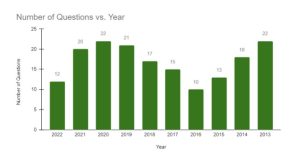
Over the past decade, the number of Environment and Ecology questions in UPSC Prelims has increased significantly. The year-wise trend of Environment and Ecology questions shows that, on average, 20 questions have been asked from this section since 2018. Between 2018 and 2021, the number of questions remained high, but there was a decline in 2022 and 2023. Due to its overlap with current affairs, agriculture, and certain areas of geography, Environment remains one of the most significant subjects in the UPSC Prelims. The trend of Environment-related questions is outlined below. Environment Questions in UPSC Prelims
Also Read: Books for UPSC
Below is the table mentioning topic-wise breakup of Environment PYQs in UPSC Prelims:
| Environment – Topicwise Weightage | % of Questions (2011-2024) | % of Questions (2022-2024) | No. of Questions (2011-2024) | No. of Questions (2022-2024) |
| A) Environment Ecology | 14% | 20% | 34 | 11 |
| B) Biodiversity in India | 22% | 19% | 54 | 10 |
| C) Environment Pollution and Remedies | 15% | 17% | 37 | 9 |
| D) Climate Change | 10% | 7% | 25 | 4 |
| E) Indian Initiatives for Environment Protection | 15% | 9% | 37 | 5 |
| F) Global Initiatives for Environment Protection | 11% | 11% | 28 | 6 |
| G) Agriculture and Environment | 7% | 4% | 18 | 2 |
| H) Renewable and Alternate Energy Sources | 5% | 13% | 13 | 7 |
Also Read: Digital Arrest
Statement I: India does not import apples from the United States of America.
Statement-II: In India, the law prohibits the import of Genetically Modified food without the approval of the competent authority.
Which one of the following is correct in respect of the above statements?
(a) Birds
(b) Fish
(c) Insects
(d) Reptiles
Statement I: Many chewing gums found in the market are a source of environmental pollution.
Statement II: Many chewing gums contain plastic as gum base.
Which one of the following is correct in respect of the above statements?
Country Animal found in its natural habitat
| 1. | Brazil | Indri |
| 2. | Indonesia | Elk |
| 3. | Madagascar | Bonobo |
How many of the pairs given above are correctly matched?
(a) Only one
(b) Only two
(c) All three
(d) None
Lions do not have a particular breeding season.
Unlike most other big cats, cheetahs don’t roar.
Unlike male lions, male leopards do not proclaim their territory by scent marking.
Which of the statements given above are correct?
(a) 1 and 2 only
(b) 2 and 3 only
(c) 1 and 3 only
(d) 1, 2 and 3
How many of the above are considered “Distributed Energy Resources”?
(a) Only one
(b) Only two
(c) Only three
(d) All four
(a) Fig
(b) Mahua
(c) Sandalwood
(d) Silk cotton
How many of the above have poisonous species among them?
(a) Only one
(b) Only two
(c) All three
(d) None
Which of the statements given above are correct?
(a) 1 and 2 only
(b) 2 and 3 only
(c) 1 and 3 only
(d) 1, 2 and 3
Parasitoid species are found in how many of the above kind of organisms?
(a) Only two
(b) Only three
(c) Only four
(d) All five
Statement-I: The Indian Flying Fox is placed under the “vermin” category in the Wild Life (Protection) Act, 1972.
Statement II: The Indian Flying Fox feeds on the blood of other animals.
Which one of the following is correct in respect of the above statements?
Also Read: Chemistry optional syllabus
[metaslider id=”5575″]
Step 1: Study NCERTs & Standard Books
Step 2: Solve UPSC CSE Prelims PYQ of Environment (2013-2024)
Step 3: Follow Current Affairs
Step 4: Take Mock Tests
Common Mistakes in UPSC Prelims Environment Questions
Are you preparing for UPSC 2025? Join IAShub’s UPSC coaching batches to boost your preparation. Enroll now!
Mastering Environment PYQ UPSC Prelims requires: Topic-wise focus (Biodiversity > Climate Change > Pollution). Regular revision of UPSC CSE Prelims PYQ of Environment. Current Affairs integration (COP28, New Species Discoveries). With 15-20 questions yearly, this section can be a game-changer.

Environment overlaps with current affairs, geography, and agriculture, making it a high-scoring and crucial subject for UPSC Prelims.
From 2018 to 2021, the number of questions was consistently high, but there was a decline in 2022 and 2023.
Study NCERTs, standard books like Shankar IAS, follow current affairs, and solve previous year questions to understand patterns.
UPSC's official website, past year question banks, and reliable coaching platforms provide compiled Environment PYQs for practice.

Refine your answer writing skills and elevate your UPSC preparation with personalized support and expert feedback.
Fill out the form to get started with the program or any other enquiries !



Are you dreaming of becoming an IAS officer? Then, IAShub can be your best guide. It is one of the Best IAS Coaching in Delhi. Many students who want to clear the UPSC exam join IAShub for learning. The institute gives both online and offline classes. Their teachers are experienced and helpful. They easily explain every topic. Students also get notes, tests, and tips to do well in the exam.
IAShub is in Delhi and is trusted by many UPSC students. It offers coaching for every part of the UPSC exam – Prelims, Mains, and Interview. The classes are simple and easy to understand. The teachers are experts and guide students in the right way. IAShub is also known for its helpful notes, test series, and answer-writing practice. IAShub is the best coaching in Delhi and also gives UPSC Online Classes. This helps students from any place in India to learn. The online classes are live and also recorded. So, students can watch them anytime. These classes cover the full UPSC syllabus.
Here are some important services provided by IAShub:
The UPSC Civil Services Exam has three parts:
This exam is tough, but with the right guidance, it becomes easy to manage. Students must study smart and stay regular.
IAShub supports students from the beginning to the end. It gives the right books, tests, and notes. The classes are easy to follow, and the teachers are always ready to help. Students get personal doubt sessions too. The test series and answer checking help students learn where they need to do better. Also, free study materials save time and money.
IAShub also guides students during the final stage – the interview. Experts take mock interviews and give useful tips. This full support makes IAShub one of the best IAS coaching in Delhi.

Join 50,000+ UPSC Aspirants! 🚀
Get Free UPSC/IAS Study Materials, Daily Current Affairs, Editorial Summaries & Exam Updates.
Join Telegram Channel