The Waqf Amendment Bill 2024 introduces major changes in waqf property management, transparency, and governance. Learn how the Waqf Amendment Bill 2024 affects waqf boards, legal disputes, and community stakeholders.
 theIAShub | 02 Apr, 2025 | 3800 | 0 |

The Waqf Amendment Bill 2024, introduced in the Lok Sabha on August 8, 2024, aims to amend the Waqf Act of 1995 to improve the management of waqf properties in India. Waqf refers to properties dedicated for religious or charitable purposes under Islamic law. The bill proposes significant changes, including altering the composition of the Central Waqf Council and State Waqf Boards to include non-Muslim members, replacing the Survey Commissioner with the Collector for conducting property surveys, and allowing government determination of disputed waqf property ownership.
These amendments have sparked opposition from various groups who argue that they may undermine Muslim property rights and diminish the autonomy of waqf institutions. Proponents, however, contend that the bill seeks to enhance transparency, curb corruption, and ensure better management of waqf assets.
Also Read: WAQF Board
The Waqf Amendment Bill is a legal proposal aimed at making changes to the existing Waqf Act, 1995. Waqf refers to a religious endowment under Islamic law, where properties are dedicated for charitable or religious purposes. The bill seeks to introduce reforms in the governance, regulation, and transparency of waqf properties.
Also Read: UPSC Prelims Cut off Analysis
The need for the Waqf Amendment Bill arises due to increasing concerns regarding mismanagement, illegal encroachments, and lack of proper documentation of waqf assets. The bill is intended to provide clarity on the administration of these properties and improve accountability in their management.
Waqf properties are often subject to disputes, and the Waqf Amendment Bill aims to establish a clear mechanism for resolving such conflicts. It proposes stronger legal backing for the waqf boards, empowering them to take decisive action against unauthorized occupation and financial mismanagement.
The introduction of digital records for waqf properties is another crucial aspect of the bill, ensuring that all properties are well-documented and accounted for. By enforcing strict guidelines and penalties for violations, the bill is expected to streamline waqf administration and enhance the overall efficiency of waqf institutions.
Waqf laws in India have a long history, dating back to the Mughal period. During Mughal rule, waqf properties were managed under Islamic traditions, and donations were made for religious and charitable purposes. When the British took control of India, they introduced legal frameworks to regulate waqf properties.
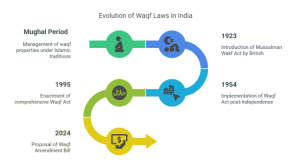
The British-era Mussalman Wakf Act of 1923 aimed to oversee waqf properties but lacked strong enforcement mechanisms. After independence, the Indian government introduced the Waqf Act of 1954, which was later replaced by the more comprehensive Waqf Act of 1995. The 1995 Act created State Waqf Boards to manage properties, prevent misuse, and ensure funds were used for community welfare.
Over the years, amendments have been made to improve transparency, reduce corruption, and clarify property ownership. The Waqf Amendment Bill 2024, is the latest effort to reform waqf governance and address existing issues.
Also Read: UPSC Prelims Pattern
The Waqf Amendment Bill 2024 is a significant legislative step taken to modernize the administration of waqf properties. It proposes amendments that align waqf management with contemporary needs, ensuring that the properties are utilized effectively for their intended purposes. One of the main objectives of the Waqf Amendment Bill 2024 is to introduce more transparency in the way waqf assets are governed and to prevent unauthorized transactions involving these properties.
The bill also suggests changes in the structure of waqf boards, aiming to include more diverse representation for better decision-making. This amendment is particularly relevant given the long-standing concerns over nepotism and mismanagement within some waqf boards.
Moreover, the bill mandates periodic surveys and audits of waqf properties to ensure their proper use and prevent illegal occupation. The Waqf Amendment Bill 2024 is expected to bring major improvements to waqf governance by incorporating modern administrative techniques, including digitalization and stricter financial accountability measures.
Also Read: UPSC Prelims Syllabus
| Aspect | Previous Waqf Laws | Waqf Amendment Bill 2024 |
| Authority of Waqf Boards | Had extensive powers over waqf properties | Limited authority in property ownership & acquisition |
| Property Records | Less strict regulations | Stricter rules to ensure transparency |
| Dispute Resolution | Lengthy legal processes | Faster resolution mechanisms to reduce delays |
| Government Role | Limited oversight | Greater government role in reviewing records |
| Encroachment Issues | Weak enforcement against illegal occupation | Stronger measures to prevent encroachment |
| Balance of Power | More control with Waqf Boards | More balanced governance and legal accountability |
The Waqf Amendment Bill introduces several key features aimed at improving the management of waqf properties. Some of the significant features include:
The Waqf Amendment Bill is expected to create a more transparent and efficient system for managing waqf properties. By making it mandatory for waqf boards to maintain digital records and submit regular financial reports, the bill aims to reduce corruption and increase the efficiency of waqf institutions. Additionally, the bill includes provisions to empower state governments in overseeing waqf boards and ensuring compliance with legal provisions.
Also Read: Nidhi Tewari
The Waqf Act, 1995 was originally enacted to provide a comprehensive legal framework for the management of waqf properties. However, several issues have arisen over the years, necessitating amendments. The Waqf Amendment Bill introduces changes such as:
The Waqf Amendment Bill seeks to modernize these amendments further by ensuring that all waqf assets are properly documented and protected. This would help in reducing legal disputes and improving the efficiency of waqf institutions.
The Waqf Board Act provides the legal structure for governing waqf properties in India. The main features include:
The Waqf Amendment Bill aims to strengthen these features by enhancing the role of waqf boards and ensuring better implementation of legal provisions. By enforcing stricter financial guidelines and documentation practices, the bill is expected to prevent corruption and improve the overall management of waqf properties.
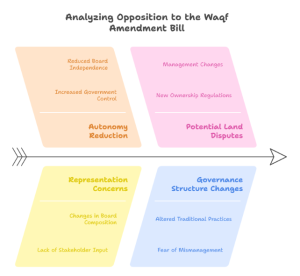
The Waqf Amendment Bill has faced opposition from various political and religious groups. Critics argue that:
The Waqf Amendment Bill has sparked debates over religious autonomy, governance efficiency, and property rights. While the bill seeks to introduce much-needed reforms, its opponents believe that it may lead to excessive government interference in waqf administration.
The Waqf Amendment Bill has ignited controversies surrounding property rights, religious freedom, and governance. Some believe the bill is essential for modernizing waqf management, while others see it as an attempt to weaken religious institutions. The controversy centers around ownership disputes, board restructuring, and the level of government oversight in waqf affairs.
[metaslider id=”5575″]
The Mussalman Wakf Repeal Bill 2024, is important because it removes outdated laws that are no longer relevant. The Mussalman Wakf Act of 1923 was created during British rule to regulate waqf properties, but it became redundant after the Waqf Act of 1954 and later amendments. The old law had provisions that were either duplicated or in conflict with modern waqf laws, creating confusion in property management.
By repealing the 1923 Act, the government aims to simplify legal procedures and remove unnecessary regulations. This step ensures that waqf properties are governed only by updated laws, preventing legal conflicts and improving efficiency. The repeal is also a move towards legal modernization, ensuring that India’s legal system is in line with contemporary needs. This change is expected to make waqf management more straightforward and transparent.
The Waqf Amendment Bill 2024, has faced criticism from opposition parties, legal experts, and some community leaders. One major concern is that the bill gives the government more control over waqf properties, reducing the independence of Waqf Boards. Critics argue that this could lead to government interference in religious and charitable matters.
Another concern is the bill’s impact on property rights, as some fear it might weaken legal protections for waqf lands. Some groups also believe that the bill does not do enough to address corruption within waqf institutions and may not benefit the communities it aims to serve.
There are also fears that changes in dispute resolution mechanisms might make it harder for waqf institutions to fight legal battles effectively. Due to these concerns, several organizations and political parties have called for revisions before the bill is passed.
The Waqf Amendment Bill 2024, will impact various stakeholders in different ways. For the government, it provides more control over waqf properties, ensuring better regulation and preventing illegal use. For Waqf Boards, the bill brings new challenges as they will have to follow stricter rules and provide detailed property records.
This could reduce corruption but may also limit their authority. Muslim communities, who rely on waqf properties for religious and social services, could benefit from improved transparency and governance. However, there are concerns that government intervention might disrupt traditional waqf management.
Property owners and developers may find it easier to resolve land disputes under the new legal framework. Overall, the bill aims to balance governance with accountability, but its effectiveness will depend on how well it is implemented.
The Waqf Act has faced several legal and constitutional challenges over the years. One major issue is the exclusive focus on waqf properties, raising questions about religious neutrality in Indian law. Some legal experts argue that special protections for waqf properties create an imbalance, as similar laws do not exist for other religious communities.
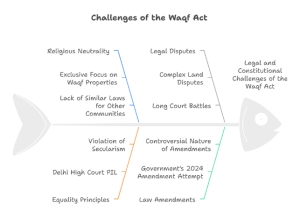
The Delhi High Court is currently hearing a PIL (Public Interest Litigation) questioning whether the Waqf Act violates the principles of equality and secularism in the Indian Constitution. Another challenge is the complex legal disputes over waqf land, often leading to long court battles. In some cases, waqf properties have been misused or illegally occupied due to unclear legal provisions. The government’s attempt to amend the law in 2024 is partly aimed at addressing these legal challenges, but it remains a controversial issue.
The Waqf Amendment Bill 2024, represents a significant step in reforming the management and governance of waqf properties in India. By addressing long-standing issues such as transparency, illegal encroachments, and legal ambiguities, the bill aims to modernize waqf laws and improve accountability. However, it has also sparked debates over government control, religious autonomy, and constitutional fairness. While the repeal of outdated laws simplifies legal procedures, concerns about the impact on Waqf Boards and Muslim communities remain. The true effectiveness of the amendment will depend on its implementation and how well it balances governance with the rights of stakeholders. As discussions continue, it is crucial to ensure that waqf properties serve their intended purpose of benefiting communities while maintaining legal clarity and fairness for all.
Are you preparing for UPSC 2025? Join IAShub’s UPSC coaching batches to boost your preparation. Enroll now!

The bill limits the power of Waqf Boards, introduces stricter property records, and ensures better coordination with government authorities.
The Mussalman Wakf Act was outdated and redundant after modern waqf laws were introduced. Repealing it helps streamline legal regulations.
Critics argue that the bill increases government control, reduces waqf board autonomy, and may not effectively address corruption.
Some legal experts question whether the bill aligns with secular principles, as it exclusively focuses on waqf properties. The matter is under legal review.


Refine your answer writing skills and elevate your UPSC preparation with personalized support and expert feedback.
Fill out the form to get started with the program or any other enquiries !






Are you dreaming of becoming an IAS officer? Then, IAShub can be your best guide. It is one of the Best IAS Coaching in Delhi. Many students who want to clear the UPSC exam join IAShub for learning. The institute gives both online and offline classes. Their teachers are experienced and helpful. They easily explain every topic. Students also get notes, tests, and tips to do well in the exam.
IAShub is in Delhi and is trusted by many UPSC students. It offers coaching for every part of the UPSC exam – Prelims, Mains, and Interview. The classes are simple and easy to understand. The teachers are experts and guide students in the right way. IAShub is also known for its helpful notes, test series, and answer-writing practice. IAShub is the best coaching in Delhi and also gives UPSC Online Classes. This helps students from any place in India to learn. The online classes are live and also recorded. So, students can watch them anytime. These classes cover the full UPSC syllabus.
Here are some important services provided by IAShub:
The UPSC Civil Services Exam has three parts:
This exam is tough, but with the right guidance, it becomes easy to manage. Students must study smart and stay regular.
IAShub supports students from the beginning to the end. It gives the right books, tests, and notes. The classes are easy to follow, and the teachers are always ready to help. Students get personal doubt sessions too. The test series and answer checking help students learn where they need to do better. Also, free study materials save time and money.
IAShub also guides students during the final stage – the interview. Experts take mock interviews and give useful tips. This full support makes IAShub one of the best IAS coaching in Delhi.