Learn about Saansad Adarsh Gram Yojana (SAGY), its objectives, current status, and how it promotes rural development in India. Discover how this scheme is transforming villages through community participation.
 theIAShub | 02 Apr, 2025 | 2483 | 0 |

Saansad Adarsh Gram Yojana (SAGY) is a rural development program initiated by the Government of India in 2014. It aims to create model villages by leveraging the leadership of Members of Parliament (MPs). Through comprehensive development and inclusive growth, the scheme aspires to transform villages into sustainable and prosperous communities.
Also Read: Constitutional bodies in India
The Saansad Adarsh Gram Yojana (SAGY), launched on October 11, 2014, aims to bring Mahatma Gandhi’s vision of an ideal Indian village to life, adapted to the modern context. Under this scheme, each Member of Parliament selects a Gram Panchayat and guides its overall development, emphasizing social progress alongside infrastructure improvement. The goal is to make these “Adarsh Grams” model centers of local development and governance, inspiring other Gram Panchayats to follow suit.
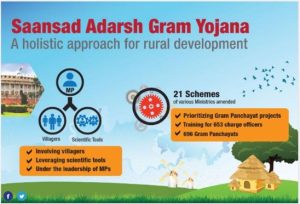
The village development plan, led by the Member of Parliament, is created by actively involving villagers and utilizing scientific tools. SAGY stands out for being:
Also Read: Sociology optional syllabus
The primary objective of the Saansad Adarsh Gram Yojana (SAGY) is to initiate processes that lead to the holistic development of selected Gram Panchayats. The scheme aims to significantly enhance the standard of living and quality of life for all community members by focusing on:
Additionally, SAGY seeks to create model villages that demonstrate effective local development and governance. These “Adarsh Grams” will serve as training hubs for other Gram Panchayats, encouraging neighboring villages to learn from and replicate successful practices.
Also Read: UPSC Prelims Syllabus
Also Read: Books for UPSC Mains
An Adarsh Gram should emerge from a collective vision, utilizing the community’s skills and resources as effectively as possible, with support from the MP, Gram Panchayat, civil society, and government agencies. While the specific elements of an Adarsh Gram may vary based on context, the key areas of focus generally include:
Under the Saansad Adarsh Gram Yojana scheme, each MP adopts a village and collaborates with the local administration, panchayats, and community members to implement development plans. Funding for projects comes from existing government schemes, CSR funds, and local resources. Additionally, MPs are encouraged to mobilize voluntary contributions and partner with NGOs and private organizations.
Also Read: Chemistry optional syllabus
[metaslider id=”5575″]
Since its inception, the Saansad Adarsh Gram Yojana status has seen the adoption of thousands of villages across the country. MPs have successfully initiated projects in sectors like sanitation, skill development, digital literacy, and renewable energy. While progress varies, the initiative has demonstrated positive impacts, with improved infrastructure and socio-economic development in many regions.
Adoption and adoption of technology and introduction of innovation are critical to this program. These would broadly in the following areas:
Despite its achievements, SAGY faces challenges such as inadequate funding, lack of coordination, and slow implementation in some areas. Strengthening community participation, enhancing transparency, and ensuring timely execution of projects are essential for maximizing its impact.
Also Read: UPSC Prelims PYQs
The Saansad Adarsh Gram Yojana is a significant step towards transforming rural India. By empowering MPs to lead development efforts, the scheme fosters inclusive growth and improves the quality of life in villages. Understanding what is Saansad Adarsh Gram Yojana, its objectives, and its current status helps in appreciating its role in creating self-sufficient and vibrant rural communities. As stakeholders continue to collaborate and innovate, SAGY has the potential to become a model for rural development worldwide.
Are you preparing for UPSC 2025? Join IAShub’s UPSC coaching batches to boost your preparation. Enroll now!

The objectives of Saansad Adarsh Gram Yojana include holistic development, enhancing basic amenities, promoting sustainable livelihoods, encouraging community participation, and reducing socio-economic disparities.
MPs select villages within their constituencies and work with local administrations and communities to implement development plans using government schemes, CSR funds, and voluntary contributions.
The Saansad Adarsh Gram Yojana status indicates significant progress, with thousands of villages benefiting from improved sanitation, healthcare, education, and skill development initiatives across the country.
SAGY empowers rural communities by fostering participatory governance, enhancing infrastructure, providing livelihood opportunities, and promoting sustainable development for long-term growth.

Refine your answer writing skills and elevate your UPSC preparation with personalized support and expert feedback.
Fill out the form to get started with the program or any other enquiries !






Are you dreaming of becoming an IAS officer? Then, IAShub can be your best guide. It is one of the Best IAS Coaching in Delhi. Many students who want to clear the UPSC exam join IAShub for learning. The institute gives both online and offline classes. Their teachers are experienced and helpful. They easily explain every topic. Students also get notes, tests, and tips to do well in the exam.
IAShub is in Delhi and is trusted by many UPSC students. It offers coaching for every part of the UPSC exam – Prelims, Mains, and Interview. The classes are simple and easy to understand. The teachers are experts and guide students in the right way. IAShub is also known for its helpful notes, test series, and answer-writing practice. IAShub is the best coaching in Delhi and also gives UPSC Online Classes. This helps students from any place in India to learn. The online classes are live and also recorded. So, students can watch them anytime. These classes cover the full UPSC syllabus.
Here are some important services provided by IAShub:
The UPSC Civil Services Exam has three parts:
This exam is tough, but with the right guidance, it becomes easy to manage. Students must study smart and stay regular.
IAShub supports students from the beginning to the end. It gives the right books, tests, and notes. The classes are easy to follow, and the teachers are always ready to help. Students get personal doubt sessions too. The test series and answer checking help students learn where they need to do better. Also, free study materials save time and money.
IAShub also guides students during the final stage – the interview. Experts take mock interviews and give useful tips. This full support makes IAShub one of the best IAS coaching in Delhi.