“Discover everything you need to know about Agriculture optional 2025 for UPSC. Learn about the syllabus, books, notes, topper strategies, and more in this comprehensive guide”
 theIAShub | 17 Feb, 2025 | 10160 | 0 |
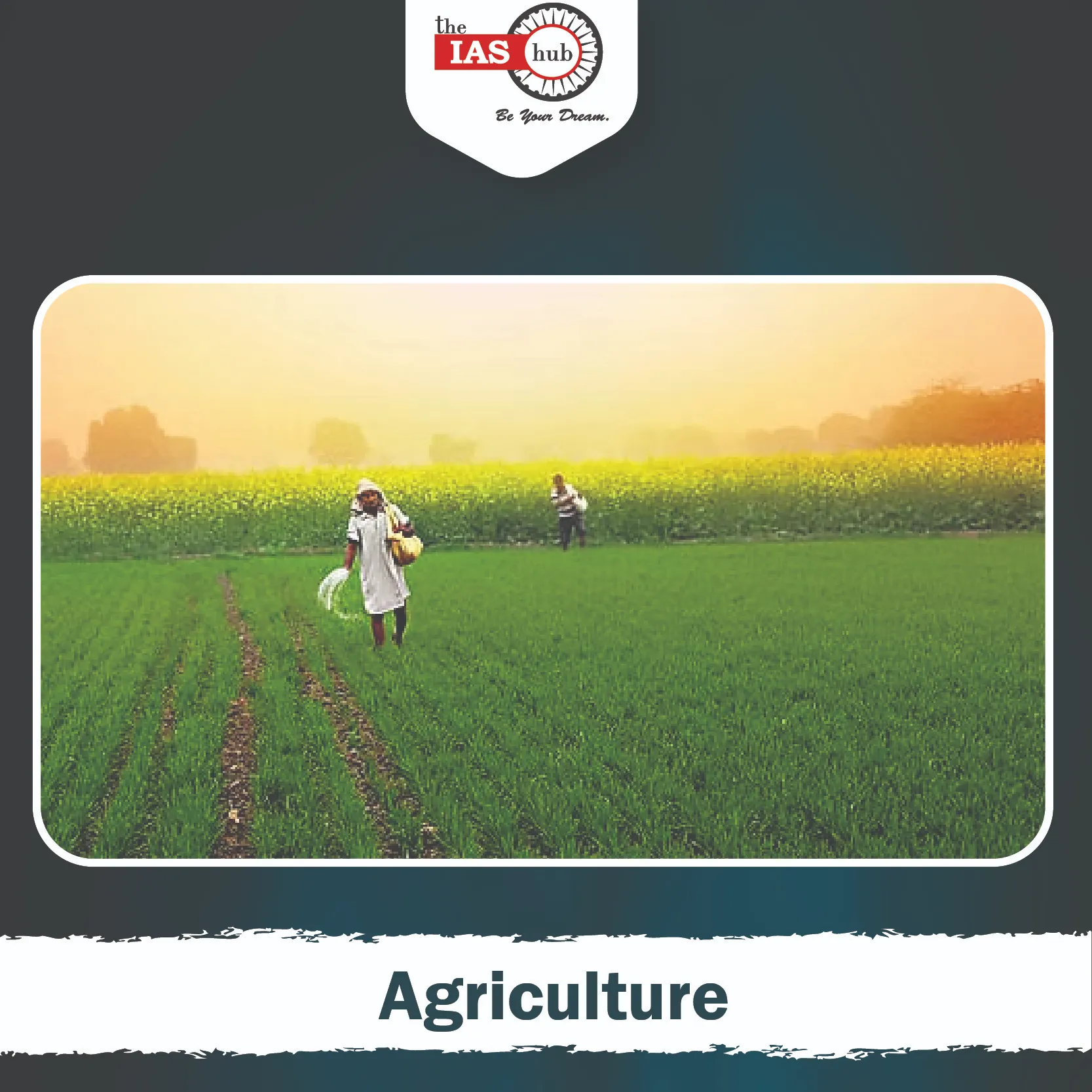

Agriculture is one of the most popular optional subjects for the UPSC Civil Services Examination, especially for candidates with a background in agriculture or related fields. It is a subject that not only helps you understand the science and practices of farming but also overlaps with the General Studies papers, making it a strategic choice for many aspirants.
In this article, we will cover everything you need to know about Agriculture optional, including its syllabus, books, notes, previous year question papers (PYQs), topper strategies, and more. Whether you are a beginner or someone looking to refine your preparation, this guide will help you navigate through the subject with ease.
Agriculture is a scoring and straightforward optional subject, ideal for candidates with a background in agricultural sciences or biology. It covers static topics with limited scope for interpretation, making preparation manageable.
Additionally, its relevance to Indian economy and rural development provides valuable insights for the General Studies papers. Here are some reasons why Agriculture is a great choice as an optional subject for the UPSC exam:
Agriculture Optional Syllabus covers a broad range of topics, including ecological concepts, crop management, and advanced agricultural techniques. It integrates scientific principles with practical applications, focusing on plant breeding, soil management, and pest control. Agriculture optional syllabus is divided into two papers, each covering different aspects of the subject. Here is a brief overview of the syllabus:
| Agriculture Optional Syllabus of Paper I | |
| PAPER-I | Details |
| Ecology and Environment | Ecology and its relevance to man, natural resources, sustainable management, and conservation. Physical and social environment as factors of crop distribution and production. Agro ecology and cropping patterns as environmental indicators. Environmental pollution and hazards to crops, animals, and humans. Climate change, international conventions, and global initiatives. Greenhouse effect and global warming. Advanced tools for ecosystem analysis—Remote Sensing (RS) and Geographic Information Systems (GIS). |
| Cropping Patterns and Systems | Cropping patterns in different agro-climatic zones of India. Impact of high-yielding and short-duration varieties on cropping patterns. Concepts of various cropping and farming systems. Organic and Precision farming. Package of practices for important cereals, pulses, oil seeds, fibers, sugar, commercial, and fodder crops. |
| Forestry and Agro-Forestry | Important features and scope of social forestry, agro-forestry, and natural forests. Propagation of forest plants. Forest products, agro-forestry, and value addition. Conservation of forest flora and fauna. |
| Weed Management | Characteristics, dissemination, and association of weeds with crops. Methods of multiplication, cultural, biological, and chemical control of weeds. |
| Soil Science | Physical, chemical, and biological properties of soil. Soil formation processes and factors. Indian soils, mineral and organic constituents, and their role in maintaining productivity. Essential plant nutrients and beneficial elements. Soil fertility principles, soil testing, and fertilizer recommendations. Integrated nutrient management and biofertilizers. Losses of nitrogen, nitrogen-use efficiency, and nitrogen fixation. Efficient phosphorus and potassium use. Problem soils and reclamation. Soil factors affecting greenhouse gas emission. |
| Soil and Water Conservation | Soil conservation, integrated watershed management, and soil erosion control. Dryland agriculture and related issues. Technology for stabilizing agriculture production in rainfed areas. |
| Water Management | Water-use efficiency, irrigation scheduling, and reducing run-off losses. Rainwater harvesting, drip, and sprinkler irrigation. Drainage of water-logged soils. Quality of irrigation water and impact of industrial effluents on soil and water pollution. Irrigation projects in India. |
| Farm Management and Economics | Scope, importance, and characteristics of farm management. Farm planning, resource optimization, and budgeting. Economics of different farming systems. Marketing management, price fluctuations, and cost implications. Role of cooperatives, agricultural price policy, and crop insurance. |
| Agricultural Extension | Importance and role of agricultural extension. Methods of evaluating extension programs. Socio-economic survey and status of farmers and agricultural laborers. Training programs for extension workers. Role of Krishi Vigyan Kendras (KVKs), NGOs, and self-help groups in rural development. |
| Agriculture Optional Syllabus of Paper II | |
| PAPER-II | Details |
| Genetics and Cell Biology | Cell structure, function, and cell cycle. Genetic material synthesis, structure, and function. Laws of heredity, chromosome structure, chromosomal aberrations, linkage, crossover, and recombination breeding. Polyploidy, euploids, aneuploids, mutation, heritability, sterility, incompatibility, cytoplasmic inheritance, and sex-linked traits. |
| Plant Breeding and Genetic Engineering | History and modes of plant breeding. Selfing and crossing techniques, origin, evolution, and domestication of crop plants. Conservation and utilization of crop genetic resources. Molecular markers, pure-line selection, pedigree, mass and recurrent selections, combining ability, heterosis exploitation, somatic hybridization, and genetic engineering. Role of genetically modified crops in improvement. |
| Seed Technology | Seed production, processing, certification, testing, and storage. DNA fingerprinting and seed registration. Role of public and private sectors in seed production and marketing. Intellectual Property Rights (IPR) and WTO issues in agriculture. |
| Plant Physiology and Nutrition | Plant physiology principles with reference to nutrition, nutrient absorption, translocation, and metabolism. Soil-water-plant relationship. Enzymes, plant pigments, photosynthesis, respiration (C3, C4, CAM), metabolism of carbohydrates, proteins, and fats. Growth and development, photoperiodism, vernalization, plant growth substances, physiology of seed development, germination, dormancy, and stress physiology. |
| Horticulture | Package practices for major fruits, plantation crops, vegetables, spices, and flower crops. Protected cultivation, high-tech horticulture, post-harvest technology, and value addition. Landscaping, commercial floriculture, medicinal and aromatic plants. Role of fruits and vegetables in human nutrition. |
| Pest and Disease Management | Diagnosis and economic importance of pests and diseases affecting field crops, vegetables, orchards, and plantations. Classification, integrated pest and disease management, storage pest management, biological control, epidemiology, and forecasting. Plant quarantine measures and pesticides formulation. |
| Food Security and Policy | Food production and consumption trends in India. Food security challenges and Vision 2020. Grain surplus, national and international food policies, production, procurement, and distribution constraints. Public Distribution System (PDS), Targeted PDS, policy implementation under globalization. Nutrient deficiencies (e.g., Protein Energy Malnutrition), food grain productivity, and food security. Relation of food production to National Dietary Guidelines. |
Choosing the right books is crucial for your preparation. Here are some recommended books for Agriculture optional:
[metaslider id=”5575″]
Preparing your own notes is one of the best ways to retain information. However, if you are short on time, you can refer to the notes provided by toppers or coaching institutes. Here are some tips for making effective notes:
The Agriculture optional question paper is divided into two papers, each carrying 250 marks. The questions are a mix of theoretical and analytical types. Here are some tips for attempting the question paper:
Topper copies are a great resource for understanding how to write effective answers. Here are some tips for using topper copies effectively:
The highest marks in the UPSC Agriculture optional paper is 276, which was scored by Devipriya Ajith in 2022. She was ranked 573 in the UPSC Civil Services Examination that year. Scoring high marks in Agriculture optional requires a combination of thorough preparation and effective answer writing. Here are some tips to help you achieve this:
Agriculture is a highly rewarding optional subject for the UPSC exam. With the right strategy, resources, and dedication, you can score well in this subject. Make sure to cover the entire syllabus, practice answer writing, and revise regularly. Use the recommended books, notes, and previous year question papers to enhance your preparation. By following these tips, you can master Agriculture and increase your chances of success in the UPSC exam.
Are you preparing for UPSC 2025? Join IAShub’s UPSC coaching batches to boost your preparation. Enroll now!
Some of the best books for Agriculture optional are "Agriculture at a Glance by R.K. Sharma," "Principles of Agronomy by Yellamanda Reddy," and "Soil Science by D.K. Das."
To prepare for Agriculture optional, understand the syllabus, make a study plan, practice answer writing, and revise regularly. Use recommended books and previous year question papers.
The syllabus for Agriculture optional is divided into two papers: Paper-I (Basic Agriculture and Crop Science) and Paper-II (Advanced Agriculture and Agricultural Engineering).
To write effective answers, structure your answers well, use headings and subheadings, and support your answers with examples. Practice writing answers within the time limit.

Refine your answer writing skills and elevate your UPSC preparation with personalized support and expert feedback.
Fill out the form to get started with the program or any other enquiries !






Are you dreaming of becoming an IAS officer? Then, IAShub can be your best guide. It is one of the Best IAS Coaching in Delhi. Many students who want to clear the UPSC exam join IAShub for learning. The institute gives both online and offline classes. Their teachers are experienced and helpful. They easily explain every topic. Students also get notes, tests, and tips to do well in the exam.
IAShub is in Delhi and is trusted by many UPSC students. It offers coaching for every part of the UPSC exam – Prelims, Mains, and Interview. The classes are simple and easy to understand. The teachers are experts and guide students in the right way. IAShub is also known for its helpful notes, test series, and answer-writing practice. IAShub is the best coaching in Delhi and also gives UPSC Online Classes. This helps students from any place in India to learn. The online classes are live and also recorded. So, students can watch them anytime. These classes cover the full UPSC syllabus.
Here are some important services provided by IAShub:
The UPSC Civil Services Exam has three parts:
This exam is tough, but with the right guidance, it becomes easy to manage. Students must study smart and stay regular.
IAShub supports students from the beginning to the end. It gives the right books, tests, and notes. The classes are easy to follow, and the teachers are always ready to help. Students get personal doubt sessions too. The test series and answer checking help students learn where they need to do better. Also, free study materials save time and money.
IAShub also guides students during the final stage – the interview. Experts take mock interviews and give useful tips. This full support makes IAShub one of the best IAS coaching in Delhi.