Sources Of The Indian Constitution – Key Features

Discover the key sources of the Indian Constitution, borrowed features, and global influences shaping India’s governance. Learn how different countries inspired India’s legal framework.

THEIASHUB
Get an Instant Call Back from Our Expert Mentors Now!
+91

The Indian Constitution is a unique document that incorporates features from various countries to create a governance framework suited to India’s diverse society. It is often referred to as a “bag of borrowings”, but this adaptation was a strategic move to ensure a strong, democratic, and inclusive governance system. The framers of the Constitution studied global practices to integrate the best elements into the Indian polity.

Key Sources of the Indian Constitution

The Sources of the Indian Constitution have been derived from various global influences. Many provisions have been borrowed from different countries to establish a well-structured governance system in India.

1. Government of India Act, 1935

The Government of India Act, 1935, played a crucial role in shaping the Sources of the Indian Constitution. Many administrative and governance-related provisions were directly borrowed, including:
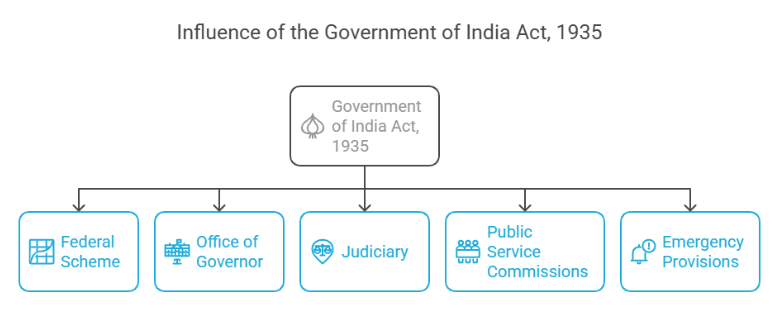
  • Federal Scheme – Division of powers between the Centre and States

  • Office of Governor – Appointment and powers of state governors

  • Judiciary – Structure and functioning of courts

  • Public Service Commissions – Establishment of UPSC and State PSCs

  • Emergency Provisions – Rules for handling national emergencies

  • Administrative Details – Governance procedures for various institutions


2. British Influence on the Indian Constitution

One of the major Sources of the Indian Constitution is the British parliamentary system, ensuring a democratic government. Key features adopted include:

  • Parliamentary Government – Elected representatives form the government

  • Rule of Law – Law applies equally to all citizens

  • Legislative Procedure – Guidelines for passing laws

  • Single Citizenship – All Indians have a common national identity

  • Cabinet System – Ministers responsible for policymaking and execution

  • Prerogative Writs – Power of courts to enforce fundamental rights

  • Parliamentary Privileges – Special rights for MPs

  • Bicameralism – Two houses in Parliament (Lok Sabha & Rajya Sabha)

3. American Contributions to the Indian Constitution

The Sources of the Indian Constitution also include several elements from the U.S. Constitution, such as:

  • Fundamental Rights – Protection of civil liberties

  • Independence of Judiciary – Separation of powers between judiciary and executive

  • Judicial Review – Courts can strike down unconstitutional laws

  • Impeachment of the President – Removal process of the President

  • Removal of Supreme Court & High Court Judges – Defined procedures

  • Post of Vice President – Role similar to the U.S. Vice President

4. Irish Influence: Directive Principles and Presidential Elections

Ireland contributed to the Sources of the Indian Constitution, particularly in:

  • Directive Principles of State Policy (DPSP) – Establishing social and economic justice

  • Nomination of Members to Rajya Sabha – Appointment of distinguished individuals

  • Method of Election of President – Indirect election process

5. Canadian Features in the Indian Constitution

Several Sources of the Indian Constitution are derived from Canada, including:
  • Strong Central Government – Centre has more authority than states

  • Residuary Powers – Powers not mentioned in the Constitution rest with the Centre

  • Appointment of State Governors by the Centre – Central government controls gubernatorial appointments

  • Advisory Jurisdiction of Supreme Court – Government can seek legal advice from the Supreme Court

6. Australian Influence: Federalism and Legislative Procedures


Australia has also contributed to the Sources of the Indian Constitution, including:

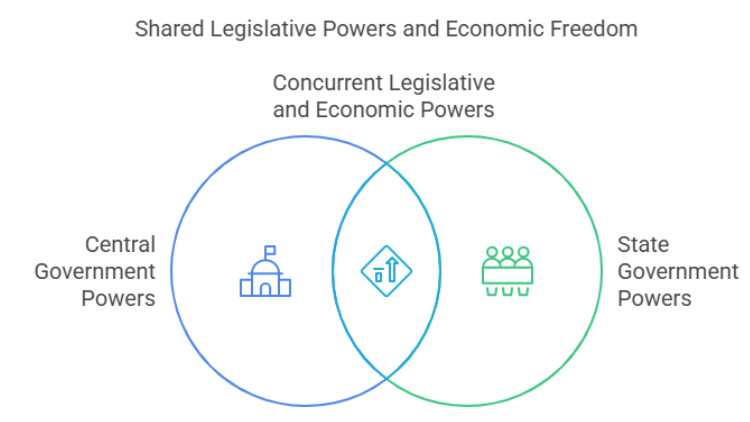
  • Concurrent List – Subjects on which both Centre and States can legislate

  • Freedom of Trade, Commerce, and Intercourse – Ensuring free trade across India

  • Joint Sitting of Parliament – Resolving deadlocks between the two Houses

7. German Contribution: Emergency Provisions

Germany has influenced the Sources of the Indian Constitution, particularly in:

  • Suspension of Fundamental Rights During Emergency – The government can limit fundamental rights in a national crisis

8. Russian Influence: Fundamental Duties & Justice Ideals

The Soviet Union (Russia) has played a significant role in shaping the Sources of the Indian Constitution, including:

  • Fundamental Duties – Citizens’ responsibilities towards the nation

  • Justice Ideals in the Preamble – Social, economic, and political justice

9. French Influence: Republicanism and Democratic Values

France contributed to the Sources of the Indian Constitution, particularly in:

  • Liberty, Equality, and Fraternity – Ideals enshrined in the Preamble, promoting democracy, secularism, and human rights

10. South African Contributions

India borrowed constitutional amendment procedures and Rajya Sabha election methods from South Africa, forming crucial Sources of the Indian Constitution. These provisions help in smooth legislative functioning and political representation.

11. Japanese Contribution: Legal Framework

One of the notable Sources of the Indian Constitution from Japan is:

  • Procedure Established by Law – Ensuring that laws passed by the legislature are valid, even if they violate fundamental rights

These Sources of the Indian Constitution highlight India's diverse legal influences, making it a unique and comprehensive governance framework.

Conclusion

The Indian Constitution is a fusion of the best global practices, tailored to suit India’s needs. By incorporating diverse features from multiple countries, it ensures a balanced governance model that upholds democracy, justice, and fundamental rights. This approach makes it a dynamic and adaptable document, capable of evolving with time.



UPSC QEP 2026 Batch 5 - English
Buy now View Details
Submit Your Details to Learn More
I agree to give my consent to receive updates through SMS/Email & WhatsApp*.

NEEV GS + CSAT Foundation 2026/27
Buy now View Details


Join theIAShub’s Mains Answer Writing Program

Refine your answer writing skills and elevate your UPSC preparation with personalized support and expert feedback.

Fill out the form to get started with the program or any other enquiries !

I agree to give my consent to receive updates through SMS/Email & WhatsApp*.

Best IAS Coaching In Delhi, UPSC Online & Offline Classes by IAShub

Are you dreaming of becoming an IAS officer? Then, IAShub can be your best guide. It is one of the Best IAS Coaching in Delhi. Many students who want to clear the UPSC exam join IAShub for learning. The institute gives both online and offline classes. Their teachers are experienced and helpful. They easily explain every topic. Students also get notes, tests, and tips to do well in the exam.

UPSC Online Classes by IAShub

IAShub is in Delhi and is trusted by many UPSC students. It offers coaching for every part of the UPSC exam – Prelims, Mains, and Interview. The classes are simple and easy to understand. The teachers are experts and guide students in the right way. IAShub is also known for its helpful notes, test series, and answer-writing practice. IAShub is the best coaching in Delhi and also gives UPSC Online Classes. This helps students from any place in India to learn. The online classes are live and also recorded. So, students can watch them anytime. These classes cover the full UPSC syllabus.

Key Offerings Provided by IAShub

Here are some important services provided by IAShub:

  • UPSC Prelims: IAShub teaches for Prelims with a focus on basics. It also gives daily current affairs and monthly magazines.
  • Classroom Courses: IAShub has classroom learning for students in Delhi. The environment is good and peaceful for study.
  • Live Classes: Students who live far can join live UPSC online classes. These classes are just like real classes.
  • QEP for Mains: The Quality Enrichment Program (QEP) is special for Mains preparation. It helps students write better and faster.
  • Answer Writing: Regular answer writing practice is given. Teachers also check answers and give tips to improve.
  • Free Resource: IAShub gives free notes by toppers and helpful Main Booster material.
  • Test Series: Test series are available for every subject. These help students know their weak points and improve.
  • Interview Guidance Session: IAShub also gives interview practice sessions with experts. These help students feel confident.

UPSC Exam Overview

The UPSC Civil Services Exam has three parts:

  • Prelims: It has two papers: General Studies and CSAT.
  • Mains: It has nine papers, including essays and optional subjects.
  • Interview: It tests the personality and confidence of the student.

This exam is tough, but with the right guidance, it becomes easy to manage. Students must study smart and stay regular.

How IAShub Helps in the UPSC Journey

IAShub supports students from the beginning to the end. It gives the right books, tests, and notes. The classes are easy to follow, and the teachers are always ready to help. Students get personal doubt sessions too. The test series and answer checking help students learn where they need to do better. Also, free study materials save time and money.
IAShub also guides students during the final stage – the interview. Experts take mock interviews and give useful tips. This full support makes IAShub one of the best IAS coaching in Delhi.

Best IAS Coaching In Delhi FAQs

Yes, IAShub offers live and recorded online classes. Students can attend from any part of India.

Classes are available in both English and Hindi, so students can choose the language they are comfortable with.

The classroom centre is located in Delhi. Students can visit and join offline batches there.

IAShub gives interview guidance sessions to help students prepare for the final round of UPSC.