
theIAShub
05 Aug, 2025
Article List
- NITI Aayog Report Highlights $200 Billion Opportunity in India’s EV Sector
- UNCCD Warns of Severe Health Impacts from Land Degradation and Drought
- India-US Relations Weather Challenges, Set to Strengthen Further: MEA
- Supreme Court Empowers Pollution Control Boards to Levy Damages for Environmental Restoration
- Asian Giant Tortoise Reintroduction in Nagaland | Conservation Efforts
- Pariksha Pe Charcha 2024 Sets Guinness World Record with 3.53 Crore Registrations
- Rhisotope Project: South Africa's Innovative Nuclear Approach to Rhino Conservation
- New Study Reveals Potato's Hybrid Origin from Wild Tomato and Etuberosum
- India Electric Mobility Index (IEMI) Launched by NITI Aayog to Accelerate EV Transition
- FSSAI Releases Definitive List of Ayurveda Aahara to Promote Traditional Nutrition
- Global Artificial Intelligence (AI) City Index 2025 Highlights Top AI Innovation Hubs
1. NITI Aayog Report Highlights $200 Billion Opportunity in India’s EV Sector
Context
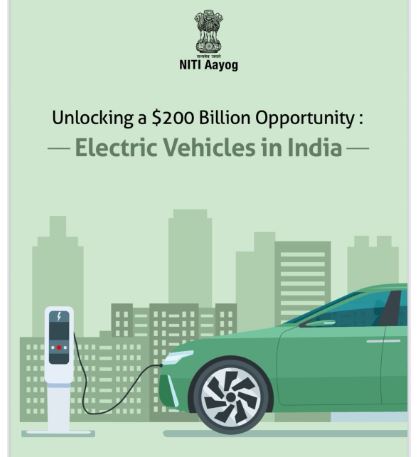
- NITI Aayog on 4th August launched the Report on ‘Unlocking a $200 Billion Opportunity: Electric Vehicles in India,’ which presents a timely and comprehensive assessment of current challenges while highlighting major unlocks essential to accelerate India’s Electric Mobility transition.
Key Points
- India aims to attain a 30% share of electric vehicles, in the total vehicles sold, by 2030.
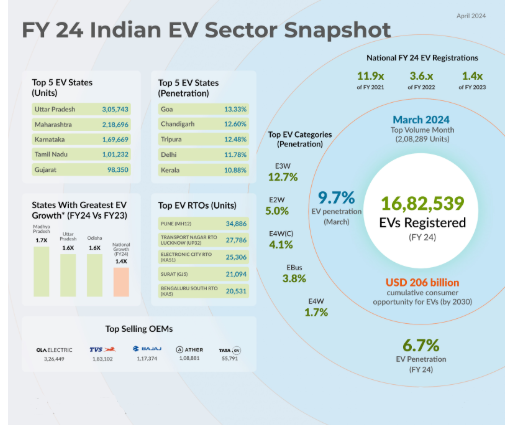
- Sales of EVs in India went up from 50,000 in 2016 to 2.08 million in 2024 as against global EV sales having risen from 918,000 in 2016 to 18.78 million in 2024.
- India’s EV penetration was only about one – fifth of the global penetration in 2020, but has picked up to over two-fifth of the global penetration in 2024.
Progress In EV sector as per Report
- Adoption of EV has been increasing in India but has been slower than the pace in some of the leading countries like the US, EU and China.
- India is doing well with electric two-wheelers and electric-three wheelers. With regard to electric buses, it has made some progress but with electric cars it has been slow. Long haul electric trucks have virtually not taken off.
- India has progressed to only about 7.6 % of the sales in 2024 being electric, which is far behind its target of 30% by 2030. Thus, it has taken nearly 10 years to reach a penetration level of 7.6% and now needs to increase this share by over 22% in the next 5 years alone.
Challenges Highlighted
- Challenges of financing vehicles, especially electric buses and electric trucks
- Inadequacy of charging facilities on one hand and low utilization of existing public charging facilities on the other
- Lack of adequate awareness regarding EV performance among public and private stakeholders.
- Inadequate data and regulatory gaps hinder evidence-based decision making.
E-Mobility Sector in India
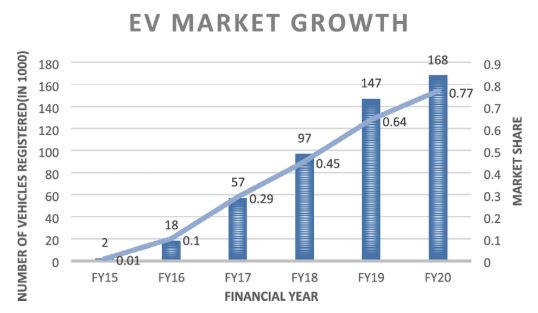
- EV Sales Growth: EV registrations in 2021: 330k units, a 168% rise from 2020.
- 2- and 3-wheelers dominate sales (48% and 47%, respectively).
- Factors Driving EV Adoption: Rising oil prices and environmental awareness.
- Geographical Distribution: Uttar Pradesh leads in EV registrations (20%).
- 2-wheelers: Karnataka, Tamil Nadu, Maharashtra, Telangana, Rajasthan.
- 3-wheelers: Uttar Pradesh, Bihar, Assam, Delhi (75% of sales).
- EV Growth Projections: By 2027, EVs are expected to reach 39% of total vehicle sales.
- Limited charging infrastructure: 1,742 stations (2021), projected 100,000 by 2027.
- Investment & Employment: EV industry attracted USD 6 billion in 2021, projected USD 20 billion by 2030.
- Potential to create 1 crore direct and 5 crore indirect jobs by 2030.
Significance of EV Sector for India
- Reducing Air Pollution: According to the ‘World Air Quality Report 2023’, India was declared as the third-most polluted country in 2023, after Bangladesh and Pakistan.
- EVs produce zero tailpipe emissions, significantly reducing pollutants like nitrogen oxides (NOx) and particulate matter (PM 2.5), improving air quality and public health.
- Energy Security: India’s import dependence soared to 87.7% in 2023-24, up from 87.4%, according to Petroleum Planning and Analysis Cell (PPAC).
- Electric mobility will help reduce dependence on imported oil by utilizing domestic sources of renewable energy like solar and wind for EV charging, enhancing the country’s energy security.
- Combating Climate Change: India is committed to reducing its carbon emissions under the Paris Agreement. The transport sector is one of the largest sources of greenhouse gas emissions.
- The shift to EVs aligns with India’s goal of achieving net-zero emissions by 2070, as electric vehicles have lower lifecycle emissions compared to conventional vehicles, especially when powered by renewable energy.
- Boosting Economic Growth: The EV sector is creating a robust ecosystem for manufacturing, battery production, and EV components, driving innovation and entrepreneurship.
- Strengthening Domestic Manufacturing: The government’s push for local manufacturing of EVs and their components, especially under the “Make in India” initiative, can strengthen India’s position as a global manufacturing hub.
Challenges
- High Upfront Cost of EVs: The cost of electric vehicles, especially electric cars, remains higher than conventional internal combustion engine (ICE) vehicles. This is primarily due to the expensive battery technology.
- Despite falling battery costs, the high upfront costs deter middle-class and lower-income consumers.
- Inadequate Charging Infrastructure: India has a limited network of public charging stations, which hampers long-distance travel and makes EV ownership less convenient.
- According to the government, the top nine cities in India will need 18,000 public EV charging stations by 2030.
- Battery Technology: India imports most of its EV batteries and the raw materials (like lithium, cobalt), making the country reliant on foreign suppliers and vulnerable to price fluctuations in global markets.
Way Forward
- Enhancing Infrastructure Development: Accelerate the rollout of public and private charging stations, including fast chargers and wireless charging facilities, to reduce range anxiety and support long-distance travel.
- Boost Battery Manufacturing: Expand domestic manufacturing of advanced chemistry cells (ACCs) and EV components to reduce import dependency and lower costs, as supported by the PLI schemes.
- Establish comprehensive battery recycling and disposal systems to manage end-of-life batteries effectively and minimize environmental impact.
- Ensure Policy Consistency: Maintain a consistent and supportive policy environment for EV adoption, including clear guidelines on subsidies, incentives, and infrastructure development.
- Transitioning to Renewable Energy: Transitioning to renewable energy sources such as solar and wind power is essential to fully realize the environmental advantages of electric vehicles (EVs).
- Government initiatives like the National Green Hydrogen Mission, Global Biofuel Alliance (GBA), and PM-KUSUM aim to strengthen India’s renewable energy production capacity.
2. UNCCD Warns of Severe Health Impacts from Land Degradation and Drought
Context
- Recently, the United Nations Convention to Combat Desertification (UNCCD) released a policy brief detailing the severe health impacts of land degradation and drought.
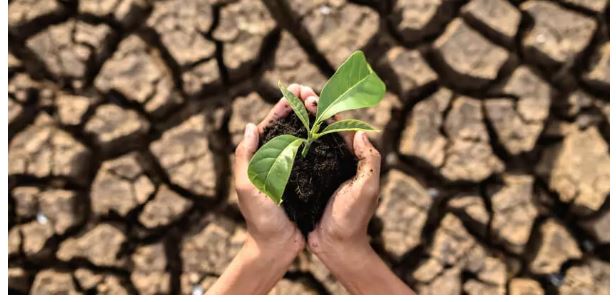
High Risk of Land Degradation and Drought
- Rise in Communicable and Non-Communicable Diseases: The policy brief highlights the wide-ranging health consequences associated with environmental stress:
- Waterborne diseases: Cholera, trachoma, scabies, conjunctivitis.
- Vector-borne diseases: Malaria and other mosquito-borne infections.
- Respiratory diseases: Triggered by dust storms and wildfires.
- Cardiovascular ailments: Hypertension, heart attacks, stroke.
- Nutritional disorders: Malnutrition and stunting due to food insecurity.
- Mental Health Consequences: Droughts often result in displacement, resource scarcity, and financial hardship, leading to increased mental health disorders such as anxiety and depression.
- Prolonged drought in Australia estimating mental health-related costs to reach $198 billion by 2050.
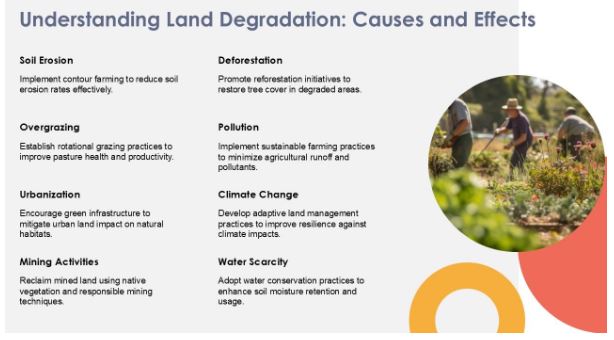
Impact on Children and Vulnerable
- Children under five suffer from malnutrition and stunting linked to drought-affected agricultural output.
- Pregnant women face dietary deficiencies during food price surges. For example, in Zambia, maize shortages during drought caused infant stunting.
- Women and children are more vulnerable to health impacts due to limited access to resources and healthcare.
India’s Vulnerability
- India lost over 30 million hectares of healthy land between 2015 and 2019.
- Nearly 854 million Indians were exposed to drought during this period.
- The spatial overlap between drought intensity and child stunting highlights the direct link between land degradation and public health.
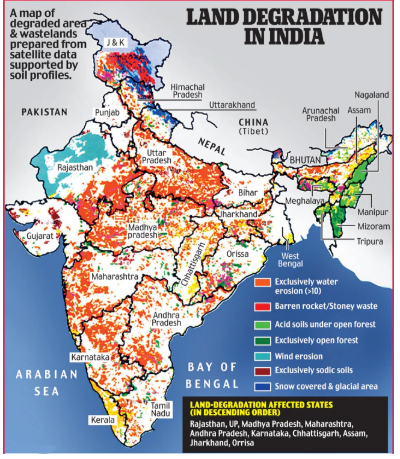
India Response and Tools
- India has introduced a Farmers’ Distress Index (FDI) to provide early alerts on drought and related stress.
- The FDI considers exposure to climate events, financial issues and mental health indicators.
- ]It aims to guide timely interventions to reduce farmer distress and improve health outcomes.
Future Challenges
- Rising aridity and land degradation threaten to worsen health globally. Without coordinated action, disease outbreaks and mental health crises will increase.
- Sustainable land management and climate adaptation are crucial to safeguard public health.
UN Recommendations and the Sustainable Approach
- The policy brief promotes the One Health Approach, emphasizing the interdependence of ecosystem health, animal health, and human health, as recognized by the UN Convention to Combat Desertification (UNCCD). It includes:
- Integrated Policy and Planning: Harmonize efforts across environmental and health sectors.
- Promote gender equity and community resilience.
- Research and Capacity Building: Expand research on the health impact of land degradation.
- Strengthen local capacities for mitigation and adaptation.
- Financial Mechanisms: Mobilize targeted funding for land and health system restoration.
- Support innovative financial tools to promote healthy land use.
- Sustainable Solutions: Invest in land restoration, sustainable agriculture, early warning systems, and water management.
- Integrated Policy and Planning: Harmonize efforts across environmental and health sectors.
3. India-US Relations Weather Challenges, Set to Strengthen Further: MEA
Context
- The India-U.S. relationship has "weathered several transitions and challenges", and the bilateral ties will "move forward", said a senior official of the Ministry of External Affairs against the backdrop of comments from U.S. President Donald Trump, who, on Wednesday, cited India's purchase of military hardware and energy from Russia and announced 25% tariffs on Indian imports "plus a penalty"
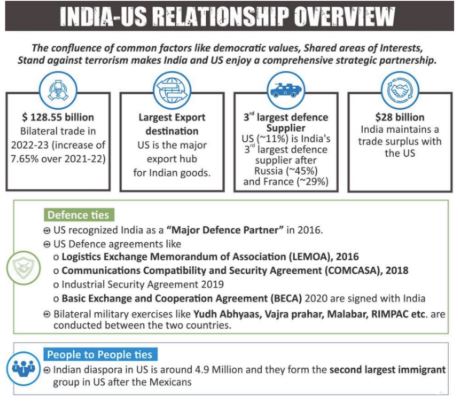
Highlights of the Announcement
- "India and the United States share a comprehensive global strategic partnership anchored in shared interests, democratic values, and robust people-to-people ties. This partnership has weathered several transitions and challenges.
- We remain focused on the substantive agenda that our two countries have committed to and are confident that the relationship will continue to move forward."
- Officials clarified that the India-U.S. relationship has come a long way over the years and expressed confidence that it will overcome the latest challenges in the way that India dealt with the sanctions and technology barriers that the U.S. had imposed after India tested nuclear weapons in May 1998.
- He further highlighted the "strong defence partnership with the U.S." that India has developed over the past years and mentioned the decisions that were taken during President Trump's February 13 meeting with Prime Minister Modi in Washington, D.C. which had led to the new initiative named:
- "U.S.-India COMPACТ (Catalyzing Opportunities for Military Partnership, Accelerated Commerce & Technology) for the 21st Century". Mr Jaiswal said "There is potential for this partnership to grow further under the India-U.S. COMPACT for the 21st century."
- Mr. Jaiswal, however, did not respond directly to the remarks from the U.S. President regarding India sourcing military hardware from Russia and said, "The sourcing of our defence requirements is determined solely by our national security imperatives and strategic assessments.
Major challenges Associated
- Ongoing Trade Friction: Tariffs and market access issues remain irritants.
- US Concerns: Indian price controls on medical devices and pharmaceuticals, agricultural market access barriers, data localization proposals, intellectual property protection, high tariffs in general.
- Indian Concerns: US visa restrictions for skilled workers (H-1B), restoration of full GSP benefits, agricultural subsidies.
- Export Sector: Trump's specific threat of tariffs "exceeding 60% or even 100%" on countries like India creates significant uncertainty for Indian exporters, particularly in sectors historically targeted (steel, aluminum) or previously benefiting from Generalised Special Preference (textiles, leather, engineering goods, agricultural products).
- Investment Hesitation: Some foreign investors may pause decisions, awaiting clarity on potential US trade policy shifts under a possible new Trump administration. It injects an element of risk.
Way Forward
- Strategic Relationship Resilience: Cooperation on defense, geopolitics (countering China), and technology (iCET) has continued to deepen despite tariff tensions.
- Leverage the Indian Diaspora: Mobilize the influential Indian-American community as advocates for stable and strong bilateral ties.
- Deepen Quad Coordination: Use the Quad platform to reinforce shared strategic interests in the Indo-Pacific, demonstrating India's indispensable role, making purely transactional tariff threats counterproductive to larger US goals.
- Diversify Export Markets: Continue efforts to reduce over-reliance on the US market by deepening trade ties with the EU, UK, UAE, Australia, ASEAN, and Africa. FTAs (like the one with the UK) are crucial here.
4. Supreme Court Empowers Pollution Control Boards to Levy Damages for Environmental Restoration
Context
- The Supreme Court on Monday gave Pollution Control Boards more teeth by declaring their power to impose and collect restitutionary damages to completely restore polluted air and waterbodies back to their original, pristine selves in an ecosystem.
About the News
- The Supreme Court ruled that Pollution Control Boards (PCBs) have the authority to: Impose and collect restitutionary and compensatory damages
- Take proactive (ex-ante) measures, like demanding bank guarantees, to address potential environmental damage.
- This power comes under Section 33A of the Water (Prevention and Control of Pollution) Act, 1974 and Section 31A of the Air (Prevention and Control of Pollution) Act, 1981.
Context of the Case
- The case originated from an appeal filed by the Delhi Pollution Control Committee (DPCC).
- The Delhi High Court had earlier held that DPCC could not levy compensatory damages under the given Acts.
- The Supreme Court overturned this decision, affirming the wider enforcement powers of PCBs.
Scope of Power and Enforcement
PCB can Now
- Recover fixed sums as damages
- Demand bank guarantees in advance to cover potential pollution
- These measures aim to restore polluted air and water bodies to their original, pristine state.
However this power must be exercised with:
- Through subordinate legislation (rules and regulations)
- By following principles of natural justice (e.g., fair hearing) PCBs hold expansive powers under the Water and Air Acts, including the authority to:
- Shut down or regulate industries and operations
- Stop utilities such as electricity, water, or other services
Judgement Emphasis
- The judgment reinforced the polluter pays principle:
- Industries causing pollution are responsible for repairing environmental damage
- Restoration must aim to replicate the original ecosystem as closely as possible.
Pollution Control Boards in India
- Pollution Control Boards (PCBs) are statutory bodies tasked with preventing, controlling, and abating pollution, established under the Water (Prevention and Control of Pollution) Act, 1974 and The Air (Prevention and Control of Pollution) Act, 1981.
Central Pollution Control Board
- Set up in 1974 under the Water (Prevention and Control of Pollution) Act, 1974.
- Advises the Central Government and serves as the technical arm of the Ministry of Environment, Forest and Climate Change.
- Monitors environmental quality and enforces pollution control norms.
- Sets emission standards and promotes clean water and air.
- Functions expanded under the The Air (Prevention and Control of Pollution) Act, 1981 and Environment Protection Act (1986).
5. Asian Giant Tortoise Reintroduction in Nagaland | Conservation Efforts
Context
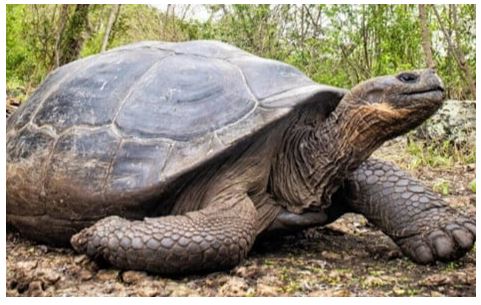
- Recently, in a significant move for wildlife conservation, ten critically endangered Asian giant tortoises were reintroduced into the Zeliang Community Reserve in Nagaland's Peren district.
About Asian Giant Tortoises
- The largest land tortoise in mainland Asia and belongs to one of the world's oldest tortoise lineages.
- Plays a keystone ecological role in tropical forest ecosystems.
- Often referred to as the "small elephant of the forest" for its contribution to seed dispersal and forest floor scavenging.
Distribution and Habitat
- Found across India, Bangladesh, Myanmar, Thailand, Malaysia, and Indonesia.
- In India, historically seen in the Northeast, especially Nagaland and Arunachal Pradesh.
- Prefers dense, moist tropical and subtropical forests, particularly lowland and hill forests with rich undergrowth and leaf litter.
Physical Features
- Size: Can grow up to 60 cm and weight over 35 kg.
- Shell: Heavily domed, dark brown to black, with prominent growth rings.
- Limbs: Thick, scaly forelimbs resembling those of an elephant, adapted for digging.
- Head: Flattened with a sharp beak for tearing vegetation.
- Coloration: Hatchlings are grayish brown and adults darken to a charcoal hue.
- Reproduction: Builds above-ground nest mounds-unusual among tortoises.
- Females guard the nest to regulate temperature and protect eggs, behavior similar to crocodilians.
Conservation Status
- IUCN Red List: Critically Endangered; CITES: Appendix II
- India's Wildlife (Protection) Act, 1972: Schedule IV
6. Pariksha Pe Charcha 2024 Sets Guinness World Record with 3.53 Crore Registrations
Context
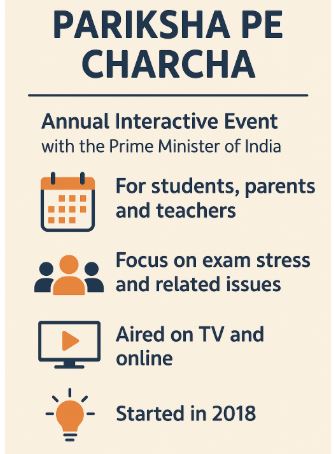
- Recently, in a historic achievement, the Prime Minister of India's flagship initiative, Pariksha Pe Charcha, entered the Guinness World Records for the "Most people registered on a Citizen Engagement Platform in one month." The recognition marked a record 3.53 crore registrations for the programme's eighth edition.
About Pariksha Pe Charcha
- A unique interactive platform where Prime Minister Narendra Modi engages with students, parents, and teachers to discuss exam-related stress and tips for success.
- The 2024 edition continues the tradition of fostering a stress-free environment for students appearing in board and other exams.
- Eligibility: Open to school students of Classes 6 to 12, their parents, and teachers.
- Participation: Students can submit responses and questions (within 500 characters) for the Prime Minister. Parents and teachers can take part in dedicated online activities.
About Guinness World Records
- First published in 1955 as the Guinness Book of Records.
- Conceptualized by Sir Hugh Beaver, then Managing Director of the Guinness Brewery in Ireland.
- Aimed to compile verified facts and figures about human achievements and natural phenomena.
- A team of researchers and editors was hired to collect and verify the data.
- The first edition was a huge success, with over 50,000 copies sold within just a few months.
- Over time, it became a global phenomenon, translated into multiple languages updated annually.
- In 2000, the title was officially changed to Guinness World Records to better reflect its global scope and appeal.
7. Rhisotope Project: South Africa's Innovative Nuclear Approach to Rhino Conservation
Context
- Recently, in a groundbreaking conservation effort, South Africa launched the Rhisotope Project.
About the Project
- A scientific initiative aimed at deterring rhino poaching injecting radioactive isotopes into rhino horns.
- Launched by the University of the Witwatersrand, South Africa, with support from the International Atomic Energy Agency (IAЕА).
- It is the first wildlife protection project globally to use nuclear technology for conservation.
Objective
- To deter poachers and curb rhino horn smuggling by:
- Inserting traceable radioactive isotopes into the horns.
- Making the horns easily detectable at international borders using existing radiation detection systems.
Working: Injection Process:
- A small hole is drilled into the horn and a radioisotope (an unstable form of an element that emits radiation) is inserted.
Detection
- Tests showed horns with isotopes could be detected inside 40-foot shipping containers using Radiation Portal Monitors (RPMs) already installed at ports, airports, and borders worldwide.
Safety Assurance
- The process is harmless to rhinos. Treated horns are rendered useless and toxic to humans, discouraging poaching and black-market trade.
Poaching Crisis
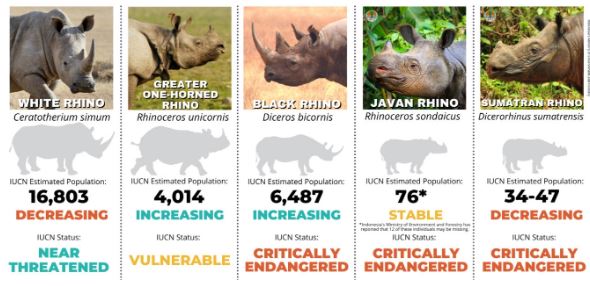
- South Africa hosts the largest population of rhinos (~16,000). Despite efforts, around 500 rhinos are killed annually for their horns.
- Globally, rhino numbers have declined from 500,000 in the early 1900s to around 27,000 today (IUCN data), driven by illegal horn trade.
8. New Study Reveals Potato's Hybrid Origin from Wild Tomato and Etuberosum
Context
- Recently, a study published in Cell revealed that the modern potato evolved from an unexpected hybridization between a wild tomato and a potato-like plant known as Etuberosum, approximately 9 million years ago.
Key Findings
- Tomatoes, Etuberosums, and potatoes all belong to the genus Solanum, having diverged from a common ancestor around 14 million years ago.
Tuber Evolution
- Neither tomatoes nor Etuberosums originally had tubers. The hybrid plant gained the ability to form tubers, allowing it to store nutrients underground - a key survival adaptation in the cold Andean environment.
Key Genes Identified
- Tomato contributed the SP6A "master switch" gene, signaling tuber formation.
- Etuberosum contributed the IT1 gene, controlling underground stem growth.
- Both genes had to function together for tubers to develop - a chance genetic combination.
Phylogenetic Puzzle Solved
- Genetic analysis showed conflicting signals, with potatoes appearing genetically closer to both tomatoes & Etuberosums depending on the marker used.
- This contradiction was resolved through phylogenetic analysis and genome sequencing of 450 wild and cultivated species.
Environmental Catalyst
- The rise of the Andes Mountains likely brought wild tomato and Etuberosum ancestors into close proximity, enabling hybridization, possibly via bee pollination.
- The study used the most comprehensive collection of wild potato genomic data ever analyzed, including rare specimens from isolated Andean valleys.
Wide Potato Diversity
- There are now 100+ wild potato species, many of which grow tubers. However, not all are edible due to toxins.
Agricultural Implications
- Insights from this study could help develop resilient, disease-resistant, seed-grown potatoes, improving genetic diversity and climate resilience.
9. India Electric Mobility Index (IEMI) Launched by NITI Aayog to Accelerate EV Transition
Context
- Recently, in a major push towards advancing India's clean transportation goals, NITI Aayog launched the India Electric Mobility Index (IEMI).
About IEMI
- A first-of-its-kind tool to track and benchmark the progress of all States and Union Territories (UTs) in transitioning to electric mobility. Helps identify top performers, bottlenecks, and promotes peer learning.
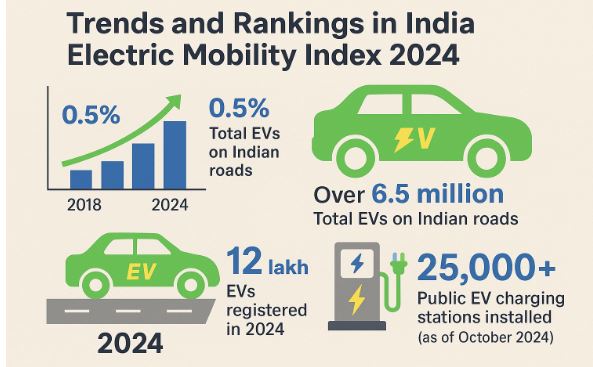
- Each State/UT is scored out of 100, based on 16 indicators grouped under three themes:
- Transport Electrification Progress: Tracks EV sales, e-bus deployment, and adoption rates.
- Charging Infrastructure Readiness: Assesses the extent and availability of charging networks.
- EV Research & Innovation Status: Evaluates R&D, startups, and local manufacturing ecosystems.
Objectives of IEMI
- Promote data-driven policymaking at the state level.
- Foster healthy competition to accelerate EV transition.
- Enable sharing of best practices across regions.
- Highlight state-specific strengths and gaps for targeted interventions.
Leading States in EV Adoption
- Delhi, Maharashtra, Tamil Nadu, and Karnataka
10. FSSAI Releases Definitive List of Ayurveda Aahara to Promote Traditional Nutrition
Context
- Recently, the Food Safety and Standards Authority of India (FSSAI), in consultation with the Ministry of Ayush, released a definitive list of Ayurvedic food preparations under the category of " Ayurveda Aahara.

About Ayurveda Aahara
- Refers to food products aligned with the holistic dietary principles of
- Ayurveda, one of the world's oldest health and wellness systems.
- These foods focus on balance, seasonal compatibility, and the use of natural ingredients and herbs with known therapeutic benefits.
- Recognises Ayurvedic food based on: Classical recipes, Authentic ingredients
Traditional preparation methods sourced from authoritative Ayurvedic texts. - Provides regulatory clarity for Food Business Operators (FBOs).
- Marks a pivotal step in integrating Ayurveda-based nutrition into India's food regulation system.
- Aims to promote widespread adoption of traditional diets for better public health outcomes.
11. Global Artificial Intelligence (AI) City Index 2025 Highlights Top AI Innovation Hubs
Context
- Recently, the Global Artificial Intelligence (Al) City Index 2025, published by market intelligence firm Counterpoint Research, highlighted the leading cities worldwide in Al development and innovation.
About Global Al City Index 2025
- A comprehensive benchmarking report that identifies and ranks cities worldwide based on their capacity to lead in artificial intelligence innovation. •
- The index evaluates performance across four key pillars:
- Al R&D Ecosystem Startups,
- Tech Hubs & Investment Inflows
- Al Adoption in Key Sectors
- Digital Infrastructure & Data Centre Growth
- The report aims to spotlight urban centres that are actively shaping the global Al landscape through collaborative governance, policy frameworks, and real-world Al deployment.
About India
- Bengaluru leads with strong Al research and infrastructure, while cities like Mumbai, Delhi, Chennai, and Kolkata are emerging hubs.
Global
- Singapore, Seoul, Beijing, Dubai, and San Francisco top the index
- Index also highlighted fast-growing cities such as Riyadh, Hangzhou, and Bengaluru.

2026-27 UPSC Mains English QEP Power Pages
View DetailsSubmit Your Details to Learn More



