
theIAShub
04 Aug, 2025

Article List
- Ramsar COP15 2025 Concludes in Zimbabwe with 13 New Resolutions on Wetland Conservation
- UK to Recognise Palestine: A Historic Shift in Middle East Diplomacy
- Bio-Fortified Potatoes with High Iron Content to Boost India’s Nutrition Security
- AI-Designed Synthetic Proteins Revolutionize T-Cell Production for Advanced Immunotherapy
- Wildlife Institute of India Study Reveals High Bird Mortality from Wind Farms in Thar Desert
- India’s First AI-Enabled Anganwadi Centre Transforms Early Childhood Learning in Maharashtra
- Krasheninnikov Volcano Erupts in Russia After Nearly Six Centuries of Dormancy
- 'Matri Van' Initiative Launched in Gurugram to Restore Aravalli Ecosystem
- Alpine Musk Deer Misidentification Raises Concerns for Breeding Programmes in India
1. Ramsar COP15 2025 Concludes in Zimbabwe with 13 New Resolutions on Wetland Conservation
Context
- The 15th Meeting of the Ramsar Convention (COP15), held in Victoria Falls, Zimbabwe, concluded with new resolutions on wetland restoration, protection of migratory birds and wetland species, and equitable governance.
Key Highlights and Outcomes of the Meeting
- Ramsar COP15 adopted 13 resolutions, presenting a global resolve to protect and restore wetlands.
- Some of the important resolutions include those on wetland restoration, protection of migratory birds through flyway conservation and the Global Waterbird Estimates Partnership among others.
- Parties also adopted the 5th Strategic Plan (2025-2034) with four goals and 18 targets. These goals are:
- Goal 1: Address and reverse wetland loss and degradation.
- Goal 2: Achieve the wise use of Wetlands through policy planning and inclusive participation.
- Goal 3: Conserve and Manage Wetlands of International Importance effectively.
- Goal 4: Enhance implementation of the Convention through scientific cooperation, capacity building, and raising money.
Other Outcomes
- A key outcome was the Victoria Falls Declaration, emphasizing political will, resource mobilisation, and investment in sustainable wetland management.
- Its Highlights include commitments to restore degraded freshwater ecosystems, protect migratory birds, and adopt clearer criteria for designating Wetlands of International Importance.
- A new strategic plan with four goals and 18 targets was approved, though a major breakthrough in long-term financing was not achieved.
- The core budget was increased by 4.1% to CHF 15.5 million for 2025–2027.
- Additional resolutions addressed equitable governance, urban wetlands, traditional knowledge, and youth engagement.
India’s Position
- India's resolution on "Promoting Sustainable Lifestyles for the Wise Use of Wetlands" was successfully adopted on receiving support from all 172 countries at Ramsar COP15.
- This resolution aligns with the ethos of India's Mission LiFE (Lifestyle for Environment) initiative, which was introduced by the Indian Prime Minister at COP26 in Glasgow in 2021. Mission LiFE promotes a lifestyle that is synchronous with nature and does not harm it.
About Ramsar Convention
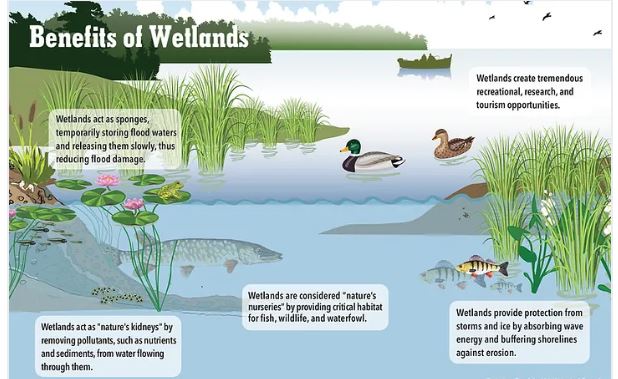
- The Ramsar Convention on Wetlands (1971) is the only global environmental treaty dedicated to wetlands. Initially focused on migratory waterfowl habitats, it now covers all wetland types, recognizing their role in biodiversity, climate regulation, and human well-being.
Global Reach and Impact
- 2,544 sites covering 257 million hectares worldwide
- Core Mission: To ensure the conservation and wise use of wetlands through local, national, and international action
- Evolution of Wise Use: Now applies to all wetlands within a country, not just Ramsar Sites, aligning the treaty with sustainable development goals
About Wetlands
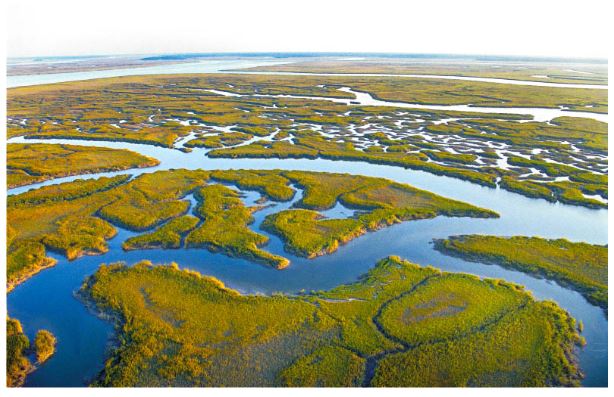
- Wetlands are areas where water is the primary factor controlling the environment and the associated plant and animal life. They occur where the water table is at or near the surface of the land, or where the land is covered by water.
- – Wetlands take many forms including rivers, marshes, bogs, mangroves, mudflats, ponds, swamps, billabongs, lagoons, lakes, and floodplains.
- Most large wetland areas often include a combination of different types of freshwater systems.
- Convention on Wetlands
- It is the intergovernmental treaty that provides the framework for the conservation and wise use of wetlands and their resources.
- It was adopted in the Iranian city of Ramsar in 1971 and came into force in 1975.
- Since then, almost 90% of UN member states, from all the world’s geographic regions, have acceded to become “Contracting Parties”
- India is one of the Contracting Parties to Ramsar Convention, signed in Ramsar, Iran, in 1971. India became a signatory to the convention on 1st February 1982.
Wetlands in India
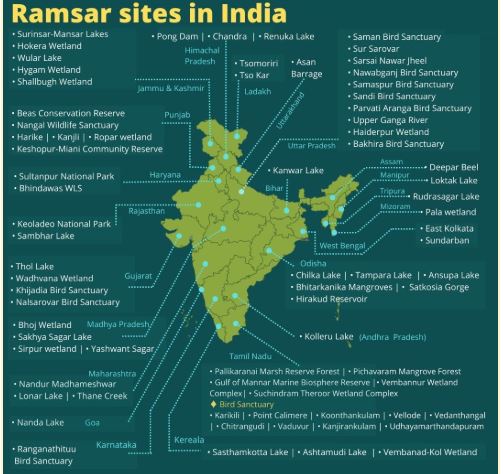
- In June 2025, two more wetlands from India were added to the list of Ramsar sites, taking the number of such sites in the country to 91.
- 1. The latest to join the list of Ramsar sites in India are Khichan in Phalodi and Menar in Udaipur, both in Rajasthan.
- – India is home to a rich diversity of wetlands, many of which hold cultural and religious significance.
- 1. These wetlands are protected under various national laws, including the Indian Forest Act (1927), the Forest (Conservation) Act (1980), and the Indian Wildlife (Protection) Act (1972).
2. UK to Recognise Palestine: A Historic Shift in Middle East Diplomacy
Context
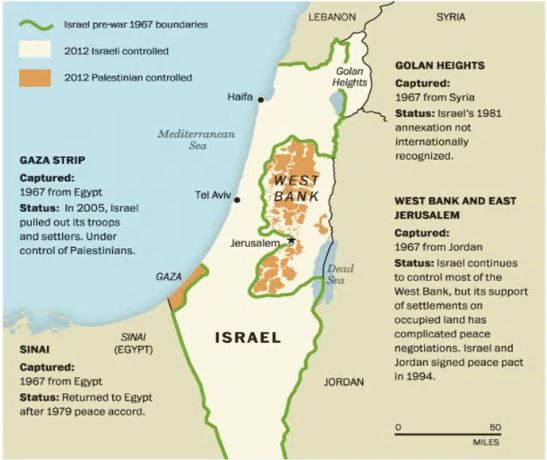
- British Prime Minister Keir Starmer announced that the UK will recognise the State of Palestine at the upcoming UN General Assembly in September unless Israel agrees to a Gaza ceasefire, facilitates more humanitarian aid, and commits to a two-state peace process.
Growing Recognition of Statehood of Palestine
- Following the United Kingdom Prime Minister announcement, States like France have also pledged to recognise the State of Palestine.
- Canada and Portugal has also expressed similar views.
- As a 21 month long war in Gaza and the Humanitarian Disaster has posed a fresh set of Diplomatic challenges for the State of ISRAEL.
Current Situation in recognising the State of Palestine
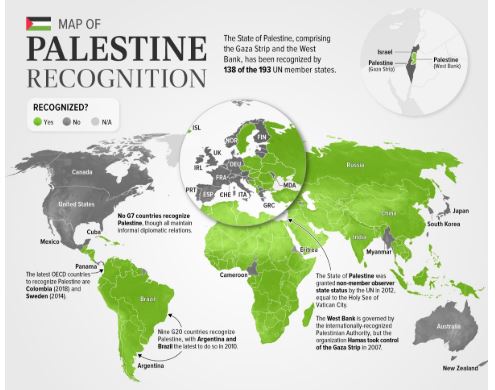
- Out of 193 UN member states, 147 have already recognised Palestine as of 2025, but major Western powers had long resisted, linking recognition to a final Israel-Palestine peace settlement.
- That stance is now shifting. Russia and China, both UN Security Council (UNSC) permanent members, already recognise Palestine.
- If France and the UK follow through on their recent pledges, the U.S. will become the only P5 member opposing recognition, isolating itself diplomatically.
- The inclusion of France, the UK, and Canada—key G7 members—adds significant weight, potentially influencing others to follow.
Balfour Declaration and the Jewish Homeland
- The Balfour Declaration was a public statement issued by the British government in 1917 during World War I announcing its support for the establishment of a "national home for the Jewish people" in Palestine, which was then an Ottoman region with a small Jewish minority population.
- The declaration originated in a letter from the United Kingdom's Foreign Secretary Arthur Balfour to Lord Rothschild, a leader of the British Jewish community. The declaration's text was published in the press on November 9, 1917.
- The Balfour Declaration, later endorsed by the U.S., became a pivotal moment in Zionist history, legitimising Jewish claims to Palestine and shaping the geopolitical future of the region.
UK Recognition and a Symbolic Shift
- Britain’s decision to recognise Palestine, 108 years after the Balfour Declaration, carries profound symbolic weight given its historic role in the Israel-Palestine conflict.
- While the recognition may not immediately alter Israel’s occupation, it signifies a major shift in Britain’s policy stance.
- With Israel facing global accusations of genocide and harrowing images of Gaza’s devastation circulating, it has become increasingly untenable for Western nations, including the UK, to support Israel unconditionally.
- Britain’s move reflects growing international pressure for a more balanced approach towards the Palestinian cause.
3. Bio-Fortified Potatoes with High Iron Content to Boost India’s Nutrition Security
Context
- Recently, in a major boost to India's food security and nutrition agenda, bio-fortified potatoes enriched with iron are set to be introduced into Indian markets. This development was announced by the Director General of the Peru-based International Potato Center (CIP).
- Coinciding with this initiative is the launch of CIP's South Asia regional centre in Agra, which aims to enhance farmers' access to high-quality potato and sweet potato seeds across the Indo-Gangetic plains.
About Bio-Fortified Potatoes
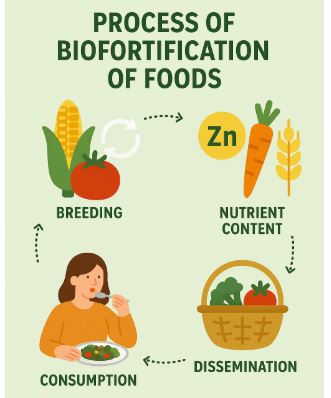
- Bio-fortified potatoes are specially bred to contain higher levels of essential micronutrients, especially iron.
- Developed through traditional breeding (not genetically modified).
- Aimed at addressing iron-deficiency anemia and improving nutritional outcomes.
- May also contain zinc or vitamin C, depending on the variety.
How Are They Developed
- High-yielding, disease-resistant, and good-tasting potato varieties are crossed with iron-rich ones. The resulting progeny are tested over multiple years.
- The best-performing lines in terms of iron content, yield, and quality are selected.
Significance
- Nutritional Security: Helps combat hidden hunger and iron deficiency.
- Farmer Benefits: Offers high-yielding, disease-resistant varieties, enhancing productivity and resilience.
- Policy Alignment: Supports national missions like POSHAN Abhiyaan and the National Food Security Mission.
4. AI-Designed Synthetic Proteins Revolutionize T-Cell Production for Advanced Immunotherapy
Context
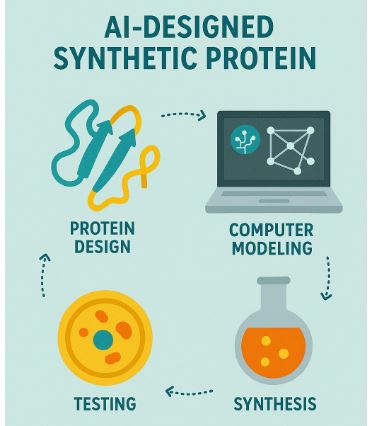
- Recently, a landmark study published in Cell by researchers from Harvard University and collaborating institutions revealed a breakthrough in immunotherapy. The team successfully used Al-designed synthetic proteins to generate immune T cells at scale.
About Ai-Designed Synthetic Proteins
- Used to activate the Notch signalling pathway, essential for generating T cells.
- These proteins served as soluble synthetic agonists, replacing previous ineffective inapplicable methods (like immobilised Notch ligands on culture dishes).
- Helps in offering a major advance in immunotherapy and vaccine development.
- Notch signalling, essential for cellular differentiation and immune response, previously lacked effective molecular activators suitable for human therapy.
- Using these synthetic agonists, the team successfully produced T cells at scale in laboratory bioreactors, addressing the demand in CAR-T cell therapies.
- The technology also shows promise in: Bridging T cells and cancer cells.
- Enhancing T cell-mediated killing. Neutralising immunosuppressive tumour microenvironments.
- This innovation opens doors to next-generation immunotherapies and cancer vaccines.
About T-cells
- A type of white blood cell involved in the immune system.
- There are two main types of T-cells: Helper T-cells: Coordinate and regulate the immune response.
- Killer T-cells: Destroy infected or abnormal cells directly.
Functions
- T-cells are essential for developing immunity against new pathogens.
- T-cells manage responses to recurring or chronic antigens.
5. Wildlife Institute of India Study Reveals High Bird Mortality from Wind Farms in Thar Desert
Context
- Recently, a study by the Wildlife Institute of India (WII), published in Nature Scientific Reports, has highlighted alarming bird mortality rates caused by wind farms in the Thar Desert, particularly around Jaisalmer, Rajasthan.
Key Highlights
- The Jaisalmer region of Rajasthan hosts around 900 wind turbines and is home to over 270 bird species, including the critically endangered Great Indian Bustard (GIB).
- 124 bird carcasses were recorded during seven multi-season surveys around 90 randomly selected turbines.
- After adjusting for detection errors and scavenging, the annual bird mortality rate was estimated at 4,464 birds per 1,000 sq. km.
- 28 nearby control sites (without turbines) showed no bird carcasses, indicating a direct link between turbines and bird deaths. 이
- Raptors (e.g. eagles, vultures), which are long-lived and slow to reproduce, were the most affected group.
- Their soaring flight patterns make them highly susceptible to collisions with rotating blades.
Why Thar and Gujarat Are High-Risk Zones
- The Thar Desert lies along the Central Asian Flyway, a key migratory route for many bird species.
- Gujarat's coastal areas, part of the African-Eurasian Flyway, are also under threat.
- Migratory birds using these flyways are increasingly at risk from wind turbines and power transmission lines, leading to rising conservation concerns.
About Wildlife Institute of India
- Established in 1982, as an autonomous body under the Ministry of Environment, Forest and Climate Change (MoEFCC). Recognised as an internationally acclaimed institute for wildlife research, training, and advisory services.
Location
- Dehradun, Uttarakhand.
Key Objectives
- Generate scientific knowledge on India's wildlife resources.
- Offer policy advice and technical support on wildlife management issues.
- Collaborate internationally on wildlife research and training.
- Evolve as a regional centre of excellence in natural resource conservation.
6. India’s First AI-Enabled Anganwadi Centre Transforms Early Childhood Learning in Maharashtra
Context
- Recently, India's first Al-enabled Anganwadi centre was established in Waddhamna village of Maharashtra's Nagpur district, just 18 km from the city.

Key Highlights
- Retrofitted with cutting-edge tools: Al-integrated smartboards and tablets
- VR headsets for virtual tours and experiential learning
- Full Wi-Fi connectivity and CCTV monitoring for security and transparency
- Activities include drawing, singing, poetry recitation, and virtual tours.

Impact on Learning Outcomes and Attendance
- Attendance rose from 10 to over 25 children in a few months.
- Children now eagerly attend the centre, showing heightened interest in learning.
- Gamified lessons help children recognise shapes, animals, and alphabets
- Adaptive learning platforms adjust to the pace of each child-benefiting both slow and fast learners
- Children's creative activities like drawing and singing are digitally archived to track developmental progress
- Technology is used to monitor nutrition and growth parameters, with plans to integrate with the Poshan Tracker platform.
7. Krasheninnikov Volcano Erupts in Russia After Nearly Six Centuries of Dormancy
Context
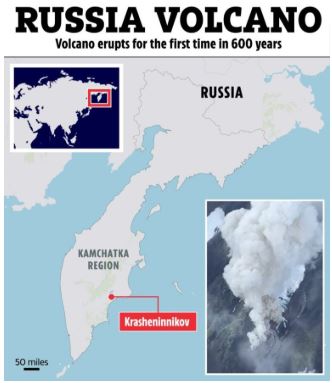
- Recently, in a rare geological event, the Krasheninnikov volcano in Russia's Kamchatka Peninsula erupted for the first time. The eruption was confirmed by the Kamchatka Volcanic Eruption Response Team (KVERT).
About Krasheninnikov Volcano
Location
- Eastern Kamchatka Peninsula, Russia, along the Pacific "Ring of Fire".
Type
- Active stratovolcano, part of a complex volcanic system.
Elevation
- Reaches a height of 1,886 meters.
Structure
- Sits within a 9 km-wide collapsed caldera formed by a massive eruption 39,600 years ago.
- Formed by two eruptive cones inside the caldera.
- The southern cone has a crater 800 meters wide and 140 meters deep.
Volcanic Activity History
- The region hosts 114 volcanoes that have erupted since the Holocene Epoch (~12,000 years ago to present).
Recent Activity
- The eruption occurred three days after a magnitude 8.8 earthquake in the vicinity and ash plumes rose to an altitude of 20,000 feet.
- The volcano last erupted around 1463, and since then, there had been no recorded activity-until its dramatic reawakening in 2025.
- This marks the first documented eruption in nearly six centuries, ending a long period of dormancy.
About Stratovolcano
- Also known as composite volcanoes, characterized by: Tall, steeр, cone-shaped structure. Built up from alternating layers of lava and pyroclastic material.
- Commonly found above subduction zones (e.g., Pacific Ring of Fire).
- Erupts mainly andesitic and dacitic lava, which are cooler and more viscous than basalt.
- Due to high lava viscosity, gas pressure builds up, often leading to explosive eruptions.
- Crater at the peak may contain water, ice, or a volcanic dome during dormant periods.
8. 'Matri Van' Initiative Launched in Gurugram to Restore Aravalli Ecosystem
Context
- Recently, in a major step towards ecological restoration and urban sustainability, the 'Matri Van' initiative was launched in Gurugram, Haryana.
About 'Matri Van' Initiative
- A theme-based urban forest project, to be developed across 750 acres in the Aravalli hill region along the Gurugram-Faridabad Road. Part of the Government of India's "Ek Ped Maa Ke Naam" programme
- It will serve as a: Green lung and carbon sink for the Delhi NCR region
- Biodiversity restoration zone, and Community engagement space with ecological, recreational, and cultural significance.
- Removal of invasive Kabuli Kikar (Prosopis juliflora) Plantation of native Aravalli species and long-rotation trees
- Creation of theme-based groves, including: Bodhi Vatika with Bargad, Peepal, Gular, and Pilkhan trees; Pushp Vatika for flowering trees; Sugandh Vatika with fragrant species; as well as dedicated spaces like a Medicinal Plants Grove, Bamboosetum, Cactus Garden, Butterfly Garden, Nakshatra Vatika, and Rashi Vatika.
Significance
- Play a crucial role in enhancing air quality, mitigating urban heat, promoting biodiversity, and fostering collective ecological stewardship, while also addressing the degradation of the ancient Aravalli range.
9. Alpine Musk Deer Misidentification Raises Concerns for Breeding Programmes in India
Context
- A recent report by the Central Zoo Authority revealed a critical misidentification. Breeding programmes meant for the Alpine musk deer were mistakenly applied to the Himalayan musk deer.
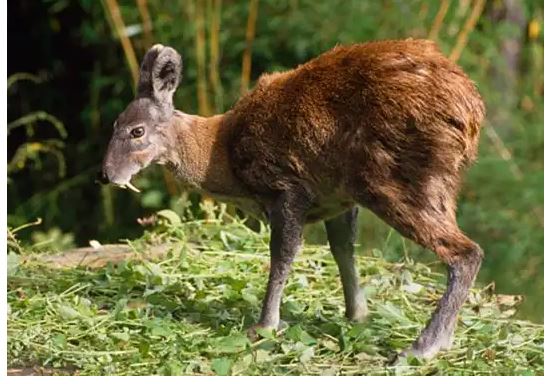
About Alpine Musk Deer (Moschus chrysogaster)
- It is not a true deer; it belongs to a distinct family more closely related to Bovidae, which includes antelopes, sheep, goats, and bovines.
Behaviour
- Solitary and crepuscular (active during dawn and dusk).
Musk Sac
- Males possess a visible musk gland between the testes; develop fangs during mating season for sparring.
Habitat
- Lives in coniferous and deciduous mountain forests at elevations between 3,000- 5,000 metres. Found across India, Nepal, Bhutan, and China.
Diet
- A ruminant herbivore, primarily a browser, feeding on forbs, grasses, lichens, moss, and shrub leaves/twigs.
Major Threat
- Poaching for musk, widely used in cosmetics and perfumes, poses the greatest threat to the species.
- Conservation Status: IUCN Red List: Endangered 이 CITES: Appendix I Wildlife Protection Act (India), 1972: Schedule I.

2026-27 UPSC Mains English QEP Power Pages
View DetailsSubmit Your Details to Learn More



