
theIAShub
28 Jul, 2025
Article List
- National Symposium on Women Safety at Work and Public Places
- National Telecom Policy: DoT Released Draft
- India’s Hydrogen Train Coach: A Revolution for Indian Railways
- India’s Look Far East Policy: Role of Russia’s Far East Region
- Great Indian Bustard Conservation: Power Corridors Proposed in Rajasthan & Gujarat
- Global SPECS 2030: WHO’s Vision for Universal Eyecare by 2030
- Exercise Bold Kurukshetra 2025: India-Singapore Joint Military Drill in Jodhpur
- Toxic Metals in Delhi Roadside Dust Pose Serious Health Risks: JNU-UNSW Study
- India Launches National Programme to Tackle GLOF Risks in the Himalayas
- Deep-Brain Stimulation (DBS): A Breakthrough Treatment for Neurological Disorders
1. National Symposium on Women Safety at Work and Public Places
Context
- The National Human Rights Commission (NHRC), in collaboration with the Dr. Ram Manohar Lohia Chair, Department of Sociology, University of Lucknow, successfully organised a National Symposium on ‘Women’s Safety at Work and Public Spaces.
About the Symposium Recommendations
- There needs to be a concerted and targeted effort to address the issue of women’s safety on all three fronts of policy-making, implementation and raising awareness.
- There is a need for inclusion of the informal sector in conversations about women’s safety and the need for targeted awareness campaigns especially in the informal sector.
- There is a need for sensitisation at the individual and family level so that there is a transformation of attitudes towards women’s safety at work and in public spaces.
- It is recommended that the state ensure creation of inclusionary spaces for women, especially in decision-making bodies, so that structural transformations can be brought about.
- It is recommended that educational institutions take proactive steps to ensure that students are made sensitive to various gender-related issues, as well as aware of how to conduct themselves in situations involving the opposite sex.
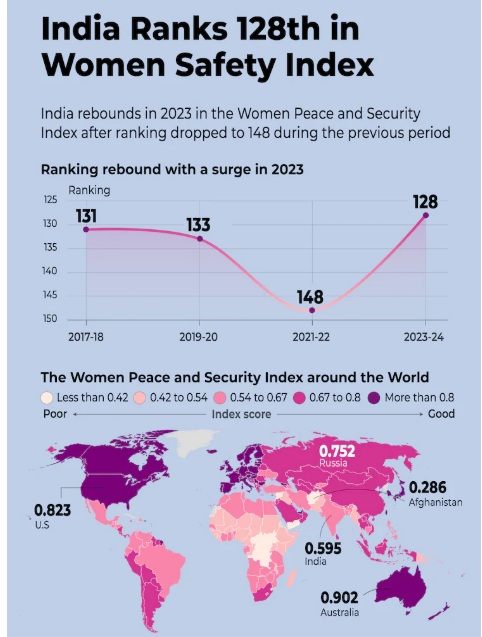
Women Safety in India: A Pressing issue
- There is still a problem concerning the harassment of women in India even after so many measures put in place across the years.
- The ghastly acts of crime on women which has occurred recently like the gang rape and murder of a young doctor in Kolkata has reasserted the need for gender safety.
- Nevertheless, various laws and growing awareness, there are horrific examples of violent crimes against women: domestic violence, sexual assault, and offences related to dowry. India has carried out several law reforms in a bid to try and curb crimes that target women.
- Thus, the Criminal Law (Amendment) Act, 2013 was a significant step in increasing severity of punishment for the rape and reform in the sentencing standards that regulate sexual crime.
Issues Related to Women Safety
- Physical Assault: Physical violence such as, domestic violence, sexual assault, assaults involving throwing acid at people continue to unfold.
- Harassment: The second manifestation of gendered innovation is related to marches and perception of women as objects, objectification through street harassment, stalking and unwanted attention in public spaces.
- Dowry-Related Violence: It exposes married women to harassment, abuse and is a major cause of killings related to dowry known as dowry deaths.
Limited Mobility and Freedom
- Social Norms: Patriarchal norms minimize women’s opportunities for movement particularly in the rural settings. They’ve written “for their hearts and their minds” they cannot roam as they are afraid of being judged and/or persecuted.
- Safety Concerns: Panic of being harassed or even attacked puts women in a dilemma of not being able to move around especially at night alone.
- Education Gap: However, there are still deep-rooted problems in the field of education and minorities are mostly affected. The girls are still constrained by factors that hinder them from going to school.
- Workforce Participation: India ranks lowly among the nations in terms of employment of women in the labour force.
Lack of Safe Public Spaces
- Poorly Lit Areas: Lack of proper lighting in the streets increases risk factors particularly when it is in the evening.
- Inadequate Public Transport: Public transport such as buses, trains and the metro are also a danger to woman passengers.
- Lack of Clean and Safe Toilets: There is still no ready provision for Safe Public Toilets especially being women.
Healthcare Disparities
- Maternal Health: This is so because; there remain high maternal mortality rates attributed to poor health care, particularly during pregnancy and childbirth.
- Access to Reproductive Health Services: Lack of use of FP/RH services has consequences on women’s health.
Steps by Government to overcome these Issues
- Beti Bachao Beti Padhao (Save the Daughter, Educate the Daughter:these campaigns were initiated by the government of India and form part of its on-going fight against all forms of gender discrimination, especially as regards education for girls. It highlights the need of providing support to girl child from the time they are young.
- Ujjawala Scheme:this scheme launched in the year 2007 to put a stop on the trafficking and exploitation of women. These are a social reintegration and source of livelihood for women who have been trafficked. In indirect manner, by overcoming the risks, it supports the protection of women.
- NIRBHAYA Fund:Created after the Nirbhaya gang rape case of 2012, it funds programmes towards improving the physical security of women. Among others, it supports the establishment of crisis centres, the development of forensic services, and increased police work.
- Ministry of Women and Child Development Initiatives: these are programs to deal with the security of women. These Programs aim to create awareness campaigns and provide legal assistance to victims facing violence. These endeavours are meant to ensure that women’s security is enhanced.
- Safety Measures in Public Transport:182 Helpline a toll free number for women travellers who face any sort of discomfort during travelling by trains.CCTV Surveillance with use of security cameras in railway stations and compartments.‘R-Mitra’ App a mobile application that will provide women with a button, in case there is a need for them to contact some authority during train travel.
- Safety for Women Tourists:Incredible India Help Linea helpline number provided for women tourists if they are in any problem.
- Safety Measures in Metro Systems:
- Women-Only Coaches: Women too have the problem of harassment in public transport, thus in Metro trains there is a reserved compartments to ensure their safety.
- Reserved Seats: Accommodations for women passengers so as to provide for their comfort and convenience to reduce cases of abuse and harassment.
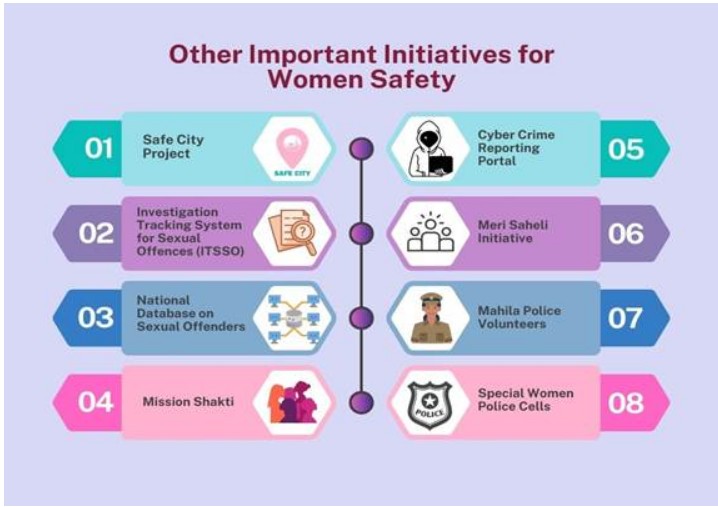
What More Can be Done to enhance security of Women
- Promote Respect and Equality: Armed with this guide, teach boys and young men on how they can respect all women. Promote the sense of justice and sense of acceptance.
- Be an Active Bystander: If you see any aggression or bullying, either in its crudest form or in its subtlest of manifestations, then you need to act safely. The long struggle for women’s rights led to creating a tool to fight and report sexual harassment. Be with women through this process of harassment or assault.
- Educate people: teach about the concept of consent, as well as healthy and unhealthy relationships. This knowledge should be shared.
- Challenge Gender Norms and Roles: men can engage themselves in cleaning activities, taking care of children or even caring for the elderly. This is very effective in eliminating stereotyping of gender roles in the society. Promote women’s right in decision making at home as well as in other social aspects.
- Promote Safe Workplaces: If you are in the management or a committee charged with organizational affairs provide for women safety at the workplace. Encourage those policies which protect the employees against workplace harassment and discrimination.
- Advocate for Legal Reforms: Encourage and call for proper enforcement of laws as much as they protect the women. It will help in legal awareness and enable people to report cases hence reducing cases of criminal activities.
2. National Telecom Policy: DoT Released Draft
Context
- The Department of Telecommunications (DoT) has circulated Draft National Telecom Policy (NTP), 2025, for public consultation.
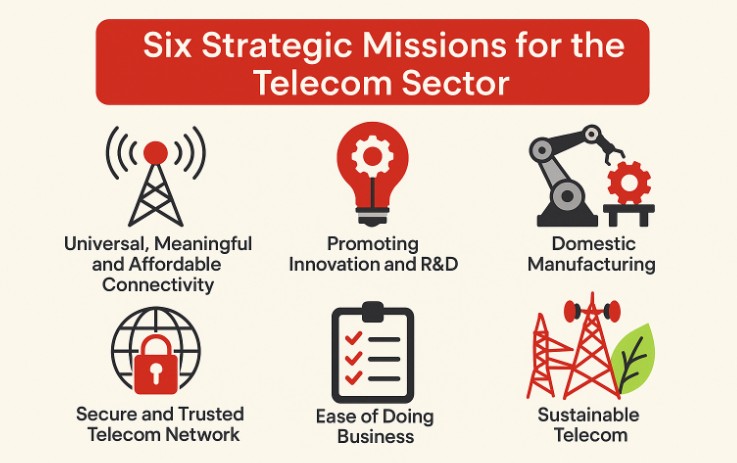
Key Features of the Draft
- Universal and Meaningful Connectivity:
- Achieve 100% 4G coverage and 90% 5G population coverage by 2030.
- Increase fiberization of telecom towers from 46% to 80% for better speed and reliability.
- Deploy 1 million public Wi-Fi hotspots and extend fixed-line broadband to 100 million households.
- Promote satellite-based internet in remote areas.Domestic Equipment Manufacturing:
- Incentivize use of locally made telecom equipment to replace 50% of imports, supporting companies like Tejas Networks and HFCL.
- R&D and Innovation:
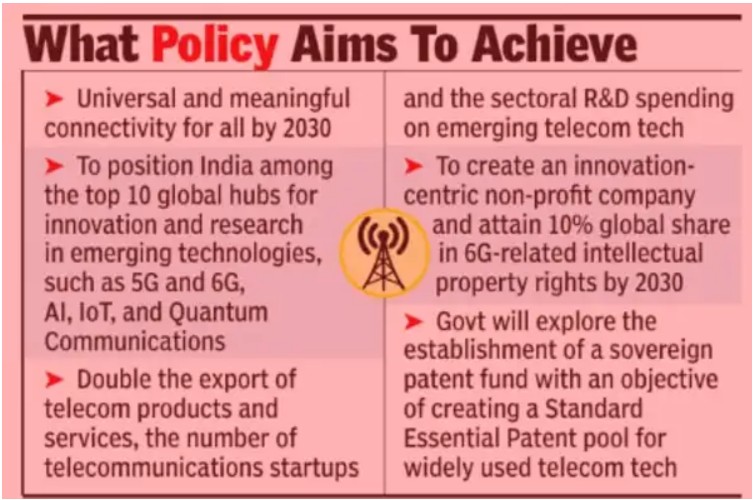
- Double telecom R&D expenditure.
- Support 500 tech startups and aim to capture 10% of global 6G-related IPs.
- Promote blended finance and fund-of-fund models for innovation.
- Employment and Skill Development:
- Create 1 million new jobs in telecom.
- Upskill 1 million workers in emerging technologies.
- Investment and Export Promotion:
- Target ₹1 trillion annual investments in telecom.
- Double telecom products and services exports.
Research and Development Goals
- Attain 10% global share in 6G-related IPRs.
- Position India among the top 10 global hubs for innovation in emerging technologies.
Security and Privacy
- Establish National Telecom SafeNet for network protection.
- Set up biometric-based identification for all telecom users.
- Monitor satellite communications to ensure cybersecurity.
Satellite Connectivity
- Establish a satcom Monitoring Facility (SMF) to monitor satellites and mitigate interference.
Significance of the Policy
- NTP 2025 aims to boost telecom sector investment to ₹1 lakh crore annually, doubling telecom product exports and fostering innovation in emerging technologies like 5G, 6G, artificial intelligence (AI), Internet of Things (IoT), and quantum communications.
- The policy targets 100% 4G population coverage and 90% 5G coverage by 2030, alongside expanding fiberization of telecom towers and deploying one million public Wi-Fi hotspots.
- NTP 2025 proposes simplification of regulations, cost reductions, and measures to improve business environment and digital inclusion, fostering a robust ecosystem for telecom players and consumers alike.
About Telecom Industry
- The Indian telecom industry with one of the world’s highest data traffic per connection offers immense growth potential.
- Industry revenue growth has accelerated after FY19 with CAGR of 13 per cent (FY19-23), compared to just 1.4 per cent during FY13-19.
- Industry consolidation (number of service providers has dropped from 10 in 2017 to just 4 in 2023) augurs well for future pricing growth.
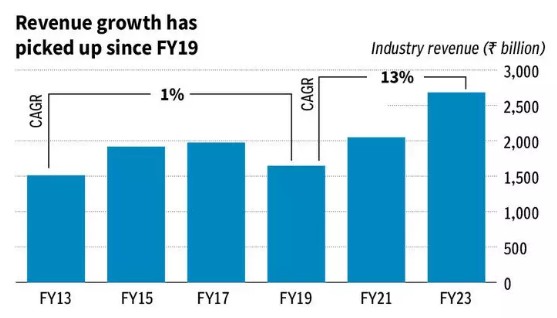
- The industry’s revenue witnessed a decline of negative six per cent CAGR during FY16-19 due to heightened competitiveness and pricing pressure.
- Since FY19, revenue has been on a steady rise with revenue CAGR of 13 per cent during FY19-23.
Initiatives by Government
- Government schemes and initiatives, including National Digital Communications Policy 2018, and the BharatNet project have played important roles in fostering indigenous manufacturing, expanding digital infrastructure, and bridging the urban-rural digital divide.
- Foreign Direct Investment: The Government of India approved 100% FDI in the telecom sector under an automatic route to encourage investment.
- Production Linked Scheme, with a financial outlay of INR 12,195 Cr, was launched in 2021 for a period of five years to provide a 4% to 7% incentive on incremental sales over the base year to promote the manufacturing of design-led telecom and networking products manufacturing in India.
Conclusion
- The Draft NTP 2025 marks a strategic shift toward self-reliance, innovation, and secure telecom infrastructure. By addressing past policy gaps and setting bold targets, it aims to transform India into a global telecom hub. Its success, however, hinges on timely execution and ecosystem alignment.
3. India’s Hydrogen Train Coach: A Revolution for Indian Railways
Context
- Indian Railways has successfully tested its first hydrogen-powered coach at the Integral Coach Factory (ICF) in Chennai, marking a major step towards launching India’s first hydrogen-powered train.
About the Hydrogen Train Project
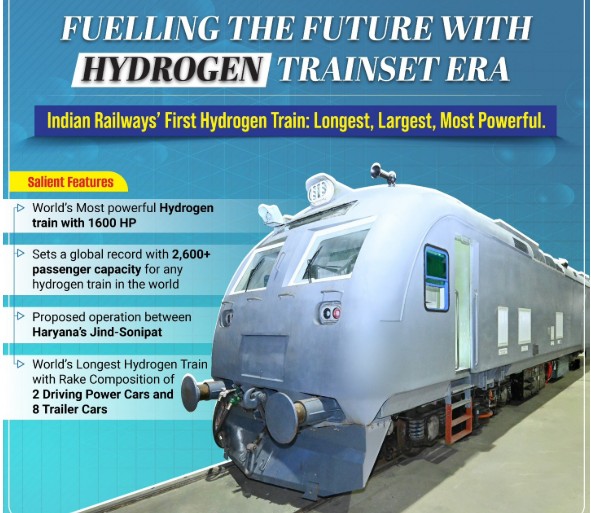
- Launched by Northern Railway in 2020-21, the hydrogen train project involves converting two 1600 HorsePower (HP) diesel power cars into hydrogen fuel cell-powered units.
- The project also includes setting up a hydrogen storage and fuelling facility at Jind, Haryana, with a storage capacity of 3,000 kg of hydrogen.
- The Research Design & Standards Organisation (RDSO) is leading the design, testing, and validation.
- The converted train, comprising 10 coaches and capable of carrying over 2,600 passengers, will operate between Jind and Sonepat in Haryana, covering two daily round trips of 356 km.
Vision and Aim
- The hydrogen coach is part of a broader vision by Indian Railways to deploy 35 hydrogen-powered trains on heritage and hill routes under the “Hydrogen for Heritage” initiative (2023).
- The hydrogen-powered trains will feature a 1,200 HP (horsepower) engine, making it the world’s most powerful hydrogen propulsion system developed for rail transport.
- It is a key milestone in India’s National Green Hydrogen Mission.
Facets of the Programme
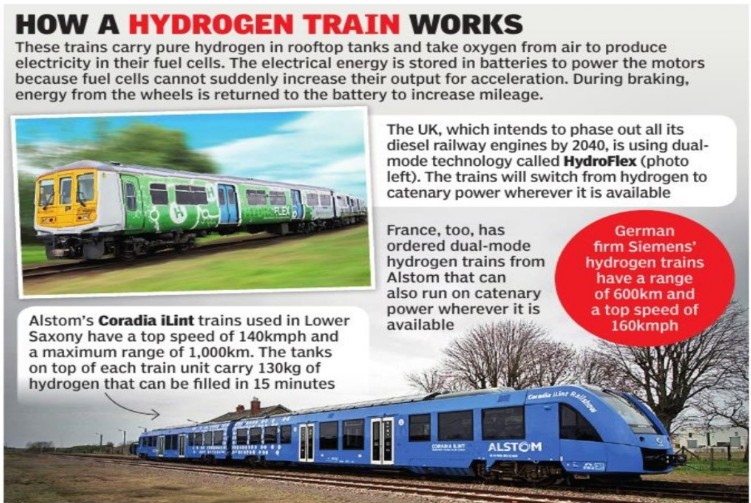
- Indian Railways’ hydrogen train project involves retrofitting two diesel power cars with hydrogen fuel cell systems, each storing 220 kg of hydrogen in specially designed cylinders at 350 bar pressure.
- Given hydrogen’s highly flammable nature, multiple safety measures have been built in, including pressure relief valves, leak and flame detection sensors, temperature monitors, and optimized ventilation systems.
- Computational fluid dynamics (CFD) studies have been conducted to simulate worst-case leak scenarios.
- Extensive testing of key components—like the traction and auxiliary converters—has been completed.
Benefits of Hydrogen as an Alternative Fuel
- Green hydrogen has a higher energy density than batteries and can be effectively stored/transported in large quantities.
- Hydrogen fuel-cell trains emit only water vapor (zero direct CO₂ emissions): Replacing one diesel train with hydrogen can cut emissions roughly equivalent to the annual CO₂ output of 400 cars.
- Green hydrogen production has lower infrastructure requirements, with hydrogen-powered locomotives being technically capable of running on existing railway tracks.
Indian Railways further role in Advancing Tech by
- Expanding pilot projects beyond heritage routes to test feasibility;
- Building supply chains (storage, transport, refuelling) on selected routes;
- Prioritizing low-frequency, remote routes for cost-effective adoption;
- Collaborating with ministries/PSUs to scale green hydrogen production.
4. India’s Look Far East Policy: Role of Russia’s Far East Region
Context
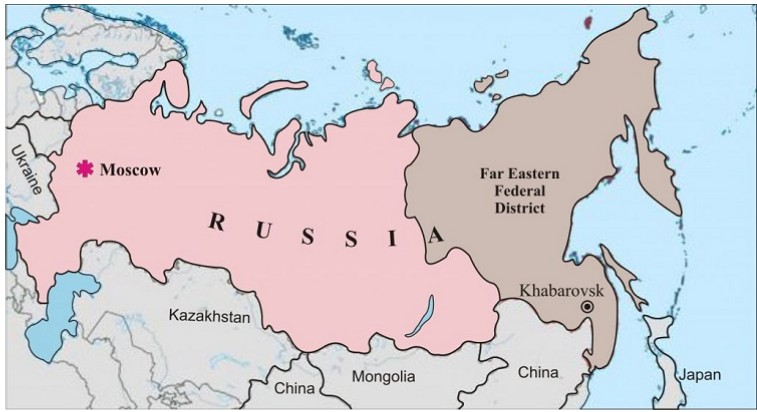
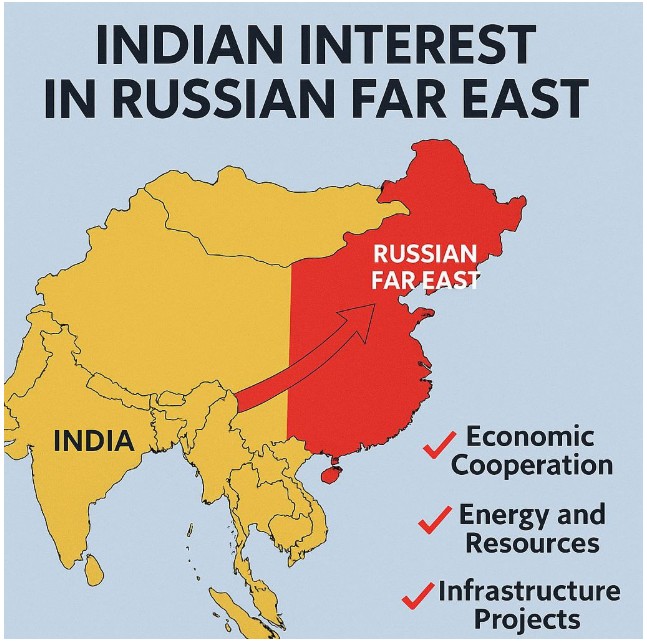
- India’s Look Far East Policy policy includes Russia Far Eastern Region including South Asia, North-East Asia and India new emphasis on Russia far East is Re-shaping in Act East Policy.
The Developments
- In September 2019, at the Eastern Economic Forum (EEF) at Vladivostok, Indian Prime Minister Narendra Modi was a special guest at an international meet intended to foster economic development in the Russian Far East (RFE).
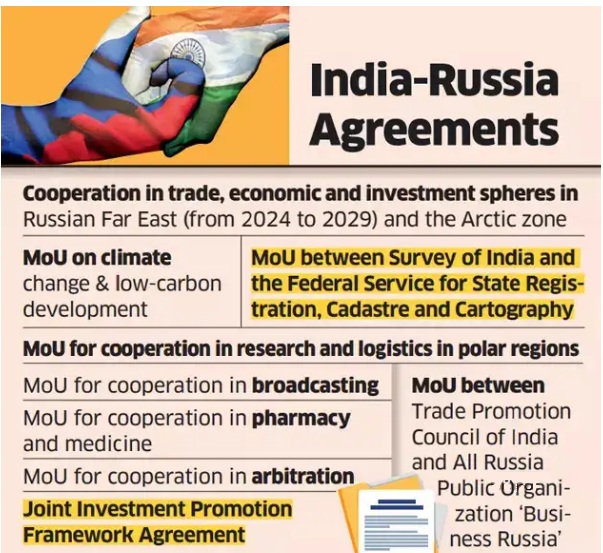
- A program for Indian involvement in the RFE was set out in a set of Memorandums of Agreement (MOUs) where Moscow and Delhi committed to large-scale economic collaboration.
- This was contrary to the trend where the relationship was limited to one-time purchases of military hardware and nuclear plants, or establishing their respective roles in global configurations like the BRICS grouping (Brazil, Russia, India, China and South Africa) or the Shanghai Cooperation Organization (SCO).
Significance for India of Russia Far East Region
- Economic Opportunities: Investing in and developing the region's vast natural resources, infrastructure, and potential markets.
- Strategic Diversification: Expanding India's presence in the IndoPacific and balancing relationships in the region.
- Strengthening Russia Ties: Providing Russia an economic partner in Asia amid Western sanctions, reinforcing a timetested relationship.
- Energy Security: Securing long-term supplies of oil, gas (especially LNG), coal, and critical minerals from the Far East.
Significance for Russia
- Developing the Far East: Attracting foreign investment (like India's $1 Billion Line of Credit) and expertise to develop this crucial region.
- "Pivot to Asia": Deepening economic integration with Asian partners as part of its strategic reorientation.
- Counterbalancing China: While cooperating with China in the Far East, Russia seeks to diversify partnerships to avoid overreliance, making India a welcome partner.
Issues and Challenges
- Geographical Distance & Connectivity: Lack of direct, efficient transport links hinders trade and project viability (making CVMC/INSTC crucial but slow).
- Implementation Gap: Difficulty translating MoUs and agreements into concrete, large-scale projects on the ground.
- Regional Competition: Navigating Russia's deep economic interdependence with China in the Far East while carving out space for India.
Economic Significance of the region for India
- Natural resources: The region occupying 40 per cent of Russia’s total territory is rich in natural resources, particularly diamonds, gold, oil, natural gas, coal, timber, silver, platinum, tin, lead, and zinc. It also has rich fishing grounds.
- Agriculture: Indian interest has been focussed mainly on its need to tap into the region’s natural resources, including arable land. A recent Indian study identifies oil and natural gas, iron ore, copper, diamonds and gold, fresh water, timber and fish stocks as the resources of the region that would find an Indian market.
- Blue Economy: It is in this context that the Chennai-Vladivostok sea route development has been proposed. This link would facilitate cargo transfers between the two eastern ports of the two countries in 24 days compared to 40 days that it now takes for ships that sail via Europe.
- Energy Security: The area's rich hydrocarbon reserves in the region throw up immense opportunities for Indian companies. ONGC Videsh has already invested in the Sakhalin-1 project and its terminal is acknowledged as the best in Russia. India is set to get gas from Gazprom that will probably be liquefied at a plant near Vladivostok.
Reasons to Focus on Far East
- While the region is labor-scarce, it is resource rich.
- The Russian Far East needs capital, technology and markets.
- Meanwhile, India is a country with a labor-surplus and a resource-deficit, in need of energy, mineral resources and farming land.
- Russia is in a position to meet Indian requirements and vice-versa.
Way Forward
- Prioritize Connectivity Corridors: Accelerate CVMC & INSTC: Fast-track feasibility studies, secure funding, and begin phased implementation of the Chennai-Vladivostok Maritime Corridor and the International North-South Transport Corridor. Focus on key bottleneck segments first.
- Interim Solutions: Explore efficient multi-modal routes combining sea (via Indian/third-country ports) and rail/road through Central Asia/Iran until dedicated corridors are fully operational.
- Robust Rupee-Rouble System: Develop a sustainable, scalable mechanism for bilateral trade settlement, addressing currency convertibility, trade imbalance, and regulatory hurdles. Explore third-country currency swaps if necessary.
- Agribusiness & Timber: Explore value-added processing of Far Eastern agricultural and timber products for export to India/third markets.
- Human Capital: Expand skill development and training programs for the Far East workforce through Indian institutions.
5. Great Indian Bustard Conservation: Power Corridors Proposed in Rajasthan & Gujarat
Context
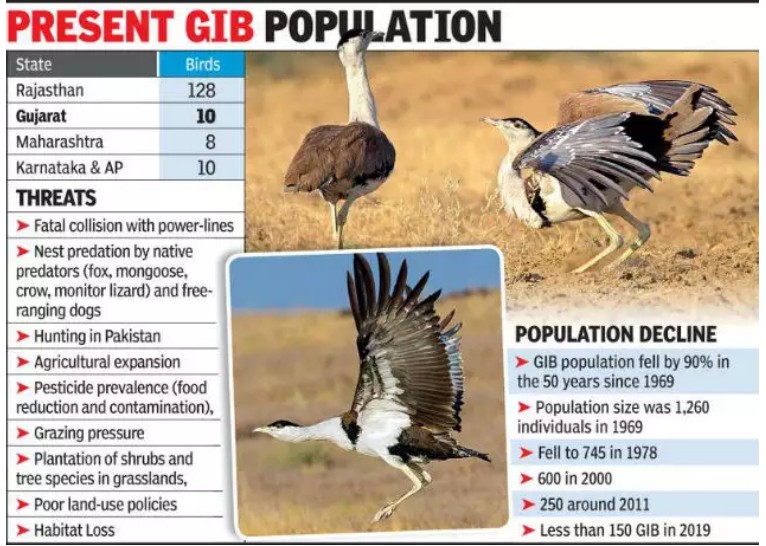
- Recently, in a significant step towards balancing conservation efforts with clean energy expansion, a Supreme Court-appointed expert committee has proposed the establishment of designated "power corridors" in Rajasthan and Gujarat
- These corridors aim to mitigate the risk of fatal collisions between overhead power lines and the critically endangered Great Indian Bustard.
About Great Indian Bustard
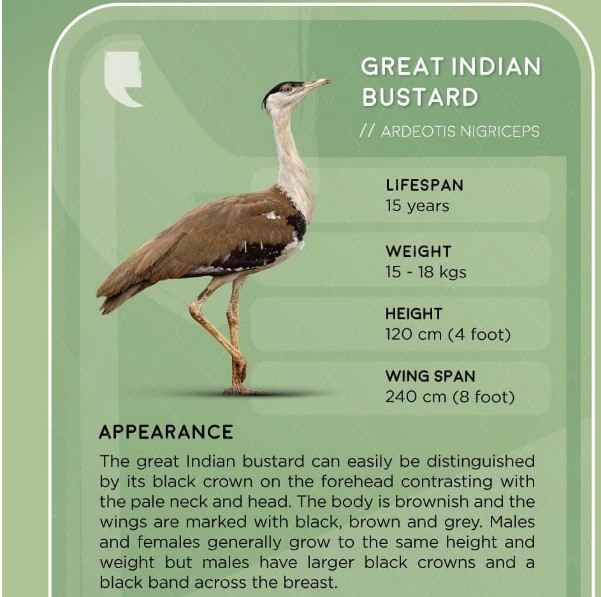
- Large bird with a horizontal body and long bare legs, giving it an ostrich-like appearance.
- Among the heaviest flying birds in the world.
- Easily identifiable by a black crown on the forehead, contrasting with a pale neck and head.
- Males have larger crowns than females, and both sexes differ in feather coloration.
- Habitat and Distribution: Endemic to the Indian subcontinent.
- Primarily inhabit dry and semi-arid grasslands with scattered bushes and scrub patches.
- Historically widespread, but now locally extinct in 90% of its original range.
- Currently found in parts of Rajasthan, Gujarat, Maharashtra, Karnataka, and Andhra Pradesh.
Features
- Primarily terrestrial, spending most of their time on the ground.
- Capable of flying but only for short distances, typically to move between areas.
- Diurnal in nature, active during early mornings and evenings.
- Omnivorous in nature and feed on insects, grass seeds, berries, rodents, and reptiles.
- In agricultural areas, they consume exposed groundnuts, millets, and legume pods.
- Declared the state bird of Rajasthan.
Protection
- IUCN Red List: Critically Endangered; CITES: Appendix I; WPA, 1972: Schedule I
6. Global SPECS 2030: WHO’s Vision for Universal Eyecare by 2030
Context
- Recently, the World Health Organization (WHO) launched a new initiative titled 'Global Specs 2030', aiming to ensure universal access to affordable eyecare by the year 2030. This global effort seeks to address the widespread challenge of vision impairment and promote eye health for all.
About Global SPECS 2030
- Raising awareness around refractive errors, especially myopia (short-sightedness) among children and adolescents aged 5-15 years.
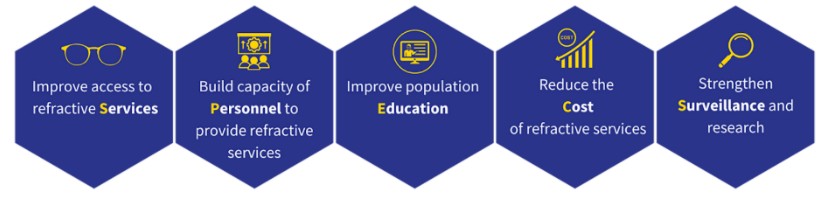
Focus Areas (SPECS)
- Services - Enhancing access to refractive (vision correction) services.
- Personnel - Strengthening the capacity and availability of trained eyecare professionals.
- Education - Increasing public awareness and education on eye health.
- Cost - Reducing the cost of eyeglasses and related eyecare services.
- Surveillance - Improving data collection, monitoring, and research on eye health.
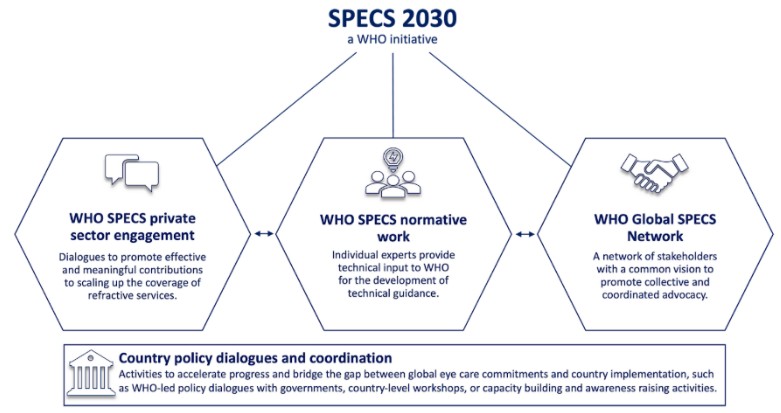
Strategic Approaches
- Normative Work: Builds upon WHO's existing technical guidance eye care. Includes development of additional resources to support national eyecare systems.
- Global SPECS Network: A collaborative platform for organizations to coordinate advocacy, share best practices, and strengthen professional networks.
- Private Sector Dialogues: Engages stakeholders from the optical, pharmaceutical, technology, insurance, and private service sectors to support the initiative.
- Country and Regional Engagement: Supports tailored activities and partnerships national and regional levels to bridge the gap between global commitments and local implementation.
7. Exercise Bold Kurukshetra 2025: India-Singapore Joint Military Drill in Jodhpur
Context
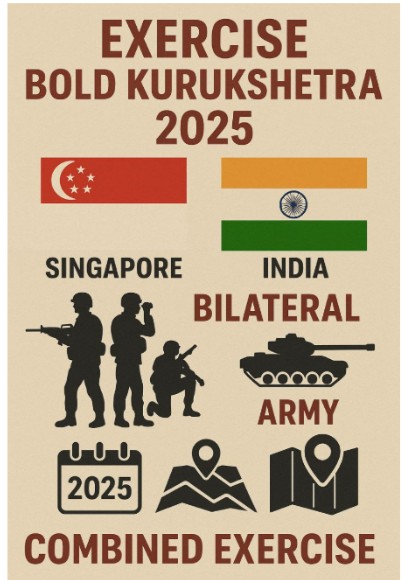
- Recently, the 14th edition of the bilateral joint military exercise. Exercise Bold Kurukshetra 2025 between the Indian Army and the Singapore Armed Forces commenced in Jodhpur, marking a significant milestone in the deepening defence cooperation between the two countries.
About Exercise Bold Kurukshetra 2025
- First held in 2005, this exercise highlights the deep rooted and enduring defence partnership between the two nations, while also strengthening cooperation between their armies.
Participating Unit
- India: Mechanised Infantry Regiment
- Singapore: 42 Singapore Armoured Regiment (4 Singapore Armoured Brigade).
Objectives
- Enhance Interoperability: Enable seamless joint operations during multinational or UN-mandated deployments.
- Advance Urban and Mechanised Warfare Training: Focus on urban combat tactics and high-intensity battlefield readiness.
- Exercise Format: Structured as a Table Top Exercise and Computer-Based Wargame, simulating real-time battlefield scenarios.
- Joint Tactical Drills: Includes synchronised manoeuvres, urban warfare, and counterterror operations.
- Technology Integration: Use of advanced communications and modern weaponry for simulation-based training. Knowledge Exchange: Sharing of military doctrines, best practices, and operational experiences.
8. Toxic Metals in Delhi Roadside Dust Pose Serious Health Risks: JNU-UNSW Study
Context
- Recently, a study by Jawaharlal Nehru University (JNU) and the University of New South Wales (UNSW), Sydney found highly toxic and carcinogenic elements in roadside soil and dust across Delhi, posing serious health risks.
- The research, published in Hygiene and Environmental Health Advances and Journal of Hazardous Materials Advances, analyzed samples from 33 locations, processed in Australia.
Key Findings
- High levels of Antimony (Sb): A carcinogenic element found in significant quantities in roadside soil and dust.
- Presence of 44 elements identified, including 16 Rare Earth Elements (REEs). 15 toxic elements identified from the top 275 hazardous substances list. Cerium (Ce) was the most abundant REE in roadside dust.
- Children especially vulnerable due to:
- Higher daily exposure to REES.
- Risks of IQ decline, memory loss, and neurodevelopmental issues.
- Ingestion of soil/dust particles (common among children).
- Children in Delhi ingest over 1 mg of toxic and non-toxic metals daily from roadside dust and soil.
Exposure Routes
- Ingestion, inhalation, and skin absorption (dermal).
- Other health issues linked: Diabetes mellitus and gestational diabetes
- Long-term accumulation of metals causing chronic diseases.
9. India Launches National Programme to Tackle GLOF Risks in the Himalayas
Context
- Recently, India has launched a national programme to monitor and mitigate Glacial Lake Outburst Flood (GLOF) risks by focusing on 195 high-risk lakes in the Himalayan region amid rising climate-induced disasters.

Key Highlights
- NDMA has shifted from post-disaster response to proactive risk reduction through its Committee on Disaster Risk Reduction (CoDRR).
- Programme likely to scale up after the 16th Finance Commission (FY2027-FY2031) recommendations.
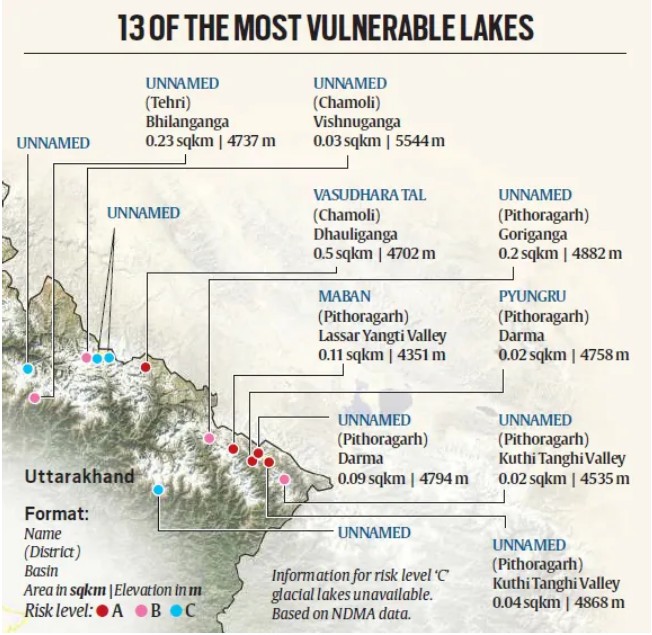
Objectives of the Programme
- Hazard assessment of each at-risk glacial lake. ✓
- Installation of Automated Weather and Water Stations (AWWS) for real-time monitoring.
- Deployment of Early Warning Systems (EWS) downstream.
- Mitigation infrastructure, including water drawdown systems & retention structures.
- Community engagement for awareness and involvement in risk mitigation.
About GLOF
- Disaster events caused by the sudden release of water from glacial lakes.
- This abrupt discharge often leads to catastrophic flooding in downstream areas.
Glacial Lakes
- Formed when melting glaciers leave behind depressions filled with meltwater.
- These lakes may occur: In front of glaciers (proglacial), On top of glaciers (supraglacial), Or beneath glaciers (subglacial).
- They are typically dammed by unstable ice, loose sediment, or moraine (rock debris).
How Do Glacial Lakes Become Hazardous
- As glaciers recede due to climate change, these lakes expand in size.
- Larger lakes under unstable conditions pose higher risks of bursting.
- If the natural dam fails, a massive volume of water can rush downhill, causing destructive floods.
10. Deep-Brain Stimulation (DBS): A Breakthrough Treatment for Neurological Disorders
Context
- Recently, over 1.6 lakh patients across the globe have undergone Deep-Brain Stimulation (DBS), reflecting its increasing relevance as an effective treatment for a range of neurological disorders.
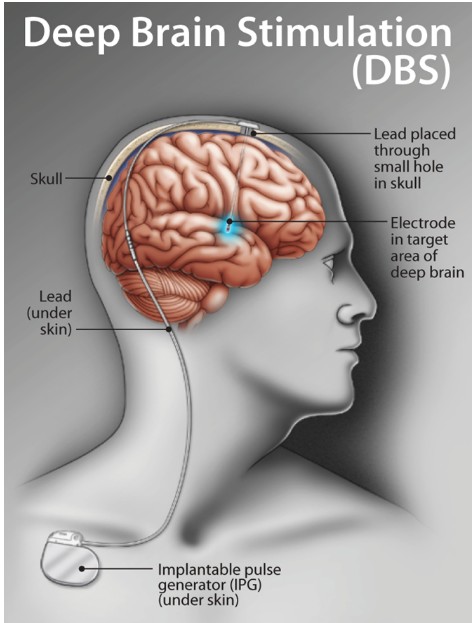
About DBS
- A medical procedure where electrodes are implanted deep within specific areas of the brain. Used to treat certain neurological and psychiatric disorders.
Working
- Electrodes are connected via wires to a pulse generator (similar to a heart pacemaker) implanted under the skin in the upper chest.
- The device sends mild, controlled electrical impulses to targeted brain regions.
- These impulses help regulate abnormal brain activity or correct chemical imbalances.
Applications of DBS
- Commonly used to manage symptoms in Parkinson's disease, essential tremor, and dystonia when medications are no longer effective.
- Approved for obsessive-compulsive disorder (OCD).
- Being researched for treatment-resistant depression and epilepsy.
- Helps interrupt faulty electrical signals between neurons, reducing symptoms like tremors and muscle rigidity.

2026-27 UPSC Mains English QEP Power Pages
View DetailsSubmit Your Details to Learn More



