
theIAShub
28 Jul, 2025
Table of Contents

Get an Instant Call Back from Our Expert Mentors!
Context
- India’s Look Far East Policy policy includes Russia Far Eastern Region including South Asia, North-East Asia and India new emphasis on Russia far East is Re-shaping in Act East Policy.
The Developments
- In September 2019, at the Eastern Economic Forum (EEF) at Vladivostok, Indian Prime Minister Narendra Modi was a special guest at an international meet intended to foster economic development in the Russian Far East (RFE).
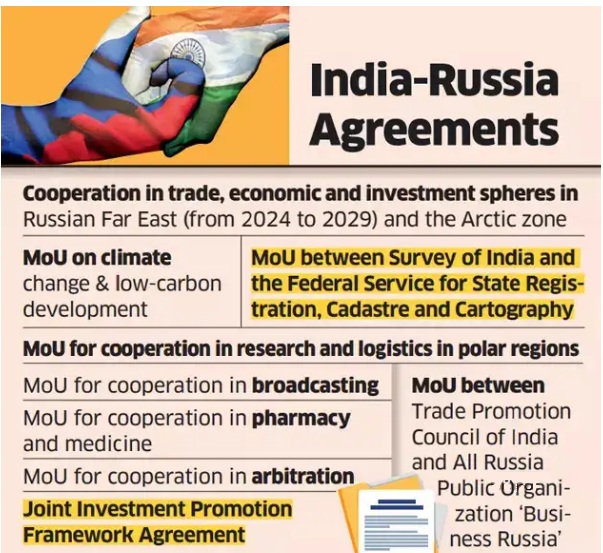
- A program for Indian involvement in the RFE was set out in a set of Memorandums of Agreement (MOUs) where Moscow and Delhi committed to large-scale economic collaboration.
- This was contrary to the trend where the relationship was limited to one-time purchases of military hardware and nuclear plants, or establishing their respective roles in global configurations like the BRICS grouping (Brazil, Russia, India, China and South Africa) or the Shanghai Cooperation Organization (SCO).
Significance for India of Russia Far East Region
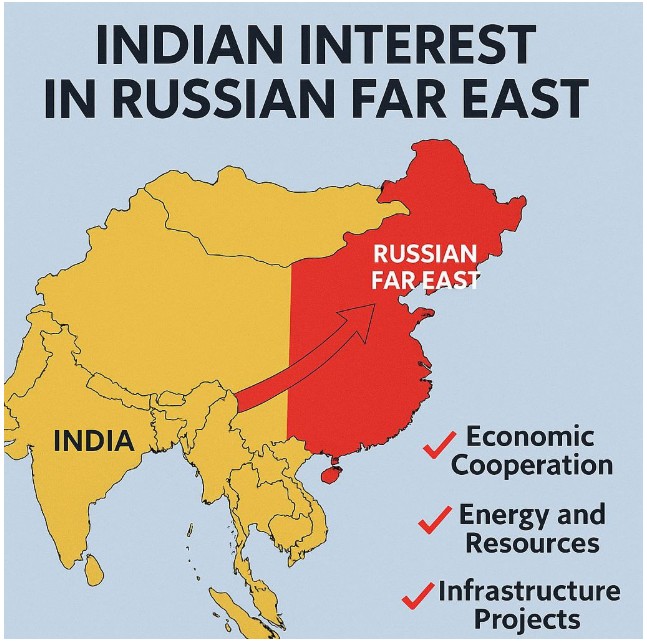
- Economic Opportunities: Investing in and developing the region's vast natural resources, infrastructure, and potential markets.
- Strategic Diversification: Expanding India's presence in the IndoPacific and balancing relationships in the region.
- Strengthening Russia Ties: Providing Russia an economic partner in Asia amid Western sanctions, reinforcing a timetested relationship.
- Energy Security: Securing long-term supplies of oil, gas (especially LNG), coal, and critical minerals from the Far East.
Significance for Russia
- Developing the Far East: Attracting foreign investment (like India's $1 Billion Line of Credit) and expertise to develop this crucial region.
- "Pivot to Asia": Deepening economic integration with Asian partners as part of its strategic reorientation.
- Counterbalancing China: While cooperating with China in the Far East, Russia seeks to diversify partnerships to avoid overreliance, making India a welcome partner.
Issues and Challenges
- Geographical Distance & Connectivity: Lack of direct, efficient transport links hinders trade and project viability (making CVMC/INSTC crucial but slow).
- Implementation Gap: Difficulty translating MoUs and agreements into concrete, large-scale projects on the ground.
- Regional Competition: Navigating Russia's deep economic interdependence with China in the Far East while carving out space for India.
Economic Significance of the region for India
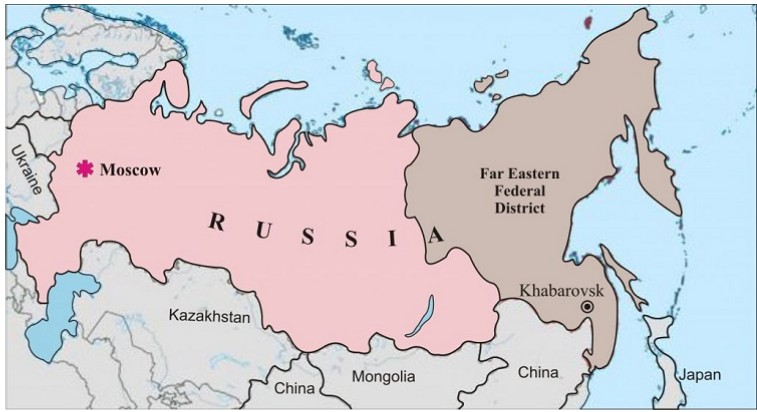
- Natural resources: The region occupying 40 per cent of Russia’s total territory is rich in natural resources, particularly diamonds, gold, oil, natural gas, coal, timber, silver, platinum, tin, lead, and zinc. It also has rich fishing grounds.
- Agriculture: Indian interest has been focussed mainly on its need to tap into the region’s natural resources, including arable land. A recent Indian study identifies oil and natural gas, iron ore, copper, diamonds and gold, fresh water, timber and fish stocks as the resources of the region that would find an Indian market.
- Blue Economy: It is in this context that the Chennai-Vladivostok sea route development has been proposed. This link would facilitate cargo transfers between the two eastern ports of the two countries in 24 days compared to 40 days that it now takes for ships that sail via Europe.
- Energy Security: The area's rich hydrocarbon reserves in the region throw up immense opportunities for Indian companies. ONGC Videsh has already invested in the Sakhalin-1 project and its terminal is acknowledged as the best in Russia. India is set to get gas from Gazprom that will probably be liquefied at a plant near Vladivostok.
Reasons to Focus on Far East
- While the region is labor-scarce, it is resource rich.
- The Russian Far East needs capital, technology and markets.
- Meanwhile, India is a country with a labor-surplus and a resource-deficit, in need of energy, mineral resources and farming land.
- Russia is in a position to meet Indian requirements and vice-versa.
Way Forward
- Prioritize Connectivity Corridors: Accelerate CVMC & INSTC: Fast-track feasibility studies, secure funding, and begin phased implementation of the Chennai-Vladivostok Maritime Corridor and the International North-South Transport Corridor. Focus on key bottleneck segments first.
- Interim Solutions: Explore efficient multi-modal routes combining sea (via Indian/third-country ports) and rail/road through Central Asia/Iran until dedicated corridors are fully operational.
- Robust Rupee-Rouble System: Develop a sustainable, scalable mechanism for bilateral trade settlement, addressing currency convertibility, trade imbalance, and regulatory hurdles. Explore third-country currency swaps if necessary.
- Agribusiness & Timber: Explore value-added processing of Far Eastern agricultural and timber products for export to India/third markets.
- Human Capital: Expand skill development and training programs for the Far East workforce through Indian institutions.

2026-27 UPSC Mains English QEP Power Pages
View DetailsSubmit Your Details to Learn More



