
theIAShub
26 Jul, 2025
Article List
- Blue Economy: Ministry Of Earth Science hosts Brainstorming Workshop
- National Cooperative Policy 2025
- Rajendra Chola I: Celebrating 1000 years of Legendary Maritime Expedition
- Mycorrhizal Fungi
- Palna Scheme
- Atal Pension Yojana (APY)
- ULPGM-V3: A Guided Missile
- Long-Billed Bush Warbler
- Chikungunya
- Free Trade Agreement (FTA): New Zealand and India
1. Blue Economy: Ministry Of Earth Science hosts Brainstorming Workshop
Context
- The Ministry of Earth Sciences (MoES), Government of India, in collaboration hosted a national-level Brainstorming Workshop on Blue Economy Investments with its Strategic Knowledge Partner in India.
About the Workshop Developments
- The workshop aimed to promote a better understanding of three thematic domains, i.e., Trade and Investments, Startups and Innovation, and Ease of Doing Business.
- Panellists and attendees deliberated on the challenges faced by various stakeholders and collaborated to co-create multifaceted solutions, identifying and mapping investible, bankable business opportunities with the potential to unlock long-term value from the blue economy.
- The outcomes of the deliberations at the event are expected to influence the National Blue Economy Investment Strategy and inform future roadmaps for Blue Economy implementation.
About the Blue Economy: What is it?
- Gunter Pauli introduced the concept in his 2010 book, “The Blue Economy: 10 Years, 100 Innovations, 100 Million Jobs.”
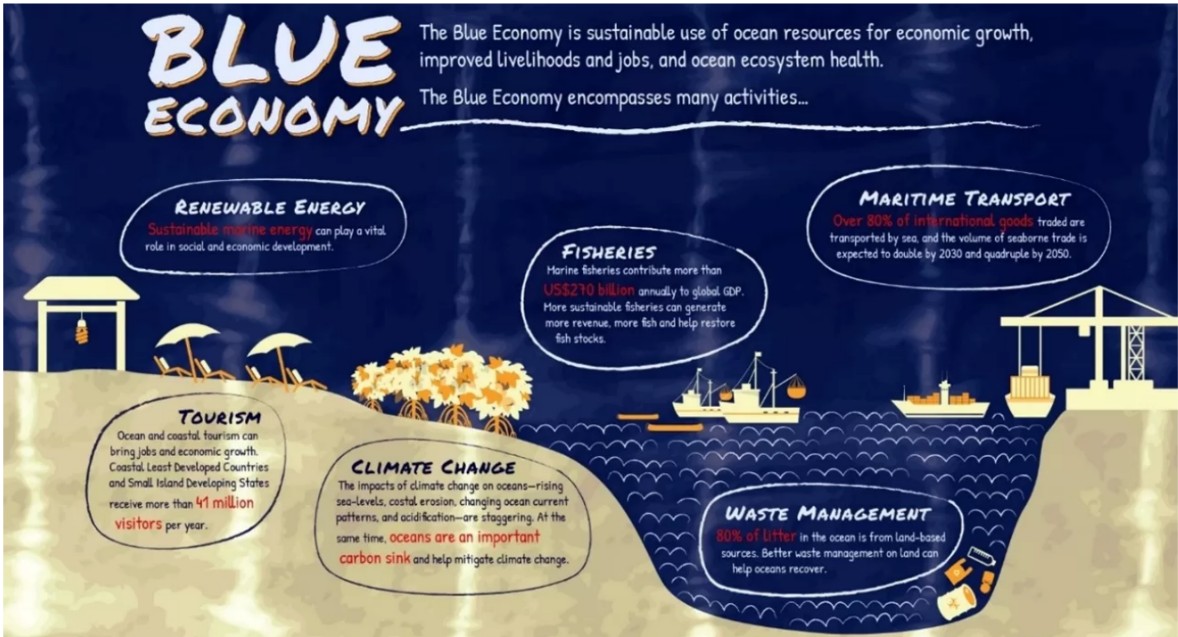
- It is the sustainable use of ocean resources for economic growth, improved livelihoods and jobs, and ocean ecosystem health.
- It highlights the importance of integrating social inclusion and innovative business models to ensure that ocean resources’ benefits are equally distributed and marine ecosystems are protected.
- This approach is encapsulated in Sustainable Development Goal (SDG Goal) 14, which calls for conserving and using oceans, seas, and marine resources for sustainable development.
Objectives of Blue Economy
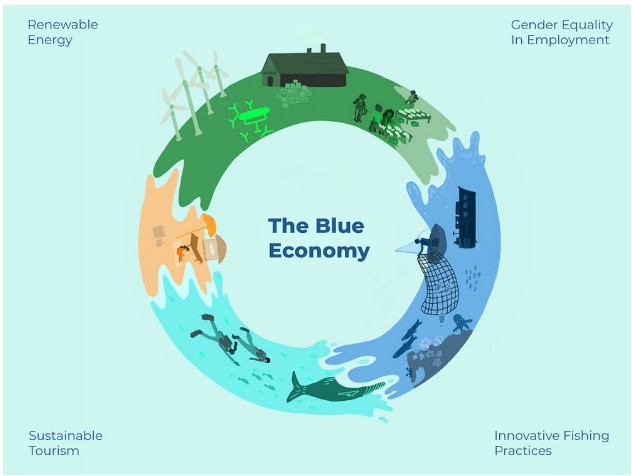
- Renewable Energy – Sustainable marine energy can be vital in social and economic development.
- Fisheries – Sustainable fisheries can generate more revenue and more fish and help restore fish stocks.
- Maritime Transport – Over 80% of international goods traded are transported by sea.
- Tourism – Ocean and coastal tourism can bring jobs and economic growth.
- Climate Change – Oceans are an essential carbon sink (blue carbon) and help mitigate climate change.
- Waste Management – Better waste management on land can help oceans recover.
Blue Economy in India
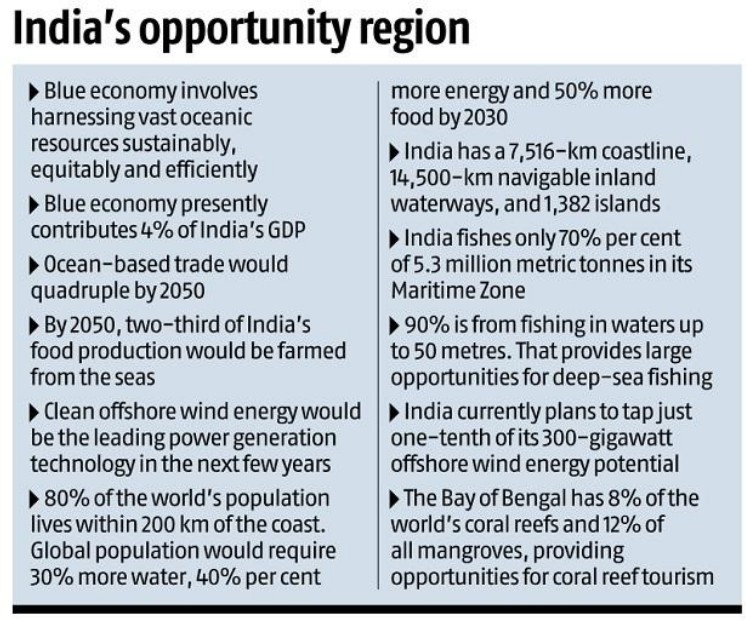
- The blue economy would reinforce the Indian government’s efforts to achieve the SDGs of hunger and poverty eradication and sustainable use of marine resources by 2030.
- India has a 7,517 km long coastline covering nine states and two union territories and an Exclusive Economic Zone (EEZ) of 2.02 mn. sq. km.
- The marine services sector could serve as the backbone of India’s blue economy and help the country become a 10 trillion dollar economy by 2022.
- The Indian Ocean is a significant conduit of trade, with as much as 80% of global oil trade occurring in it.
- Better regional connectivity will significantly cut transport costs and maritime resource wastage, making trade sustainable and cost-effective.
- This economy focuses on livelihood generation, achieving energy security, building ecological resilience, and improving coastal communities’ health and living standards.
Importance of Blue Economy
- Economic Growth – It drives significant economic benefits through fisheries, maritime transport, tourism, and renewable energy sectors.
- The sustainable use of ocean resources can boost economies, create jobs, and generate revenue.
- Environmental Sustainability – The Blue Economy helps preserve marine ecosystems, protect biodiversity, and mitigate the impacts of climate change by promoting the sustainable management of ocean resources.
- It focuses on reducing pollution and overexploitation.
- Food Security – Sustainable fisheries and aquaculture are vital for global food security.
- The Blue Economy ensures that fish stocks are managed effectively, contributing to a stable food supply and supporting coastal communities.
- Climate Change Mitigation – Oceans act as a major carbon sink, absorbing a significant amount of CO2.
- The Blue Economy supports initiatives that enhance the ocean's ability to sequester carbon and adapt to climate change impacts.
- Innovative Solutions – It encourages the development of innovative technologies and practices, such as renewable marine energy and advanced waste management systems, which contribute to a circular economy and reduce environmental footprints.
Challenges to Blue Economy
- Threat of Sea- Borne Terror- Piracy and armed robbery, maritime terrorism, illicit trade in crude oil, arms, drug and human trafficking, and smuggling of contraband, etc.
- Natural Disasters – Every year, tsunamis, cyclones, hurricanes, typhoons, etc., leave thousands of people stranded and property worth millions destroyed.
- Man-Made Problems – Oil spills and climate change continue to risk the stability of the maritime domain.
- Impact of Climate Change – Changes in sea temperature and acidity threaten marine life, habitats, and the communities that depend on them.
- Marine Pollution – Excess nutrients from untreated sewage, agricultural runoff, and marine debris such as plastics.
- Overexploitation of Marine Resources – Illegal, unreported, and unregulated extraction of marine resources.
Developments Initiated by India
- The Sagarmala project is a strategic initiative for port-led development, which involves extensive use of IT-enabled services to modernise ports.
- India has an umbrella scheme by the name of O-SMART (‘Ocean Services, Modelling, Application, Resources and Technology), which is aimed at promoting ocean research and setting up early warning weather systems with the objectives of providing forecasts and services based on the continuous observation of oceans, development of technologies and exploratory surveys for sustainable harnessing of oceanic resources (both living and non-living) and promotion of front-ranking research in ocean sciences.
- Integrated Coastal Zone Management focuses on conserving coastal and marine resources and improving livelihood opportunities for coastal communities.
- The development of Coastal Economic Zones (CEZ) under Sagarmala would become a microcosm of the blue economy, wherein industries and townships that depend on the sea would contribute to global trade.
2. National Cooperative Policy 2025
Context
- The Union Ministry of Cooperation unveiled the National Cooperation Policy – 2025, marking a transformative moment in the history of India’s cooperative movement.
About National Cooperative Policy 2025
- Aim: To establish cooperation as an instrument for the country’s development for future generations.
- Mission: Promotion of professional, transparent, technology-enabled, accountable, economically self-reliant, and successful cooperative units.
- India’s first National Cooperation Policy was introduced in 2002.
- The second cooperation policy in 2025, represents a renewed commitment to making cooperatives competitive, inclusive, and future-ready.
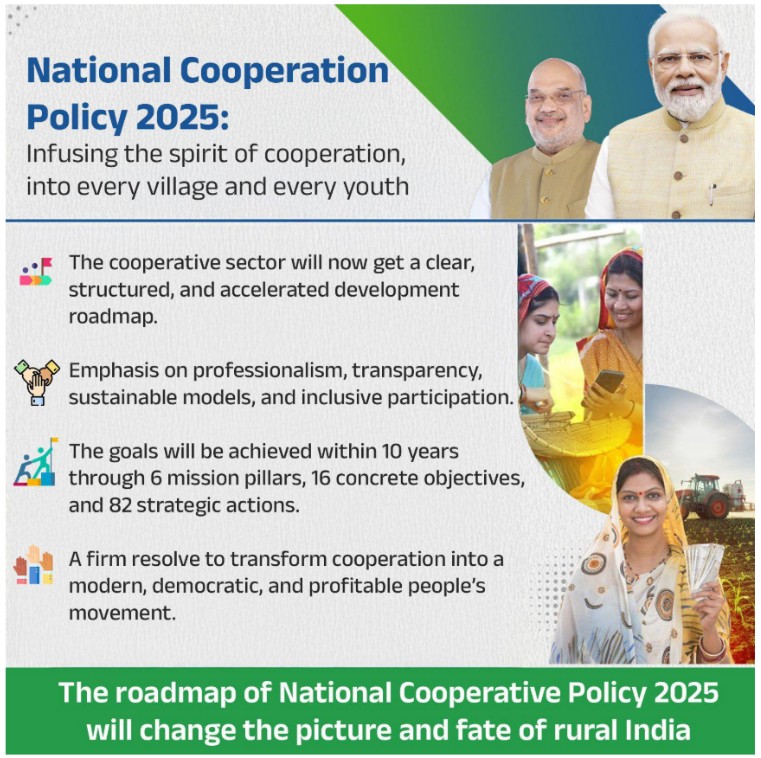
Objectives
- Establishment of at least one cooperative unit in every village and five Model Cooperative Villages in every tehsil.
- Tripling the cooperative sector’s GDP contribution by 2034.
- Increasing the number of cooperative societies by 30% from the current 8.3 lakh.
- Expansion into new sectors like tourism, insurance, taxi services, green energy.
- Legal reforms every 10 years to keep the policy relevant.
- A cluster and monitoring system.
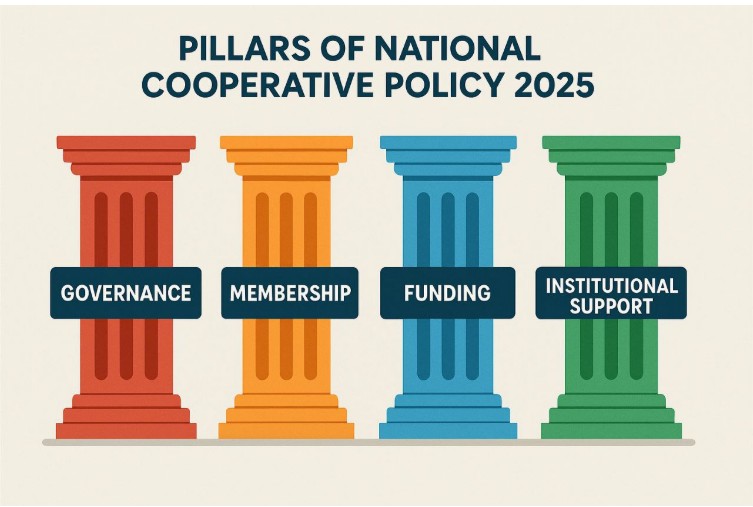
Pillars of the National Cooperation Policy, 2025
- Strengthening the Foundation
- Promoting Vibrancy
- Preparing Cooperatives for the Future
- Enhancing Inclusivity and Expanding Reach
- Expanding into New Sectors
- Preparing the Younger Generation
Cooperatives as India’s Backbone
- Cooperatives empower small farmers, artisans, fishermen, women, and labourers by giving them collective bargaining power.
- Example: Amul has uplifted millions of dairy farmers, many of whom are landless or marginal farmers.
- Strengthening Rural Economy: Over 65% of India’s population lives in rural areas. Cooperatives provide credit, inputs, marketing, and infrastructure support.
- PACS (Primary Agricultural Credit Societies) are the first point of credit delivery in rural India.
- Promoting Self-Reliance: Cooperatives reduce dependence on middlemen and large corporations by pooling local resources for production, processing, and marketing.
Economic Impact and Inclusive Vision
- The cooperative sector currently contributes significantly to India’s rural economy:
- 20% of the total agricultural credit
- 35% of fertiliser distribution
- Over 30% of sugar and 10% of milk production
- Over 21% of the fishing sector
- 13% of wheat and 20% of paddy procurement.
Conclusion
- The National Cooperation Policy, 2025 is a visionary step to mainstream cooperatives as engines of inclusive and sustainable development.
- As India approaches its centenary of independence in 2047, a reformed cooperative sector could be key to achieving the vision of Aatmanirbhar Bharat.
3. Rajendra Chola I: Celebrating 1000 years of Legendary Maritime Expedition
Context
- India is commemorating 1,000 years of Rajendra Chola I’s Southeast Asian expedition through cultural events and heritage projects.
- The festival also honours Tamil Shaiva Bhakti traditions, especially the 63 Nayanmars, saint-poets supported by the Chola dynasty.
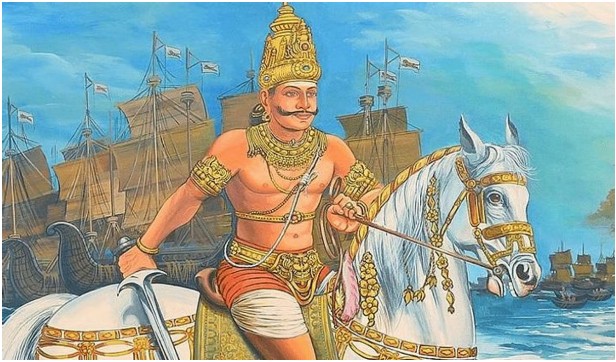
About Rajendra Chola I
- He was son of Rajaraja I the most powerful Chola ruler who became a King in 985.
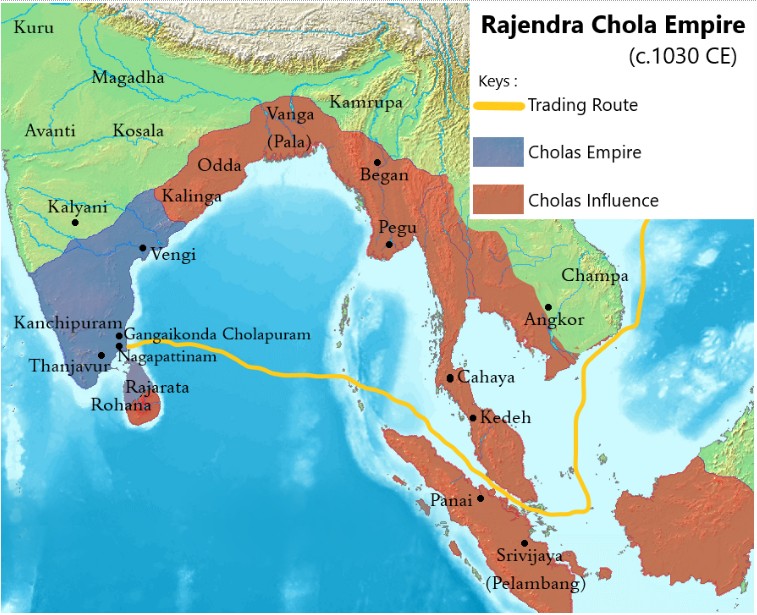
- He expanded the Chola Empire from South India to the Ganga in the north and deep into Southeast Asia through a historic naval Expedition in 1025 CE.
Historical Background
- Inherited a strong military state and expanded it into a maritime empire.
- Established the capital Gangaikonda Cholapuram to mark his conquest of northern India.
Military and Maritime Achievements
- Led a naval expedition in 1025 CE to defeat the Srivijaya empire, asserting trade control over the Malacca Strait.
- Extended Chola influence across India, Sri Lanka, Maldives, and Southeast Asia including Thailand, Indonesia, Cambodia, Malaysia
Art and Architecture
- Rajendra established Gangaikonda Cholapuram as his capital from the mediaeval Chola capital Thanjavur, which became the capital for the next 250 years.
- He also built Gangaikonda Cholapuram Temple.
- Constructed the Cholagangam Tank, a man-made lake with advanced sluice and sediment control—irrigating over 1,500 acres.
Chola Sculptures
- Characteristics: Chola bronze sculptures were often smaller and portable compared to larger temple sculptures, designed for processions and worship outside the temple.
- Ritual Empowerment: These smaller sculptures, called utsavamurti, were empowered through rituals to represent the deities during ceremonies.
- Lost-Wax Casting Technique: still used today, was employed to create Chola bronzes, involving wax modelling covered in clay, melted to leave a hollow space, then filled with molten bronze.
Administrative Legacy
- Strengthened village assemblies (sabhas) and temple-based revenue systems.
- Codified land grants, irrigation records, and social welfare measures through detailed inscriptions.
- Aesthetic Excellence: Chola sculptures exemplified a harmony of energy, grace, and dignity.
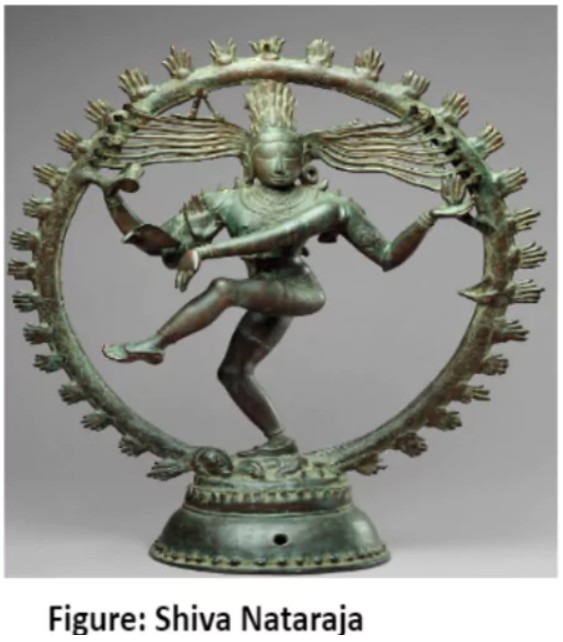
- Example: Shiva Nataraja, a famous Chola bronze.
- Significance of Shiva Nataraja in Chola Art: is highly regarded for its divine, elegant, and abstract form, depicting Shiva in a dynamic dancing pose surrounded by symbolic elements like fire, a drum, and a rearing cobra.
Literature of the Period
- Patronage of Sanskrit: Chola kings were great patrons of learning who supported Sanskrit education.
- Literary Works: Kamba Ramayanam and Periyapuranam belong to this period.
- Establishment of Vedic College: Rajendra I established Vedic college at Ennayiram (South Arcot district), a Vaishnava centre, where learnings on Vedas, Grammar and Vedanta were provided.
About Chola Empire
- Beginnings: Started as minor chiefs in Uraiyur under Pallava, the Cholas rose to power in the 9th century under Vijayalaya Chola.
- Local Governance: Irrigation helped ur (settlements of peasants) prosper. Groups of such villages formed nadu, which handled justice, and tax collection.
- Tax System: Common ones include Vetti (forced labour), and Kadamai (land revenue).
- Key inscription: Uttaramerur inscriptions that detail the Chola administrative system and elections.
- Cultural Marvels
- Splendid Temples: The Great Living Chola Temples (Gangaikonda Cholapuram, Airavatesvara, and Brihadeeswara) are UNESCO World Heritage Sites.
- Bronzes: Known for exquisite bronze sculptures, especially the iconic Nataraja.
4. Mycorrhizal Fungi
Context
- Recently, a groundbreaking digital atlas released by the Society for the Protection of Underground Networks (SPUN) revealed that over 90% of the world's regions rich in mycorrhizal fungi are located outside designated conservation areas.
About Mycorrhizal Fungi
- Play a crucial role in nutrient cycling, carbon sequestration, and ecosystem regeneration, making them essential allies in maintaining ecological balance.
- Widespread Symbiosis: These fungi form symbiotic associations with over 80% of plant species, helping them absorb key nutrients especially phosphorus, and improving water uptake.
- Massive Soil Presence: Up to 30% of the living microbial biomass in soils, highlighting their vast underground influence.
- Climate Role: They sequester approximately 13 billion tonnes of CO2 annually, which is nearly one-third of global fossil fuel emissions, contributing significantly to climate mitigation.
- Consequences of Disruption: Leads to slower forest regeneration, reduced crop yields, and a breakdown in aboveground biodiversity, as emphasized by Toby Kiers, Executive Director of SPUN.
- Policy Urgency: Their critical ecological functions have prompted
About Atlas
- Charts the global distribution of two key types of mycorrhizal fungi: •
- Arbuscular Mycorrhizal (AM) - Predominantly found in tropical forests and savannas, including the Brazilian Cerrado, Southeast Asia, and West Africa. O
- Ectomycorrhizal (EcM) - Common in temperate and boreal regions such as Siberia, Canada's boreal forests, and mountain ranges in North America and Europe.
- Developed using over 25,000 geo-located soil samples and 2.8 billion fungal DNA sequences, making it the most comprehensive global map of underground fungal biodiversity ever created.
5. Palna Scheme
Context
- Recently, under the Palna Scheme, the Central Government approved the establishment of +14k Anganwadi cum Crèche (AWCC) centres across the country to enhance early childhood care and provide support to working mothers.
About PALNA Scheme
- Centrally Sponsored Scheme launched by the Ministry of Women and Child Development under the Samarthya vertical of Mission Shakti, applicable across States and Union Territories.
Objective
- To provide quality crèche facilities in a safe and secure environment for children aged 6 months to 6 years, focusing on: Nutritional support, Growth monitoring Immunization, Health and cognitive development.
Universal Access
- Crèche services are available to all mothers, regardless of their employment status.
Types of Crèches
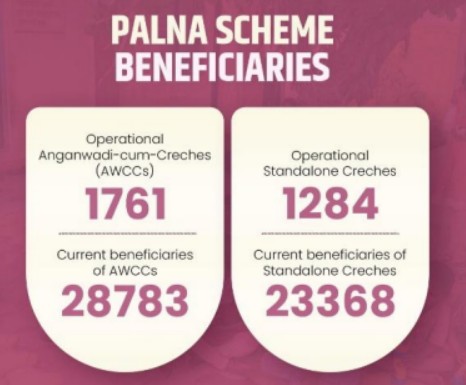
- Standalone Crèches and Anganwadi-cum-Crèches (AWCCs)
Flexible Timings
- Crèches must operate for 26 days a month, with 7.5 working hours per day, tailored to the local needs of mothers.
Funding Pattern
- General States: 60: 40 (Centre: State)
- NE & Special Category States: 90: 10
- UTs with Legislature: 60: 40
- UTs without Legislature: 100% Central assistance
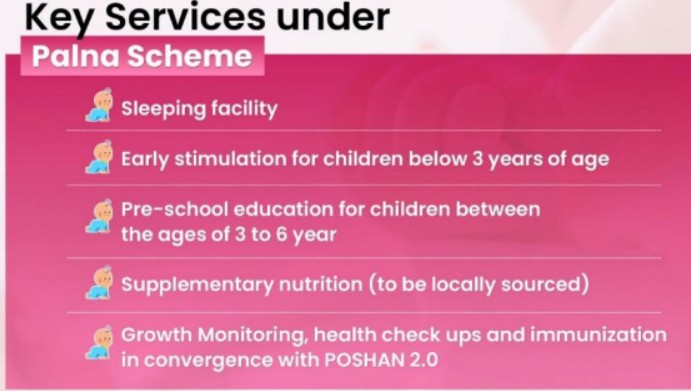
Key Services Offered
- Daycare facilities, including sleeping arrangements Early stimulation for children under 3 years
- Pre-school education for children aged 3-6 years Supplementary nutrition (to be locally sourced) Regular health check-ups, growth monitoring, and immunization
6. Atal Pension Yojana (APY)
Context
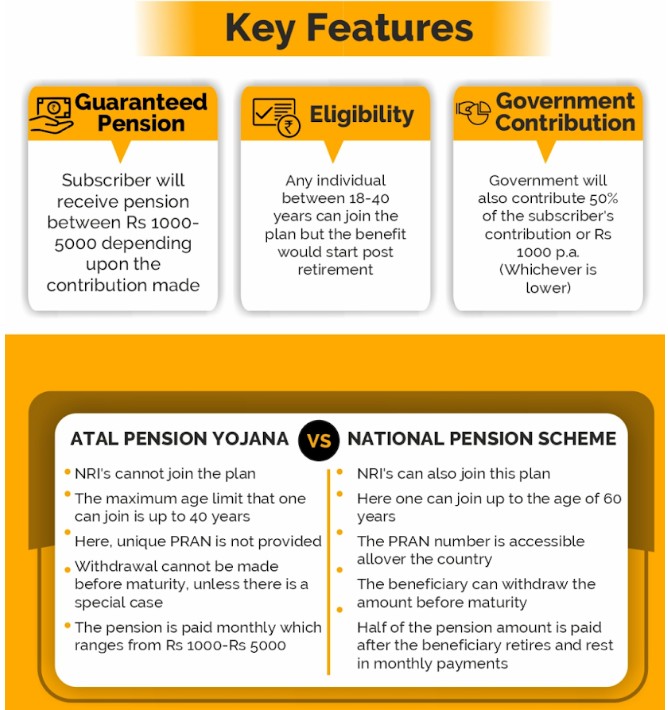
- Recently, the Atal Pension Yojana (APY) crossed a significant milestone by surpassing 8 crore total gross enrolments, with 39 lakh new subscribers added in the current financial year alone.
- This achievement coincides with the scheme marking its 10th anniversary.
About Atal Pension Yojana
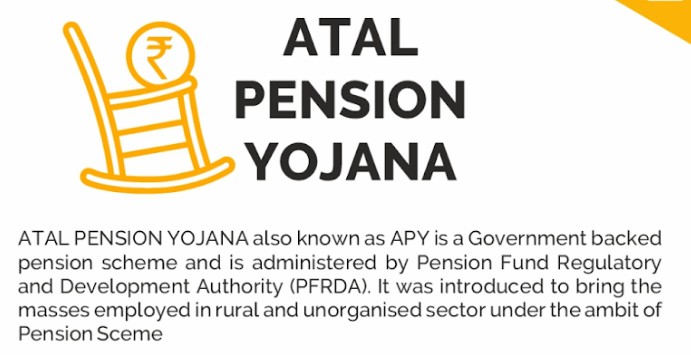
- Launched on 9th May 2015 and administered by Pension Fund Regulatory and Development Authority (PFRDA).
Objectives of Atal Pension Yojana
- To establish a universal social security system for all citizens
- To ensure financial security during old age
- To promote long-term savings among informal sector workers
Eligibility Criteria
- Must be an Indian citizen aged between 18 and 40 years
- Must have a savings bank account or post office account
- Aadhaar and mobile number are optional but recommended for communication
- Government co-contribution (2015-2020) applicable only for: Non-taxpayers
- Individuals not covered under other statutory social security schemes.
Key Features
- Guaranteed Minimum Pension: Ranges from 1,000 to 5,000, depending on age of entry and contribution
- Flexible Contributions: Monthly, quarterly, or half-yearly via auto-debit.
- Spouse Benefit: Pension continues to spouse after subscriber's death.
- Nominee Benefit: Corpus paid to nominee after death of both subscriber and spouse.
7. ULPGM-V3: A Guided Missile
Context
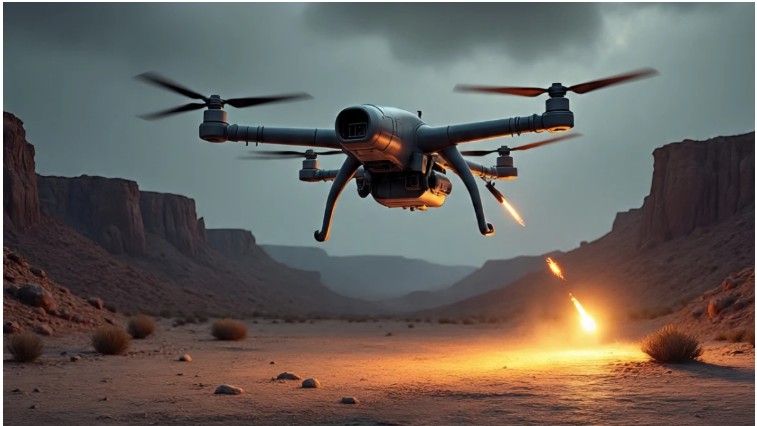
- Recently, the Defence Research & Development Organisation (DRDO) successfully conducted flight trials of the latest version of its Unmanned Aerial Vehicle Launched Precision Guided Missile (ULPGM-V3) at the National Open Area Range (NOAR) in Kurnool, Andhra Pradesh.
About ULPGM-V3
- An advanced air-to-surface precision-guided missile, UAVS, designed to engage both static and moving targets with high accuracy and minimal collateral damage.
- Developed By: DRDO, in collaboration with Bharat Dynamics Limited (BDL), Adani, and multiple MSMEs and start-ups under the Make in India initiative.
- Primary Objective: To enhance India's autonomous strike capability, enabling drones to deliver pinpoint attacks without risking pilots or manned aircraft.
Variants of ULPGM
- ULPGM-V1: Baseline prototype
- ULPGM-V2: Production-ready standard issue
- ULPGM-V3 (ULM-ER): Extended-range and enhanced variant.
Key Features
- Equipped with a fire-and-forget mechanism and high-definition dual-channel imaging infrared (IR) seeker, ensuring precise targeting day and night.
- Operational range up to 4 km in daylight and 2.5 km at night
- Powered by dual-thrust solid propulsion.
- Two-way datalink enables mid-course updates and real-time communication, improving hit accuracy.
- Destroys modern tanks with Rolled Homogeneous Armour (RHA) and Explosive Reactive Armour (ERA) protection.
- Ideal for fortified bunkers and hardened targets Effective in anti-personnel and soft target operations
- Weighs just 12.5 kg, allowing integration with lightweight Indian drones like Rustom and TAPAS-BH UAVs.
8. Long-Billed Bush Warbler
Context
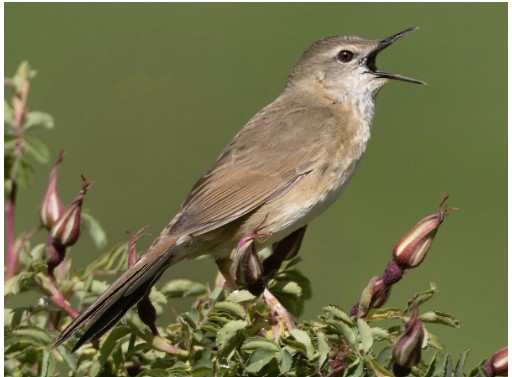
- Recently, the elusive Long-Billed Bush Warbler was spotted in India for the first time in 46 years, with a confirmed sighting by a team of birders in Ladakh's Suru Valley.
About Long-Billed Bush Warbler
- Medium-sized bush warbler (songbird) with a long tail and long bill.
Scientific Name
- Locustella major
Distribution
- Found in Central Asian mountain ranges and recorded in China, India, Pakistan, and Tajikistan
Distinct Features
- Long tail and long bill and size is 15-17 cm in length
- Brownish-olive plumage with fine streaking on the back Whitish or buff underparts
- Both sexes look similar
- Extremely skulking and elusive in behavior, prefers to run rather than fly
- Known for a dull clicking song, often compared to a grasshopper.
Habitat
- Prefers grassy slopes with bushes, weeds, and grass
- Found around upland terraced cultivation, alpine meadows, and forest clearings
- Altitude range: 2400-3600 meters.
Conservation Status
- Listed as Near Threatened on the IUCN Red List.
9. Chikungunya
Context
- Recently, the World Health Organization (WHO) issued a warning about the potential for a major global outbreak of the chikungunya virus, urging immediate action to avert it.
- The WHO noted that it is observing the same early warning signs that preceded a significant outbreak two decades ago and emphasized the need to prevent history from repeating itself.
About Chikungunya
- A viral disease spread by mosquitoes and caused by the Chikungunya virus (CHIKV). •
- It is marked by fever, skin rash and intense joint pain. o
- The word "chikungunya" comes from the Makonde language of Africa, meaning "bent over in pain.
- First recorded during an outbreak in southern Tanzania in 1952.
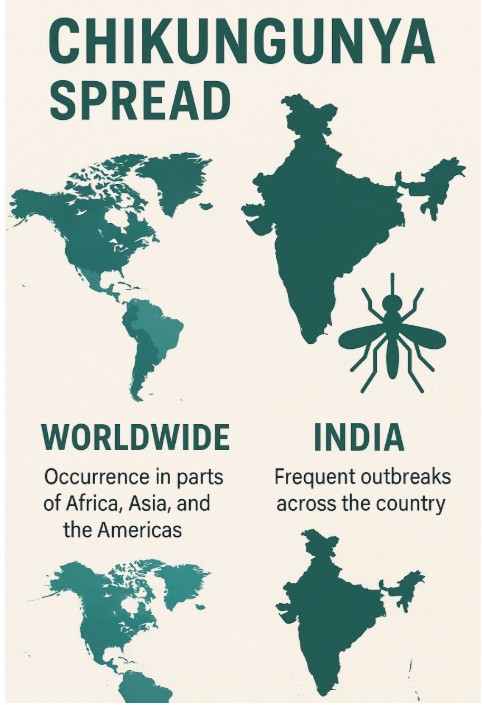
- The virus has now spread to over 110 countries across Asia, Africa, the Americas, and Europe.
- Transmitted through the bite of infected female Aedes aegypti and Aedes albopictus mosquitoes.
- These mosquitoes also spread dengue and Zika viruses.
- No specific antiviral treatment or vaccine is available for chikungunya.
10. Free Trade Agreement (FTA): New Zealand and India
Context
- Recently, the second round of negotiations for the proposed India New Zealand Free Trade Agreement (FTA) concluded successfully, marking a major step toward enhancing bilateral trade and economic cooperation between the two countries.
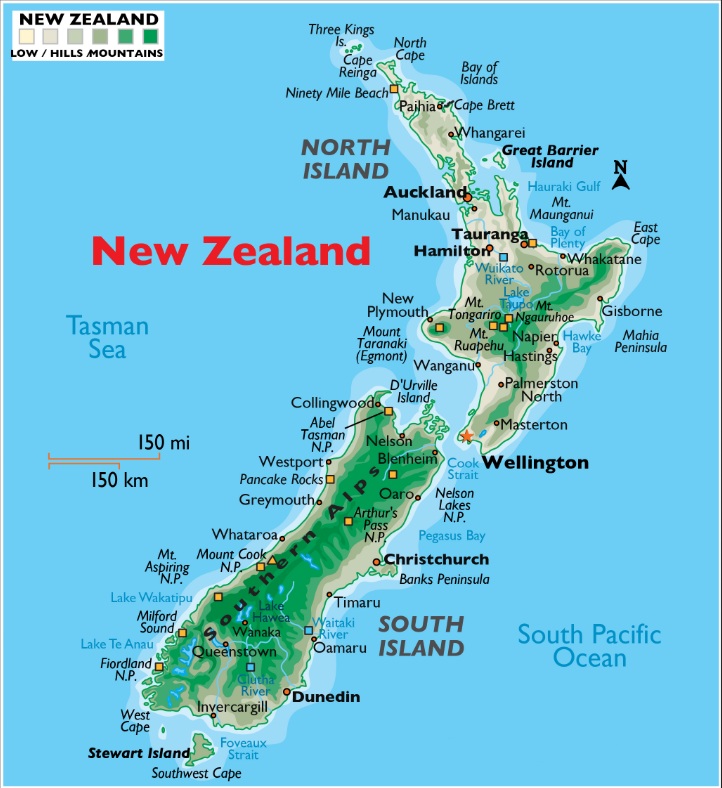
About FTA
- Are comprehensive trade arrangements between two or more countries designed to reduce or eliminate trade barriers such as tariffs, quotas, and import/export restrictions.
- These agreements aim to provide preferential market access by offering tariff concessions and easing non-tariff barriers.
Key Features
- Cover trade in both goods (agricultural and industrial) and services (e.g., banking, IT, construction).
- Advanced FTAs may also include provisions on: Investment, Intellectual Property Rights (IPRs), Government procurement & Competition policy.
Major Trade Agreements Involving India
- India-ASEAN FTA and India-South Korea CEPA ✓ Proposed Agreements: India-UK FTA and India-EU FTA.

2026-27 UPSC Mains English QEP Power Pages
View DetailsSubmit Your Details to Learn More



