Know the Quit India Movement 1942 – its background, causes, nature, slogan, impact, key leaders, women’s role, British response, limitations, and how it became a turning point in India’s freedom struggle.
 theIAShub | 31 Jul, 2025 | 3106 | 0 |
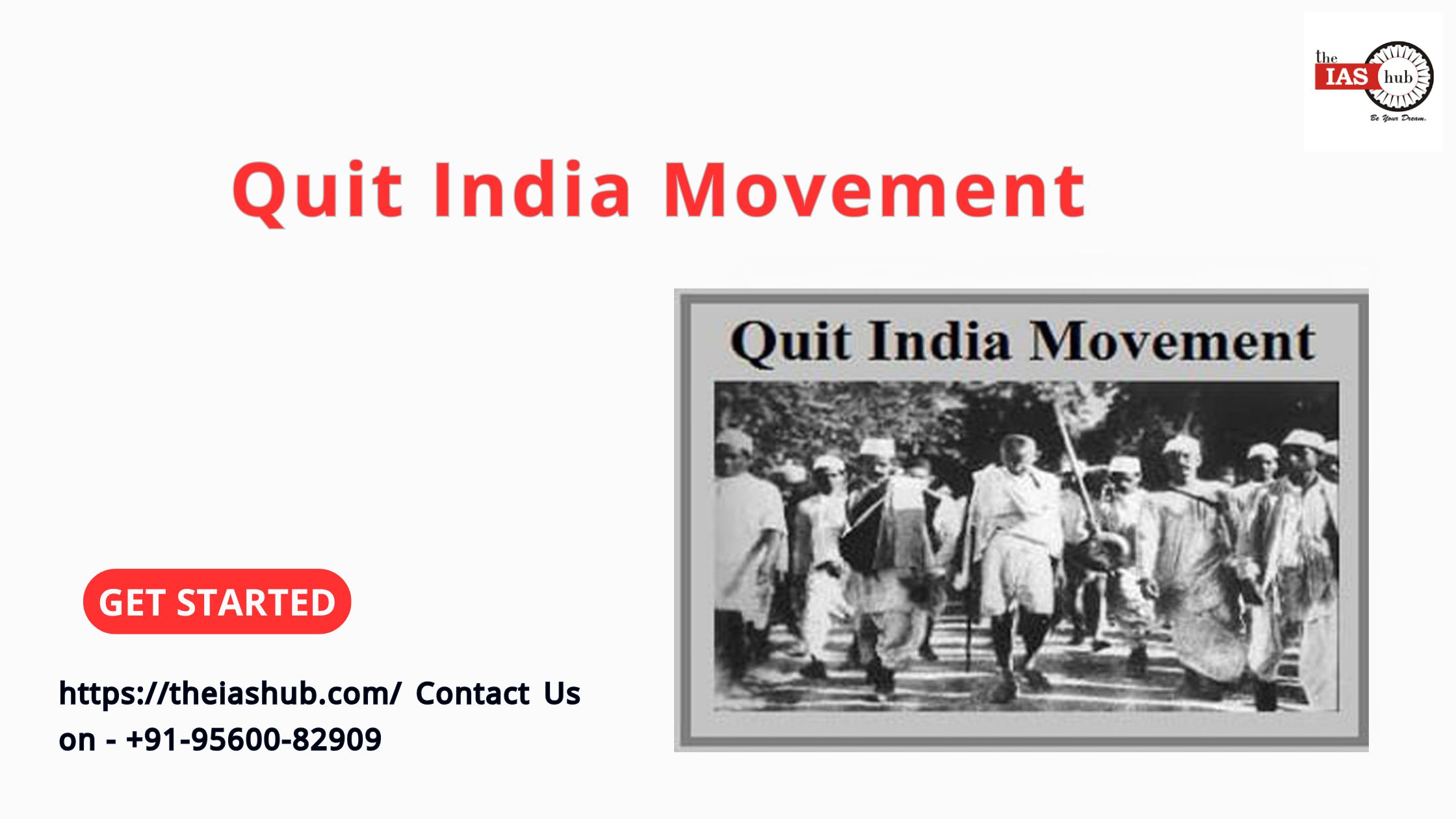

There were many historical movements in India’s freedom struggle that shook the foundations of British rule. Bharat Chhodo Andolan, also known as the Quit India Movement, was a significant movement launched in India during World War II on August 8, 1942. One of the most influential and decisive movements among these movements was the Quit India Movement also famous as Bharat Chhodo Andolan. It is also called the August Movement because it started in August 1942. Quit India Movement or Bharat Chhodo Andolan spread the wave of independence across the country and made it difficult for the British to stay in India.
Also Read: Mahatma Gandhi
In the 1930s when the civil disobedience movement That is, when the Civil Disobedience Movement was going on, the feeling of independence had taken a deeper root in the Indians. Although this movement subsided for some time, during the Second World War (1939), when the British government threw India into the war without any consultation, a wave of discontent spread.

Congress opposed this and demanded that if India were being dragged into the war, then it should also be given independence after the war. But the British government ignored these demands. As a result of this, on 8 August 1942, British was forced to leave the country. The All India Congress Committee passed a resolution in Bombay (now Mumbai), and the Quit India Movement was announced.
Also Read: Women Freedom Fighters Of India
Most famous thing about Quit India Movement was the historical slogan given by Mahatma Gandhi: Do or die” (Karo Ya Maro Ka Nara) to the Indian people during his speech at Gowalia Tank Maidan, which is now known as August Kranti Maidan. It gave a clear message to the people of India—now the time has come that either we should liberate India or sacrifice our lives for it.
Gandhi said in his speech, “I want one thing from you—that is freedom. We cannot have it if you do not join in the spirit of ‘do or die.’”
Note: This slogan spread like fire across the country, and every citizen became ready to join Quit India Movement.
Also Read: India freedom fighters
As soon as Quit India Movement was announced, the British government arrested Gandhiji, Nehru, Sardar Patel, and other prominent leaders. This step was taken to stop the movement, but it had the opposite effect. The people spontaneously took to the streets.
Here are the key characteristics of the Quit India Movement:
Note: There was a lack of organized leadership in Quit India Movement (Bharat Chhodo Andolan) because most of the leaders were in jail. But the common people made Quit India Movement a mass movement.
Also Read: Lokmanya Tilak
Special thing about Quit India Movement was that the active participation of women and youth was seen in it. Aruna Asaf Ali, Usha Mehta, and Sucheta Kriplani were women who led a secret radio. Information was conveyed to the public. The secret radio ‘Congress Radio’ run by him defied British censorship and gave new energy to the Quit India Movement.
British government took harsh measures to crush Quit India Movementt:
Also Read: women in indian national movement

Although Quit India Movement shook the British rule, it had some limitations:
Also Read: jawaharlal nehru
Quit India Movement brought the Indian freedom struggle to a decisive turn. Its major effects are as follows:
Also Read: Sardar Vallabh Patel
Though India did not gain independence immediately in 1942, Quit India Movement proved to be the final nail in the coffin of British rule. The war ended in 1945, and British power weakened. India finally became independent on 15 August 1947.
Also Read: iswar chandra vidyasagar
Bharat Chhodo Andolan was not just a movement; it was a flame that ignited the spark of freedom in the hearts of every Indian. Mahatma Gandhi’s Do or Die” slogan became a symbol of the Indian freedom struggle. Quit India Movement gave a new consciousness to the Indians and told the British Empire that now the people of India want nothing less than independence at any cost.

It is called the August Movement because it was officially launched on 8th August 1942 in Bombay during the All India Congress Committee session.
Quit India Movement slogan was “Do or Die” (Karo Ya Maro), given by Mahatma Gandhi to inspire Indians to fight for complete independence.
Key leaders included Mahatma Gandhi, Jawaharlal Nehru, Sardar Vallabhbhai Patel, Aruna Asaf Ali, and Usha Mehta, among others.
Though suppressed, it marked a turning point in India’s freedom struggle, showing mass unity and weakening British control irreversibly.



Refine your answer writing skills and elevate your UPSC preparation with personalized support and expert feedback.
Fill out the form to get started with the program or any other enquiries !



Are you dreaming of becoming an IAS officer? Then, IAShub can be your best guide. It is one of the Best IAS Coaching in Delhi. Many students who want to clear the UPSC exam join IAShub for learning. The institute gives both online and offline classes. Their teachers are experienced and helpful. They easily explain every topic. Students also get notes, tests, and tips to do well in the exam.
IAShub is in Delhi and is trusted by many UPSC students. It offers coaching for every part of the UPSC exam – Prelims, Mains, and Interview. The classes are simple and easy to understand. The teachers are experts and guide students in the right way. IAShub is also known for its helpful notes, test series, and answer-writing practice. IAShub is the best coaching in Delhi and also gives UPSC Online Classes. This helps students from any place in India to learn. The online classes are live and also recorded. So, students can watch them anytime. These classes cover the full UPSC syllabus.
Here are some important services provided by IAShub:
The UPSC Civil Services Exam has three parts:
This exam is tough, but with the right guidance, it becomes easy to manage. Students must study smart and stay regular.
IAShub supports students from the beginning to the end. It gives the right books, tests, and notes. The classes are easy to follow, and the teachers are always ready to help. Students get personal doubt sessions too. The test series and answer checking help students learn where they need to do better. Also, free study materials save time and money.
IAShub also guides students during the final stage – the interview. Experts take mock interviews and give useful tips. This full support makes IAShub one of the best IAS coaching in Delhi.