Learn about the Flag Code of India 2002, national flag hoisting rules, features, and Har Ghar Tiranga 2025. Know how to download the Har Ghar Tiranga certificate online.
 theIAShub | 05 Aug, 2025 | 4027 | 0 |
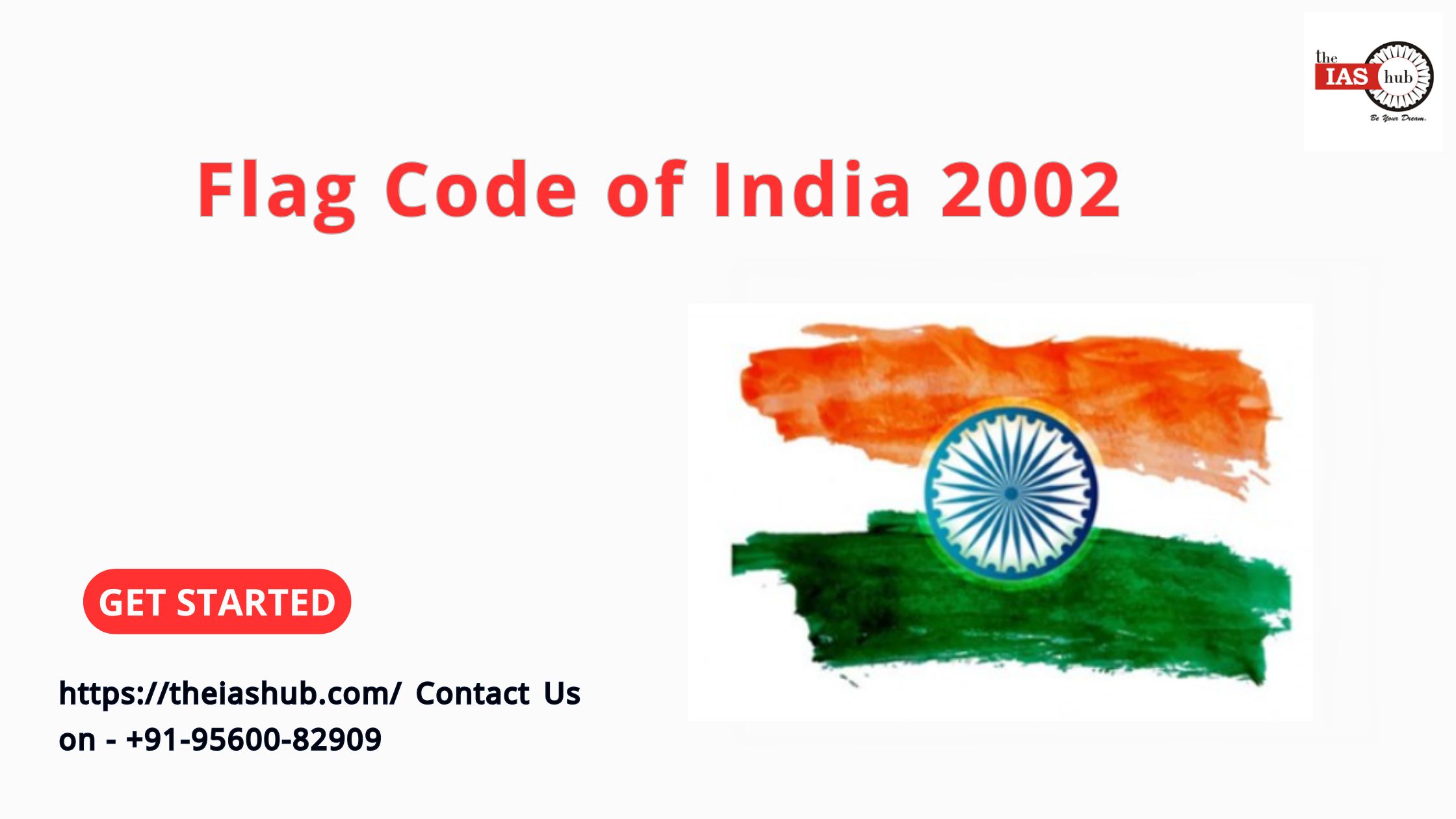

Flag Code of India 2002 is a code implemented by the Government of India on 26 January 2002, which lays down the rules and guidelines related to the use, hoisting, and respect of the national flag. Its purpose is to ensure that the Indian tricolor is used with full respect and dignity, whether by government institutions or by ordinary citizens.
This subject is extremely important for UPSC and other civil service exams as it is linked to important topics like the Indian Constitution, the importance of national symbols, civic duties, and constitutional ethics.
Also Read: UPSC Study Material
Flag Code of India 2002 is a code implemented by the Government of India on 26 January 2002, which determines the rules according to which the national flag will be used. Until now, common citizens were not allowed to hoist the national flag freely, but this code handed over that right to every citizen, provided they follow it with respect.
The Flag Code is divided into three parts:

Also Read: How Much Time is Required to Prepare for UPSC?
Here are the main rules, the national flag hoisting rules:
Also Read: how to study maps for upsc
Har Ghar Tiranga 2025 is an initiative of the Government of India, which is the Amrit Mahotsav of Independence, organized from 13th to 15th August under the National Flag Campaign. This campaign aims to connect every citizen with the national flag so that the feeling of patriotism can be further strengthened.
|
Attribute |
Details |
| Campaign Name | Har Ghar Tiranga |
| Organized by | Ministry of Culture, in collaboration with MyGov |
| Purpose / Objective | To invite every citizen to bring the Tiranga home and hoist it with pride, fostering a personal connection with the national flag and patriotism |
| Initiative Under | Azadi Ka Amrit Mahotsav celebrations |
| Campaign Period (2025) | August 2 to August 15, 2025 |
| Eligibility | Open to all citizens and institutions; includes options to volunteer or participate online |
| Citizen Participation | Pin a flag on the campaign portal, upload selfies with Tiranga, and become a volunteer ambassador. |
| Volunteer Role | Register, support neighbors in hoisting the flag, upload photos, earn badges/certificates |
| Impact Statistics (2024) | Over 23 crore homes hoisted the flag, 6 crore selfies uploaded; campaign continues to expand. |
Also Read: How to Read PIB for UPSC
If you have hoisted the national flag, you can download the “Every Home Tiranga Certificate” by following steps:
Also Read: how to prepare polity for upsc

The Indian Government amended the Flag Code on 20 July 2022:
|
S.No. |
Aspect | Before Amendment |
After Amendment (2022) |
| 1 | Material of the Flag | Only hand-spun and hand-woven khadi was permitted | Polyester, machine-made, and hand-woven cotton/wool/silk/khadi allowed |
| 2 | Time of Hoisting | Flag could be hoisted only between sunrise and sunset | Flag can be hoisted day and night if properly displayed and illuminated |
| 3 | Display by Individuals | Limited and specific days (e.g., national holidays) | Any day, by any individual, organization, or educational institution |
| 4 | Use of Machine-made Flags | Not allowed | Allowed |
| 5 | Disposal of Damaged Flag | Should be destroyed as a whole in private, preferably by burning | No change – respectful disposal still mandatory |
Note: This change, like making Every Home Tiranga campaigns easier and inclusive.
Also Read: Indian Civil Service
Flag Code of India 2002 sets necessary rules for every citizen so that the national flag is respected properly. Be it a government institution, private organization, school, or common citizen, everyone should follow these National flag hoisting rules as it is mandatory to follow.
Through such campaigns as Every Home Tiranga 2025, the message of patriotism reaches every corner of the country. Therefore, we must show not only enthusiasm but also awareness of the tricolor.

A member of the public, a private organization, or an educational institution may raise or display the national flag on all days or events in accordance with the dignity and honor of the flag.
The Flag Code of India 2002, was amended, replacing clause (xi) of paragraph 2.2 of Part-II with a new clause allowing flags to be flown day and night when displayed in public places.
As per the Flag Code of India 2002, only dignitaries (like the President, Vice President, Governors, Ministers, Judges, etc.) are officially allowed to fly the National Flag on their cars using a flag post.
Yes, you can put the Indian flag on your bike, but only if it complies with the Flag Code of India 2002.

Refine your answer writing skills and elevate your UPSC preparation with personalized support and expert feedback.
Fill out the form to get started with the program or any other enquiries !
Are you dreaming of becoming an IAS officer? Then, IAShub can be your best guide. It is one of the Best IAS Coaching in Delhi. Many students who want to clear the UPSC exam join IAShub for learning. The institute gives both online and offline classes. Their teachers are experienced and helpful. They easily explain every topic. Students also get notes, tests, and tips to do well in the exam.
IAShub is in Delhi and is trusted by many UPSC students. It offers coaching for every part of the UPSC exam – Prelims, Mains, and Interview. The classes are simple and easy to understand. The teachers are experts and guide students in the right way. IAShub is also known for its helpful notes, test series, and answer-writing practice. IAShub is the best coaching in Delhi and also gives UPSC Online Classes. This helps students from any place in India to learn. The online classes are live and also recorded. So, students can watch them anytime. These classes cover the full UPSC syllabus.
Here are some important services provided by IAShub:
The UPSC Civil Services Exam has three parts:
This exam is tough, but with the right guidance, it becomes easy to manage. Students must study smart and stay regular.
IAShub supports students from the beginning to the end. It gives the right books, tests, and notes. The classes are easy to follow, and the teachers are always ready to help. Students get personal doubt sessions too. The test series and answer checking help students learn where they need to do better. Also, free study materials save time and money.
IAShub also guides students during the final stage – the interview. Experts take mock interviews and give useful tips. This full support makes IAShub one of the best IAS coaching in Delhi.