Chhatrapati Shivaji Maharaj Jayanti 2025 celebrates the 395th birth anniversary of the great Maratha warrior king. Learn about his life, achievements, and the significance of this day in Indian history.
 theIAShub | 19 Feb, 2025 | 2207 | 0 |
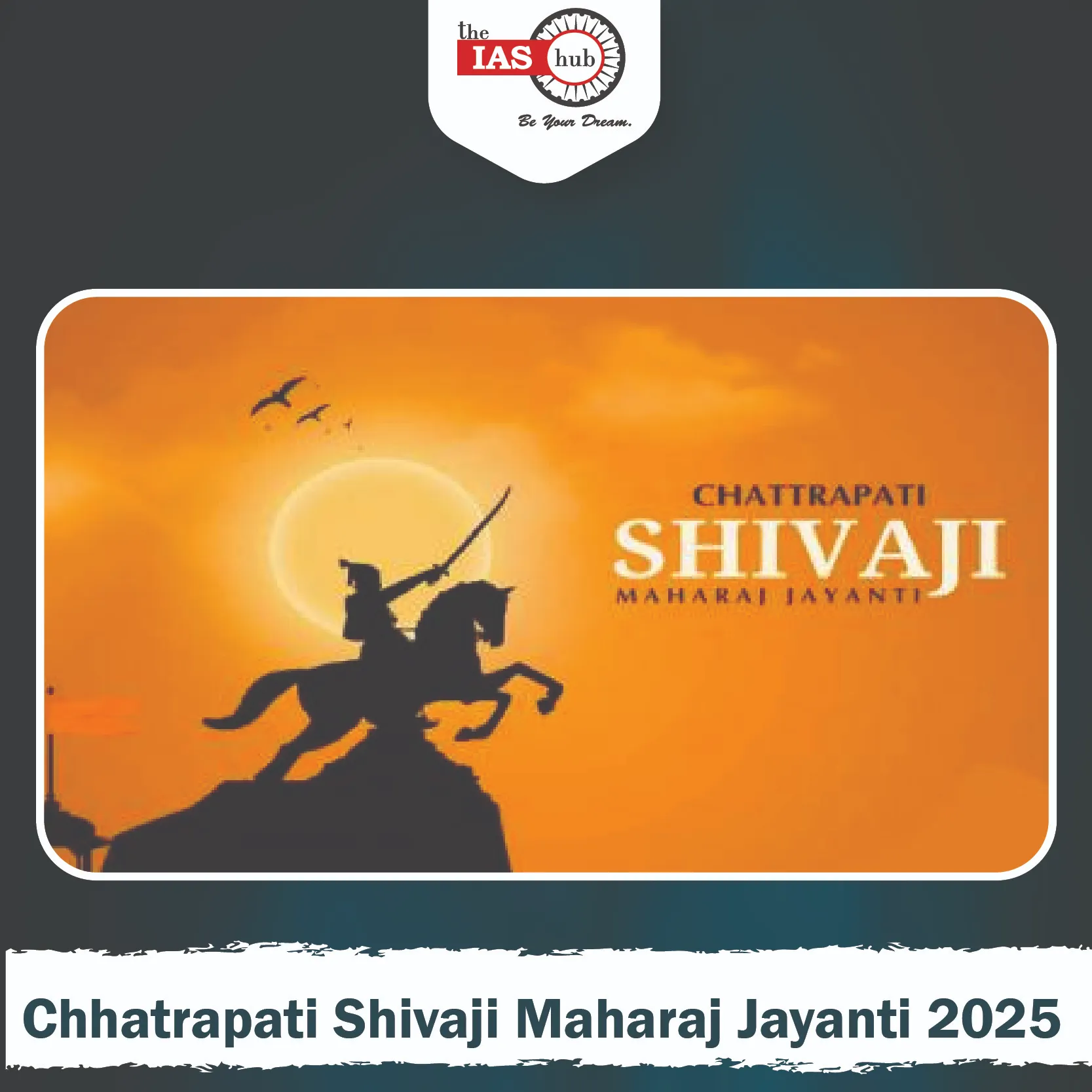

Chhatrapati Shivaji Maharaj Jayanti 2025 is a significant occasion that commemorates the birth anniversary of one of India’s greatest warriors and the founder of the Maratha Empire, Chhatrapati Shivaji Maharaj. Also known as Shiv Jayanti, this day is celebrated with immense pride and enthusiasm, especially in Maharashtra.
In 2025, Chhatrapati Shivaji Maharaj Jayanti will be observed on February 19, marking the 395th birth anniversary of this legendary king. This article will explore the history, significance, and celebrations of Chhatrapati Shivaji Maharaj Jayanti 2025 and key aspects of his life and legacy.

| Biography of Chhatrapati Shivaji Maharaj | |
| Aspect | Details |
| Full Name | Shivaji Bhosale (later known as Chhatrapati Shivaji Maharaj) |
| Birth Date | February 19, 1630 |
| Birthplace | Shivneri Fort, Pune, Maharashtra |
| Parents | Father: Shahaji Bhosale (Maratha General)
Mother: Jijabai |
| Title | Chhatrapati (Emperor) |
| Founder of | Maratha Empire |
| Coronation Date | June 6, 1674 |
| Capital of the Maratha Empire | Raigad Fort |
| Key Achievements | – Established Swarajya (self-rule)
– Founded the Maratha Empire – Pioneered guerrilla warfare (Ganimi Kava) – Built a strong naval force |
| Notable Battles | – Battle of Pratapgarh (1659)
– Battle of Kolhapur (1659) – Treaty of Purandar (1665) – Siege of Panhala (1660) |
| Administrative Reforms | – Introduced Ashta Pradhan (Council of Eight Ministers)
– Promoted Marathi and Sanskrit in administration – Established a fair revenue system |
| Religious Tolerance | Respected all religions and protected places of worship for all communities |
| Death | April 3, 1680 (at Raigad Fort) |
| Legacy | Symbol of courage, good governance, and the fight for self-rule |
Chhatrapati Shivaji Maharaj, born on February 19, 1630, at Shivneri Fort, was a visionary leader, a skilled military strategist, and the founder of the Maratha Empire. His full name was Shivaji Bhosale, and he was named after the local Goddess Shivai, who his mother, Jijabai, worshipped. His father, Shahaji Bhosale, was a Maratha general, while his mother played a pivotal role in shaping his values and principles.
Shivaji Maharaj is celebrated for his relentless fight for Swarajya (self-rule) and his efforts to free India from foreign domination, particularly the Mughals. His progressive leadership, administrative reforms, and military strategies have made him a national hero and a symbol of Maratha pride.

The celebration of Chhatrapati Shivaji Maharaj Jayanti began in 1870 after the discovery of his tomb at Raigad Fort. The initiative was taken by social reformer Mahatma Jyotirao Phule, who recognized Shivaji Maharaj’s contributions to Indian history. Later, freedom fighter Bal Gangadhar Tilak popularized the celebrations to inspire Indians during the struggle for independence.
Chhatrapati Shivaji Maharaj Jayanti is not just a day to remember his birth but also to honor his principles of good governance, religious tolerance, and social justice. His legacy continues to inspire generations, making this day a symbol of courage, resilience, and unity.
Chhatrapati Shivaji Maharaj was born in 1630 at Shivneri Fort to Shahaji Bhosale and Jijabai. His early life was influenced by his mother’s teachings and the strategic policies of his father, shaping him into a visionary leader.
Shivaji Maharaj envisioned a sovereign Maratha state free from Mughal domination. He inherited the jagir of Poona from his father in 1637 and began his journey to establish an independent kingdom.
Shivaji Maharaj was known for his military acumen and strategic brilliance. Some of his notable battles include:
Shivaji Maharaj’s administration was well-organized and efficient. Key features included:
Shivaji Maharaj was not just a warrior but also a patron of art, culture, and social harmony.
Chhatrapati Shivaji Maharaj Jayanti 2025 will be celebrated with great enthusiasm across Maharashtra and other parts of India. Key activities include:
Chhatrapati Shivaji Maharaj Jayanti 2025 is not just a celebration of a historical figure but a reminder of the values he stood for. His legacy continues to inspire millions, making this day a symbol of courage, resilience, and unity.
Explore IAS Hub Courses for the upcoming UPSC Prelims 2025 and Mains Exam.
| Related Articles | |
| Important Days in February | World Wetlands Day 2025 |
| Indian Coast Guard Day | Vasant Panchami |
Shivaji Maharaj established a strong naval force and introduced innovative naval strategies, earning him the title of the Father of the Indian Navy.
He founded the Maratha Empire, promoted Swarajya, and introduced progressive administrative and military reforms.
The day is marked with processions, cultural programs, speeches, and visits to historical forts associated with Shivaji Maharaj.
His legacy symbolizes courage, good governance, religious tolerance, and the fight for self-rule, inspiring generations.

Refine your answer writing skills and elevate your UPSC preparation with personalized support and expert feedback.
Fill out the form to get started with the program or any other enquiries !

Are you dreaming of becoming an IAS officer? Then, IAShub can be your best guide. It is one of the Best IAS Coaching in Delhi. Many students who want to clear the UPSC exam join IAShub for learning. The institute gives both online and offline classes. Their teachers are experienced and helpful. They easily explain every topic. Students also get notes, tests, and tips to do well in the exam.
IAShub is in Delhi and is trusted by many UPSC students. It offers coaching for every part of the UPSC exam – Prelims, Mains, and Interview. The classes are simple and easy to understand. The teachers are experts and guide students in the right way. IAShub is also known for its helpful notes, test series, and answer-writing practice. IAShub is the best coaching in Delhi and also gives UPSC Online Classes. This helps students from any place in India to learn. The online classes are live and also recorded. So, students can watch them anytime. These classes cover the full UPSC syllabus.
Here are some important services provided by IAShub:
The UPSC Civil Services Exam has three parts:
This exam is tough, but with the right guidance, it becomes easy to manage. Students must study smart and stay regular.
IAShub supports students from the beginning to the end. It gives the right books, tests, and notes. The classes are easy to follow, and the teachers are always ready to help. Students get personal doubt sessions too. The test series and answer checking help students learn where they need to do better. Also, free study materials save time and money.
IAShub also guides students during the final stage – the interview. Experts take mock interviews and give useful tips. This full support makes IAShub one of the best IAS coaching in Delhi.