Know everything you need to know about Anthropology optional 2025 for UPSC. Learn about the syllabus, books, notes, PYQs, topper strategies, and more in this comprehensive guide.
 theIAShub | 12 Feb, 2025 | 7385 | 0 |
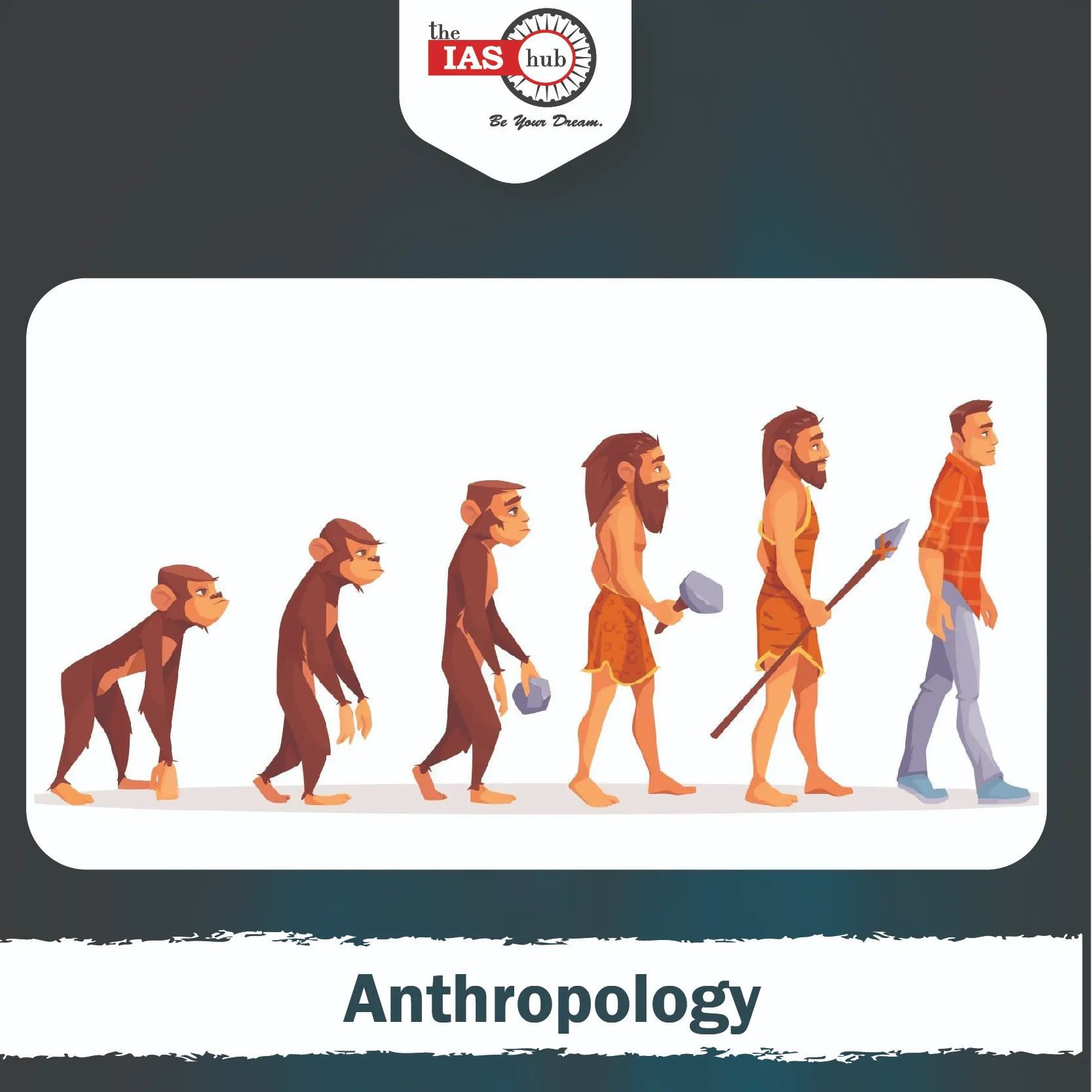

Anthropology is one of the most popular optional subjects for the UPSC Civil Services Examination. It is a subject that not only helps you understand human societies, cultures, and evolution but also overlaps with the General Studies papers, making it a strategic choice for many aspirants.
In this article, we will cover everything you need to know about Anthropology optional, including its syllabus, books, notes, previous year question papers (PYQs), topper strategies, and more. Whether you are a beginner or someone looking to refine your preparation, this guide will help you navigate through the subject with ease.
Anthropology is one of the most chosen optional subjects by the candidates appearing for UPSC Civil Services Exam. Here are some reasons why Anthropology is a great choice as an optional subject for the UPSC exam:
Anthropology optional syllabus is divided into two papers, each covering different aspects of the subject. Here is a brief overview of the syllabus for Anthropology Optional Paper 1:
| Anthropology Optional Syllabus Paper 1 | |
| S.No | Topics and Sub Topics |
| 1.1 | Meaning, Scope, and development of Anthropology. |
| 1.2 | Relationships with other disciplines: Social Sciences, Behavioural Sciences, Life Sciences, Medical Sciences, Earth Sciences, and Humanities. |
| 1.3 | Main branches of Anthropology, their scope and relevance:
(a) Social-cultural Anthropology. (b) Biological Anthropology. (c) Archaeological Anthropology. (d) Linguistic Anthropology. |
| 1.4 | Human Evolution and Emergence of Man:
(a) Biological and Cultural factors in human evolution. (b) Theories of Organic Evolution (Pre-Darwinian, Darwinian and Post-Darwinian). (c) Synthetic theory of evolution; Brief outline of terms and concepts of evolutionary biology (Doll’s rule, Cope’s rule, Gause’s rule, parallelism, convergence, adaptive radiation, and mosaic evolution). |
| 1.5 | Characteristics of Primates; Evolutionary Trend and Primate Taxonomy; Primate Adaptations (Arboreal and Terrestrial); Primate Behaviour; Tertiary and Quaternary fossil primates; Living Major Primates; Comparative Anatomy of Man and Apes; Skeletal changes due to erect posture and its implications. |
| 1.6 | Phylogenetic status, characteristics, and geographical distribution of:
(a) Plio-preleistocene hominids in South and East Africa—Australopithecines. (b) Homo erectus: Africa (Paranthropus), Europe (Homo erectus heidelbergensis), Asia (Homo erectus javanicus, Homo erectus pekinensis). (c) Neanderthal man—La-chapelle-aux-saints (Classical type), Mt. Carmel (Progressive type). (d) Rhodesian man. (e) Homo sapiens—Cromagnon, Grimaldi and Chancelade. |
| 1.7 | The biological basis of Life: The Cell, DNA structure and replication, Protein Synthesis, Gene, Mutation, Chromosomes, and Cell Division. |
| 1.8 | (a) Principles of Prehistoric Archaeology. Chronology: Relative and Absolute Dating methods.
(b) Cultural Evolution—Broad Outlines of Prehistoric cultures: (i) Paleolithic (ii) Mesolithic (iii) Neolithic (iv) Chalcolithic (v) Copper-Bronze age (vi) Iron Age |
| 2.1 | The Nature of Culture: The concept and Characteristics of culture and civilization; Ethnocentrism vis-a-vis cultural Relativism. |
| 2.2 | The Nature of Society: Concept of Society; Society and Culture; Social Institution; Social groups; and Social stratification. |
| 2.3 | Marriage: Definition and universality; Laws of marriage (endogamy, exogamy, hypergamy, hypogamy, incest taboo); Type of marriage (monogamy, polygamy, polyandry, group marriage). Functions of marriage; Marriage regulations (preferential, prescriptive and proscriptive); Marriage payments (bride wealth and dowry). |
| 2.4 | Family: Definition and universality; Family, household and domestic groups; functions of family; Types of family (from the perspectives of structure, blood relation, marriage, residence and succession); Impact of urbanization, industrialization and feminist movements on family. |
| 2.5 | Kinship: Consanguinity and Affinity; Principles and types of descent (Unilineal, Double, Bilateral Ambilineal); Forms of descent groups (lineage, clan, phratry, moiety and kindred); Kinship terminology (descriptive and classificatory); Descent, Filiation and Complimentary Filiation; Descent and Alliance. |
| 3 | Economic Organization: Meaning, scope and relevance of economic anthropology; Formalist and Substantivist debate; Principles governing production, distribution and exchange (reciprocity, redistribution and market), in communities, subsisting on hunting and gathering, fishing, swiddening, pastoralism, horticulture, and agriculture; globalization and indigenous economic systems. |
| 4 | Political Organization and Social Control: Band, tribe, chiefdom, kingdom and state; concepts of power, authority and legitimacy; social control, law and justice in simple Societies. |
| 5 | Religion: Anthropological approaches to the study of religion (evolutionary, psychological and functional); monotheism and polytheism; sacred and profane; myths and rituals; forms of religion in tribal and peasant Societies (animism, animatism, fetishism, naturism and totemism); religion, magic and science distinguished; magico-religious functionaries (priest, shaman, medicine man, sorcerer and witch). |
| 6 | Anthropological Theories:
(a) Classical evolutionism (Tylor, Morgan and Frazer). (b) Historical particularism (Boas) Diffusionism (British, German and American). (c) Functionalism (Malinowski); Structural—Functionalism (Radcliffe-Brown). (d) Structuralism (Lévi-Strauss and E. Leach). (e) Culture and personality (Benedict, Mead, Linton, Kardiner and Cora-du Bois). (f) Neo—evolutionism (Childe, White, Steward, Sahlins and Service). (g) Cultural materialism (Harris). (h) Symbolic and interpretive theories (Turner, Schneider and Geertz). (i) Cognitive theories (Tyler, Conklin). (j) Post-modernism in anthropology. |
| 7 | Culture, Language and Communication: Nature, origin and characteristics of language; verbal and non-verbal communication; social context of language use. |
| 8 | Research Methods in Anthropology:
(a) Fieldwork tradition in anthropology. (b) Distinction between technique, method and methodology. (c) Tools of data collection: observation, interview, schedules, questionnaire, case study, genealogy, life-history, oral history, secondary sources of information, participatory methods. (d) Analysis, interpretation and presentation of data. |
Here is a brief overview of the syllabus for Anthropology Optional Paper 2:
| Anthropology Optional Paper 2 Syllabus | |
| Topic | Subtopics |
| 1.1 Evolution of the Indian Culture and Civilization | Prehistoric (Palaeolithic, Mesolithic, Neolithic, and Neolithic-Chalcolithic). Protohistoric (Indus Civilization). Pre-Harappan, Harappan, and post-Harappan cultures. Contributions of the tribal cultures to Indian civilization. |
| 1.2 Palaeo-Anthropological Evidences | Evidences from India with special reference to Siwaliks and Narmada basin (Ramapithecus, Sivapithecus, and Narmada Man). |
| 1.3 Ethno-archaeology in India | The concept of ethno-archaeology; Survivals and parallels among the hunting, foraging, fishing, pastoral, and peasant communities, including arts and crafts producing communities. |
| 2. Demographic Profile of India | Ethnic and linguistic elements in the Indian population and their distribution. Indian population—factors influencing its structure and growth. |
| 3.1 Traditional Indian Social System | Structure and nature—Varnashram, Purushartha, Karma, Rina, and Rebirth. |
| 3.2 Caste System in India | Structure and characteristics. Varna and caste. Theories of origin of caste system. Dominant caste. Caste mobility. Future of caste system. Jajmani system. Tribe-caste continuum. |
| Sacred Complex and Nature-Man-Spirit Complex | |
| 3.3 Impact of Religions on Indian Society | Buddhism, Jainism, Islam, and Christianity. |
| 4. Emergence, Growth, and Development of Anthropology in India | Contributions of the 18th, 19th, and early 20th Century scholar-administrators. Contributions of Indian anthropologists to tribal and caste studies. |
| 5.1 Indian Village | Significance of village study in India. Indian village as a social system. Traditional and changing patterns of settlement and inter-caste relations. Agrarian relations in Indian villages. Impact of globalization on Indian villages. |
| 5.2 Linguistic and Religious Minorities | Social, political, and economic status. |
| 5.3 Socio-Cultural Change in Indian Society | Indigenous and exogenous processes: Sanskritization, Westernization, Modernization. Interplay of little and great traditions. Panchayati Raj and social change. Media and social change. |
| 6.1 Tribal Situation in India | Bio-genetic variability, linguistic and socio-economic characteristics of the tribal populations and their distribution. |
| 6.2 Problems of Tribal Communities | Land alienation, poverty, indebtedness, low literacy, poor educational facilities, unemployment, under-employment, health, and nutrition. |
| 6.3 Developmental Projects and Tribals | Impact on tribal displacement and problems of rehabilitation. Development of forest policy and tribals. Impact of urbanization and industrialization on tribal populations. |
| 7.1 Problems of Exploitation and Deprivation | Scheduled Castes, Scheduled Tribes, and Other Backward Classes. Constitutional safeguards for Scheduled Tribes and Scheduled Castes. |
| 7.2 Social Change and Contemporary Tribal Societies | Impact of modern democratic institutions, development programmes, and welfare measures on tribals and weaker sections. |
| 7.3 Ethnicity and Social Change | Concept of ethnicity. Ethnic conflicts and political developments. Unrest among tribal communities. Regionalism and demand for autonomy. Pseudo-tribalism. Social change among the tribes during colonial and post-Independent India. |
| 8.1 Impact of Religions on Tribal Societies | Hinduism, Buddhism, Christianity, Islam, and other religions. |
| 8.2 Tribe and Nation State | A comparative study of tribal communities in India and other countries. |
| 9.1 Administration and Development of Tribal Areas | History of administration of tribal areas. Tribal policies, plans, and programmes of tribal development and their implementation. Concept of PTGs (Primitive Tribal Groups), their distribution, and special programmes for their development. Role of N.G.O.s in tribal development. |
| 9.2 Role of Anthropology | In tribal and rural development. |
| 9.3 Contributions of Anthropology | Understanding of regionalism, communalism, and ethnic and political movements. |
Choosing the right books is crucial for your preparation. Here are some recommended books for Anthropology optional:

Preparing your own notes is one of the best ways to retain information. However, if you are short on time, you can refer to the notes provided by toppers or coaching institutes. Here are some tips for making effective notes:
Solving previous year question papers is one of the best ways to prepare for the exam. It helps you understand the pattern of the questions and the areas from which questions are frequently asked. Here are some tips for using PYQs effectively:
Here is a list of the last five years Public Administration Optional PYQ (Previous Year Question Papers) aspirant can download and use them in their preparation.
| UPSC Anthropology Optional Previous Year Question Papers | |
| Year | Paper |
| 2024 | Download Paper 1 |
| Download Paper 2 | |
| 2023 | Download Paper 1 |
| Download Paper 2 | |
| 2022 | Download Paper 1 |
| Download Paper 2 | |
| 2021 | Download Paper 1 |
| Download Paper 2 | |
| 2020 | Download Paper 1 |
| Download Paper 2 | |
The Anthropology optional question paper is divided into two papers, each carrying 250 marks. The questions are a mix of theoretical and analytical types. Here are some tips for attempting the question paper:
Topper copies are a great resource for understanding how to write effective answers. Here are some tips for using topper copies effectively:
Here are some tips for preparing for Anthropology optional:
Anthropology is a highly rewarding optional subject for the UPSC exam. With the right strategy, resources, and dedication, you can score well in this subject. Make sure to cover the entire syllabus, practice answer writing, and revise regularly. Use the recommended books, notes, and previous year question papers to enhance your preparation. By following these tips, you can master Anthropology and increase your chances of success in the UPSC exam.
Are you preparing for UPSC 2025? Join IAShub’s UPSC coaching batches to boost your preparation. Enroll now!
| Related Articles | |
| Public Administration Optional Strategy | UPSC Mains Notes |
| PSIR Optional Strategy | UPSC Mains Language Paper |
Some of the best books for Anthropology optional are "Physical Anthropology by P. Nath," "An Introduction to Social Anthropology by D.N. Majumdar and T.N. Madan," and "Indian Anthropology by Nadeem Hasnain."
To prepare for Anthropology optional, understand the syllabus, make a study plan, practice answer writing, and revise regularly. Use recommended books and previous year question papers.
The syllabus for Anthropology optional is divided into two papers: Paper-I (Basic Concepts and Social Anthropology) and Paper-II (Indian Anthropology and Tribal Studies).
To write effective answers, structure your answers well, use headings and subheadings, and support your answers with examples. Practice writing answers within the time limit.

Refine your answer writing skills and elevate your UPSC preparation with personalized support and expert feedback.
Fill out the form to get started with the program or any other enquiries !
Are you dreaming of becoming an IAS officer? Then, IAShub can be your best guide. It is one of the Best IAS Coaching in Delhi. Many students who want to clear the UPSC exam join IAShub for learning. The institute gives both online and offline classes. Their teachers are experienced and helpful. They easily explain every topic. Students also get notes, tests, and tips to do well in the exam.
IAShub is in Delhi and is trusted by many UPSC students. It offers coaching for every part of the UPSC exam – Prelims, Mains, and Interview. The classes are simple and easy to understand. The teachers are experts and guide students in the right way. IAShub is also known for its helpful notes, test series, and answer-writing practice. IAShub is the best coaching in Delhi and also gives UPSC Online Classes. This helps students from any place in India to learn. The online classes are live and also recorded. So, students can watch them anytime. These classes cover the full UPSC syllabus.
Here are some important services provided by IAShub:
The UPSC Civil Services Exam has three parts:
This exam is tough, but with the right guidance, it becomes easy to manage. Students must study smart and stay regular.
IAShub supports students from the beginning to the end. It gives the right books, tests, and notes. The classes are easy to follow, and the teachers are always ready to help. Students get personal doubt sessions too. The test series and answer checking help students learn where they need to do better. Also, free study materials save time and money.
IAShub also guides students during the final stage – the interview. Experts take mock interviews and give useful tips. This full support makes IAShub one of the best IAS coaching in Delhi.