Environmental Impact Assessment (EIA): Key Provisions, Benefits

Understand Environmental Impact Assessment (EIA): its provisions, benefits, challenges, and India's EIA 2020 framework. Learn about Social Impact Assessment (SIA) and its role in sustainable development.

THEIASHUB

Environmental Impact Assessment (EIA) is a comprehensive approach employed to scrutinize and assess the probable consequences, both favourable and detrimental, that a proposed project or development may exert on the environment, economy, and society.
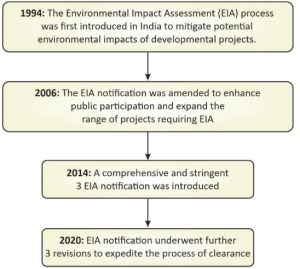
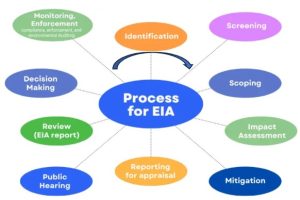
Need For Environmental Impact Assessment (EIA) In India: Rapid industrialization, Protection of natural resource

  • Rapid industrialization and development: Environmental Impact Assessment (EIA) is essential to address the potential environmental impacts of India’s rapid industrial growth and infrastructure development.
    Environmental Impact Assessment
  • Protection of natural resources: EIA helps assess and protect India’s rich biodiversity, water resources, forests, and ecosystems.
  • Public participation and transparency: EIA ensures public involvement and transparency in project decision-making processes.
  • Compliance with environmental regulations: EIA is a legal requirement in India, ensuring compliance with environmental laws and regulations.


Key Provisions Of Draft Environmental Impact Assessment (EIA) 2020: Categorization, Post-Facto Clearance

  • Categorization: Projects classified as Category A and Category B based on scale and impact.
  • Post-Facto Clearance: Provision for retrospective approval of projects already under construction.
  • Expanded Project Scope: Inclusion of additional projects requiring environmental clearance.
    Environmental Impact Assessment
  • Online Submission and Processing: Emphasis on using online platforms for project applications, consultations, and compliance monitoring. 
  • Reduction in time for Public Consultation: from 30 days to 20 days.
  • Post-Clearance Monitoring: Focus on monitoring compliance and reporting after clearance.
  • Expert Committees: Establishment of expert committees at central and state levels for project assessment.
  • Violations and Penalties: Penalties and legal action for non-compliance and false information.


Benefits Of Environmental Impact Assessment (EIA) In India: Environmental protection, Sustainable development

  • Environmental protection and conservation: EIA identifies and mitigates potential environmental impacts, safeguarding air, water, soil, and ecosystems.
  • Sustainable development: EIA integrates environmental considerations, promoting sustainable use of resources.
  • Social benefits: EIA assesses social impacts, benefiting local communities, livelihoods, health, and cultural heritage.
  • Decision-making support: EIA provides comprehensive information for informed project decision-making.
  • Legal and regulatory compliance: Environmental Impact Assessment (EIA) ensures adherence to national and international environmental standards.


Shortcomings Of Environmental Impact Assessment (EIA) In India: Easy clearance for ‘Strategic’ projects, Limited public participation

  • Easy clearance for ‘Strategic’ projects: because new EIA rules empower the government to declare any project as a ‘Strategic’ project without explaining why.
  • Opening the routes for violations: Provision of post-facto clearance will encourage the industries to go with the project without getting worried about the environmental clearance. 
  • Inadequate assessment quality: Some EIA reports lack thorough assessments and scientific rigor.
  • Limited public participation: EIA 2020 has reduced the time for public participation from 30 days to 20 days. It means reduced awareness and limited public participation.
  • Weak enforcement and monitoring: Inconsistent enforcement and monitoring of EIA conditions undermine its effectiveness. 
  • Influence of vested interests: Sometimes, Environmental Impact Assessment (EIA) processes are influenced by biased assessments and approvals due to vested interests.
  • Non-compliance with the International frameworks and conventions: EIA, 2020 is not in compliance with various international pledges such as the Paris Climate Agreement. It will weaken India’s stance as a global leader in environmental governance and climate politics. 


WAY FORWARD:

  • Online Platforms: Implement online platforms for project submissions, public comments, and information dissemination, improving accessibility and efficiency of the EIA process.
  • Technology Integration: Utilize remote sensing, satellite imagery, and data analytics to enhance accuracy and objectivity in environmental impact assessments.
  • Independent Expert Panels: Establish independent expert panels to review and validate EIA reports, ensuring impartiality and expertise.
  • Capacity Building: Enhance the knowledge and skills of regulatory authorities and experts involved in the EIA process through training programs and workshops.
  • Cumulative Impact Assessment: Include provisions for assessing the cumulative environmental impacts of multiple projects in a region.
  • Timely and Comprehensive Reviews, Strengthening Monitoring Mechanisms, Public Awareness and Education, International Best Practices


RECENT UPDATES

KEY DIFFERENCES BETWEEN Environmental Impact Assessment (EIA) RULES, 2020 AND Environmental Impact Assessment (EIA) RULES, 2020:


Aspect EIA Rules, 2020 EIA Notification, 2006
Applicability Applicable to all projects Applicable to projects falling under specific categories
Project Categories Includes a wider range of projects Limited categories of projects covered
Screening Process Categorization based on thresholds and parameters Categorization based on size and capacity
Public Consultation Extensive public consultation requirements Less emphasis on public consultation
Timeline Streamlined process with reduced timelines Longer timelines for obtaining environmental clearance
Expert Committees Reconstitution of expert committees with defined roles Less defined guidelines for expert committee formation
Post-Facto Clearance Restricted provision for post-facto clearance No specific provision for post-facto clearance
Violations and Penalties Stringent provisions for violations and penalties Relatively lenient provisions
Environmental Impact Assessment (EIA) Report Expanded scope and detailed requirements Relatively limited scope and requirements
Monitoring and Compliance Strengthened provisions for monitoring and compliance Less emphasis on monitoring and compliance
Public Disclosure Mandatory public disclosure of EIA reports Limited public disclosure requirements


Conclusion

Environmental Impact Assessment (EIA) has potential for sustainable development and environmental protection by incorporating robust measures, promoting public participation, and integrating scientific advancements to safeguard the environment and foster a balance between development and conservation.
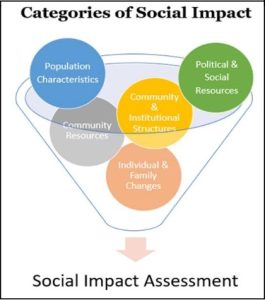
 

SOCIAL IMPACT ASSESSMENT (SIA)
Environmental Impact Assessment

  • Social impact assessment (SIA) is a methodology to review the social effects of infrastructure projects and other development interventions.
  • According to the International Association for Impact Assessment, SIA includes the processes of analyzing, monitoring, and managing the intended and unintended social consequences of planned interventions and any social change processes invoked by those interventions.
  • The primary purpose of SIA is to bring about a more sustainable and equitable biophysical and human environment.


Need Of Social Impact Assessment: Social Impacts, Local and Regional Populations

  • Social Impacts: It is important to understand the social impacts of a project, which are the direct and indirect impacts that affect people and their communities during all stages of the project lifecycle.
  • Local and Regional Populations: SIA aims to achieve an extensive understanding of the local and regional populations and settings to be affected by the proposed action, program, or policy.
  • Human Environment Elements: SIA focuses on the key elements of the human environment related to the proposed action, program, or policy.
  • Ensuring Environmental Justice: SIA ensures that any environmental justice issues are fully described and analyzed, identifying disadvantaged, at-risk, and minority populations affected by the proposed action, program, or policy.
  • Monitoring and Evaluation: The research design and databases established for the assessment of impacts should provide the basis for monitoring and evaluating the actual impacts of the chosen alternative project.


Significance: Beyond Natural Resource Impacts, Scientific Research Concepts

  • Beyond Natural Resource Impacts: The core focus of an SIA is on the important impacts of projects and developments beyond the impacts on natural resources.
  • Scientific Research Concepts: The SIA is based upon sound and replicable scientific research concepts and methods.
  • Decreasing Social Unrest: By mandating SIA, governments aim to decrease social unrest and ensure compensation to affected communities.
  • Evidence for Future Support: Monitoring and evaluation offer tangible evidence of a project’s achievements and future potential. 
  • Promoting Sustainable Growth: SIA helps in the development of the country and leads to sustainable growth and employment in the region through the speedy completion of projects.
  • Avoiding Unnecessary Litigations: SIA helps government and judiciary to save resources and time by avoiding unnecessary litigations, as assessment and compensation for any project are done beforehand.


WAY FORWARD

  • Increased Public Access: Ensure widespread access to information and awareness about public hearings and their impact on the EIA process.
  • Faster Clearances: Reduce the average delay of 238 days in granting environmental clearances.
  • Balanced Policy Approach: Avoid the “grow now, sustain later” mindset, which undermines sustainable development.
  • Diverse Expert Committees: Include experts from various stakeholder groups with the necessary expertise in environmental and relevant fields.
  • Enhanced Capacity Building: Strengthen the abilities of NGOs, civil society groups, and local communities to effectively use the EIA notification for better project decision-making.

UPSC PREVIOUS YEAR QUESTIONS (PYQs)

  1. How does the draft Environment Impact Assessment (EIA) Notification, 2020 differ from the existing EIA Notification, 2006? (2020, 10 Marks)
  2. Rehabilitation of human settlements is one of the important environmental impacts which always attracts controversy while planning major projects. Discuss the measures suggested from mitigation of this impact while proposing major developmental projects (2016, 12.5 Marks)
  3. Environmental Impact Assessment studies are increasingly undertaken before a project is cleared by the Government. Discuss the environmental impacts of coal-fired thermal plants located at coal pitheads. (2014, 12.5 Marks)

Join theIAShub’s Mains Answer Writing Program

Refine your answer writing skills and elevate your UPSC preparation with personalized support and expert feedback.

Fill out the form to get started with the program or any other enquiries !

Let's Connect with Counselor

Best IAS Coaching In Delhi, UPSC Online & Offline Classes by IAShub

Are you dreaming of becoming an IAS officer? Then, IAShub can be your best guide. It is one of the Best IAS Coaching in Delhi. Many students who want to clear the UPSC exam join IAShub for learning. The institute gives both online and offline classes. Their teachers are experienced and helpful. They easily explain every topic. Students also get notes, tests, and tips to do well in the exam.

UPSC Online Classes by IAShub

IAShub is in Delhi and is trusted by many UPSC students. It offers coaching for every part of the UPSC exam – Prelims, Mains, and Interview. The classes are simple and easy to understand. The teachers are experts and guide students in the right way. IAShub is also known for its helpful notes, test series, and answer-writing practice. IAShub is the best coaching in Delhi and also gives UPSC Online Classes. This helps students from any place in India to learn. The online classes are live and also recorded. So, students can watch them anytime. These classes cover the full UPSC syllabus.

Key Offerings Provided by IAShub

Here are some important services provided by IAShub:

  • UPSC Prelims: IAShub teaches for Prelims with a focus on basics. It also gives daily current affairs and monthly magazines.
  • Classroom Courses: IAShub has classroom learning for students in Delhi. The environment is good and peaceful for study.
  • Live Classes: Students who live far can join live UPSC online classes. These classes are just like real classes.
  • QEP for Mains: The Quality Enrichment Program (QEP) is special for Mains preparation. It helps students write better and faster.
  • Answer Writing: Regular answer writing practice is given. Teachers also check answers and give tips to improve.
  • Free Resource: IAShub gives free notes by toppers and helpful Main Booster material.
  • Test Series: Test series are available for every subject. These help students know their weak points and improve.
  • Interview Guidance Session: IAShub also gives interview practice sessions with experts. These help students feel confident.

UPSC Exam Overview

The UPSC Civil Services Exam has three parts:

  • Prelims: It has two papers: General Studies and CSAT.
  • Mains: It has nine papers, including essays and optional subjects.
  • Interview: It tests the personality and confidence of the student.

This exam is tough, but with the right guidance, it becomes easy to manage. Students must study smart and stay regular.

How IAShub Helps in the UPSC Journey

IAShub supports students from the beginning to the end. It gives the right books, tests, and notes. The classes are easy to follow, and the teachers are always ready to help. Students get personal doubt sessions too. The test series and answer checking help students learn where they need to do better. Also, free study materials save time and money.
IAShub also guides students during the final stage – the interview. Experts take mock interviews and give useful tips. This full support makes IAShub one of the best IAS coaching in Delhi.

Best IAS Coaching In Delhi FAQs

Yes, IAShub offers live and recorded online classes. Students can attend from any part of India.

Classes are available in both English and Hindi, so students can choose the language they are comfortable with.

The classroom centre is located in Delhi. Students can visit and join offline batches there.

IAShub gives interview guidance sessions to help students prepare for the final round of UPSC.
Footer Image