Bio-Medical Waste In India: Challenges, Government/International Initiatives

Explore the challenges of biomedical waste management in India, government initiatives, international conventions, and solutions for sustainable healthcare practices.

THEIASHUB

Biomedical waste refers to human and animal anatomical waste, as well as treatment apparatus such as needles, syringes, and other materials utilized in healthcare facilities during treatment and research.
  • India generates around 700 TPD of biomedical waste approximately and about 90% is treated, despite the combined treatment capacity available being 1,590 TPD. 20 states in India are still using captive treatment measures and deep pit burials for disposal. 

Challenges Associated With Bio-Medical Waste: Non-Segregation, Increase in Waste

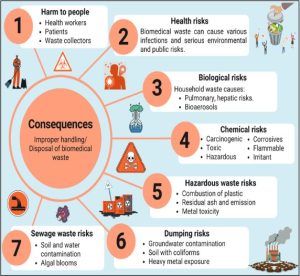
  • Non-Segregation: The non-segregation of waste results in the incineration of contaminated plastics producing toxic gases and adding to air pollution.
  • Increase in Waste: The rise in residential biomedical waste and its collection without adhering to safety protocols could also trigger a surge in caseload.

Bio-Medical Waste

  • Health of Workers Associated: Without proper scientific management of such waste, it can potentially affect patients and can affect the concerned workers and professionals.
  • Municipal Workers at Risk: Many municipal workers have been infected and some have died, likely due to contact with contaminated waste.
  • Issue with the Waste Management Rules: Existing legal provisions are designed for hospital-generated biomedical waste, with no guidelines for managing such waste at home or in non-hospital settings.


WAY FORWARD

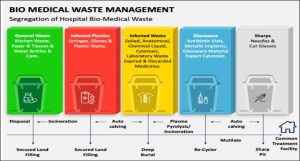
  • Collecting and Categorizing the Waste: After segregation, the waste is collected and categorized into appropriate bins. Different colored bins are used to indicate specific types of waste, aiding in efficient identification and disposal.
  • Storing the Waste: Proper storage of BMW is essential to avoid health hazards. Waste must be stored in designated containers for limited periods – less than 8-10 hours in hospitals with around 250 beds and up to 24 hours in nursing homes. 
  • Regulatory Compliance: BMW management must adhere to specific regulations, such as Schedule 2 and Schedule 3 of the BMW (Management and Handling) Rules, 1998.
  • Prevention of Waste Reuse: Segregation and proper disposal practices help prevent the reuse of potentially dangerous items like syringes and needles, thus protecting public health and safety.
  • Recycling Goals: Effective BMW management also supports recycling efforts. By segregating plastic and metal waste, recycling processes are facilitated, contributing to environmental sustainability.


GOVERNMENT/INTERNATIONAL INITIATIVES

  • Common Biomedical Waste Treatment Facilities (CBWTF): It’s a set up where bio-medical waste, generated from a number of healthcare units, is imparted necessary treatment to reduce adverse effects that this waste may pose.
  • Bio-Medical Waste Management Rules, 2016: The purpose of these rules is to ensure the effective management of daily bio-medical waste generated by Healthcare Facilities (HCFs) nationwide.
  • Bio-Medical Waste Management (Amendment) Rules, 2018: To improve compliance and strengthen the implementation of environmentally sound management of biomedical waste in India.
  • The amended rules stipulate that generators of bio-medical waste such as hospitals, nursing homes, clinics, and dispensaries etc will not use chlorinated plastic bags and gloves beyond March 27, 2019 in medical applications to save the environment.
  • Basel Convention: To protect human health and the environment against the adverse effects resulting from the generation, management, transboundary movements and disposal of hazardous and other wastes.

Bio-Medical Waste

Are you preparing for UPSC 2025? Join IAShub’s UPSC coaching batches to boost your preparation. Enroll now!
Join theIAShub’s Mains Answer Writing Program

Refine your answer writing skills and elevate your UPSC preparation with personalized support and expert feedback.

Fill out the form to get started with the program or any other enquiries !

Let's Connect with Counselor

Best IAS Coaching In Delhi, UPSC Online & Offline Classes by IAShub

Are you dreaming of becoming an IAS officer? Then, IAShub can be your best guide. It is one of the Best IAS Coaching in Delhi. Many students who want to clear the UPSC exam join IAShub for learning. The institute gives both online and offline classes. Their teachers are experienced and helpful. They easily explain every topic. Students also get notes, tests, and tips to do well in the exam.

UPSC Online Classes by IAShub

IAShub is in Delhi and is trusted by many UPSC students. It offers coaching for every part of the UPSC exam – Prelims, Mains, and Interview. The classes are simple and easy to understand. The teachers are experts and guide students in the right way. IAShub is also known for its helpful notes, test series, and answer-writing practice. IAShub is the best coaching in Delhi and also gives UPSC Online Classes. This helps students from any place in India to learn. The online classes are live and also recorded. So, students can watch them anytime. These classes cover the full UPSC syllabus.

Key Offerings Provided by IAShub

Here are some important services provided by IAShub:

  • UPSC Prelims: IAShub teaches for Prelims with a focus on basics. It also gives daily current affairs and monthly magazines.
  • Classroom Courses: IAShub has classroom learning for students in Delhi. The environment is good and peaceful for study.
  • Live Classes: Students who live far can join live UPSC online classes. These classes are just like real classes.
  • QEP for Mains: The Quality Enrichment Program (QEP) is special for Mains preparation. It helps students write better and faster.
  • Answer Writing: Regular answer writing practice is given. Teachers also check answers and give tips to improve.
  • Free Resource: IAShub gives free notes by toppers and helpful Main Booster material.
  • Test Series: Test series are available for every subject. These help students know their weak points and improve.
  • Interview Guidance Session: IAShub also gives interview practice sessions with experts. These help students feel confident.

UPSC Exam Overview

The UPSC Civil Services Exam has three parts:

  • Prelims: It has two papers: General Studies and CSAT.
  • Mains: It has nine papers, including essays and optional subjects.
  • Interview: It tests the personality and confidence of the student.

This exam is tough, but with the right guidance, it becomes easy to manage. Students must study smart and stay regular.

How IAShub Helps in the UPSC Journey

IAShub supports students from the beginning to the end. It gives the right books, tests, and notes. The classes are easy to follow, and the teachers are always ready to help. Students get personal doubt sessions too. The test series and answer checking help students learn where they need to do better. Also, free study materials save time and money.
IAShub also guides students during the final stage – the interview. Experts take mock interviews and give useful tips. This full support makes IAShub one of the best IAS coaching in Delhi.
Best IAS Coaching In Delhi FAQs

Yes, IAShub offers live and recorded online classes. Students can attend from any part of India.

Classes are available in both English and Hindi, so students can choose the language they are comfortable with.

The classroom centre is located in Delhi. Students can visit and join offline batches there.

IAShub gives interview guidance sessions to help students prepare for the final round of UPSC.
Footer Image