Biodiversity Definition, Importance, Hotspots, Conservation

Learn about biodiversity's definition, importance, hotspots, and conservation. Explore causes of biodiversity loss, the sixth mass extinction, and solutions for sustainability.

  • “India is a mega-diverse country and the nation has consistently been at the forefront in taking action on biodiversity conservation, protection, restoration and enrichment.” – Prime Minister of India (N. Modi)
  • “Our future is safe when nature is safe. It is the responsibility of entire nation. Biodiversity conservation is not the job of one country, but a universal issue”. – Prime Minister of India (N. Modi)

Biodiversity: Definition, Levels, and Importance

THEIASHUB

The United Nations Earth Summit 1992 defined Biodiversity as ‘the variability among living organisms from all sources, including terrestrial, marine and other aquatic ecosystems and the ecological complexes of which they are a part; this includes diversity within species, between species, and of ecosystems. 

  • Biodiversity itself is a combination of two words, Bio (life) and diversity (variety). In simple terms, biodiversity is the number and variety of organisms found within a specified geographic region. 
  • It comprises several levels, starting with genes, then individual species, then communities of creatures and finally entire ecosystems, such as forests or coral reefs, where life interplays with the physical environment. 

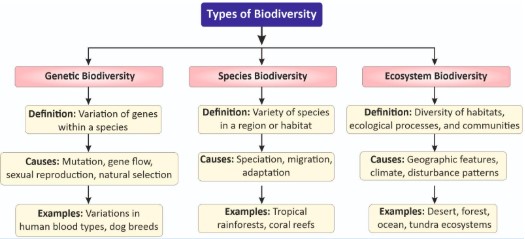
Biodiversity is considered to exist at three levels: Genetics, species, and ecosystems.
Biodiversity Definition, Importance, Hotspots, Conservation


Importance of Biodiversity: Key Reasons for its Conservation  

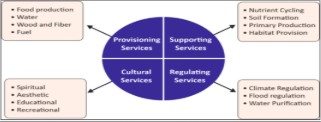
  • Ecosystem services: For example, air and water purification, soil formation, nutrient cycling, pollination, and pest control. 
  • Economic value: Through the production of food, medicine, and other products. 
  • It also supports industries such as tourism and recreation.
    Biodiversity Definition, Importance, Hotspots, Conservation
  • Climate change mitigation: By sequestering carbon and maintaining the balance of greenhouse gases in the atmosphere.
  • Cultural value: Biodiversity is an integral part of many cultures around the world, providing spiritual and aesthetic value.
  • Conservation of genetic resources: Biodiversity is a source of genetic diversity, which is essential for the development of new crops and medicines.
  • Scientific and educational value: Biodiversity offers opportunities for scientific research and discovery. The study of different species and ecosystems can lead to new technologies and solutions to global challenges.

Reasons for Loss of Biodiversity: Habitat destruction, climate change, overexploitation

  • Habitat Destruction: Habitat destruction, often due to human activities like deforestation, urbanization, and agriculture, is a primary cause of biodiversity loss. 
  • For instance, an estimated 17 % of the Amazon forests have been degraded, while another 18 % have been converted for other purposes according to the Living Amazon Report, 2022.
  • Climate Change: The rapid rate of climate change is threatening species that cannot adapt quickly enough. 
  • The IPCC has predicted that 20-30% of species will be at risk of extinction if global temperature rises exceed 1.5-2.5°C.
  • Overexploitation: Overfishing, poaching, and overhunting are causing dramatic declines in many species. 
  • According to the International Union for Conservation of Nature (IUCN), overfishing has left nearly one-third of assessed fish species threatened with extinction as of 2020.
  • Invasive Species: Non-native species can disrupt ecosystems by out-competing native species. 
  • For example, the introduction of the brown tree snake to Guam after WWII has led to the extinction of 9 out of 12 native bird species.
  • Pollution: Contamination of air, water, and soil can harm or kill species. 
  • According to some estimates, over 1 million marine animals, including many sea turtles, die each year due to plastic pollution in the ocean. Most animals that die are seabirds.
  • Disease: Diseases can devastate populations and even lead to species extinction.


Sixth Mass Extinction: Causes, Impacts, and Human Activities Driving Biodiversity Loss

A mass extinction is a short period of geological time in which a high percentage of biodiversity, or distinct species
—bacteria, fungi, plants, mammals, birds, reptiles, amphibians, fish, invertebrates—die out. The present era of loss of biodiversity is often described as the Sixth Mass Extinction. 
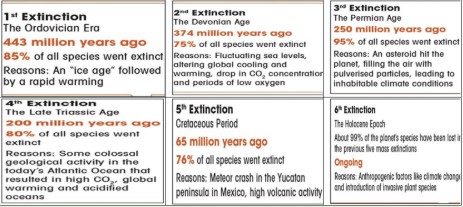
  • Unlike previous extinction events caused by natural phenomena, the sixth mass extinction is driven by human activity, primarily (though not limited to) the unsustainable use of land, water and energy use, and climate change.
  • Causes: Catastrophic alterations to the environment, such as massive volcanic eruptions, depletion of oceanic oxygen or collision with an asteroid. 
  • Impact: After each of these extinctions, it took millions of years to regain species comparable to those that existed before the event.

6th MASS EXTINCTION:

  • It will be the “most serious environmental problem” since the loss of species will be permanent.
  • Causes: Soil degradation, deforestation, pollution and biodiversity loss, and introduction of invasive species introduced by humans. 
  • For example, Cane toads are a notorious invasive species in Australia.
  • Impact of this mass extinction:
  • Extreme weather: Drastic changes to our planet, including extreme weather such as flooding, drought and wildfires.
  • Others: Impact on food chain, loss of population of species which may lead to reduced ecosystem functions and services, worsening of genetic and cultural variability etc.

Biodiversity Definition, Importance, Hotspots, Conservation

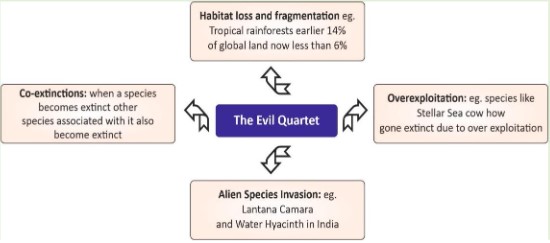
The Evil Quartet Causing Sixth Mass extinction:

The “Evil Quartet” is a term used in the context of biodiversity conservation and refers to four major factors that contribute significantly to species extinction and the loss of biodiversity. They are:

    • Habitat loss and fragmentation, 
    • Co-extinctions, 
    • Overexploitation,
  • Alien species.

Biodiversity Definition, Importance, Hotspots, Conservation


Conclusion

Biodiversity conservation is essential for maintaining the health of ecosystems, supporting human well-being, mitigating climate change, preserving cultural heritage, and conserving genetic resources. We have an ethical responsibility to protect biodiversity for future generations and to maintain the integrity of the Earth’s ecosystems

Are you preparing for UPSC 2025? Join IAShub’s UPSC coaching batches to boost your preparation. Enroll now!


Join theIAShub’s Mains Answer Writing Program

Refine your answer writing skills and elevate your UPSC preparation with personalized support and expert feedback.

Fill out the form to get started with the program or any other enquiries !

Let's Connect with Counselor

Best IAS Coaching In Delhi, UPSC Online & Offline Classes by IAShub

Are you dreaming of becoming an IAS officer? Then, IAShub can be your best guide. It is one of the Best IAS Coaching in Delhi. Many students who want to clear the UPSC exam join IAShub for learning. The institute gives both online and offline classes. Their teachers are experienced and helpful. They easily explain every topic. Students also get notes, tests, and tips to do well in the exam.

UPSC Online Classes by IAShub

IAShub is in Delhi and is trusted by many UPSC students. It offers coaching for every part of the UPSC exam – Prelims, Mains, and Interview. The classes are simple and easy to understand. The teachers are experts and guide students in the right way. IAShub is also known for its helpful notes, test series, and answer-writing practice. IAShub is the best coaching in Delhi and also gives UPSC Online Classes. This helps students from any place in India to learn. The online classes are live and also recorded. So, students can watch them anytime. These classes cover the full UPSC syllabus.

Key Offerings Provided by IAShub

Here are some important services provided by IAShub:

  • UPSC Prelims: IAShub teaches for Prelims with a focus on basics. It also gives daily current affairs and monthly magazines.
  • Classroom Courses: IAShub has classroom learning for students in Delhi. The environment is good and peaceful for study.
  • Live Classes: Students who live far can join live UPSC online classes. These classes are just like real classes.
  • QEP for Mains: The Quality Enrichment Program (QEP) is special for Mains preparation. It helps students write better and faster.
  • Answer Writing: Regular answer writing practice is given. Teachers also check answers and give tips to improve.
  • Free Resource: IAShub gives free notes by toppers and helpful Main Booster material.
  • Test Series: Test series are available for every subject. These help students know their weak points and improve.
  • Interview Guidance Session: IAShub also gives interview practice sessions with experts. These help students feel confident.

UPSC Exam Overview

The UPSC Civil Services Exam has three parts:

  • Prelims: It has two papers: General Studies and CSAT.
  • Mains: It has nine papers, including essays and optional subjects.
  • Interview: It tests the personality and confidence of the student.

This exam is tough, but with the right guidance, it becomes easy to manage. Students must study smart and stay regular.

How IAShub Helps in the UPSC Journey

IAShub supports students from the beginning to the end. It gives the right books, tests, and notes. The classes are easy to follow, and the teachers are always ready to help. Students get personal doubt sessions too. The test series and answer checking help students learn where they need to do better. Also, free study materials save time and money.
IAShub also guides students during the final stage – the interview. Experts take mock interviews and give useful tips. This full support makes IAShub one of the best IAS coaching in Delhi.

Best IAS Coaching In Delhi FAQs

Yes, IAShub offers live and recorded online classes. Students can attend from any part of India.

Classes are available in both English and Hindi, so students can choose the language they are comfortable with.

The classroom centre is located in Delhi. Students can visit and join offline batches there.

IAShub gives interview guidance sessions to help students prepare for the final round of UPSC.
Footer Image