UPSC IAS Optional Strategy 2025 helps increase your Mains score. Learn how to choose the right subject, prepare effectively, and follow a topper-based plan to score 300+ in optional papers
 theIAShub | 24 Jul, 2025 | 3115 | 0 |

Optional forms an important part of UPSC civil services exam. Choosing and preparing for the right optional subject is an important part of UPSC Civil Services Mains. The optional papers in UPSC Civil Services Mains Examination can either get you a great rank or you may not be even able to clear the exam.. Out of 1750 marks of Mains, 500 marks come from the two optional papers. Many toppers have gained a substantial edge through strategic optional paper preparation. Whether you’re a beginner or repeat aspirant, a well-crafted UPSC IAS optional strategy is important for maximizing scores and improving your overall rank.
Also Read: UPSC Exam Syllabus
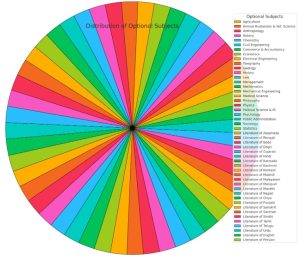
Each aspirant has to select one optional subject from a list of 48 choices.
|
Aspect |
Details |
Description |
| Exam pattern | Paper I: Theory-based (250 marks) Paper II: Applied/Analytical (250 marks) |
Paper I tests foundational concepts. Paper II assesses application and case studies. |
| Humanities subjects | Focus on theoretical and analytical aspects. | PSIR, History, Geography, Sociology, Philosophy |
| Science-subjects | Emphasis on technical concepts and problem-solving. | Physics, Chemistry, Mathematics |
| Professional subjects | Subject-specific expertise required. | Law, Medical Science, Engineering subjects |
| Literature-subjects | Requires proficiency in language and critical analysis. | Hindi, English, Tamil, etc. |
Also Read: Books for UPSC Mains
You can also follow these suggestions steps:
|
Suggestion |
Actions |
Description |
| Focus on Your Strengths | • Choose a subject with prior exposure (graduation/interest/work). • Avoid herd mentality. |
E.g., An engineering graduate may prefer Maths over History. Personal interest matters more than popularity. |
| Syllabus Overlap with GS | • Subjects like Sociology, Geography, PSIR overlap with GS and Essay. • Reduces preparation burden. |
Saves time; improves answer quality in GS papers. |
| Availability of Resources | • Ensure availability books, notes, test series, and topper copies. • Lack of material disrupts preparation. |
E.g., Literature subjects may have limited coaching support compared to PSIR or Sociology. |
| Scoring Potential | • Check past year trends. • Some subjects (e.g., Anthropology, Public Admin) have higher average scores due to objective answers or concise syllabus. |
Avoid overly subjective or lengthy syllabus if scoring is a priority. |
The will to do continuous hard work along with a good mentorship is the key to a strong UPSC IAS Strategy.
Also Read: Sociology optional syllabus
Optional subject popularity changes with success trends and coaching availability.
There is no universally “best” optional. Your choice shall depend on:
Also Read: Geography optional Syllabus
[metaslider id=”5575″]
There’s no officially “easy” optional, but the following are considered manageable for common aspirants:
These subjects require fewer diagrams or formulas and are less technical.
Subjects assumed to be tough include:
These require strong academic grounding and deep interest.
Also Read: Chemistry optional syllabus
Also Read: Mechanical engineering optional Syllabus
Follow this structured strategy whether it’s your first attempt or a repeat:
|
Step |
Action Items |
Key Tips |
| 1. Understand the Syllabus | • Break down the official syllabus topic-wise. • Use a checklist to track completion. |
Ensure no topic is left unrevised. Focus on high-weightage areas first. |
| 2. Choose Core Books | • Identify 2–3 standard sources per paper. • Avoid excessive material; focus on revision. |
Stick to recommended books (e.g., NCERT, Laxmikant for PSIR). |
| 3. Make Personal Notes | • Condense books into short notes. • Use bullet points, diagrams, flowcharts. |
Keep notes concise for quick revision. Visual aids improve retention. |
| 4. Master Answer Writing | • Practice daily/weekly answers. • Compare with topper copies. • Get feedback. |
Focus on structure, clarity, and time management. |
| 5. Integrate Current Affairs | • Link concepts with recent events/case studies. • In Anthropology: Use diagrams for evolution. • In PSIR: Connect theories with current politics. |
Enhances answer depth and relevance. |
| 6. Join a Test Series (Optional) | • Simulates exam pressure. • Refines answer presentation. • Tracks progress. |
Helps identify weak areas and improve speed. |
A Beginner-Friendly Plan:
|
Phase |
Duration | Key Tasks |
Focus Areas |
| Foundation | Month 1–2 | • Read basic books and NCERTs. • Understand syllabus and PYQs. • Begin note-making. |
Building conceptual clarity. Identifying important topics from past papers. |
| Advanced Reading | Month 3–4 | • Cover Paper I & II in detail. • Make notes with examples/case studies. • Join answer writing groups. |
Deepening subject knowledge. Linking theory with real-world applications. |
| Practice | Month 5–6 | • Focus on answer writing. • Join test series. • Revise notes and solve PYQs. |
Improving speed, structure, and presentation. Identifying weak areas. |
| Final Phase | Month 7+ | • Second revision of both papers. • Strengthen weak areas (test feedback). • Memorize thinkers, dates, quotes (Humanities). |
Fine-tuning answers. Enhancing retention for critical facts. |
Weekly Plan Example (Non-academic background):
|
Phase |
Duration |
Focus |
| Phase 1 | 2 months | Complete reading of Paper I |
| Phase 2 | 2 months | Paper II + answer writing |
| Phase 3 | 1 month | Revision + test series |
| Phase 4 | Ongoing | Final revision during Mains prep |
Consistency is more important than speed. Avoid switching subjects mid-way.
Scoring 300+ is achievable with:
Toppers Who Scored High in Optional:
|
Year |
Topper | Optional |
Marks Scored |
| 2017 | Anudeep Durishetty | Anthropology | 318 |
| 2018 | Kanishak Kataria | Mathematics | 364 |
| 2020 | Jeydev CS | PSIR | 306 |
| 2021 | Shruti Sharma | History | 298 |
| 2022 | Ishita Kishore | PSIR | 306 |
| 2023 | Pradeep Singh | Sociology | 305 |
Highest scorer ever in optional:
Kanishak Kataria (Mathematics) – 364/500 in 2018
Optional paper is often the rank booster, as GS scores are competitive but closely packed.
|
Paper Type |
Range for Average Candidates |
Topper Range |
| GS (I–IV) | 90–110 per paper | 115–130 |
| Essay | 110–140 | 140–160 |
| Optional | 240–280 total | 300–335 |
A good optional score can give a 100+ mark edge over others.
[metaslider id=”5575″]
Your optional subject is not just another part of the Mains exam—it is your most powerful weapon to secure a top rank. With the right UPSC IAS Optional Strategy, focused preparation, and smart revision, scoring 300+ is possible.

Without coaching, aspirants should rely on standard textbooks, previous year questions, and topper answer sheets. Make structured notes, practice writing consistently. Use online platforms for peer review and feedback. Self-discipline and regular evaluation are key to success.
On average, optional subject preparation takes 6–9 months. Candidates with prior background might complete it in 4–6 months. Repeaters usually need 3–4 months of focused revision, answer practice, and test-based evaluation to improve overall performance.
Sociology, Anthropology, and Philosophy are considered the easiest due to short syllabus, straightforward concepts, and GS overlap. However, ease is subjective. The best optional is the one you find most engaging, manageable, and suitable for consistent long-term preparation.
Subjects like Mathematics, Law, Physics, and Engineering disciplines are seen as most difficult because they demand in-depth technical knowledge, extensive problem-solving skills, and regular practice. Choose them only if you have a strong academic foundation and interest in the subject.
Public Administration, Sociology, Political Science, and Geography are among the most chosen optionals. Their popularity is driven by overlap with General Studies, structured syllabus, and abundant resources. But, selection should still depend on personal aptitude and preparation strategy.
One can get high marks from complete syllabus coverage, strong conceptual clarity, and excellent answer writing. Use keywords, relevant examples, and structured presentation. Regular revision, mock tests, and feedback-driven assessment help you write faster, more relevant, and scoring answers in the exam.

Refine your answer writing skills and elevate your UPSC preparation with personalized support and expert feedback.
Fill out the form to get started with the program or any other enquiries !



Are you dreaming of becoming an IAS officer? Then, IAShub can be your best guide. It is one of the Best IAS Coaching in Delhi. Many students who want to clear the UPSC exam join IAShub for learning. The institute gives both online and offline classes. Their teachers are experienced and helpful. They easily explain every topic. Students also get notes, tests, and tips to do well in the exam.
IAShub is in Delhi and is trusted by many UPSC students. It offers coaching for every part of the UPSC exam – Prelims, Mains, and Interview. The classes are simple and easy to understand. The teachers are experts and guide students in the right way. IAShub is also known for its helpful notes, test series, and answer-writing practice. IAShub is the best coaching in Delhi and also gives UPSC Online Classes. This helps students from any place in India to learn. The online classes are live and also recorded. So, students can watch them anytime. These classes cover the full UPSC syllabus.
Here are some important services provided by IAShub:
The UPSC Civil Services Exam has three parts:
This exam is tough, but with the right guidance, it becomes easy to manage. Students must study smart and stay regular.
IAShub supports students from the beginning to the end. It gives the right books, tests, and notes. The classes are easy to follow, and the teachers are always ready to help. Students get personal doubt sessions too. The test series and answer checking help students learn where they need to do better. Also, free study materials save time and money.
IAShub also guides students during the final stage – the interview. Experts take mock interviews and give useful tips. This full support makes IAShub one of the best IAS coaching in Delhi.