
















Explore the complete profile of Puducherry — a Union Territory with a unique colonial legacy and multi-regional structure. Learn about its rich history, diverse geography, political setup, vibrant culture, key rivers, national parks, and evolving economic landscape shaped by tourism, industry, and education.
 theIAShub | 11 Jul, 2025 | 8561 | 0 |
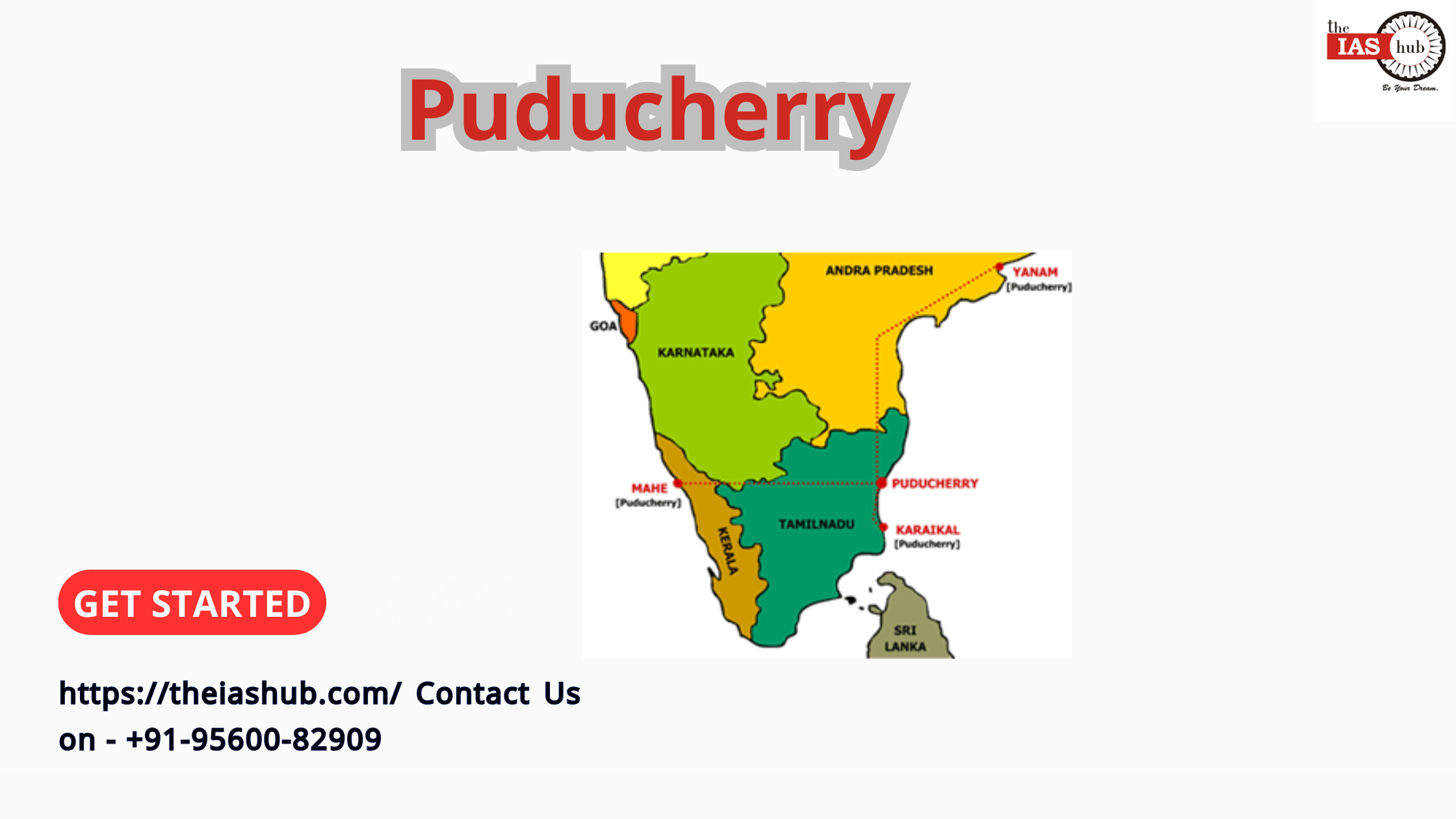

Puducherry, located on the southeastern coast of India, is known for its colonial heritage, spiritual centers, and serene beaches. The region is famed for its French-style architecture, Auroville township, and diverse coastal culture. Covering 492 square kilometers (Union Territory status), it holds a distinct identity influenced by its French colonial past. According to the 2011 Census, Puducherry had a population of over 1.2 million. Puducherry city serves as the capital of the Union Territory.
Also Read: Union Territories of India List
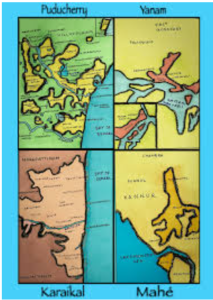
The history of Puducherry includes ancient Tamil settlements, successive rule by the Pallavas, Cholas, and Vijayanagara Empire, and colonial control by the Portuguese, Dutch, and French. In 1674, the French East India Company established Puducherry as its headquarters in India.
The territory remained under French rule until 1954 when it was de facto transferred to India. It was formally integrated into the Indian Union in 1962. Puducherry retains several French institutions and cultural legacies even today.
Puducherry is located in four separate geographical enclaves—Puducherry and Karaikal in Tamil Nadu, Mahe in Kerala, and Yanam in Andhra Pradesh—due to its colonial history. These territories were former French settlements acquired over different periods and scattered along the eastern and western coasts of India. When India gained independence and negotiated the integration of French territories, all these enclaves were merged into a single Union Territory named Puducherry, despite their geographical discontinuity. Their separation reflects the pattern of French colonial acquisition rather than administrative planning, making Puducherry a unique multi-regional Union Territory in India.
Also Read: Assam
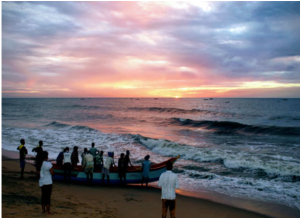
Puducherry comprises four unconnected districts: Puducherry, Karaikal (Tamil Nadu), Mahe (Kerala), and Yanam (Andhra Pradesh). It has coastal boundaries but no international borders.
| Category | Details |
| Key Geographic Features | • Eastern coastal plains • Sandy beaches and lagoons • Backwaters and wetlands |
| Highest Peak | No significant mountain peak; terrain is mostly flat coastal plain |
| Smallest Recognized Peak | Not applicable |
| Important Mountain Passes | Not applicable |
| Major Rivers | • Gingee River – Flows through Puducherry • Sankaraparani River – Seasonal river • Ariyankuppam River – Known for the Chunnambar backwaters |
| Climate | • Tropical wet and dry • Hot and humid summers • Monsoon from October to December • Mild winters |
Also Read: Bihar
Puducherry: Neighboring States and Boundaries
Puducherry is bordered by:
| Type of Border | Neighbour |
| Domestic Border | Tamil Nadu (Puducherry and Karaikal) |
| Domestic Border | Andhra Pradesh (Yanam) |
| Domestic Border | Kerala (Mahe) |
| International Border | None |
The territory’s scattered geographical units pose administrative and connectivity challenges.
Also Read: Mizoram
[metaslider id=”5575″]
As per the 2011 Census, Puducherry had a population of approximately 1.2 million. The population density stands at around 2,598 persons per square kilometer. The sex ratio is 1,038 females per 1000 males.
Literacy Rate: The literacy rate is 85.8%, with male literacy at 91.3% and female literacy at 80.7%.
Languages Spoken:
Also Read: Meghalaya
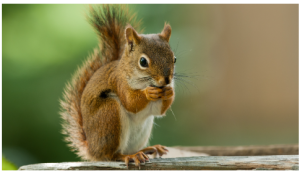
Following are the state symbols for Puducherry:
| Symbol | Name |
| State Animal | Squirrel |
| State Bird | Koel |
| State Tree | Bael Tree (Aegle marmelos) |
| State Flower | Cannonball Flower (Couroupita guianensis) |
These symbols reflect the region’s ecological and cultural uniqueness.
Also Read: Manipur
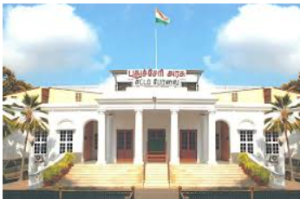
Puducherry, a Union Territory, has a unique administrative setup with partial statehood and a legislative assembly. It functions under the Indian Constitution and has representation in both houses of Parliament.
| Category | Details |
| Political Status | • Union Territory with Legislative Assembly (Government of Union Territories Act, 1963) |
| Current Leadership | Lieutenant Governor: Tamilisai Soundararajan (additional charge since 2021) • Also Governor of Telangana • Focus areas: Coordination, law and order |
| Judiciary | High Court: Madras High Court (Puducherry under its jurisdiction) Bench: No separate bench; cases heard in Chennai |
| Parliamentary Representation | • Lok Sabha (Lower House): 1 elected MP • Rajya Sabha (Upper House): 1 indirectly elected member |
| Legislative Structure | • Unicameral Assembly: 33 seats (30 elected, 3 nominated) • Districts: 4 (Puducherry, Karaikal, Mahe, Yanam) • Local governance: Municipalities and communes |
Following is the list of districts in Puducherry:
| No. | District Name | Area (km²) | Headquarters | Formation Year | Major Towns/Areas |
| 1 | Puducherry | 293 | Puducherry | 1963 | Puducherry, Ozhukarai, Ariyankuppam |
| 2 | Karaikal | 160 | Karaikal | 1963 | Karaikal, Nedungadu, Thirunallar |
| 3 | Mahe | 9 | Mahe | 1963 | Mahe, Palloor, Chalakkara |
| 4 | Yanam | 30 | Yanam | 1963 | Yanam, Kothapeta, Darialatippa |
Also Read: Maharrashtra
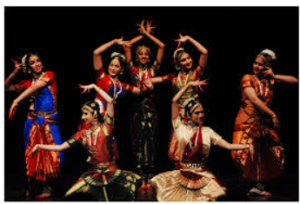
Puducherry’s culture blends Tamil, Telugu, and French colonial influences. The region hosts a cosmopolitan society with deep-rooted spiritual traditions, coastal customs, and a multicultural lifestyle.
| Category | Details |
| Classical Dance | • Bharatanatyam (widely practiced) • Folk dances: Garadi (mask dance), Kummi (women’s group dance) |
| Theatre Art | • Tamil street theatre (Therukoothu) • French-influenced modern theatre |
| Folk Music | • Tamil and Telugu folk songs • Devotional bhajans and coastal ballads |
| Classical Music | • Carnatic music (dominant tradition) • Regular kutcheris during festivals |
| Performance Traditions | • Celebrations during Pongal, Deepavali, Bastille Day • Auroville cultural events |
| Major Festivals | • Hindu: Pongal, Navaratri, Deepavali • Christian: Christmas, Easter • Muslim: Eid-ul-Fitr • French: Bastille Day (July 14 parade and celebrations) |
| Arts & Crafts | • Handmade paper (Auroville) • Leather and terracotta goods • Textile weaving and embroidery |
| Architecture | • French Quarter: colonial-style buildings, pastel facades • Religious sites: Aurobindo Ashram, Manakula Vinayagar Temple, churches |
| Wildlife & Nature | • Ousteri Wetland and Lake (bird sanctuary) • Botanical gardens, backwaters, and coastal biodiversity |
Also Read: Kerala
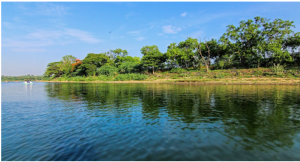
Puducherry is one of the most biodiverse site of India:
| Category | Details |
| National Parks | 1. Ousteri National Park (Wetland area across Puducherry and Tamil Nadu) – Key Species: Spot-billed pelican, painted stork, and other migratory waterfowl |
| 2. Bahour Lake Region (Proposed) – Focus: Wetland and bird habitat conservation |
|
| Wildlife Sanctuaries | • Ousteri Bird Sanctuary (Wetland ecosystem) • Kaliveli Tank (shared with Tamil Nadu, ecological significance) |
| Ramsar Sites | 1. Ousteri Lake – Internationally recognized wetland – Supports biodiversity, water recharge, and climate regulation |
| UNESCO Tentative Sites | • None currently listed for Puducherry (No submissions made to UNESCO tentative list as of now) |
| Tiger Reserve | Not applicable • No tiger reserves in Puducherry due to its small size and urban-coastal geography |
The economy of Puducherry is service-driven with notable contributions from industry, tourism, agriculture, and education. Coastal trade, spiritual tourism, and light manufacturing form the economic backbone of this Union Territory.
| Category | Details |
| Key Sectors | • Agriculture: Paddy, sugarcane, coconut, pulses • Industry: Textiles, leather, food processing, electronics • Tourism: Spiritual and heritage tourism centered around Auroville, French Quarter, and beaches • Education: Presence of institutions like JIPMER and Pondicherry University • Fisheries: Marine and inland fish production; key livelihood in coastal areas |
| Major Projects | • Smart City Mission: ₹1,800+ crore for Puducherry city development • Port Development: Expansion of Puducherry Port for coastal shipping • Industrial Estates: PIPDIC estates in Sedarapet and Thirubuvanai • Solar Initiatives: Rooftop solar in government buildings under UT’s renewable push |
| Economic Overview (2023–24) | • GSDP: ₹38,253 crore (estimated) • Sectoral Contribution: – Agriculture: 6% – Industry: 34% (textiles, manufacturing) – Services: 60% (tourism, education, ITES) |
| Major Economic Centers | • Puducherry city: Administration, tourism, education • Karaikal: Agriculture, port, seafood industry • Mahe: Trade and coastal activities • Yanam: Agro-processing and small-scale industries |
| Top Contributing Districts | 1. Puducherry (services, administration) 2. Karaikal (agriculture, trade) 3. Mahe (fisheries, commerce) 4. Yanam (industry, agro-processing) |
Also Read: Karnataka
Puducherry is not rich in mineral deposits due to its coastal alluvial terrain. Minor occurrences of laterite, clay, and sand are used for construction and brick-making.
| Mineral Type | Locations |
| Laterite | Bahour and Mannadipet regions |
| Brick Clay | Ariyankuppam and Odiampet |
| Silica Sand | Coastal tracts and riverbeds |
[metaslider id=”5575″]
Following are the important schemes run by the government of Puducherry for welfare:
| Scheme | Objective | Key Features |
| PY Health Scheme | Health insurance for residents | ₹5 lakh coverage per family for hospitalization |
| Deen Dayal Upadhyaya Grameen Kaushalya Yojana (DDU-GKY) | Rural youth skilling | Training programs for employment in industry sectors |
| Start-Up Puducherry | Entrepreneur support | Seed funding and incubation for early-stage startups |
| Free Bus Pass for Women and Students | Public transport access | Free rides for women and students in UT-run buses |
| Digital Puducherry Mission | Governance and citizen services | e-Seva centers, online certificates, grievance redressal |
| Urban Renewal Projects | Smart city development | Infrastructure upgrade, LED lighting, green mobility |
| Welfare of Fishermen | Coastal livelihood support | Subsidy on equipment, housing, and insurance |
Are you preparing for UPSC 2026? Join IAShub’s UPSC coaching batches to boost your preparation. Enroll now!
From French boulevards and spiritual centers to coastal ports and IT hubs, Puducherry is steadily emerging as a vibrant Union Territory with a unique socio-economic identity in southern India.

Key rivers include the Gingee, Sankaraparani, and Ariyankuppam. These seasonal rivers support agriculture, groundwater recharge, and the region’s wetland ecosystems.
Puducherry blends Tamil, Telugu, and French cultures. This is reflected in its language mix, cuisine, spiritual traditions, and festivals like Bastille Day. Colonial architecture, the Aurobindo Ashram, and Auroville also contribute to its distinct identity.
Puducherry has one major national park — Ousteri — a wetland ecosystem shared with Tamil Nadu. It is also home to several bird sanctuaries and proposed conservation areas focused on avian biodiversity.
The economy is driven by tourism, education, small and medium-scale industries, agriculture, and fisheries. Coastal trade, spiritual tourism, and new infrastructure projects under Smart City and port development schemes are boosting economic growth.

Refine your answer writing skills and elevate your UPSC preparation with personalized support and expert feedback.
Fill out the form to get started with the program or any other enquiries !



Are you dreaming of becoming an IAS officer? Then, IAShub can be your best guide. It is one of the Best IAS Coaching in Delhi. Many students who want to clear the UPSC exam join IAShub for learning. The institute gives both online and offline classes. Their teachers are experienced and helpful. They easily explain every topic. Students also get notes, tests, and tips to do well in the exam.
IAShub is in Delhi and is trusted by many UPSC students. It offers coaching for every part of the UPSC exam – Prelims, Mains, and Interview. The classes are simple and easy to understand. The teachers are experts and guide students in the right way. IAShub is also known for its helpful notes, test series, and answer-writing practice. IAShub is the best coaching in Delhi and also gives UPSC Online Classes. This helps students from any place in India to learn. The online classes are live and also recorded. So, students can watch them anytime. These classes cover the full UPSC syllabus.
Here are some important services provided by IAShub:
The UPSC Civil Services Exam has three parts:
This exam is tough, but with the right guidance, it becomes easy to manage. Students must study smart and stay regular.
IAShub supports students from the beginning to the end. It gives the right books, tests, and notes. The classes are easy to follow, and the teachers are always ready to help. Students get personal doubt sessions too. The test series and answer checking help students learn where they need to do better. Also, free study materials save time and money.
IAShub also guides students during the final stage – the interview. Experts take mock interviews and give useful tips. This full support makes IAShub one of the best IAS coaching in Delhi.
Join 50,000+ UPSC Aspirants! 🚀
Get Free UPSC/IAS Study Materials, Daily Current Affairs, Editorial Summaries & Exam Updates.
Join Telegram Channel