
















Explore Nagaland's History, Polity, Culture, Rivers, Wildlife, and Economy. Learn about its tribal heritage, Article 371A, national parks, major festivals, and economic sectors like agriculture, tourism, and handicrafts. A key state in India's northeast.
 theIAShub | 08 Jul, 2025 | 8716 | 0 |

Courtesy: Adobe Stock
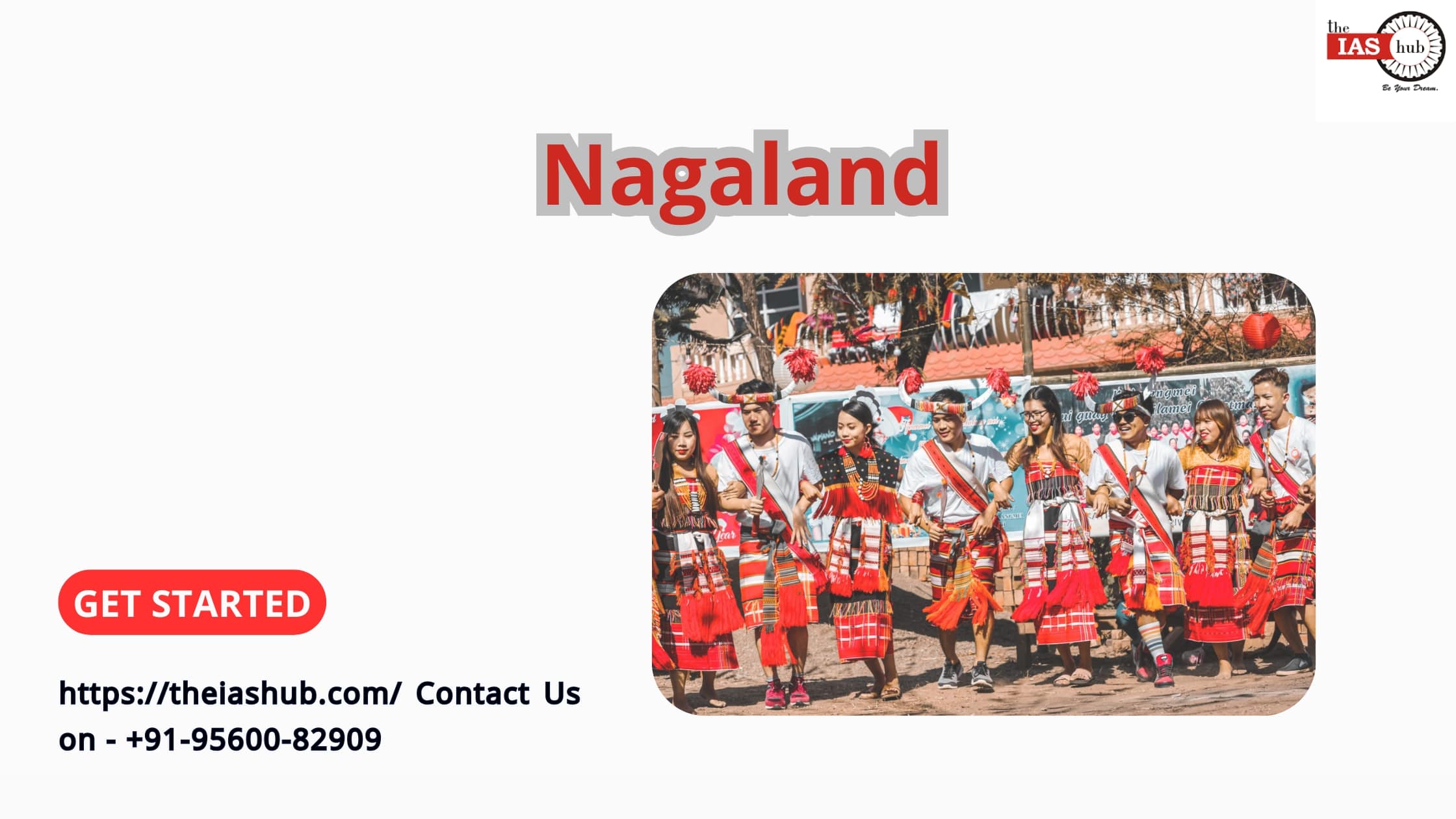
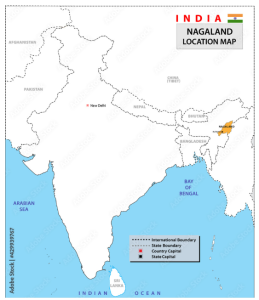
Nagaland is located in the northeastern part of India. It is known for its distinct tribal culture, vibrant festivals, and hilly terrain. It is majorly governed through the 6th Schedule of the Constitution of India. The state is famed for its indigenous crafts, traditional music, and biodiversity-rich landscapes. It covers 16,579 square kilometers (statehood granted in 1963). It holds a unique position in India’s cultural and strategic landscape. According to the 2011 Census, Nagaland had a population of over 1.9 million. Kohima serves as the capital of the state.
Also Read: Indian States and Their Capitals
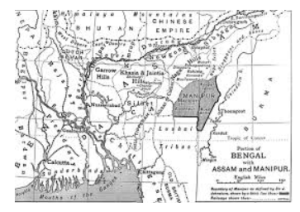
The history of Nagaland is rooted in its indigenous Naga tribes. They have maintained a distinct identity for centuries. The region came under British control in the 19th century through gradual annexation. The Naga Hills district was part of Assam during British rule.
Also Read: Union Territories of India List
Post-independence, demands for Naga sovereignty led to the formation of the Naga National Council. After years of unrest and negotiations, Nagaland was carved out as the 16th state of India in 1963 through the State of Nagaland Act. A special constitutional provision under Article 371A safeguards Naga customary laws and ownership rights over land and resources.
Also Read: Andhra Pradesh
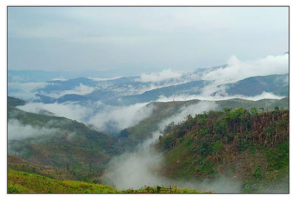
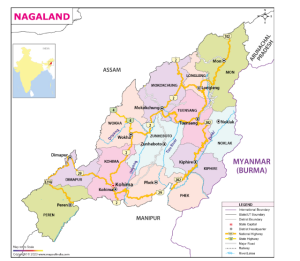
Nagaland shares international borders with Myanmar and domestic boundaries with Arunachal Pradesh, Assam, and Manipur.
| Category | Details |
| Key Geographic Features | • Naga Hills, Patkai Range, and Barail Range • Dzukou Valley, Japfu Peak, and Mount Saramati • Subtropical evergreen forests, valleys, and rivers |
| Highest Peak | Mount Saramati • Elevation: 3,841 m (12,598 ft) • Location: Kiphire district, on the border with Myanmar • Significance: Highest peak in Nagaland; often called the “Crown of Nagaland” |
| Smallest Recognized Peak | No officially designated smallest peak. Nagaland’s terrain is predominantly hilly and mountainous. The lowest elevations are in river valleys along the Assam border (e.g., Dhansiri Valley), around 100–200 m. |
| Important Mountain Passes | 1. Pfutsero Pass – Connects Pfutsero town to other regions; known for cold climate 2. Saramati Pass – Trek routes leading to Mount Saramati 3. Meluri Pass – Connects Meluri subdivision to other areas 4. Wokha-Mokokchung Road Passes – Various unnamed passes aiding inter-district connectivity |
| Major Rivers | • Dhansiri River – Forms boundary with Assam; flows through Dimapur • Doyang River – Originates in Naga Hills; key for hydropower • Dikhu River – Flows through Mokokchung and Longleng • Milak River – Tributary of Dikhu • Tizu River – Flows through Zunheboto and Kiphire |
| Climate | • Foothills (Assam border): Subtropical monsoon – hot, humid summers; mild winters; heavy rain • Mid-hills: Temperate – pleasant summers, cool winters • Higher Elevations: Cooler – cold winters |
Also Read: Arunachal Pradesh
Nagaland is bordered by:
| Type of Border | Neighbour |
| Domestic Border | Assam |
| Domestic Border | Arunachal Pradesh |
| Domestic Border | Manipur |
| International Border | Myanmar |
The region holds significant geopolitical relevance due to its proximity to international borders and ongoing ethnic and cultural exchanges.
Also Read: Chattisgarh
As per the 2011 Census, Nagaland had a population of approximately 1.9 million. The population density is at around 119 persons per square kilometer. The sex ratio is 931 females per 1000 males.
Literacy Rate: The literacy rate is 79.6%. Male literacy is at 82.8% and female literacy is at 76.1%.
Languages Spoken:
Also Read: Assam
Following are the state symbols for Nagaland:
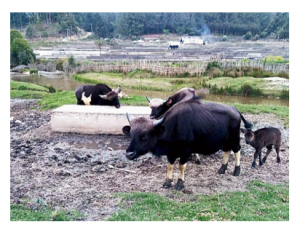
| Symbol | Name |
| State Animal | Mithun (Bos frontalis) |
| State Bird | Blyth’s Tragopan |
| State Tree | Alder Tree (Alnus nepalensis) |
| State Flower | Rhododendron |
These symbols reflect the region’s ecological and cultural uniqueness.
Also Read: Bihar
[metaslider id=”5575″]
Courtesy: Maps of India
Nagaland became a full-fledged state of India in 1963. It has a unicameral legislature with 60 seats. The state is administered through the Indian Constitution with representation in both houses of Parliament.
| Category | Details |
| Political Status | • Statehood since December 1, 1963 • Unicameral legislature (60 seats) |
| Current Leadership | Governor: La. Ganesan (since February 2023) Chief Minister: Neiphiu Rio |
| Judiciary | High Court: Under jurisdiction of Gauhati High Court Kohima Bench |
| Parliamentary Representation | • Lok Sabha (Lower House): 1 elected MP • Rajya Sabha (Upper House): 1 indirectly elected member |
| Legislative Structure | • Unicameral Assembly: 60 elected members • Districts: 16 • Subdivisions: Further divided into blocks and villages for local governance |
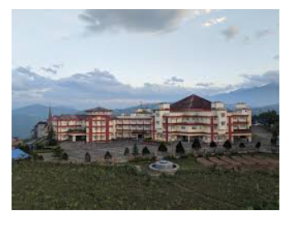
Nagaland has no Autonomous District Councils (ADCs) as found in other northeastern states under the Sixth Schedule of the Indian Constitution. Instead, the entire state operates under special provisions of Article 371A. It grants significant autonomy to Naga tribes in matters related to religion, social practices, customary laws, and land ownership.
However, in the eastern districts—such as Mon, Tuensang, Longleng, Kiphire, Noklak, and Shamator—special administrative arrangements exist. These were introduced due to the relative socio-economic backwardness and historical sensitivities of these areas.
Key features include:
Thus, while Nagaland lacks formal ADCs, tribal self-governance is deeply embedded through village councils, traditional institutions, and customary laws empowered by the Constitution.
Also Read: Mizoram
Following are the major tribes of Nagaland:
| Tribe | Region/Districts Predominantly Inhabited | Key Cultural Traits |
| Angami | Kohima, Chümoukedima | Sekrenyi festival, terraced cultivation, warrior heritage |
| Ao | Mokokchung, parts of Tuensang | Moatsu festival, vibrant shawls, strong literary tradition |
| Sumi | Zunheboto, Dimapur | Tuluni festival, skilled in martial dance and traditional songs |
| Lotha | Wokha | Tokhu Emong festival, known for black shawls and log drums |
| Konyak | Mon | Aoling festival, famous for headhunting history and tattoos |
| Chakhesang | Phek | Hornbill feather crafts, integrated with Angami and Pochury |
| Chang | Tuensang | Naknyulem festival, traditional hunting tools |
| Yimkhiung | Shamator, parts of Tuensang | Metümnyo festival, bamboo work |
| Phom | Longleng | Monyü festival, known for pottery and cane work |
| Rengma | Tseminyu, Kohima | Ngada festival, known for intricate wood carvings |
| Zeliang | Peren | Liangmai and Zeme sub-tribes, skilled in dance and folklore |
| Pochury | Phek | Yemshe festival, noted for monoliths and indigenous rituals |
| Khiamniungan | Noklak | Tsokum festival, strong oratory and dance traditions |
| Sangtam | Kiphire, Tuensang | Mongmong festival, known for fire rituals and bamboo crafts |
| Yimchunger | Kiphire | Metümnyo festival, weaving and beadwork |
| Tikhir | Noklak (recognized as separate tribe in 2022) | Close cultural ties with Yimkhiung tribe |
| Dimasa | Dimapur (minor presence) | Known for folk music and mythology |
Also Read: Meghalaya
Nagaland’s culture is deeply rooted in its indigenous tribal heritage. It has 17 major tribes and multiple sub-tribes contributing to a vibrant cultural landscape. These communities preserve unique traditions through oral history, attire, music, dance, festivals, and craftsmanship. Tribal identity, animist roots, and Christian faith coexist, shaping a distinct socio-cultural fabric.
| Category | Details |
| Classical Dance | • No officially recognized classical dance form among India’s eight classical dances. • Popular Folk Dances: – Chang Lo (war dance of Chang tribe) – Aoling (Konyak festival dance) – Zeliang dance • Themes: Warfare, harvest, fertility, community bonding. |
| Theatre Art | • Traditional oral storytelling through song and dance. • No formal classical theatre tradition. • Morung (youth dormitories) served as cultural hubs for storytelling and performance. |
| Folk Music | • Types: Tribal chants, warrior songs, love ballads, and work songs. • Instruments: Bamboo mouth organ, log drum, Jew’s harp, horn trumpet, flute. • Notable Form: Log drum performances during festivals and community events. |
| Classical Music | • No classical music tradition akin to Hindustani or Carnatic. • Emphasis on vocal harmonies and choral singing, often with Christian influences. |
| Performance Traditions | • Linked to tribal festivals, headhunting rituals (historically), agriculture, and religious events. • Venues: Open village grounds, church halls, and community centres. |
| Major Festivals | • Tribal: Hornbill Festival (statewide cultural showcase), Aoling (Konyak), Sekrenyi (Angami), Tokhu Emong (Lotha), Moatsu (Ao), Tuluni (Sumi). • Religious: Christmas, Good Friday, Easter. |
| Arts & Crafts | • Woodwork: Carved door panels, totemic figures. • Weaving: Distinctive shawls with tribal patterns (e.g., Ao warrior shawl). • Beadwork and basketry: Functional and symbolic items. |
| Architecture | • Traditional: Bamboo and wood houses on stilts with symbolic carvings. • Morungs: Decorated youth dormitories with tribal emblems. • Churches: Central to village layout in modern settlements. |
| Wildlife & Nature | • Sanctuaries: Intanki National Park (elephants, hoolock gibbons), Fakim Wildlife Sanctuary (birds, leopards). • Ecosystems: Subtropical forests, grasslands, mountain slopes. |
Nagaland has one designated national park:
| Category | Details |
| National Parks | 1. Intanki National Park (202 km², Peren) • Key Species: Hoolock Gibbon, Sloth Bear, Tiger, Great Indian Hornbill |
| Wildlife Sanctuaries | Fakim Wildlife Sanctuary (Kiphire) Pulie Badze Wildlife Sanctuary (Kohima) Ghosu Bird Sanctuary (Zunheboto) Rangapahar Wildlife Sanctuary (Dimapur) |
| Ramsar Sites | None |
| UNESCO Tentative Sites | Naga Heritage Village, Kisama (proposed) |
| Tiger Reserve | None |
The economy of Nagaland is primarily agrarian. It is supported by forestry, handloom and handicrafts, public administration, and emerging sectors like tourism and horticulture.
| Category | Details |
| Key Sectors | • Agriculture/Horticulture: Rice, maize, millets, pineapples, oranges, cardamom • Handicrafts: Bamboo and cane crafts, traditional shawls, woodwork • Tourism: 80,000+ annual tourists; Hornbill Festival, Dzukou Valley, Mon villages • Forestry: 70%+ forest cover; timber, medicinal plants • Public Sector: Major employment in state government and education |
| Major Projects | • Foothill Road Project (intra-state connectivity) • Kohima Smart City (₹1,000+ crore investment) • Bamboo Resource Centre and Agro-Processing Units (state-led missions) • Industrial Development Scheme (2021–30): MSME support • Startup Nagaland: 200+ startups registered |
| Economic Overview (2023–24) | • GSDP: ₹34,000 crore (approx. 7.5% growth) • Sectoral Contribution: – Agriculture: 27% – Industry: 20% (handlooms, forest-based products) – Services: 53% (education, tourism, administration) |
| Major Economic Centers | • Dimapur: Commercial hub, transport gateway • Kohima: Governance, education (NU, regional institutes) • Mokokchung: Agro-processing, textiles • Mon: Traditional crafts, heritage tourism • Tuensang: Border trade and horticulture |
| Top Contributing Districts | 1. Dimapur (trade, connectivity) 2. Kohima (services, governance) 3. Mokokchung (agriculture, handlooms) 4. Peren (forestry, bamboo) 5. Wokha (horticulture, spices) |
Nagaland’s hilly terrain contains several mineral reserves.
| Mineral Type | Locations |
| Coal | Mokokchung, Mon, Tuensang |
| Limestone | Dimapur, Peren |
| Marble | Longleng |
| Nickel-Cobalt-Chromium | Kiphire |
| Petroleum & Natural Gas | Surveyed in Wokha and Peren |
[metaslider id=”5575″]
Following are the important schemes run by the government of Nagaland for welfare:
| Scheme | Objective | Key Features |
| CMHIS (Chief Minister’s Health Insurance Scheme) | Universal health coverage | ₹5 lakh/family/year; integrates Ayushman Bharat and state-funded schemes |
| YouthNet Entrepreneurship Program | Youth skilling and startups | Incubation, mentoring, seed funding for startups |
| Honey Mission Nagaland | Tribal livelihood through beekeeping | Training, equipment, market linkages |
| Nagaland Bamboo Development Agency | Bamboo-based economy promotion | Craft training, value addition, plantation support |
| NBHM (Nagaland Bee and Honey Mission) | Natural product enterprise | Honey production clusters and branding |
| State e-Governance Mission Mode Project | Digital services for citizens | Online portals for certificates, RTI, and public grievance redressal |
| My City My Pride | Urban outreach and feedback | Service delivery enhancement in towns |
| Border Area Development Programme (BADP) | Border infrastructure | Focus on Mon, Tuensang, Noklak districts |
| PMGSY (Nagaland Special Projects) | Rural road connectivity | Roads in inaccessible terrain |
| Industrial Policy 2021–30 | Promote investment and MSMEs | Capital incentives, transport subsidies, marketing assistance |
Extremism in Nagaland is rooted in the long-standing demand for a separate Naga identity and sovereignty. The movement began in the 1940s with the formation of the Naga National Council (NNC). It opposed integration with India. After independence, the situation escalated into armed insurgency.
Key phases and features include:
Although insurgency-related violence has declined, the peace process remains incomplete. A full political resolution is awaited. The situation today is largely peaceful but politically sensitive, with complex demands and ethnic dynamics shaping the discourse.
Are you preparing for UPSC 2026? Join IAShub’s UPSC coaching batches to boost your preparation. Enroll now!
With its tribal legacy, forest wealth, and border-state identity, Nagaland is evolving through focused governance, startup momentum, and cultural diplomacy. From beekeeping clusters and bamboo crafts to digital initiatives and smart cities, the state is scripting its own growth narrative in India’s northeast.

Major rivers include the Dhansiri, Doyang, Dikhu, Milak, and Tizu. These rivers support agriculture, biodiversity, and local livelihoods across the state’s hilly terrain.
Nagaland’s uniqueness lies in its 17 major tribes, each with distinct traditions, attire, languages, and festivals. Folk dances, music, bamboo crafts, and events like the Hornbill Festival showcase its vibrant cultural diversity.
Nagaland has one national park—Intanki National Park—along with several sanctuaries like Fakim and Rangapahar. These areas protect species such as hoolock gibbons, hornbills, and sloth bears.
Agriculture, forestry, handicrafts, and public sector employment form the backbone of Nagaland’s economy. Emerging sectors include tourism, bamboo-based industries, horticulture, and entrepreneurship through state-supported startup missions.
The official language of Nagaland is English. It is used for administration, education, and official communication. Additionally, each tribe speaks its own language or dialect. Hence, making the state linguistically diverse.
The Hornbill Festival is held annually in December at Kisama near Kohima. It is Nagaland’s premier cultural event. It brings together all tribes to showcase their music, dance, crafts, cuisine, and heritage, promoting unity and boosting tourism in the state.


Refine your answer writing skills and elevate your UPSC preparation with personalized support and expert feedback.
Fill out the form to get started with the program or any other enquiries !



Are you dreaming of becoming an IAS officer? Then, IAShub can be your best guide. It is one of the Best IAS Coaching in Delhi. Many students who want to clear the UPSC exam join IAShub for learning. The institute gives both online and offline classes. Their teachers are experienced and helpful. They easily explain every topic. Students also get notes, tests, and tips to do well in the exam.
IAShub is in Delhi and is trusted by many UPSC students. It offers coaching for every part of the UPSC exam – Prelims, Mains, and Interview. The classes are simple and easy to understand. The teachers are experts and guide students in the right way. IAShub is also known for its helpful notes, test series, and answer-writing practice. IAShub is the best coaching in Delhi and also gives UPSC Online Classes. This helps students from any place in India to learn. The online classes are live and also recorded. So, students can watch them anytime. These classes cover the full UPSC syllabus.
Here are some important services provided by IAShub:
The UPSC Civil Services Exam has three parts:
This exam is tough, but with the right guidance, it becomes easy to manage. Students must study smart and stay regular.
IAShub supports students from the beginning to the end. It gives the right books, tests, and notes. The classes are easy to follow, and the teachers are always ready to help. Students get personal doubt sessions too. The test series and answer checking help students learn where they need to do better. Also, free study materials save time and money.
IAShub also guides students during the final stage – the interview. Experts take mock interviews and give useful tips. This full support makes IAShub one of the best IAS coaching in Delhi.

Join 50,000+ UPSC Aspirants! 🚀
Get Free UPSC/IAS Study Materials, Daily Current Affairs, Editorial Summaries & Exam Updates.
Join Telegram Channel