
















Explore Himachal Pradesh’s geography, politics, economy, and vibrant culture. Discover its Himalayan landscapes, folk art, paintings, woodcraft, shawls, tourism, and hydropower-driven economy in a state rich in heritage and sustainable development.
 theIAShub | 09 Jun, 2025 | 8609 | 0 |
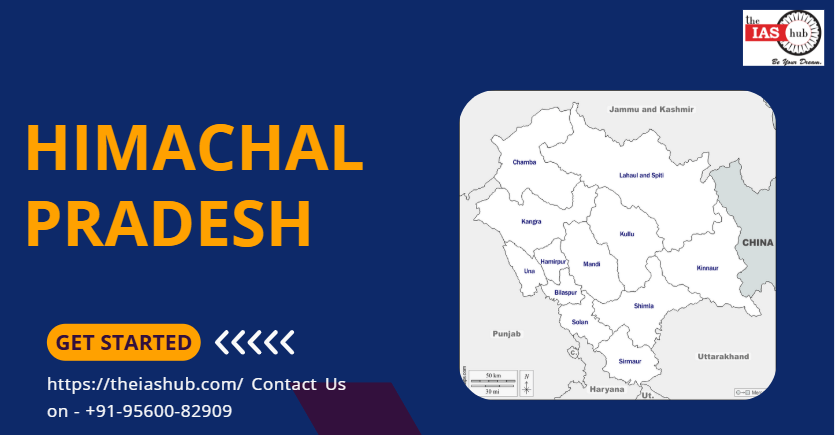

Himachal Pradesh was formed on January 25, 1971, and it spans an area of 55,673 sq km in the western Himalayas. Known for its scenic beauty, the state features rugged mountains and deep valleys. It follows a unicameral legislature and is governed under the Indian Constitution. Himachal Pradesh’s economy is driven by agriculture, tourism, and hydropower. Rich in culture, the state celebrates vibrant festivals and folk traditions. Its art and craft include wood carvings, woolen shawls, and intricate metalwork, reflecting its diverse heritage.
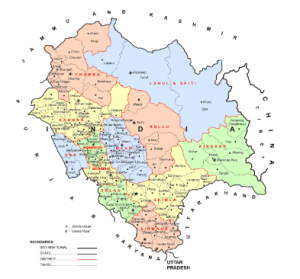
Himachal Pradesh Map
Himachal Pradesh is located in northern India, spans 55,673 km² with a population of about 7.3 million (according to the Census 2011). Known for its scenic Himalayan landscapes, it boasts 12 districts and over 90% rural population. Tourism and agriculture drive the economy of the state of Himachal Pradesh, while Shimla serves as the capital of the state. Major attractions in Himachal include Manali, Dharamshala, and the Great Himalayan National Park.
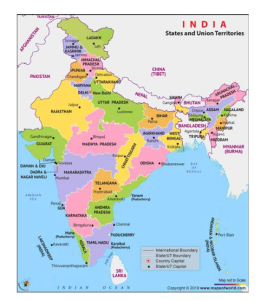
Image Credit: Maps of India
Himachal Pradesh, which is located in the northern part of India, is well known for its beautiful mountainous and cultural heritage. The state of Himachal Pradesh shares borders with Punjab, Haryana, Uttar Pradesh, Uttarakhand, and the Tibet Autonomous Region of China. Himachal Pradesh is also famous for its mineral resources, including deposits of limestone (which is 30% of India’s reserves), marble, and gypsum.
In terms of literacy, Himachal Pradesh ranks 5th in India with a literacy rate of approximately 83.8%. The state has been a significant contributor to India’s tourism, agriculture, and horticulture sectors. It holds a key position in renewable energy generation, particularly hydroelectric power.
The region’s history is rich, with evidence of ancient civilizations, and it has long been a part of India’s spiritual and religious landscape. The state was formally created in 1971 and has since grown into a well-governed region with a focus on sustainable development.
Himachal Pradesh shares its boundaries with 4 Indian states and an autonomous Tibet region in the east. Below is the list of Himachal Pradesh’s border states and regions:
The northern and eastern borders with Jammu and Kashmir, Tibet (China), and Uttarakhand give Himachal Pradesh a strategically important position. The region is crucial for defense, as it lies along the international border.
Himachal Pradesh is the source state of several important rivers, including the Sutlej river, Beas river, and the Yamuna river. Its diverse geographical borders support a variety of climates, from temperate in the foothills to alpine in the higher reaches. This makes the state ecologically significant, with rich flora and fauna, particularly in the protected areas and national parks.
Also Read: List of Indian States And Their Capitals 2025
Himachal Pradesh’s economy is primarily driven by agriculture, horticulture, tourism, and hydroelectric power generation. Here are a few insights to the economic profile of Himachal Pradesh:
[metaslider id=”5575″]
Before becoming a state, some areas of present-day Himachal Pradesh were part of the larger territories of Punjab, Kashmir, and the Kingdom of Nepal—until the Anglo-Nepal War (1814–1816). Ancient texts refer to the region as “Trigarta,” which was home to several dynasties over centuries. The Mauryas, Kushans, and Guptas ruled parts of the area during different periods, leaving behind cultural and political imprints.
During the medieval period, the region was governed by local dynasties such as Chamba, Kangra, and Mandi, each of which established small but influential kingdoms. These were marked by a mix of Hindu and Buddhist influences. The Rajputs also held power in various pockets, shaping much of the region’s cultural identity.
In the 19th century, Himachal Pradesh came under British rule and was integrated into the Punjab province. The British retained control over several princely states like Chamba and Mandi under their suzerainty, while allowing them limited autonomy.
After India’s independence, the modern political journey of Himachal Pradesh began. The Chief Commissioner’s Province of Himachal Pradesh was created on 15th April 1948. It became a Part C state with the implementation of the Indian Constitution on 26th January 1950. The princely state of Bilaspur was merged with Himachal Pradesh on 1st July 1954.
Later, on 1st November 1956, Himachal Pradesh was designated as a Union Territory. The reorganization of states on 1st November 1966 brought Kangra and most of the other hilly areas of Punjab into Himachal Pradesh, though it continued to be a Union Territory.
Finally, the Himachal Pradesh Statehood Act was passed by Parliament on 18th December 1970, and Himachal Pradesh officially became the eighteenth state of the Indian Union on 25th January 1971.
Since attaining statehood, Himachal Pradesh has witnessed steady political growth and economic development, led by a series of full-fledged elected governments that have worked toward the goal of self-reliance and inclusive progress.
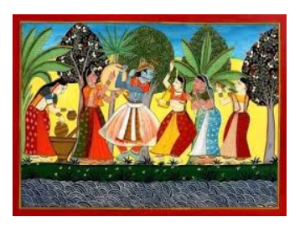
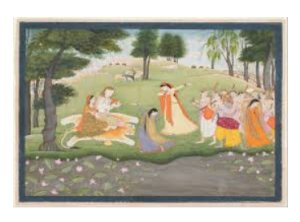
The Pahari paintings of Himachal Pradesh form an important part of India’s rich artistic heritage, particularly flourishing between the 17th and 19th centuries in the Himalayan hill kingdoms. These miniature paintings are known for their delicate brushwork, lyrical themes, and vibrant colors. Two of the most notable schools from this region are the Basohli School and the Kangra School.
The state legislature of Himachal Pradesh, known as the Himachal Pradesh Legislative Assembly, consists of 68 seats. All of these seats are directly elected, with no nominations. The constituencies of Himachal Pradesh have been redefined under the Delimitation Act of 2002, which also influences both state and national elections. The first assembly elections post-delimitation took place in 2007, significantly shaping the political landscape.
In terms of national representation, Himachal Pradesh has a total of 4 seats in the Lok Sabha. Out of these, 1 is reserved for Scheduled Castes (SC), and the remaining 3 are General seats. The political setup emphasizes a focus on General and SC constituencies.
Legislative Body Seats in Himachal Pradesh:
| Legislative Body | Seats in Himachal Pradesh |
| Lok Sabha (Lower House) | 4 |
| Rajya Sabha (Upper House) | 3 |
| Legislative Assembly | 68 |
Himachal Pradesh is known for its majestic Himalayan mountain ranges, lush valleys, rivers, and diverse flora and fauna.
Himachal Pradesh is home to several important rivers that are important for irrigation, hydroelectric power generation, and other ecological functions in Himachal Pradesh. Key rivers include:
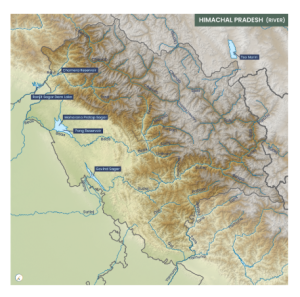
Himachal Pradesh, known for its breathtaking mountain passes, offers several iconic routes that challenge adventurers and provide stunning views of the Himalayas. Some key passes include:
Himachal Pradesh dams play an important role in the region’s water management, power generation, and agricultural irrigation. Here is the list of Dams in Himachal Pradesh:
Himachal Pradesh National parks and Tiger reserves are rich in biodiversity and represent Himachal Pradesh’s natural beauty. Below is the list of Himachal Pradesh’s Natural Parks and Tiger Reserves:
[metaslider id=”5575″]
Himachal Pradesh’s tribal heritage reflects a rich tapestry of traditions, vibrant art, and communal life rooted in nature. Tribes like the Gaddis, Kinnauris, and Lahaulis preserve unique customs through oral folklore, traditional dress, and intricate wood and metal crafts.
Folk dances such as Nati, Dangi, and Chhanak are performed during festivals and seasonal changes, often accompanied by traditional instruments like the nagara and shehnai. Art forms include Thangka paintings and wool weaving, showcasing deep spiritual and cultural symbolism. These elements of tribal life embody a deep respect for nature, community cohesion, and ancestral continuity.
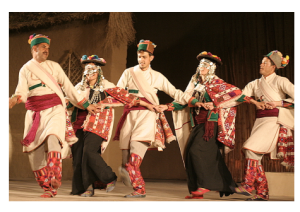
Image: Nati Dance
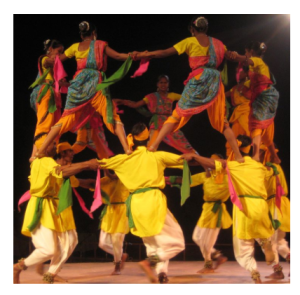
Image: Dangi Dance
Himachal Pradesh is renowned for its vibrant traditional arts and crafts that reflect its rich cultural heritage. Notable crafts include intricate wood carvings, especially seen in temples and homes, and Pahari miniature paintings characterized by vivid colors and fine detailing. The region also produces exquisite woolen shawls, like the Kullu and Kinnauri varieties, known for their geometric patterns and warmth.
Handwoven carpets, metal crafts, and Chamba rumals (embroidered handkerchiefs) showcase local artistry. Pottery and bamboo crafts are commonly practiced in rural areas. These art forms not only preserve ancestral knowledge but also support local livelihoods and cultural identity.
Himachal Pradesh’s mining and mineral development focuses on the sustainable extraction of resources like limestone, gypsum, slate, and quartzite. The state ensures regulated mining through the Himachal Pradesh Minor Minerals (Concession) Revised Rules, 1971, while promoting environmental protection and community development. Efforts are ongoing to curb illegal mining and encourage scientific, eco-friendly practices.
Are you preparing for UPSC 2025? Join IAShub’s UPSC coaching batches to boost your preparation. Enroll now!
Related Articles |
|
| Dams in India | Ramsar sites in India |
| Major Rivers in India | Tiger Reserves In India |
| National Parks In India | Biosphere Reserves In India |

Himachal Pradesh has 12 districts: Chamba, Kangra, Lahaul and Spiti, Kullu, Mandi, Hamirpur, Una, Bilaspur, Solan, Sirmaur, Shimla, and Kinnaur. Each district has distinct geography and cultural identity.
Himachal Pradesh is known for its unique cuisine like Chana Madra, Dham, Siddu, and Babru. The region is also famous for its handloom woolens, Kullu shawls, wooden crafts, and natural beauty with apple orchards and scenic mountain landscapes.
As of May 2025, the Chief Minister of Himachal Pradesh is Shri Sukhvinder Singh Sukhu. He assumed office on 11 December 2022, representing the Indian National Congress. SS Sukhu is a four-time MLA from the Nadaun constituency in Hamirpur district.
The official language of Himachal Pradesh is Hindi. However, many regional languages and dialects such as Pahari, Kangri, Mandeali, and Kinnauri are also widely spoken across different districts of the state.

Refine your answer writing skills and elevate your UPSC preparation with personalized support and expert feedback.
Fill out the form to get started with the program or any other enquiries !



Are you dreaming of becoming an IAS officer? Then, IAShub can be your best guide. It is one of the Best IAS Coaching in Delhi. Many students who want to clear the UPSC exam join IAShub for learning. The institute gives both online and offline classes. Their teachers are experienced and helpful. They easily explain every topic. Students also get notes, tests, and tips to do well in the exam.
IAShub is in Delhi and is trusted by many UPSC students. It offers coaching for every part of the UPSC exam – Prelims, Mains, and Interview. The classes are simple and easy to understand. The teachers are experts and guide students in the right way. IAShub is also known for its helpful notes, test series, and answer-writing practice. IAShub is the best coaching in Delhi and also gives UPSC Online Classes. This helps students from any place in India to learn. The online classes are live and also recorded. So, students can watch them anytime. These classes cover the full UPSC syllabus.
Here are some important services provided by IAShub:
The UPSC Civil Services Exam has three parts:
This exam is tough, but with the right guidance, it becomes easy to manage. Students must study smart and stay regular.
IAShub supports students from the beginning to the end. It gives the right books, tests, and notes. The classes are easy to follow, and the teachers are always ready to help. Students get personal doubt sessions too. The test series and answer checking help students learn where they need to do better. Also, free study materials save time and money.
IAShub also guides students during the final stage – the interview. Experts take mock interviews and give useful tips. This full support makes IAShub one of the best IAS coaching in Delhi.
Join 50,000+ UPSC Aspirants! 🚀
Get Free UPSC/IAS Study Materials, Daily Current Affairs, Editorial Summaries & Exam Updates.
Join Telegram Channel