
















Explore Gujarat's rich history, vibrant culture, rivers, national parks, and economic power. Discover its heritage, polity, and industrial growth—home to Gir lions, Navratri Garba, and world-class ports. A dynamic blend of tradition and progress.
 theIAShub | 09 Jun, 2025 | 8244 | 0 |
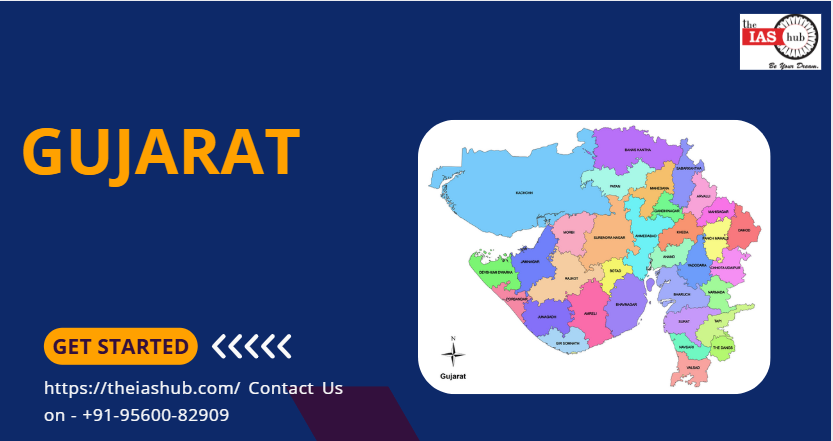

Gujarat, a key western state of India, plays an important role in the country’s economic and cultural framework. Known for its rich heritage, entrepreneurial spirit, and industrial growth, the state blends historical significance with modern development. Spanning 196,024 square kilometers, it is the fifth-largest state in India by area. As per the 2011 Census, Gujarat has a population of over 60 million. Gandhinagar, the state capital, serves as the administrative hub, while cities like Ahmedabad, Surat, and Vadodara contribute significantly to the state’s growth.
Also Read: List of Indian States And Their Capitals
Gujarat has a long historical timeline that includes ancient civilizations like the Indus Valley (Harappan) sites of Lothal and Dholavira. The region was ruled by powerful dynasties such as the Mauryas, Guptas, Solankis, and the Sultanate of Gujarat.
The medieval period saw the rise of the Mughal Empire, followed by Maratha influence before coming under British colonial rule. Post-independence, Gujarat was formed in 1960 under the Bombay Reorganisation Act, separating from the bilingual Bombay State to become a predominantly Gujarati-speaking region.
Also Read: Andhra Pradesh
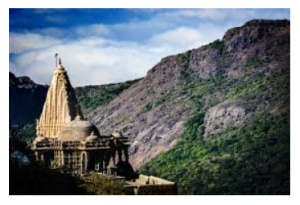
Gujarat is located in western India, bordered by Rajasthan to the northeast, Madhya Pradesh to the east, Maharashtra to the southeast, and the Arabian Sea to the west. It also shares an international border with Pakistan to the northwest. The state features diverse geographical regions, including the arid Rann of Kutch, fertile plains, and a long coastline.
| Category | Details |
| Geographical Features | – Kathiawar Peninsula (Saurashtra) and Kutch Desert (northwest) – Aravalli Range (eastern Gujarat) and Gulf of Khambhat coastal plains – River systems: Sabarmati, Mahi, Narmada, Tapi – Longest river: Narmada (~161 km in Gujarat; total length ~1,312 km) – Shortest major river: Sabarmati (~371 km) – Highest peak: Girnar (1,031 m in Junagadh) – Lowest point: Rann of Kutch (below sea level in some areas) – Rich in minerals (limestone, bauxite, petroleum) and biodiversity (Gir Forest, Rann of Kutch, marine ecosystems) |
| Climate Type | Arid/Desert (Kutch), Tropical Savanna (Saurashtra), Tropical Monsoon (southern plains) |
| Seasons | – Summer (Mar–Jun): Extremely hot (up to 45°C in Kutch) – Monsoon (Jun–Sep): Southwest monsoon (moderate rainfall; heavy in Dangs) – Post-Monsoon (Oct–Nov): Retreating monsoon (occasional cyclones) – Winter (Dec–Feb): Mild (10–25°C; colder in deserts) |
| Climate Variation | – Kutch & North Gujarat: Arid (<500 mm rainfall) – Saurashtra Peninsula: Semi-arid (500–700 mm) – South Gujarat (Surat, Valsad): Humid (>2,000 mm) – Aravalli Region (e.g., Banaskantha): Moderate rainfall (600–800 mm) – Coastal areas (Gulf of Kutch/Khambhat): Prone to cyclones |
Key Notes:
Also Read: Arunachal Pradesh
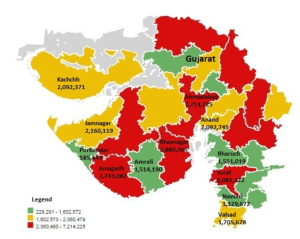
As per the 2011 Census, Gujarat had a population of 60.4 million. The population density stands at 308 persons per square kilometer, lower than the national average. The sex ratio is 919 females per 1000 males, below the national average but improving in recent years.
Literacy Rate: The state recorded a literacy rate of 78.0%, with male literacy at 85.8% and female literacy at 70.7%.
Languages Spoken:
Also Read: Chattisgarh
[metaslider id=”5575″]
Each state has its own symbols. Following are the state symbols of Gujarat:
| Symbol | Name |
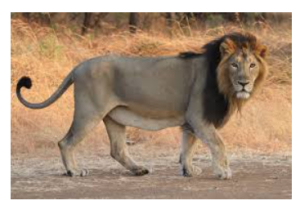
| State Animal | Asiatic Lion (Gir Forest) |
| State Bird | Greater Flamingo |
| State Tree | Banyan Tree (Vad) |
| State Flower | Marigold (Galgota) |
These symbols reflect Gujarat’s ecological diversity (e.g., Gir lions, Rann of Kutch flamingos) and cultural significance (e.g., Banyan tree as a gathering spot in villages).
Also Read: Assam
Gujarat follows a unicameral legislature, consisting only of the Legislative Assembly (Gujarat Vidhan Sabha).
| Category | Details |
| State Formation | Formed on May 1, 1960, after the division of Bombay State under the Bombay Reorganisation Act, 1960. Originally part of the Mumbai Presidency during British rule. |
| Chief Minister | Bhupendra Patel (Since September 2021) – Party: Bharatiya Janata Party (BJP) – Focus: Infrastructure, renewable energy, industrial development |
| Governor | Acharya Devvrat – In office since July 15, 2019 |
| Chief Justice (High Court) | Hon’ble Justice Sunita Agarwal – Assumed office: October 2, 2023 – High Court located in Ahmedabad (Gujarat High Court) |
| Legislature Type | Unicameral (Gujarat Legislative Assembly) |
| Legislative Assembly Members | 182 elected members |
| Lok Sabha Representation | 26 Members |
| Rajya Sabha Representation | 11 Members (indirectly elected) |
| Districts | 33 (as of 2024) |
| Local Governance Units | Divided into districts, talukas, and gram panchayats |
Key Notes:
Also Read: Bihar
Gujarat’s culture reflects a vibrant mix of folk traditions, business acumen, and spiritual heritage, shaped by its history as a major trade hub and the influence of kingdoms like the Solankis, Mughals, and Marathas. Key aspects include:
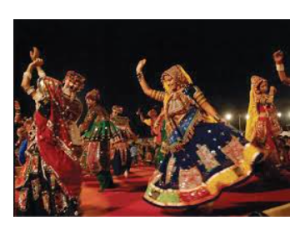
| Category | Details |
| Classical Dance of Gujarat | Garba and Dandiya Raas are the most prominent. |
| Garba | – A graceful, circular dance performed during Navratri. – Features: Fluid movements, clapping, and rhythmic footwork. – Themes: Devotion to Goddess Amba (Durga). – Unique Aspect: Dancers revolve around a Garba lamp or idol, symbolizing the cycle of life. |
| Dandiya Raas | – A lively stick-dance performed in pairs. – Features: Energetic footwork and synchronized strikes of decorated sticks (Dandiyas). – Themes: Celecles the victory of good over evil. – Unique Aspect: Originated from Lord Krishna’s Raas Leela with the gopis. |
| Theatre Art of Gujarat | Gujarat has a vibrant tradition of folk and devotional theatre. |
| Bhavai | – A folk theatre form with daring acts (e.g., balancing pots on the head). – Features: Satirical dialogues, acrobatics, and social commentary. – Unique Aspect: Performed by Taragala (troupe) communities. |
| Puppetry (Kathputli) | – String puppetry narrating folk tales and epics. – Features: Colorful wooden puppets, accompanied by folk music. – Unique Aspect: Recognized by UNESCO as an intangible cultural heritage. |
| Folk Music of Gujarat | Reflects the state’s rural life and spirituality. |
| Dayro | – Devotional songs sung by Maldhari (shepherd) communities. – Instruments: Harmonium, dholak, and manjira. |
| Sugam Sangeet | – Light devotional music by poets like Narsinh Mehta. – Themes: Love for Lord Krishna and moral teachings. |
| Classical Music in Gujarat | Strong influence of Hindustani classical and bhajans. |
| Performance Traditions | – Garba nights, Mirabhajan (devotional songs), and Baul music in Sufi traditions. |
| Festivals | – Navratri: World’s largest dance festival. – Uttarayan: International Kite Festival. – Janmashtami: Grand celebrations in Dwarka. – Rann Utsav: Cultural carnival in the White Desert. – Modhera Dance Festival: Classical performances at the Sun Temple. |
| Arts and Crafts | Gujarat is renowned for its handicrafts and textiles. |
| Patola Silk | – Double-ikat woven sarees from Patan (UNESCO-recognized). |
| Kutch Embroidery | – Intricate hand-stitched designs by Rabari and Ahir communities. |
| Bandhani (Tie-Dye) | – Vibrant patterned fabrics from Jamnagar and Bhuj. |
| Wood Carving | – Exquisite furniture and artifacts from Saurashtra. |
| Architecture | Gujarat showcases Indo-Islamic, Maru-Gurjara, and colonial styles. |
| Somnath Temple | – First among the 12 Jyotirlingas, rebuilt multiple times. |
| Rani ki Vav, Patan | – UNESCO-listed stepwell with intricate sculptures. |
| Sun Temple, Modhera | – 11th-century marvel with astronomical alignment. |
| Sabarmati Ashram | – Gandhi’s home and a symbol of Ahimsa (non-violence). |
Key Notes:
Gujarat National Parks and Wildlife Sanctuaries
Gujarat is home to diverse ecosystems, ranging from arid deserts to coastal wetlands, preserved in its national parks and sanctuaries.
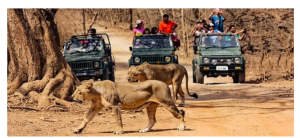
| Category | Details |
| National Parks in Gujarat | Gir National Park (Junagadh district) – Known for: Asiatic lions, leopards, and dry deciduous forests. – Area: 1,412 sq km Blackbuck National Park (Velavadar) – Known for: Blackbucks, Indian wolves, and grassland ecosystem. – Area: 34.08 sq km |
| Largest National Park | Gir National Park – Area: 1,412 sq km – Location: Junagadh district – Key features: Only wild population of Asiatic lions. |
| Smallest National Park | Vansda National Park – Area: 23.99 sq km – Location: Navsari district – Key features: Dense forests, sloth bears. |
| Notable Wildlife Sanctuaries | Nal Sarovar Bird Sanctuary Wild Ass Sanctuary (Little Rann of Kutch) Marine National Park (Gulf of Kutch) |
| Neighboring States and Boundaries | Rajasthan to the northeast, Madhya Pradesh to the east, Maharashtra to the southeast, Arabian Sea to the west. Gujarat has a 1,600 km coastline. |
| Ramsar Sites in Gujarat | Nal Sarovar Bird Sanctuary (2012) – Known for: Migratory birds and wetland ecosystem. |
| UNESCO World Heritage Sites | Rani ki Vav (Patan, 2014) Historic City of Ahmedabad (2017) |
| Lion Reserves in Gujarat | Gir National Park – Area: 1,412 sq km Gir Sanctuary – Area: 1,153 sq km |
Key Facts:
The economy of Gujarat is highly industrialized, with strong petrochemicals, textiles, pharmaceuticals and renewable energy sectors, supported by world-class infrastructure and business-friendly policies.
| Category | Details |
| Key Sectors | Petrochemicals: “Petroleum Capital of India” with Reliance Jamnagar (world’s largest refinery complex). Textiles & Diamonds: Surat handles 90% of world’s diamond cutting/polishing. Automobiles: Sanand hosts Tata Motors, Ford and Suzuki plants. Pharmaceuticals: Produces 33% of India’s medicines (Zydus, Cadila, Torrent). Renewable Energy: Leads in solar (Charanka – Asia’s largest solar park) and wind power. Port-led Economy: Handles 40% of India’s cargo through Mundra, Kandla ports. |
| Major Projects | Dholera SIR: ₹78,000 crore smart city project (920 sq km). GIFT City: India’s first operational IFSC with 400+ companies. Mumbai-Ahmedabad Bullet Train: ₹1.1 lakh crore Japan-assisted project. PM MITRA Park: ₹4,445 crore textile park in Navsari. Semiconductor Plant: Vedanta-Foxconn’s ₹1.54 lakh crore investment. |
| Economic Overview | GSDP for 2023-24: ₹22.5 lakh crore (9.1% growth). Sector-wise Contribution (2023-24): – Agriculture: 15% – Industry: 45% – Services: 40% Gujarat contributes 8.3% to India’s GDP with just 5% of population. |
| Major Economic Centres | Ahmedabad: Pharmaceuticals, IT and finance (Nirma, Adani). Surat: Diamond polishing and textiles. Vadodara: Petrochemicals and education. Rajkot: Engineering and auto parts. Ankleshwar: Chemical industries. |
| District-wise Economic Contribution | Ahmedabad: ₹7.8 lakh crore Surat: ₹4.5 lakh crore Vadodara: ₹2.9 lakh crore Rajkot: ₹2.1 lakh crore Bharuch: ₹1.7 lakh crore |
| Important Industrial Infrastructure | Gujarat International Finance Tec-City (GIFT): International financial hub. Sanand Auto Cluster: Tata Nano plant, Ford India factory. PCPIR Dahej: ₹50,000 crore petroleum investment region. Kandla Port: India’s largest by cargo volume. Reliance SEZ: 4,500-acre special economic zone in Jamnagar. |
Key Notes:
[metaslider id=”5575″]
Following is the list of all major and minor ports of Gujarat:
| Port Name | Type | Location | Key Features |
| Kandla Port | Major | Kutch | – India’s largest port by cargo volume (120+ MMT). – Handles petroleum, salt, and chemicals. – Free Trade Zone. |
| Mundra Port | Major | Kutch | – India’s largest private port (Adani Group). – Handles containers, coal, and crude oil. – Direct connectivity to Delhi-Mumbai corridor. |
| Pipavav Port | Major | Amreli | – First PPP port in India. – Specializes in bulk cargo and container handling. – Strategic location near Saurashtra. |
| Bhavnagar Port | Minor | Bhavnagar | – Primarily handles salt and marine trade. – Supports small-scale industries. |
| Porbandar Port | Minor | Porbandar | – Historical port (linked to Mahatma Gandhi). – Fishing and coastal trade hub. |
Following is the list of major and minor minerals found in Gujarat:
| Mineral Resource | Major Mining Areas / Districts | Details / Notes |
| Bauxite | Kutch, Bharuch | – Key raw material for aluminium production. – Gujarat contributes 15% of India’s bauxite. |
| Limestone | Junagadh, Porbandar | – Used in cement manufacturing (Ambuja, UltraTech). – High-quality deposits in Saurashtra. |
| Crude Oil | Ankleshwar, Mehsana | – ONGC and Reliance operations. – Gujarat produces 18% of India’s crude oil. |
| Salt | Kutch, Bhavnagar | – Produces 75% of India’s salt. – Largest producer globally. |
| Lignite | Kutch, Bharuch | – Used for thermal power generation. – Neyveli Lignite Corporation has operations here. |
| China Clay | Kutch, Sabarkantha | – Used in ceramics and paper industries. – High demand in tile manufacturing. |
| Fluorite | Vadodara | – Used in steel and chemical industries. – Limited but high-quality deposits. |
Key Notes:
Are you preparing for UPSC 2025? Join IAShub’s UPSC coaching batches to boost your preparation. Enroll now!
Gujarat, with its industrial might, entrepreneurial culture, and rich heritage, exemplifies balanced economic and social progress. Understanding Gujarat’s economy, geography, and governance is crucial for UPSC aspirants studying India’s federal diversity.

Key rivers include the Sabarmati (flowing through Ahmedabad), Narmada (with Sardar Sarovar Dam), Tapi in Surat, and Mahi. These support agriculture, industries, and drinking water needs.
Famous for garba dance during Navratri, Patola silk sarees, Kutch embroidery, traditional folk arts like Bhavai, and Jain pilgrimage sites (Palitana temples). The state celebrates Uttarayan (kite festival) globally.
Dominant sectors include petrochemicals (Jamnagar refineries), pharmaceuticals (Ahmedabad-Vadodara corridor), textiles (Surat's diamond-polishing and fabrics), and agriculture (cotton, groundnut, dairy).
Key protected areas: Gir National Park: Only home of Asiatic lions, Marine National Park (Gulf of Kutch): Coral reefs and dugongs, Wild Ass Sanctuary (Little Rann): Endangered Indian wild ass, Nal Sarovar: Ramsar wetland for migratory birds

Refine your answer writing skills and elevate your UPSC preparation with personalized support and expert feedback.
Fill out the form to get started with the program or any other enquiries !



Are you dreaming of becoming an IAS officer? Then, IAShub can be your best guide. It is one of the Best IAS Coaching in Delhi. Many students who want to clear the UPSC exam join IAShub for learning. The institute gives both online and offline classes. Their teachers are experienced and helpful. They easily explain every topic. Students also get notes, tests, and tips to do well in the exam.
IAShub is in Delhi and is trusted by many UPSC students. It offers coaching for every part of the UPSC exam – Prelims, Mains, and Interview. The classes are simple and easy to understand. The teachers are experts and guide students in the right way. IAShub is also known for its helpful notes, test series, and answer-writing practice. IAShub is the best coaching in Delhi and also gives UPSC Online Classes. This helps students from any place in India to learn. The online classes are live and also recorded. So, students can watch them anytime. These classes cover the full UPSC syllabus.
Here are some important services provided by IAShub:
The UPSC Civil Services Exam has three parts:
This exam is tough, but with the right guidance, it becomes easy to manage. Students must study smart and stay regular.
IAShub supports students from the beginning to the end. It gives the right books, tests, and notes. The classes are easy to follow, and the teachers are always ready to help. Students get personal doubt sessions too. The test series and answer checking help students learn where they need to do better. Also, free study materials save time and money.
IAShub also guides students during the final stage – the interview. Experts take mock interviews and give useful tips. This full support makes IAShub one of the best IAS coaching in Delhi.
Join 50,000+ UPSC Aspirants! 🚀
Get Free UPSC/IAS Study Materials, Daily Current Affairs, Editorial Summaries & Exam Updates.
Join Telegram Channel