
















Explore Rabindranath Tagore's biography including his early life, literary works, Nobel Prize, contributions to education, art, and India’s freedom movement. Learn how the Bard of Bengal reshaped Indian culture and left a global legacy.
 theIAShub | 03 Jun, 2025 | 18594 | 0 |

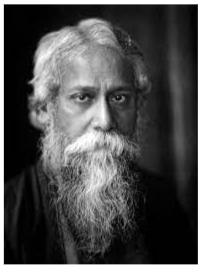
Rabindranath Tagore was a monumental figure in Indian and world literature. A poet, writer, philosopher, educator, and artist, he reshaped modern Indian culture and left a lasting impact on literature, education, and nationalist thought. He was the first non-European to win the Nobel Prize in Literature in 1913. This article covers his background, early life, career progression, contributions to art and culture, participation in the national movement, and enduring literary works.
Also Read: Constitutional bodies in India
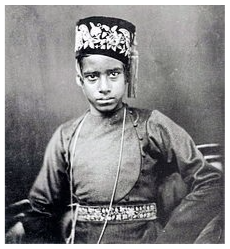
Rabindranath Tagore was born on 7 May 1861 in the historic Jorasanko mansion in Calcutta (now Kolkata). He belonged to the influential Tagore family, known for its contribution to the Bengal Renaissance. His father, Debendranath Tagore, was a reformer and philosopher, while his grandfather, Dwarkanath Tagore, was a noted industrialist and social leader.
Growing up in a culturally vibrant environment, Tagore was introduced early to literature, music, and philosophy. The Tagore household hosted discussions on politics, art, and reform, which influenced young Rabindranath profoundly.
Also Read: International Organisations
Rabindranath Tagore started writing poems at the age of eight. By the time he was sixteen, he had published poems under the pen name Bhanusimha. His early literary works attracted critical acclaim for their lyrical quality and depth.
In 1878, Tagore traveled to England to study law at University College London. Although he left without completing a degree, the exposure broadened his literary and philosophical outlook. On returning to India, he dedicated himself to literature and managing family estates.
Also Read: Cooperative Federalism in India
The career of Rabindranath Tagore spanned multiple disciplines — poetry, prose, drama, music, education, and painting.
| Year | Achievement/Position | Notable Work/Contribution |
| 1890-1901 | Managed family estates in East Bengal | Inspired short stories like Postmaster, Kabuliwala |
| 1901 | Founded Shantiniketan school | Promoted experimental education blending Indian and Western ideas |
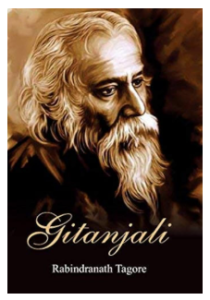
| 1910 | Published Gitanjali in Bengali | Later translated into English in 1912 |
| 1913 | Won Nobel Prize in Literature | First Asian recipient, for Gitanjali |
| 1915 | Knighted by British government (returned in 1919) | Protested against Jallianwala Bagh massacre |
| 1921 | Founded Visva-Bharati University | Promoted global cultural exchange |
| 1928–1941 | Focused on painting, essays, and educational reforms | Wrote significant works like Chinnapatra, Char Adhyay |
Rabindranath Tagore’s contribution to Indian art and culture was multi-dimensional.
Tagore integrated Indian classical traditions with modern forms, enriching India’s artistic heritage.
Also Read: National Parks in India
Rabindranath Tagore’s career as an artist was as remarkable as his literary achievements. Though he began painting relatively late in life, around 1928, he produced more than 2,300 artworks before his death. His paintings often featured bold lines, abstract human faces, imaginative landscapes, and symbolic forms, setting them apart from conventional art of his time. Tagore’s visual art rejected academic realism, focusing instead on expressive, intuitive forms. Alongside this, his contributions to drama were pioneering. He wrote and staged plays like Chitrangada (1892), Dak Ghar (1912), and Raktakarabi (1926), which blended lyrical dialogue, music, and dance with social and philosophical themes. His theatrical works challenged social norms, celebrated human dignity, and addressed issues like oppression, nationalism, and identity, laying the foundation for modern Indian drama. Through his visual art and stage productions, Tagore expanded the boundaries of Indian artistic expression and cultural thought.
Also Read: Statutory Bodies in India
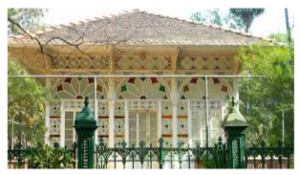
Rabindranath Tagore viewed education as a holistic process blending intellect, nature, and creativity. In 1901, he established Shantiniketan, an experimental school emphasizing outdoor learning, music, and the arts.
Later, in 1921, Shantiniketan evolved into Visva-Bharati University, a unique institution dedicated to blending Indian and international education models. The university attracted students and scholars from across the world.
Tagore’s educational philosophy promoted freedom of thought, respect for cultural diversity, and environmental awareness — values that remain relevant today.
Though not aligned with political parties, Rabindranath Tagore actively participated in India’s national awakening.
Tagore advocated for intellectual nationalism and believed that India’s freedom must be accompanied by cultural, educational, and social emancipation.
[metaslider id=”5575″]
Rabindranath Tagore was a prolific writer, authoring poetry, essays, short stories, novels, and plays. His works explored universal themes such as humanity, nature, spirituality, and social injustice.
Major Literary Works
| Type | Title (Year) |
| Poetry | Gitanjali (1910), Sonar Tari (1894), Balaka (1916) |
| Novels | Gora (1910), Chokher Bali (1903), Char Adhyay (1934) |
| Short Stories | Postmaster, Kabuliwala, Kshudhita Pashan |
| Plays | Dak Ghar (1912), Chitrangada (1892), Raktakarabi (1926) |
| Essays | Sadhana (1913), Nationalism (1917) |
His literary themes reflected human dignity, social equality, and cultural synthesis, marking a new era in modern Indian literature.
In 1913, Rabindranath Tagore received the Nobel Prize in Literature for the English translation of his Bengali poetry collection Gitanjali. The Nobel committee cited his work’s profound sensitivity, freshness, and purity.
Tagore was the first Asian Nobel laureate in any category. The recognition elevated Indian literature’s status globally and inspired future generations of Indian writers and thinkers.
Rabindranath Tagore was known by several respectful titles and affectionate nicknames, reflecting his stature in Indian and global cultural life.
| Title/Nickname | Meaning/Context |
| Gurudev | Mahatma Gandhi first addressed Tagore as Gurudev, meaning Revered Teacher. It signifies his role as a philosopher and educator. |
| Kaviguru | A popular Bengali term meaning The Poet-Teacher, acknowledging his eminence as a poet and guide. |
| Bhanusingha (Bhanusimha) | Tagore’s early literary pseudonym. He used this name when publishing his first poems at the age of sixteen. |
| Vishwakavi | Meaning World Poet, a title given by admirers for his global literary recognition, especially after his Nobel Prize in 1913. |
| Bard of Bengal | An informal English epithet, often used by scholars and writers to refer to Tagore as the poet and cultural icon of Bengal. |
Rabindranath Tagore spent his final years at Shantiniketan, continuing to write, paint, and engage in educational reforms. He passed away on 7 August 1941 in Calcutta after a prolonged illness.
His death was mourned nationally and internationally, marking the end of an era in Indian cultural and intellectual life.
Rabindranath Tagore’s life was a remarkable journey through literature, music, education, and public thought. His contributions enriched Indian culture, global literature, and nationalist ideals. The institutions he founded and the values he upheld continue to inspire India’s cultural and educational identity.
Are you preparing for UPSC 2025? Join IAShub’s UPSC coaching batches to boost your preparation. Enroll now!
From his early life in Calcutta to his Nobel Prize success and lasting legacy in Shantiniketan, Rabindranath Tagore remains one of the greatest figures in world history.

Tagore founded Shantiniketan in 1901 and later Visva-Bharati University in 1921, promoting holistic education blending art, nature, and international culture.
Tagore received the 1913 Nobel Prize in Literature for the English translation of his Bengali poetry collection Gitanjali.
He protested colonial rule by renouncing his knighthood in 1919 and inspired the freedom struggle through patriotic songs and writings.
Tagore’s renowned works include Gitanjali, Gora, Chokher Bali, Postmaster, Dak Ghar, and Raktakarabi, covering poetry, novels, short stories, and plays.

Refine your answer writing skills and elevate your UPSC preparation with personalized support and expert feedback.
Fill out the form to get started with the program or any other enquiries !



Are you dreaming of becoming an IAS officer? Then, IAShub can be your best guide. It is one of the Best IAS Coaching in Delhi. Many students who want to clear the UPSC exam join IAShub for learning. The institute gives both online and offline classes. Their teachers are experienced and helpful. They easily explain every topic. Students also get notes, tests, and tips to do well in the exam.
IAShub is in Delhi and is trusted by many UPSC students. It offers coaching for every part of the UPSC exam – Prelims, Mains, and Interview. The classes are simple and easy to understand. The teachers are experts and guide students in the right way. IAShub is also known for its helpful notes, test series, and answer-writing practice. IAShub is the best coaching in Delhi and also gives UPSC Online Classes. This helps students from any place in India to learn. The online classes are live and also recorded. So, students can watch them anytime. These classes cover the full UPSC syllabus.
Here are some important services provided by IAShub:
The UPSC Civil Services Exam has three parts:
This exam is tough, but with the right guidance, it becomes easy to manage. Students must study smart and stay regular.
IAShub supports students from the beginning to the end. It gives the right books, tests, and notes. The classes are easy to follow, and the teachers are always ready to help. Students get personal doubt sessions too. The test series and answer checking help students learn where they need to do better. Also, free study materials save time and money.
IAShub also guides students during the final stage – the interview. Experts take mock interviews and give useful tips. This full support makes IAShub one of the best IAS coaching in Delhi.

Join 50,000+ UPSC Aspirants! 🚀
Get Free UPSC/IAS Study Materials, Daily Current Affairs, Editorial Summaries & Exam Updates.
Join Telegram Channel