
















Explore the life and legacy of Jawaharlal Nehru, India's first Prime Minister. Learn about his role in the freedom struggle, Constitution-making, economic planning, and scientific development that shaped modern India after independence.
 theIAShub | 03 Jun, 2025 | 11447 | 0 |

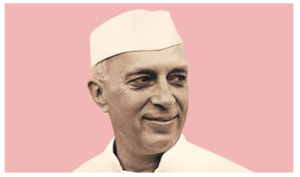
Jawaharlal Nehru played a central role in shaping India after independence. As the country’s first Prime Minister, he laid the foundation for its political structure, economic policy, and global position. His vision combined democratic values with a commitment to social justice and national development. Through steady leadership and long-term planning, he guided a newly free nation through its most formative years, leaving a legacy that continues to influence India’s direction today.
Also Read: Constitutional bodies in India
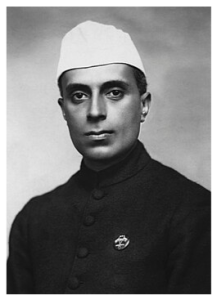
Jawaharlal Nehru was born on November 14, 1889, in Allahabad. He came from a wealthy Kashmiri Brahmin family. His father, Motilal Nehru, was a well-known lawyer and active in national politics. Nehru grew up in an environment filled with books, ideas, and debate.
He studied in England at Harrow, then at Trinity College, Cambridge. He later trained in law at the Inner Temple in London. In 1912, he returned to India and started working as a lawyer. But law did not hold his interest for long. Soon, he turned to the growing struggle for India’s freedom.
Also Read: International Organisations
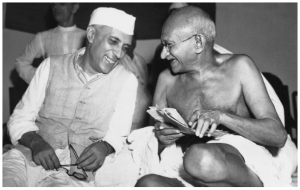
Nehru joined the Indian National Congress and quickly rose in its ranks. He was deeply influenced by Mahatma Gandhi’s call for non-violent resistance. Nehru took part in several movements against British rule. These included the Non-Cooperation Movement, the Civil Disobedience Movement, and the Quit India Movement.
| Year(s) | Role/Event | Key Contributions |
| 1912 | Returned to India after education in England | Began legal practice but soon joined freedom struggle |
| 1916 | First meeting with Mahatma Gandhi | Marked shift toward active participation in nationalism |
| 1919 | Joined Home Rule Movement | Advocated self-governance; protested Rowlatt Act |
| 1920s | Leader in Non-Cooperation Movement | Organized protests, promoted Swadeshi, and boycotted British institutions |
| 1923 | Elected President of Allahabad Municipal Council | Focused on public health and education reforms |
| 1927 | Founded Independence for India League | Advocated complete independence from British rule (merged with INC in 1928) |
| 1928 | General Secretary of INC | Played key role in drafting Nehru Report (demanding Dominion Status) |
| 1929 | President of Indian National Congress (Lahore Session) | Pushed for Purna Swaraj (Complete Independence) |
| 1930s | Imprisoned multiple times | Wrote Glimpses of World History and Autobiography in jail |
| 1936-37 | Advocated socialist policies within INC | Strengthened left-wing influence in freedom struggle |
| 1938 | Chairman of National Planning Committee | Laid foundation for India’s economic planning (precursor to Planning Commission) |
| 1942 | Participated in Quit India Movement | Arrested; demanded immediate British withdrawal |
| 1946 | Interim Prime Minister of India | Headed transitional government before independence |
| 1947 | First Prime Minister of Independent India | Established Planning Commission (1950); led nation through Partition |
| 1950 | Established Planning Commission | Formulated India’s Five-Year Plans for economic development |
| 1961 | Non-Aligned Movement | Ensured India’s strategic independence in Cold war era |
Key Contributions to National Movement
Also Read: Cooperative Federalism in India
[metaslider id=”5575″]
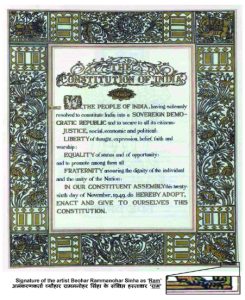
Jawaharlal Nehru played a key role in the framing of the Indian Constitution. As the leader of the Indian National Congress and the first Prime Minister, he set the direction for the Constituent Assembly, which was tasked with drafting the document. He believed that the Constitution should reflect the aspirations of a free and democratic India.
| Year | Committee/Role | Key Responsibilities | Specific Contributions | Outcome |
| 1928 | Member, Nehru Committee | Drafting constitutional framework | Proposed Dominion Status, bicameral legislature | First Indian attempt at constitution-making |
| 1946 | Chairman, Union Powers Committee | Define Centre-State relations | Recommended strong Central government | Basis for Union List (Article 246) |
| 1946-49 | Chairman, Union Constitution Committee | Draft Union government structure | Designed: • Parliamentary system • PM’s role • President’s powers |
Shaped Articles 74-79 |
| 1946 | Member, Provincial Constitution Committee | State governance framework | Advocated elected state governments | Influenced State List (Article 246) |
| Dec 1946 | Moved Objectives Resolution | Present constitutional philosophy | Included: • Sovereignty • Republic • Fundamental rights |
Became Preamble foundation |
| 1947-49 | Prime Minister in Constituent Assembly | Guide constitution-making | Ensured: • Secularism • Federalism • Social justice |
Finalized 395 Articles |
| 1948 | Advocated Fundamental Rights | Draft Part III provisions | Supported: • Equality (Articles 14-18) • Freedoms (19-22) |
Constitutional safeguards |
| 1949 | Championed Directive Principles | Shape Part IV guidelines | Pushed for: • Free education (Article 45) • Living wage (Article 43) |
Welfare state basis |
| 1949 | Supported Constitutional Amendments | Future modification process | Proposed flexible amendment procedure | Article 368 framework |
Also Read: Digital Arrest
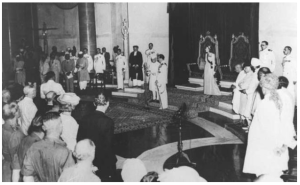
When India gained independence in 1947, Nehru was chosen as the first Prime Minister of India. He remained in office until his death in 1964. As Prime Minister, he worked to build a democratic, secular, and united nation.
Nehru laid the foundation for India’s political system. He valued free speech, a strong Parliament, and an independent judiciary. His calm but steady leadership helped guide the country through its early years.
Also Read: National Parks in India
Soon after independence, the princely state of Jammu and Kashmir became a flashpoint. In 1948, armed groups from Pakistan entered the region. India responded by sending troops to protect the area. This led to the first war between India and Pakistan.
Nehru took the matter to the United Nations. A ceasefire was declared, and the territory was split by the Line of Control. The issue remains unresolved, but the conflict tested Nehru’s leadership. It also set the tone for India’s future relations with its neighbors.
Nehru’s role in shaping free India was immense. He promoted unity in a diverse country. He focused on removing deep-rooted social inequalities. His government passed laws to end caste discrimination and improve the status of women.
He believed that education and equal opportunity were key to progress. Schools, colleges, and technical institutes were built during his time. Nehru wanted India to grow as a modern, just society. He believed the state must help those who had been left behind.
Also Read: Statutory Bodies in India
India needed a clear economic path after independence. Nehru chose a planned model. He introduced the First Five-Year Plan in 1951. This plan focused on building dams, increasing food production, and improving rural life.
| Policy/Initiative | Year | Key Features | Impact/Outcome | Criticisms |
| Five-Year Plans | 1951 (1st Plan) | – Focus on agriculture, irrigation, and infrastructure – State-led industrialization |
– GDP growth: ~3.6% annually – Foundation for public sector |
– Slow industrial growth – License Raj beginnings |
| Industrial Policy Resolution | 1948 & 1956 | – Categorized industries (Public, Private, Mixed) – Emphasis on heavy industries |
– Established PSUs (e.g., HEC, BHEL) – Reduced foreign dependence |
– Bureaucratic inefficiencies – Stifled private enterprise |
| Green Revolution (Prelude) | 1950s-60s | – Agricultural universities (e.g., Pantnagar) – Irrigation projects (Dams) |
– Increased food production – Reduced famines |
– Limited to few states initially – Neglected small farmers |
| Public Sector Undertakings (PSUs) | 1950s onward | – Steel plants (Bhilai, Rourkela) – IITs & AIIMS established |
– Job creation – Technical education boost |
– Overstaffing – Low profitability |
| Mixed Economy Model | 1947-1964 | – Balance between state control and private sector | – Self-reliance in key sectors – Diversified industrial base |
– License-Permit Raj criticisms – Foreign investment discouraged |
| Land Reforms | 1950s | – Abolition of Zamindari – Land ceiling laws |
– Reduced feudal exploitation – Empowered tenants |
– Poor implementation in states – Loopholes exploited |
| Foreign Trade Policy | 1950s | – Import substitution – Protectionist tariffs |
– Reduced trade deficit – Domestic industry protection |
– Isolation from global markets – Low competitiveness |
| Infrastructure Development | 1950s-60s | – Bhakra Nangal Dam – Road/rail expansion |
– Energy and transport boost – Rural connectivity |
– Cost overruns – Delayed projects |
Nehru saw science and technology as vital for India’s future. He helped set up top research institutions and engineering colleges. The Indian Institutes of Technology (IITs) were among the most important.
| Initiative/Institution | Year | Key Features | Impact/Outcome | Visionary Quote |
| Indian Institutes of Technology (IITs) | 1951 (First in Kharagpur) | Modeled after MIT for technical education | Created world-class engineers; 23 IITs today | “Scientists are the modern prophets” |
| Atomic Energy Commission | 1948 | Headed by Homi Bhabha | Launched India’s nuclear program | “The future belongs to science” |
| CSIR (Council of Scientific & Industrial Research) | 1942 (Expanded post-1947) | Network of 38 national labs | Pioneered indigenous R&D | “Science solves problems of hunger and poverty” |
| Space Program | 1962 (INCOSPAR) | Predecessor to ISRO | Led to Aryabhata satellite (1975) | “Reach for the stars through science” |
| AIIMS (All India Institute of Medical Sciences) | 1956 | Model tertiary healthcare institute | Became India’s premier medical institution | “Health is the foundation of progress” |
| Damodar Valley Corporation | 1948 | First multipurpose river valley project | Model for later dams like Bhakra-Nangal | “Dams are the temples of modern India” |
| Indian Statistical Institute | 1931 (Strengthened post-1947) | Pioneered data science applications | Foundation for economic planning | “Facts are sacred” |
| National Physical Laboratory | 1947 | Standards and measurement research | Certified indigenous technologies | “Precision is the soul of science” |
The India–China War of 1962 was one of the most difficult moments in Jawaharlal Nehru’s time as Prime Minister. The conflict arose from a long-standing border dispute, especially in the regions of Aksai Chin and Arunachal Pradesh. Nehru had pursued a policy of peaceful coexistence with China and was a key architect of the Panchsheel Agreement signed in 1954. This agreement laid down five principles of peaceful coexistence, including mutual respect for sovereignty, non-aggression, and non-interference in each other’s internal affairs. The Panchsheel was intended to guide friendly relations between India and China and foster trust between the two nations.
However, despite the spirit of Panchsheel and even promoting the slogan “Hindi-Chini Bhai-Bhai” to emphasize friendly ties, tensions grew as both countries began asserting their claims over disputed territories. In October 1962, Chinese forces launched a sudden attack across the Himalayan border. India was unprepared for the scale and speed of the offensive. The Indian army suffered heavy losses, and China soon declared a unilateral ceasefire after advancing deep into Indian territory. The war was a serious blow to Nehru’s foreign policy and exposed weaknesses in India’s defense preparedness.
After the war, India began to rebuild its defense capabilities. The war remains a key moment in Nehru’s time in office.
[metaslider id=”5575″]
Jawaharlal Nehru died on May 27, 1964. He had suffered a stroke and could not recover. His passing brought an outpouring of grief across the country. For many, it was like losing a father.
He had led India through its most critical years. His calm presence, strong ideals, and clear vision had held the young nation together. Nehru was cremated with full honors, and millions came to pay their respects.
His legacy lives on in the institutions he built and the ideas he championed. His belief in democracy, secularism, and equality continues to shape India.
Jawaharlal Nehru was a thoughtful writer whose books reflect his deep understanding of history, politics, and society. His most well-known works include The Discovery of India, Glimpses of World History, and An Autobiography. Written mostly during his time in prison, these books offer insight into his worldview and intellectual depth. The Discovery of India explores India’s rich cultural heritage and his vision for its future. Glimpses of World History is a collection of letters he wrote to his daughter, Indira Gandhi, tracing major world events and ideas. An Autobiography presents a candid account of his personal and political life up to the 1930s. These writings remain valuable for their clarity, historical insight, and human perspective.
Jawaharlal Nehru was not just India’s first Prime Minister. He was the mind behind much of modern India’s structure. From his early life to his rise in the national movement, from handling the India–Pakistan Conflict of 1948 to facing the India–China War, his leadership defined a generation.
Are you preparing for UPSC 2025? Join IAShub’s UPSC coaching batches to boost your preparation. Enroll now!
He built the foundation for the economy, promoted science and technology, and stood for a just, inclusive society. His death marked the end of an era, but his ideas remain part of India’s DNA.

Nehru led India’s military and diplomatic response to Pakistani aggression in Kashmir, eventually bringing the issue to the United Nations for resolution.
He guided key committees, moved the Objectives Resolution, and ensured the Constitution reflected democratic, secular, and inclusive values.
He established institutions like IITs and AIIMS, promoted atomic energy, and laid the foundation for India’s space and research programs.
The 1962 war exposed flaws in Nehru's China policy and defense strategy, marking a turning point in India’s foreign and military outlook.

Refine your answer writing skills and elevate your UPSC preparation with personalized support and expert feedback.
Fill out the form to get started with the program or any other enquiries !



Are you dreaming of becoming an IAS officer? Then, IAShub can be your best guide. It is one of the Best IAS Coaching in Delhi. Many students who want to clear the UPSC exam join IAShub for learning. The institute gives both online and offline classes. Their teachers are experienced and helpful. They easily explain every topic. Students also get notes, tests, and tips to do well in the exam.
IAShub is in Delhi and is trusted by many UPSC students. It offers coaching for every part of the UPSC exam – Prelims, Mains, and Interview. The classes are simple and easy to understand. The teachers are experts and guide students in the right way. IAShub is also known for its helpful notes, test series, and answer-writing practice. IAShub is the best coaching in Delhi and also gives UPSC Online Classes. This helps students from any place in India to learn. The online classes are live and also recorded. So, students can watch them anytime. These classes cover the full UPSC syllabus.
Here are some important services provided by IAShub:
The UPSC Civil Services Exam has three parts:
This exam is tough, but with the right guidance, it becomes easy to manage. Students must study smart and stay regular.
IAShub supports students from the beginning to the end. It gives the right books, tests, and notes. The classes are easy to follow, and the teachers are always ready to help. Students get personal doubt sessions too. The test series and answer checking help students learn where they need to do better. Also, free study materials save time and money.
IAShub also guides students during the final stage – the interview. Experts take mock interviews and give useful tips. This full support makes IAShub one of the best IAS coaching in Delhi.
Join 50,000+ UPSC Aspirants! 🚀
Get Free UPSC/IAS Study Materials, Daily Current Affairs, Editorial Summaries & Exam Updates.
Join Telegram Channel