
















Explore Kerala’s rich heritage with insights on its history, polity, culture, rivers, national parks, and economic profile. Discover key facts about its geography, festivals, biodiversity, and development highlights. Courtesy: Maps of India.
 theIAShub | 03 Jun, 2025 | 7873 | 0 |

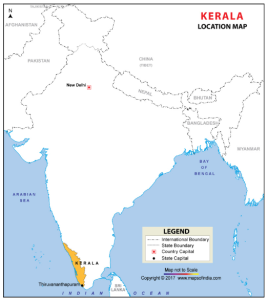
Courtesy: Maps of India
Kerala, a prominent southern state of India, holds significant importance in the country’s socio-cultural and economic landscape. Known for its lush greenery, high literacy rate, and vibrant traditions, the state combines natural beauty with progressive development. Spanning 38,863 square kilometers, it is the 21st-largest state in India by area. As per the 2011 Census, Kerala has a population of over 33 million. Thiruvananthapuram, the state capital, serves as a major administrative and cultural hub, while cities like Kochi, Kozhikode, and Thrissur contribute to its economic and cultural prominence.
Also Read: Indian States and Their Capitals
Kerala has a rich historical legacy dating back to ancient times, with trade links to Mesopotamia, Egypt, and Rome. The region was influenced by the Chera, Chola, and Pandya dynasties, which played a crucial role in shaping its early culture and trade. The arrival of St. Thomas the Apostle in 52 AD marked the beginning of Christianity in Kerala, while Arab traders introduced Islam.
During the medieval period, Kerala was divided into several small kingdoms, including the Zamorin of Calicut and the Kingdom of Travancore. The Portuguese, Dutch, and British established colonial influence through trade, particularly in spices. Post-independence, Kerala was formed in 1956 under the States Reorganisation Act, merging Malayalam-speaking regions into a single administrative unit.
Also Read: Andhra Pradesh
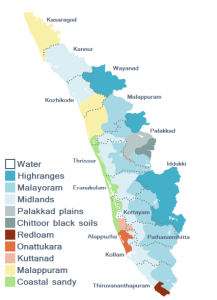
Kerala is situated on the Malabar Coast in southern India, bordered by Karnataka to the north, Tamil Nadu to the east and south, and the Arabian Sea to the west. The state features diverse geographical zones, including coastal plains, Western Ghats mountain ranges, and backwaters. Known for its tropical climate, Kerala experiences heavy monsoon rains, contributing to its rich biodiversity and lush landscapes.
| Category | Details |
| Geographical Features | – Coastal Plains & Backwaters (dominant landform) – Western Ghats (mountain range) & midland hills – River systems: Periyar, Bharathapuzha, Pamba – Longest river: Periyar (~244 km in Kerala) – Shortest major river: Manjeswaram Puzha (~16 km) – Highest peak: Anamudi (2,695 m) – Smallest peak: Ponmudi Hill (1,100 m elevation) – Lowest point: Coastal areas (sea level) – Rich in biodiversity (tropical forests, spices) & water resources |
| Climate Type | Tropical Monsoon (hot & humid with heavy rainfall) |
| Seasons | – Summer (Mar–May): Hot & humid – Monsoon (Jun–Sep): Heavy rainfall (SW monsoon) – Post-Monsoon (Oct–Dec): Retreating monsoon (occasional rains) – Winter (Jan–Feb): Mild & pleasant |
| Climate Variation | – Western Ghats: Very high rainfall (>5,000 mm in some areas) – Midlands: Moderate rainfall (2,500–3,500 mm) – Coastal areas: Humid with high rainfall (~3,000 mm) – Eastern slopes (rain shadow regions): Drier (~1,500 mm) |
As per the 2011 Census, Kerala had a population of 33.4 million. The population density stands at 860 persons per square kilometer. The sex ratio is 1,084 females per 1,000 males, significantly above the national average.
Literacy Rate: The state recorded a literacy rate of 94.0%, with male literacy at 96.1% and female literacy at 92.1%.
Languages Spoken:
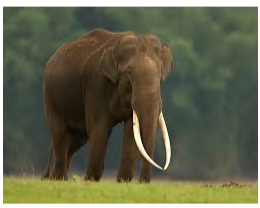
Each state has its own symbols. Following are the state symbols of Kerala:
| Symbol | Name |
| State Animal | Indian Elephant |
| State Bird | Great Hornbill |
| State Tree | Coconut Palm |
| State Flower | Golden Shower (Kanikonna) |
These symbols reflect Kerala’s cultural heritage and ecological diversity.
Also Read: Chattisgarh
[metaslider id=”5575″]
Kerala follows a unicameral legislature, consisting of the Legislative Assembly (Vidhana Sabha).
| Category | Details |
| State Formation | Formed on November 1, 1956 (reorganized under States Reorganisation Act). |
| Chief Minister | Pinarayi Vijayan (Since 2021) – Party: CPI(M) – Focus: Social welfare, education, healthcare |
| Governor | Arif Mohammed Khan – In office since September 6, 2019 |
| Chief Justice (High Court) | Hon’ble Justice A.J. Desai – Assumed office: 2023 – High Court located in Kochi |
| Legislature Type | Unicameral (Legislative Assembly) |
| Legislative Assembly Members | 140 elected members |
| Lok Sabha Representation | 20 Members |
| Rajya Sabha Representation | 9 Members (indirectly elected) |
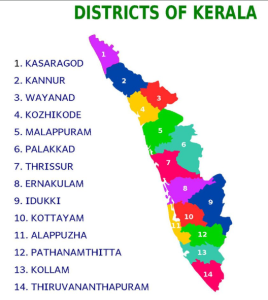
| Districts | 14 (as of 2024) |
| Local Governance Units | Divided into districts, taluks, and gram panchayats |
Also Read: Assam
Kerala’s culture reflects a rich blend of classical heritage, folk traditions, festivals, and art forms shaped by its ancient trade links, diverse communities, and regional influences.
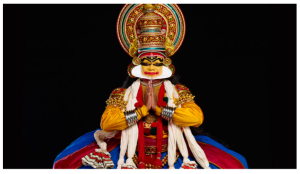
| Category | Details |
| Classical Dance of Kerala | Kathakali and Mohiniyattam are prominent. |
| Kathakali | – A classical dance-drama with roots in 17th century Kerala. – Features: Elaborate costumes, vibrant makeup (especially facial colors), and rhythmic music. – Themes: Epics like Ramayana, Mahabharata, and Puranic stories. – Unique Aspect: Combines intricate mudras (hand gestures), facial expressions and footwork, often performed overnight. |
| Theatre Art of Kerala | Kerala has a vibrant tradition of folk and classical theatre. |
| Koodiyattam | Ancient Sanskrit theatre recognized by UNESCO as Intangible Cultural Heritage. |
| Theyyam | Ritualistic performance where dancers embody deities, with elaborate costumes and makeup. |
| Tholpavakoothu | Shadow puppetry showcasing stories from Ramayana, accompanied by traditional music. |
| Folk Music of Kerala | Reflects the state’s agrarian lifestyle and devotional fervor. |
| Oppana | Traditional Muslim bridal songs performed in groups with clapping. |
| Mappila Paattu | Folk songs blending Malayalam and Arabic influences. |
| Margam Kali | Traditional group dance of Syrian Christians performed in circular formation. |
| Classical Music in Kerala | Kerala contributes significantly to Carnatic music tradition. |
| Performance Traditions | Concerts, Sopana Sangeetham (temple music), and Kathakali music are integral to cultural life. |
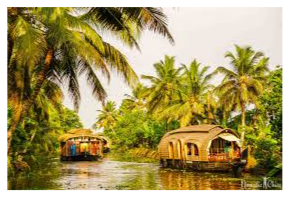
| Festivals | – Onam: 10-day harvest festival with boat races, floral carpets (Pookalam) and feasts. – Vishu: Malayalam New Year marked by Vishukkani and fireworks. – Thrissur Pooram: Grand temple festival with caparisoned elephants and percussion ensembles. – Christmas, Eid, and Easter widely celebrated. – Nehru Trophy Boat Race: Spectacular snake boat races in Alappuzha. |
| Arts and Crafts | Kerala boasts a rich legacy of handicrafts and traditional arts. |
| Kerala Kasavu | Traditional off-white sarees with golden borders, worn during festivals. |
| Coir Products | Eco-friendly products made from coconut fiber. |
| Aranmula Kannadi | Unique metal mirrors made using secret traditional techniques. |
| Nettipattam | Intricate elephant caparisons made of gold-plated metal. |
| Architecture | Kerala showcases unique vernacular style with influences from Dravidian and foreign traders. |
| Padmanabhapuram Palace | Wooden palace showcasing traditional Kerala architecture. |
| Vadakkunnathan Temple | Classic example of Kerala temple architecture with murals and wood carvings. |
| Jewish Synagogue, Kochi | Features Chinese tiles and Belgian chandeliers, reflecting Kerala’s multicultural history. |
| Kerala Murals | Ancient temple art form depicting mythological scenes in natural pigments. |
Also Read: Bihar
Kerala is home to diverse ecosystems, ranging from Western Ghats rainforests to grasslands, preserved in its national parks and sanctuaries.
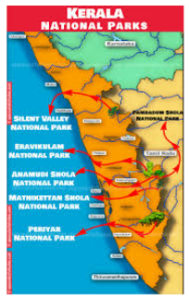
| Category | Details |
| National Parks in Kerala | Eravikulam National Park (Idukki district) – Known for: Shola grasslands, endangered Nilgiri tahr, and Neelakurinji flowers (blooms once every 12 years) – Area: 97 sq. km Periyar National Park (Idukki and Pathanamthitta districts) – Known for: Periyar Lake, tigers, elephants, and boat safaris – Area: 305 sq. km Silent Valley National Park (Palakkad district) – Known for: Tropical evergreen forests, lion-tailed macaques – Area: 89.52 sq. km |
| Largest National Park | Periyar National Park – Area: 305 sq. km – Location: Idukki and Pathanamthitta districts – Key features: Tiger reserve, artificial lake, and high biodiversity |
| Smallest National Park | Pampadum Shola National Park – Area: 1.32 sq. km – Location: Idukki district – Key features: Montane grasslands, shola forests, and rare birds |
| Notable Wildlife Sanctuaries | Wayanad Wildlife Sanctuary Parambikulam Wildlife Sanctuary Chinnar Wildlife Sanctuary Thattekad Bird Sanctuary |
| Neighboring States and Boundaries | Karnataka to the north, Tamil Nadu to the east Kerala has a 590 km coastline along the Arabian Sea |
| Ramsar Sites in Kerala | Vembanad-Kol Wetland (2002) – Known for: Largest lake in Kerala, backwaters, and migratory birds Ashtamudi Wetland (2002) – Known for: Estuarine system supporting diverse aquatic life |
| UNESCO World Heritage Sites | Western Ghats (2012) – Covers Kerala sites including Agasthyamalai, Periyar, and Silent Valley Nilgiri Mountain Railway (2005) – Extends into Kerala (part of Mountain Railways of India) |
| Tiger Reserves in Kerala | Periyar Tiger Reserve – Area: 925 sq. km – Notified: 1978 Parambikulam Tiger Reserve – Area: 643.66 sq. km – Notified: 2009 |
Also Read: National Parks in India
The economy of Kerala is diversified, with strong IT, manufacturing, and agricultural sectors, supported by robust infrastructure and innovation.
| Category | Details |
| Key Sectors | Information Technology: Technopark (Trivandrum) and Infopark (Kochi) emerging as IT hubs. Ayurveda & Medical Tourism: Global destination for traditional medicine and wellness tourism. Manufacturing: Shipbuilding (Cochin Shipyard), petroleum (Kochi Refinery), and rubber products. Agriculture: Major producer of rubber, spices (pepper, cardamom), coconut, and tea. Fisheries: Contributes significantly to marine exports and domestic consumption. |
| Major Projects | Kochi Metro: Urban transit system enhancing city connectivity. Vizhinjam Port: Deep-sea international container transshipment terminal. Kochi Smart City: IT/ITES hub with global partnerships. GAIL Pipeline: Natural gas infrastructure project across Kerala. K-Rail (SilverLine): Proposed semi-high-speed rail corridor. |
| Economic Overview | GSDP for 2023–24: ₹11.5 lakh crore, with a growth rate of 7.1%. Sector-wise Contribution (2023–24): – Agriculture and Allied: 18% – Industry: 24% – Services: 58% The economy is driven by remittances, tourism, and services sector, with growing IT and healthcare industries. |
| Major Economic Centres | Kochi: Commercial capital with port, IT, and tourism (Cochin Port, Infopark). Thiruvananthapuram: Government, IT (Technopark), and space research (VSSC). Kozhikode: Trade, commerce, and education hub. Thrissur: Cultural capital with thriving gold trade and small industries. Kannur: Handloom and coir industry center. |
| District-wise Economic Contribution | Ernakulam: ₹3.2 lakh crore Thiruvananthapuram: ₹2.1 lakh crore Kozhikode: ₹1.5 lakh crore Thrissur: ₹1.3 lakh crore Kannur: ₹0.9 lakh crore Ernakulam leads due to port activities, industries, and services sector. |
| Important Industrial Infrastructure | Technopark, Trivandrum: First and largest IT park in Kerala. Infopark, Kochi: Major IT/ITES hub with global companies. Cochin Special Economic Zone: Export-oriented industrial area. Cochin Shipyard: India’s largest shipbuilding and maintenance facility. Kochi Refinery: Major petroleum processing plant. |
[metaslider id=”5575″]
Major & Minor Ports of Kerala
Following is the list of major and minor ports of Kerala:
| Port Name | Type | Location | Key Features |
| Kochi Port | Major Port | Kochi | – Largest container transshipment hub in India – Handles spices, tea, and petroleum – Home to Southern Naval Command (Indian Navy) |
| Vizhinjam Port | Minor Port | Thiruvananthapuram | – Deep-sea port under construction – Aims to rival Colombo as transshipment hub |
| Beypore Port | Minor Port | Kozhikode | – Historic timber trade port – Known for traditional shipbuilding (Uru crafts) |
| Azheekkal Port | Minor Port | Kannur | – Major fishing and trade harbor – Potential future LNG terminal site |
| Kollam Port | Minor Port | Kollam | – Ancient port with Chinese trade links – Now handles coastal cargo and fishing |
Also Read: Statutory Bodies in India
Mineral Resources in Kerala
Kerala has limited but significant mineral resources. Following are the mineral resources found in Kerala:
| Mineral Resource | Major Mining Areas / Districts | Details / Notes |
| Ilmenite | Alappuzha, Kollam | – Used in titanium production – Found in coastal sands |
| Rutile | Kollam, Thiruvananthapuram | – Titanium dioxide mineral – Recovered from beach sands |
| Monazite | Alappuzha, Kannur | – Contains rare earth elements & thorium – Atomic Minerals Directorate oversees mining |
| Silica Sand | Kollam, Alappuzha | – High purity silica for glass industry |
| China Clay | Thiruvananthapuram, Kollam | – Used in ceramics and paper industry |
| Limestone | Palakkad, Kannur | – Small deposits for cement production |
| Graphite | Kollam, Pathanamthitta | – Limited mining activity |
| Bauxite | Kannur, Kasaragod | – Minor deposits |
Also Read: UPSC Exam Syllabus
Unique and Notable Facts about Kerala
Are you preparing for UPPCS Mains 2024? Join IAShub’s UPPCS coaching batches to boost your preparation. Enroll now!
Kerala, with its exceptional social development indicators, unique geography, and progressive policies, offers a distinct model of human development. Understanding Kerala’s achievements in health, education, and sustainable development is crucial for UPSC aspirants analyzing India’s regional diversity.

Kerala has 44 rivers including Periyar (longest), Bharathapuzha, Pamba, and Chaliyar. These west-flowing rivers are vital for irrigation, drinking water, and hydroelectric power.
Kerala's culture includes classical art forms like Kathakali, Mohiniyattam, Theyyam, and Koodiyattam (UNESCO heritage). Festivals like Onam, Vishu, and Thrissur Pooram are celebrated with grandeur.
Remittances from Gulf countries, tourism, spices, rubber, and IT (Kochi is emerging tech hub). Fisheries and coir industry also contribute significantly.
Important protected areas include Periyar Tiger Reserve, Eravikulam National Park (home to Nilgiri Tahr), Silent Valley National Park, and Wayanad Wildlife Sanctuary. Known for elephants, tigers, and endemic species.

Refine your answer writing skills and elevate your UPSC preparation with personalized support and expert feedback.
Fill out the form to get started with the program or any other enquiries !



Are you dreaming of becoming an IAS officer? Then, IAShub can be your best guide. It is one of the Best IAS Coaching in Delhi. Many students who want to clear the UPSC exam join IAShub for learning. The institute gives both online and offline classes. Their teachers are experienced and helpful. They easily explain every topic. Students also get notes, tests, and tips to do well in the exam.
IAShub is in Delhi and is trusted by many UPSC students. It offers coaching for every part of the UPSC exam – Prelims, Mains, and Interview. The classes are simple and easy to understand. The teachers are experts and guide students in the right way. IAShub is also known for its helpful notes, test series, and answer-writing practice. IAShub is the best coaching in Delhi and also gives UPSC Online Classes. This helps students from any place in India to learn. The online classes are live and also recorded. So, students can watch them anytime. These classes cover the full UPSC syllabus.
Here are some important services provided by IAShub:
The UPSC Civil Services Exam has three parts:
This exam is tough, but with the right guidance, it becomes easy to manage. Students must study smart and stay regular.
IAShub supports students from the beginning to the end. It gives the right books, tests, and notes. The classes are easy to follow, and the teachers are always ready to help. Students get personal doubt sessions too. The test series and answer checking help students learn where they need to do better. Also, free study materials save time and money.
IAShub also guides students during the final stage – the interview. Experts take mock interviews and give useful tips. This full support makes IAShub one of the best IAS coaching in Delhi.
Join 50,000+ UPSC Aspirants! 🚀
Get Free UPSC/IAS Study Materials, Daily Current Affairs, Editorial Summaries & Exam Updates.
Join Telegram Channel