
















Explore Karnataka’s History, Geography, Culture, Polity, Rivers, National Parks, and Economic Profile. Discover heritage cities, IT hubs, biodiversity, festivals, ports, and mineral wealth of this dynamic southern Indian state.
 theIAShub | 15 May, 2025 | 6034 | 0 |

Karnataka, a key southern state of India, plays an important role in the country’s economic and cultural framework. Known for its rich heritage, linguistic diversity, and technological hubs, the state blends historical depth with modern growth. Spanning 191,791 square kilometers, it is the sixth-largest state in India by area. As per the 2011 Census, Karnataka has a population of over 61 million. Bengaluru, the state capital, also serves as India’s leading IT and innovation center, while cities like Mysuru, Mangaluru, and Hubballi serve as regional economic and cultural centers.
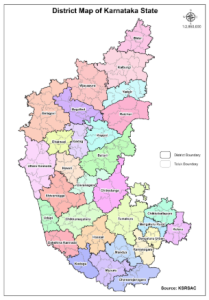
Source: KSRSAC
Also Read: List of Indian States And Their Capitals
Karnataka has a long historical timeline that includes early Stone Age settlements. The region saw the rise of powerful dynasties like the Kadambas, Chalukyas, Hoysalas, and Vijayanagara Empire. These kingdoms contributed to temple architecture, literature, and governance systems that shaped the region’s identity.
The Vijayanagara Empire, in particular, left a lasting legacy through its capital at Hampi, now a UNESCO World Heritage Site. After its fall, parts of Karnataka came under the rule of the Deccan Sultanates and later the Mughals. In the 18th century, the state witnessed resistance led by Haider Ali and Tipu Sultan against British forces.
Post-independence, the state was reorganized in 1956 under the States Reorganisation Act, uniting Kannada-speaking regions into one administrative unit. It was officially renamed Karnataka in 1973.
Also Read: Andhra Pradesh
Geography and Climate of Karnataka
Karnataka is located in southern India, bordered by Goa to the northwest, Maharashtra to the north, Telangana to the northeast, Andhra Pradesh to the east, Tamil Nadu to the southeast, Kerala to the south, and the Arabian Sea to the west.
| Category | Details |
| Geographical Features | – Deccan Plateau (dominant landform) – Western Ghats (mountain range) and coastal plains – River systems: Krishna, Kaveri, Tungabhadra – Longest river: Krishna (~1,400 km in Karnataka) – Shortest major river: Arkavati (~190 km) – Highest peak: Mullayanagiri (1,925 m) – Smallest peak: Savandurga Hill (single rock monolith, ~1,226 m elevation) – Lowest point: Karwar coast (sea level) – Rich in minerals (gold, iron ore) and biodiversity |
| Climate Type | Tropical Savanna (inland), Tropical Monsoon (coastal) |
| Seasons | – Summer (Mar–May): Hot and dry – Monsoon (Jun–Sep): Heavy rainfall (SW monsoon) – Post-Monsoon (Oct–Dec): Retreating monsoon (NE monsoon in some regions) – Winter (Jan–Feb): Mild and pleasant |
| Climate Variation | – Western Ghats: High rainfall (>3,000 mm) – Interior regions (e.g., Bengaluru): Moderate (750–1,100 mm) – Coastal areas: Humid with high rainfall – Plateau regions: Drier with moderate temperatures |
Also Read: Arunachal Pradesh
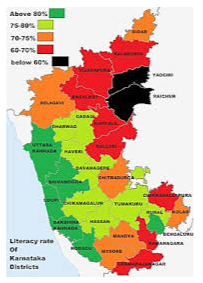
As per the 2011 Census, Karnataka had a population of 61.1 million. The population density stands at 319 persons per square kilometer. The sex ratio is 973 females per 1000 males, slightly above the national average.
Literacy Rate: The state recorded a literacy rate of 75.4%, with male literacy at 82.8% and female literacy at 68.1%.
Languages Spoken:
[metaslider id=”5575″]
Each state has its own symbols. Following are the state symbols of Karnataka:
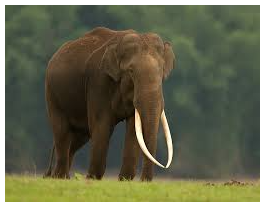
| Symbol | Name |
| State Animal | Indian Elephant |
| State Bird | Indian Roller |
| State Tree | Sandalwood |
| State Flower | Lotus |
These symbols reflect Karnataka’s cultural heritage and ecological diversity.
Also Read: Chattisgarh
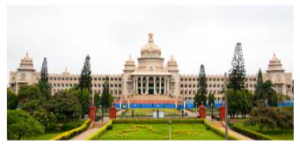
Karnataka follows a bicameral legislature, consisting of the Legislative Assembly (Vidhana Sabha) and Legislative Council (Vidhana Parishad).
| Category | Details |
| State Formation | Formed on November 1, 1956 (reorganized under States Reorganisation Act). Originally Mysore State, renamed Karnataka in 1973. |
| Chief Minister | Siddaramaiah (Since 2023) – Party: Indian National Congress – Focus: Social welfare, infrastructure |
| Governor | Thaawarchand Gehlot – In office since July 11, 2021 |
| Chief Justice (High Court) | Hon’ble Justice N.V. Anjaria – Assumed office: October 10, 2023 – High Court located in Bengaluru |
| Legislature Type | Bicameral (Legislative Assembly + Council) |
| Legislative Assembly Members | 224 elected members |
| Legislative Council Members | 75 members |
| Lok Sabha Representation | 28 Members |
| Rajya Sabha Representation | 12 Members (indirectly elected) |
| Districts | 31 (as of 2024) |
| Local Governance Units | Divided into divisions, districts, taluks, and gram panchayats |
Also Read: Assam
Karnataka’s culture reflects a rich blend of classical heritage, folk traditions, festivals, and art forms shaped by its ancient dynasties, diverse communities, and regional influences.
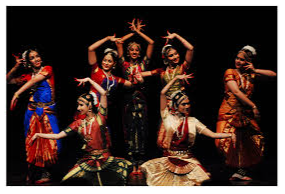
| Category | Details |
| Classical Dance of Karnataka | Bharatanatyam and Yakshagana are prominent. |
| Yakshagana | – A classical dance-drama with roots in coastal Karnataka. – Features: Elaborate costumes, vibrant makeup, and rhythmic music. – Themes: Epics like Ramayana, Mahabharata, and Puranas. – Unique Aspect: Combines dialogue, dance, and music, performed overnight in open-air stages. |
| Theatre Art of Karnataka | Karnataka has a vibrant tradition of folk and classical theatre. |
| Bayalata | Open-air performances depicting mythological or social stories through song and dance. |
| Doddata | A traditional folk play performed in rural areas, often with comedic and moral themes. |
| Togalu Gombeyaata | Shadow puppetry showcasing stories from epics, accompanied by folk music. |
| Folk Music of Karnataka | Reflects the state’s agrarian lifestyle and devotional fervor. |
| Lavani | Energetic folk songs and dances performed to the beats of drums and harmonium. |
| Bhavageethe | Lyrical poetry set to music, often expressing love, nature, and social issues. |
| Dollu Kunitha | A drum-based folk dance performed by men, celebrating valor and unity. |
| Classical Music in Karnataka | Karnataka is the birthplace of Carnatic music. |
| Performance Traditions | Concerts, Harikathe (devotional storytelling), and temple music are integral to cultural life. |
| Festivals | – Dasara: 10-day grand celebration in Mysuru. – Ugadi: Kannada New Year marked by festive dishes and rituals. – Makar Sankranti: Kite-flying and sugarcane harvest celebrations. – Ganesh Chaturthi, Diwali, Eid, and Christmas widely celebrated. – Hampi Utsav: Cultural extravaganza celebrating Vijayanagara heritage. |
| Arts and Crafts | Karnataka boasts a rich legacy of handicrafts and traditional arts. |
| Mysore Silk | Renowned for its gold-zari work and vibrant sarees. |
| Sandalwood Carving | Intricate sculptures and artifacts made from fragrant sandalwood. |
| Bidriware | Metalwork with silver inlay on blackened alloy, originating from Bidar. |
| Channapatna Toys | Lacquered wooden toys, globally recognized for their eco-friendly craftsmanship. |
| Architecture | Karnataka showcases a mix of Dravidian, Hoysala, and Vijayanagara styles. |
| Mysore Palace | A blend of Indo-Saracenic architecture, illuminated during Dasara. |
| Hoysala Temples (Belur, Halebidu) | UNESCO-listed for intricate stone carvings and star-shaped platforms. |
| Gol Gumbaz, Bijapur | World’s second-largest dome with whispering gallery acoustics. |
Also Read: Bihar
Karnataka is home to diverse ecosystems, ranging from Western Ghats rainforests to Deccan plateau grasslands, preserved in its national parks and sanctuaries.
| Category | Details |
| National Parks in Karnataka | Bandipur National Park (Chamarajanagar, Mysuru, Kodagu districts) |
| – Known for: Dry deciduous forests, tigers, elephants, and the largest population of wild Asiatic elephants in India | |
| – Area: 874.20 sq. km | |
| Nagarhole National Park (Kodagu and Mysuru districts) | |
| – Known for: Riverine forests, Kabini reservoir, tigers, leopards, and dholes | |
| – Area: 643.39 sq. km | |
| Largest National Park | Anshi National Park (part of Kali Tiger Reserve) |
| – Area: 1,169.82 sq. km | |
| – Location: Uttara Kannada district | |
| – Key features: Dense tropical forests, black panthers, and over 200 bird species | |
| Smallest National Park | Bannerghatta National Park |
| – Area: 104.27 sq. km | |
| – Location: Bengaluru Rural district | |
| – Key features: Safari park, butterfly park, and proximity to Bengaluru city | |
| Notable Wildlife Sanctuaries | Dandeli Wildlife Sanctuary |
| Bhadra Wildlife Sanctuary | |
| BRT Tiger Reserve (Biligiri Rangaswamy Temple Wildlife Sanctuary) | |
| Anshi National Park (part of Kali Tiger Reserve) | |
| Neighboring States and Boundaries | Maharashtra to the north, Goa to the northwest, Kerala to the southwest, Tamil Nadu to the southeast, Andhra Pradesh to the east |
| Karnataka has a 320 km coastline along the Arabian Sea | |
| Ramsar Sites in Karnataka | Ranganathittu Bird Sanctuary (2022) |
| – Known for: Riverine islands, migratory birds like painted storks and spot-billed pelicans | |
| UNESCO World Heritage Sites | Western Ghats (2012) – Covers multiple sites in Karnataka including Agumbe, Kudremukh, and Pushpagiri Wildlife Sanctuary |
| Hampi Group of Monuments (1986) – Ruins of Vijayanagara Empire | |
| Tiger Reserves in Karnataka | Bandipur Tiger Reserve |
| – Area: 1,458 sq. km | |
| – Notified: 1973 | |
| Nagarhole Tiger Reserve | |
| – Area: 1,205 sq. km | |
| – Notified: 1999 | |
| Kali Tiger Reserve (includes Anshi and Dandeli) | |
| – Area: 1,300 sq. km | |
| – Notified: 2007 |
The economy of Karnataka is diversified, with strong IT, manufacturing, and agricultural sectors, supported by robust infrastructure and innovation.
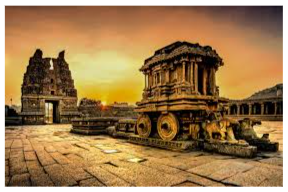
| Category | Details |
| Key Sectors | Information Technology: Bengaluru is India’s IT capital, housing global tech giants and startups. |
| Biotechnology: Leading biotech hub with over 60% of India’s biotech firms. | |
| Manufacturing: Automobiles (Toyota, Volvo), aerospace (HAL), and electronics. | |
| Agriculture: Major producer of coffee, silk, spices, and horticulture crops. | |
| Mining: Gold (Kolar, Raichur), iron ore (Ballari), and granite. | |
| Major Projects | Bengaluru-Mysuru Expressway: Enhances regional connectivity and trade. |
| Toyota Kirloskar Expansion: Boosts automobile manufacturing in Bidadi. | |
| Aero India: Biannual aerospace exhibition attracting global investments. | |
| Chenab Power Project: Hydropower initiative in Western Ghats. | |
| Economic Overview | GSDP for 2023–24: ₹25.5 lakh crore, with a growth rate of 8.2%. |
| Sector-wise Contribution (2023–24): | |
| – Agriculture and Allied: 15% | |
| – Industry: 29% | |
| – Services: 56% | |
| The economy is driven by IT, manufacturing, and agriculture, with Bengaluru as a global tech hub. | |
| Major Economic Centres | Bengaluru: IT, biotech, and R&D hub (Infosys, Wipro, ISRO). |
| Mysuru: Tourism, silk, and manufacturing (Nano Tech, TVS). | |
| Mangaluru: Port city with petrochemicals and seafood exports. | |
| Hubballi-Dharwad: Transportation and agro-processing hub. | |
| Ballari: Mining and steel production (JSW Steel). | |
| District-wise Economic Contribution | Bengaluru Urban: ₹12.3 lakh crore |
| Mysuru: ₹1.8 lakh crore | |
| Belagavi: ₹1.2 lakh crore | |
| Ballari: ₹1.1 lakh crore | |
| Dakshina Kannada: ₹0.9 lakh crore | |
| Bengaluru Urban dominates due to IT, services, and industrial output. | |
| Important Industrial Infrastructure | Electronics City, Bengaluru: Premier IT and electronics hub. |
| KIADB Industrial Areas: Spread across Tumakuru, Devanahalli, and Mysuru. | |
| JSW Steel Plant, Ballari: One of India’s largest steel plants. | |
| New Mangaluru Port: Major hub for exports and imports. |
Also Read: National Parks in India
[metaslider id=”5575″]
Following is the list of major and minor ports of Karnataka:
| Port Name | Type | Location | Key Features |
| New Mangaluru Port | Major Port | Mangaluru | – Handles iron ore, petroleum, coffee exports – Deepest port on Karnataka coast – Connects to Konkan Railway |
| Karwar Port | Minor Port | Uttara Kannada | – Naval base (INS Kadamba) – Supports fishing & trade |
| Belekeri Port | Minor Port | Karwar | – Mainly handles iron ore exports – Small commercial port |
| Malpe Port | Minor Port | Udupi | – Fishing & small trade – Tourism-linked activities |
| Honnavar Port | Minor Port | Uttara Kannada | – Historical port – Supports coastal trade & fishing |
Also Read: Cooperative Federalism in India
Karnataka is one of the most resource rich regions of India. Following are the mineral resources found in Karnataka:
| Mineral Resource | Major Mining Areas / Districts | Details / Notes |
| Iron Ore | Ballari, Chitradurga, Tumakuru, Chikmagalur | – Ballari has high-grade hematite. – Major companies: NMDC, JSW Steel. |
| Gold | Kolar, Raichur, Dharwad | – Kolar Gold Fields (KGF) was once Asia’s deepest gold mine (now closed). – Hutti Gold Mines (Raichur) is operational. |
| Bauxite | Belagavi, Chikkamagaluru, Uttara Kannada | – Used for aluminium production. – Hindalco and Vedanta have mining leases. |
| Manganese | Ballari, Chitradurga, Tumakuru | – Karnataka is India’s 2nd-largest producer. – Used in steel and batteries. |
| Chromite | Hassan, Mysuru, Ballari | – Minor deposits; used in stainless steel and chemicals. |
| Limestone | Gulbarga, Bagalkot, Belagavi | – Key input for cement (ACC, UltraTech operate here). |
| Dolomite | Chitradurga, Ballari | – Used as flux in steel plants. |
| Granite | Bengaluru Rural, Mysuru, Kolar | – Karnataka is a top exporter of ornamental granite. |
| China Clay (Kaolin) | Kolar, Bengaluru Rural | – Used in ceramics, paper, and paint. |
| Copper | Chitradurga, Hassan | – Small-scale deposits; explored by Hindustan Copper Ltd. |
| Quartz / Silica Sand | Tumakuru, Chitradurga | – Used in glass and solar panel industries. |
| Kyanite & Sillimanite | Hassan, Mandya | – Heat-resistant minerals for refractories. |
| Corundum | Kolar, Mysuru | – Used in abrasives and gemstones (ruby/sapphire). |
| Feldspar | Kolar, Tumakuru | – Used in ceramics and glass. |
| Asbestos | Mandya, Hassan | – Limited deposits; used in insulation. |
Also Read: Digital Arrest
Are you preparing for UPSC 2025? Join IAShub’s UPSC coaching batches to boost your preparation. Enroll now!
Karnataka, with its blend of technological advancement, rich history, and diverse ecosystems, stands as a microcosm of India’s cultural and economic progress. A deep understanding of Karnataka’s heritage, geography, and development model is essential for UPSC aspirants and researchers examining India’s federal diversity.

Karnataka is nourished by key rivers such as the Krishna, Cauvery (Kaveri), Tungabhadra, Sharavathi, and Hemavati. These rivers are vital for irrigation, hydroelectric power, and drinking water across the state.
Karnataka’s culture is diverse, featuring classical dance forms like Yakshagana and Bharatanatyam, rich Carnatic music, and traditional arts like Channapatna toys and Mysore painting. Festivals like Ugadi, Dasara (Mysore Dasara), and Karaga are widely celebrated.
Karnataka's economy is driven by information technology, biotechnology, agriculture (millets, coffee, sugarcane), and manufacturing. Bengaluru is a global tech hub, while the state also has strong textile, aerospace, and education sectors.
Karnataka hosts several important protected areas, including Bandipur National Park, Nagarhole National Park, Bannerghatta National Park, and Bhadra Wildlife Sanctuary. These are known for tigers, elephants, and rich biodiversity.

Refine your answer writing skills and elevate your UPSC preparation with personalized support and expert feedback.
Fill out the form to get started with the program or any other enquiries !



Are you dreaming of becoming an IAS officer? Then, IAShub can be your best guide. It is one of the Best IAS Coaching in Delhi. Many students who want to clear the UPSC exam join IAShub for learning. The institute gives both online and offline classes. Their teachers are experienced and helpful. They easily explain every topic. Students also get notes, tests, and tips to do well in the exam.
IAShub is in Delhi and is trusted by many UPSC students. It offers coaching for every part of the UPSC exam – Prelims, Mains, and Interview. The classes are simple and easy to understand. The teachers are experts and guide students in the right way. IAShub is also known for its helpful notes, test series, and answer-writing practice. IAShub is the best coaching in Delhi and also gives UPSC Online Classes. This helps students from any place in India to learn. The online classes are live and also recorded. So, students can watch them anytime. These classes cover the full UPSC syllabus.
Here are some important services provided by IAShub:
The UPSC Civil Services Exam has three parts:
This exam is tough, but with the right guidance, it becomes easy to manage. Students must study smart and stay regular.
IAShub supports students from the beginning to the end. It gives the right books, tests, and notes. The classes are easy to follow, and the teachers are always ready to help. Students get personal doubt sessions too. The test series and answer checking help students learn where they need to do better. Also, free study materials save time and money.
IAShub also guides students during the final stage – the interview. Experts take mock interviews and give useful tips. This full support makes IAShub one of the best IAS coaching in Delhi.
Join 50,000+ UPSC Aspirants! 🚀
Get Free UPSC/IAS Study Materials, Daily Current Affairs, Editorial Summaries & Exam Updates.
Join Telegram Channel