
















A concise overview of India’s missile inventory (ballistic, cruise, air-to-air, surface-to-air, etc.), listing each missile’s name, range, launch platform and key features.
 theIAShub | 09 May, 2025 | 24416 | 0 |

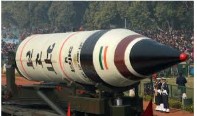
India’s missile arsenal spans multiple classes for land, sea and air warfare. This article presents a structured list of missiles of India, organized by category. Each section below uses clean tables to summarize the major missiles in that class, including their ranges, launch platforms and notable features. A downloadable “list of missiles of India pdf” is often used by aspirants for quick reference (not provided here). The Indian missile list with range and specifications below is tailored for defense study and exam preparation.
Also Read: Operation Sindoor
[metaslider id=”5575″]
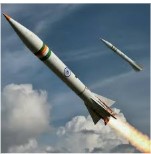
India’s ballistic missiles deliver warheads on high-arc trajectories. They include both short/tactical missiles and long-range strategic weapons. For example, Agni series missiles range from Agni-I (about 700–1,200 km) up to Agni-V (7,000–8,000 km). The ballistic missile of India with the longest reach is Agni-V, an ICBM road-mobile launcher. India also fields shorter-range tactical missiles (Prithvi, Prahaar) and submarine-launched ballistic missiles. Key ballistic missiles are listed below:
| Missile | Range (km) | Launch Platform | Features |
| Agni-I | 700–1,200 | Road/Rail mobile TEL | MRBM (2-stage solid); nuclear-capable. |
| Agni-II | 2,000–3,500 | Road-mobile TEL | MRBM (2-stage solid); nuclear-capable. |
| Agni-III | 3,500–5,000 | Road-mobile TEL | IRBM (2-stage solid); higher payload. |
| Agni-IV | 3,500–4,000 | Road-mobile TEL | IRBM (2-stage solid); improved accuracy. |
| Agni-V | 7,000–8,000 | Road-mobile TEL | ICBM (3-stage solid); canister-launched, nuclear-capable. |
| Agni-P (Prime) | ~1,000–2,000 (est.) | Road-mobile TEL | MRBM (new solid-fuel stage); in trials. |
| Agni-VI | 5,000–6,000 (est.) | (Under development) | ICBM (3-stage solid); planned MIRV payload. |
| Prithvi-I | ~150 | Road-mobile TEL | SRBM (single-stage liquid); Army version. |
| Prithvi-II | ~350 | Road-mobile TEL | SRBM (single-stage liquid); Air Force version. |
| Prithvi-III (Dhanush) | ~350 | Ship/Submarine | SRBM naval version; can carry nuclear warhead. |
| Shaurya | 700–1,000 | Road-mobile canister | Hypersonic tactical ballistic (2-stage solid); nuclear-capable. |
| Prahaar | ~150 | Road-mobile TEL | Short-range ballistic (single-stage solid); quick-reaction, multi-warhead. |
| Pralay | 150–500 | Road-mobile TEL | SRBM (2-stage solid); precision-guided battlefield ballistic. |
| K-15 (Sagarika) | ~750 | Submarine (Arihant-class) | SLBM (2-stage solid); forms nuclear triad. |
| K-4 | ~3,500 | Submarine (Arihant-class) | SLBM (2-stage solid); IRBM for second-strike capability. |
| K-5 | 5,000–6,000 (est.) | Submarine (Arihant/S5) | SLBM (3-stage solid); ICBM range in development. |
Table: Major Indian ballistic missiles (nuclear-capable unless noted) with range and deployment platform.
India also demonstrated an ASAT capability in 2019 (K-Sat/“Mission Shakti”) by intercepting a satellite with a modified Prithvi missile. This is essentially a short-range exo-atmospheric ballistic missile test.
Also Read: UPSC Exam Syllabus
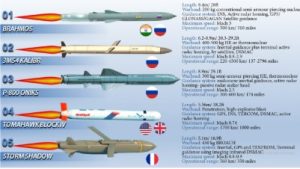
Cruise missiles fly at low altitude on guided routes for precision strikes. India’s key cruise missile of India is the BrahMos supersonic missile (Mach 2.5). BrahMos (PJ-10) has a range of about 300–500 km (290 km export limit) and can be launched from ships, submarines, aircraft or road TELs. Another indigenous system is Nirbhay, a long-range subsonic cruise missile (range ~1,000–1,500 km). Nirbhay can strike land targets with high precision (sea-skimming flight path) and has variants in development (air-launched, sub-launched). The table below lists India’s cruise/land-attack missiles:
| Missile | Range (km) | Launch Platforms | Features |
| BrahMos | 300–500 | Road-mobile TEL, Ship, Sub, Air | Supersonic ramjet cruise missile; HE warhead 200–300 kg; anti-ship and land-attack. |
| BrahMos NG | ~150–290 (est.) | Road, Air | Next-generation lightweight supersonic cruise (in development). |
| Nirbhay | ~1,000–1,500 | Road-mobile launcher | Subsonic long-range cruise missile; can loiter/sea-skim. |
| Nirbhay SLCM | ~500 (initial) | Submarine (torpedo tube) | Submarine-launched variant (under development). |
India’s anti-ship missiles overlap with cruise missiles: BrahMos serves as the primary ship-target missile, and an anti-ship variant of Nirbhay is in development. For example, BrahMos used by the Navy can strike ships at sea, and India is also working on longer-range hypersonic anti-ship cruise missiles.
Also Read: Digital Arrest
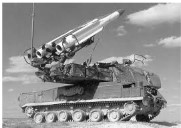
Surface-to-air missiles (SAMs) defend against aircraft and missiles. India’s list of surface-to-air missile in India includes short, medium and long-range systems. The indigenous Akash system (medium-range SAM) has a range of about 25–30 km; it is road-mobile and can engage multiple aerial targets simultaneously. The Barak-8 (MRSAM) is a joint Indo-Israeli system with a range up to ~70–100 km, deployed on Navy ships and by the Air Force for regional air defense. New DRDO systems are in trials: QRSAM (Quick-Reaction SAM) for mobile short-range defense (~30 km) and VL-SRSAM (Vertical Launch SRSAM) for shipborne short-range defense (range up to ~80 km). Notable surface-to-air missiles are:
| Missile/System | Range (km) | Launch Platform | Features |
| Akash | 25–30 | Road-mobile (TEL) | Medium-range SAM; 60 kg HE warhead; multi-target fire. |
| Barak-8 (MRSAM) | 70–100 | Shipborne VLS, IAF regiments | MR-SAM (dual-pulse rocket); active radar seeker; 60 kg warhead. |
| QRSAM | 3–30 | Truck-mounted TEL | Short-range, quick-reaction SAM (Mach 4.7); designed to protect moving columns. |
| VL-SRSAM | ~40–80 | Shipborne vertical launcher | Short-range SAM for naval use; vertical hot-launch; RF seeker. |
| Akash-NG | ~70–90 (est.) | Road/mobile | Next-gen Akash with extended range and single-stage motor (in development). |
Also Read: Statutory Bodies in India
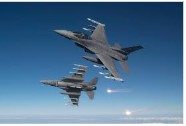
Air-to-air missiles (AAMs) are carried by fighter aircraft to engage enemy aircraft. India’s first indigenously developed Beyond-Visual-Range AAM is Astra. Astra Mk I has an engagement range of about 110 km and is now being integrated on Su-30MKI and other IAF fighters. A longer-range Astra Mk II (estimated ~160 km) is under development. The IAF also uses imported AAMs like Python-5 (IR-guided, ~20 km) and Derby (RF-guided, ~50 km). A summary is below:
| Missile | Range (km) | Launch Platform | Features |
| Astra Mk I | ~110 | Fighter jets (Su-30MKI, LCA Tejas, Rafale) | BVR AAM; active radar homing; IR/EM seeker. |
| Astra Mk II | ~160 (est.) | Future fighters | Extended-range BVR (under development). |
| Python-5 | ~20 | Fighter jets | IR-guided short-range AAM; lock-on after launch. |
| Derby | ~50 | Fighter jets | Medium-range radar-guided AAM; fire-and-forget. |
| R-73 | ~30 | Fighter jets | Short-range IR-guided AAM (supersonic, high agility). |
| R-27ER | ~80 | Fighter jets | Medium-range radar-guided AAM. |
Also Read: International Organisations
[metaslider id=”5575″]
India’s navy and air force deploy anti-ship missiles to target enemy vessels. The BrahMos supersonic cruise missile is the primary anti-ship weapon (canister/ship/air-launched) with ~300 km range. India also plans longer-range anti-ship versions of BrahMos and cruise missiles: e.g. a future hypersonic BrahMos-II, and anti-ship variants of Nirbhay (~1,000 km range). The table below highlights key anti-ship missiles:
| Missile | Range (km) | Launch Platform | Features |
| BrahMos | 300–500 | Ship, Submarine, Air, Road | Supersonic anti-ship/land-attack (Mach 2.5); ramjet propulsion. |
| Nirbhay (ASCM) | ~1,000 (planned) | Submarine/Ship | Subsonic long-range anti-ship (under development). |
| Dhanush | ~350 | Ship (landing ship) | Naval variant of Prithvi SRBM; ballistic missile anti-ship. |
India has developed modern anti-tank guided missiles (ATGMs) for its Army and Air Force. The Nag missile is a third-generation, fire-and-forget ATGM: the land variant (NAMICA carrier) has a range of 0.5–4 km, while the helicopter-launched version Helina (aka Dhruvastra) reaches ~7–10 km. A man-portable Nag variant (MPATGM) with ~5–7 km range is under development. These missiles use tandem HEAT warheads to penetrate modern armor. Key ATGMs:
Are you preparing for UPSC 2025? Join IAShub’s UPSC coaching batches to boost your preparation. Enroll now!
| Missile | Range (km) | Platform | Features |
| Nag | 0.5–4 | Vehicle-mounted (BMP-2/NAMICA) | Fire-and-forget ATGM; tandem-HEAT warhead. |
| Helina/Dhruvastra | 7–10 | Helicopter (HAL Rudra, ALH) | Air-launched Nag; IR-guided; long-range ATGM. |
| MPATGM | ~5–7 | Shoulder-fired | Man-portable Nag; shorter-range ATGM (in trials). |

Agni-V is currently India’s longest-range missile, with an intercontinental reach of approximately 7,000–8,000 km. Agni-VI, expected to exceed 8,000 km, is still under development.
Yes, many defense aspirants look for a “list of missiles of India PDF” for study. While this article summarizes all major missile types and ranges, it does not currently include a downloadable PDF.
BrahMos, India’s supersonic cruise missile, has a range of 300–500 km, while Nirbhay is a subsonic long-range missile with an estimated range of 1,000–1,500 km.
India’s nuclear-capable ballistic missiles include Agni-I to Agni-V, Prithvi variants, Shaurya, K-15, and K-4. These cover short to intercontinental ranges and form part of India’s strategic deterrent.

Refine your answer writing skills and elevate your UPSC preparation with personalized support and expert feedback.
Fill out the form to get started with the program or any other enquiries !



Are you dreaming of becoming an IAS officer? Then, IAShub can be your best guide. It is one of the Best IAS Coaching in Delhi. Many students who want to clear the UPSC exam join IAShub for learning. The institute gives both online and offline classes. Their teachers are experienced and helpful. They easily explain every topic. Students also get notes, tests, and tips to do well in the exam.
IAShub is in Delhi and is trusted by many UPSC students. It offers coaching for every part of the UPSC exam – Prelims, Mains, and Interview. The classes are simple and easy to understand. The teachers are experts and guide students in the right way. IAShub is also known for its helpful notes, test series, and answer-writing practice. IAShub is the best coaching in Delhi and also gives UPSC Online Classes. This helps students from any place in India to learn. The online classes are live and also recorded. So, students can watch them anytime. These classes cover the full UPSC syllabus.
Here are some important services provided by IAShub:
The UPSC Civil Services Exam has three parts:
This exam is tough, but with the right guidance, it becomes easy to manage. Students must study smart and stay regular.
IAShub supports students from the beginning to the end. It gives the right books, tests, and notes. The classes are easy to follow, and the teachers are always ready to help. Students get personal doubt sessions too. The test series and answer checking help students learn where they need to do better. Also, free study materials save time and money.
IAShub also guides students during the final stage – the interview. Experts take mock interviews and give useful tips. This full support makes IAShub one of the best IAS coaching in Delhi.

Join 50,000+ UPSC Aspirants! 🚀
Get Free UPSC/IAS Study Materials, Daily Current Affairs, Editorial Summaries & Exam Updates.
Join Telegram Channel