Celebrate Rabindranath Tagore Jayanti 2025 on May 7—explore his biography, Nobel Prize, contributions to education & society, and birth anniversary details.
 theIAShub | 07 May, 2025 | 3149 | 0 |

Rabindranath Tagore Jayanti is celebrated on 7th May as the birth anniversary of one of India’s most famous literary and cultural figures, Gurudev Rabindranath Tagore. He has left a lasting mark not just on Indian literature but on the global intellectual landscape by being a poet, philosopher, composer, artist, and social reformer. This day is celebrated every year with great enthusiasm, especially in West Bengal and among Bengali communities worldwide. This day honors his extraordinary contributions to literature, music, education, and national identity. Rabindranath Tagore Jayanti in 2025 is a moment to reflect on his timeless legacy, revisit his inspiring works, and celebrate the enduring spirit of a man who helped to reshape India’s culture.
Also Read: National and International Days 2025
Rabindranath Tagore Jayanti 2025 is the 164th birth anniversary of great poet and philosopher Rabindranath Tagore. He is the first non-European Nobel Laureate in Literature and one of India’s greatest cultural icons. This day is celebrated with high respect and enthusiasm, especially in West Bengal and among Bengali communities worldwide. Various cultural institutions, schools, and universities organize cultural activities to honor his legacy, such as poetry readings, Rabindra Sangeet performances, dance dramas, and others. This day is observed as a tribute to his marvelous work for literature, music, education, and the Indian freedom movement.
| Event | Details |
| Occasion | Rabindranath Tagore Jayanti 2025 |
| Date | 7th May 2025 |
| Bengali Calendar Date | 25th Boishakh, 1432 (Bengali Year) |
| Tagore’s Birth Date | May 7, 1861 |
| Birthplace | Jorasanko Thakur Bari, Kolkata, India |
| Commemorates | 164th Birth Anniversary |
| Main Celebration Venue | Kolkata (Jorasanko Thakurbari, Rabindra Sadan), Santiniketan (Visva-Bharati University) |
| Observed In | West Bengal, Tripura, Bengali communities worldwide |
| Legacy | Nobel laureate, composer of national anthems of India & Bangladesh, founder of Visva-Bharati |
Rabindranath Tagore Jayanti 2025 was observed on Wednesday, 7th May 2025, and this day is represented as the 25th day of Boishakh, 1432, according to the Bengali calendar. Rabindranath Tagore was born on 7th May 1861 (25 Boishakh, 1268 Bengali Era) in Jorasanko Thakur Bari, Kolkata. His birth anniversary is celebrated each year according to the Bengali lunar calendar. On the Rabindranath Tagore Jayanti, many institutions, such as Visva-Bharati University in Santiniketan, hold grand cultural events, and his songs, poetry, and plays are performed to honor his enduring contributions to Indian art and thought.
Also Read: Important Days in May 2025
Rabindranath Tagore (1861–1941) was a philosopher, musician, and social reformer whose influence has excel national and cultural boundaries. He was born on 7th May 1861, in Jorasanko Thakur Bari in Kolkata and belonged to a well-known Bengali Brahmin family who are known for their contributions to literature, art, and reform movements. He was the youngest of thirteen siblings and was educated at home under tutors and later in England, though he did not complete formal studies there.
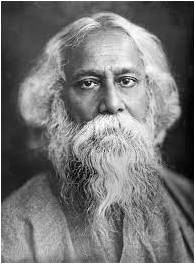
He started writing poetry at the age of eight, and his first collection was published under the pseudonym Bhanusimha at the age of 16. Over the year, he has produced an amazing volume of work across multiple genres, such as poetry, novels, short stories, essays, plays, and songs.
He won the 1913 Nobel Prize in Literature, awarded for his collection Gitanjali (Song Offerings), making him the first non-European to receive the honor.
He has founded Visva-Bharati University in Santiniketan in 1921 to promote holistic, global, and inclusive education rooted in Indian culture as a visionary educator and social thinker. As a composer, he created Rabindra Sangeet, a unique musical tradition blending classical Indian and folk melodies with lyrical poetry. He was also a vocal critic of British colonial rule, and he has rejected his knighthood in 1919 to protest the Jallianwala Bagh massacre.
Rabindranath Tagore’s impact on society was extreme, as he was not only a literary genius but also a social reformer, educator, and visionary who challenged the prevailing norms of his time. He has contributed to various fields such as education, literature, culture, rural development, nationalism, and global humanism. All these contributions make him one of the most influential figures in modern Indian history.
Also Read: World Press Freedom Day 2025
[metaslider id=”5575″]
Rabindranath Tagore has taken many initiatives to transform the educational system by emphasizing creativity, cultural values, and holistic development. He believed that education should encourage the intellectual, emotional, physical, and spiritual growth of children.
Also Read: UPSC Exam 2025
Rabindranath Tagore was awarded the Nobel Prize in Literature in 1913, and he became the first non-European and the first Asian to receive this prestigious honor. The Nobel Prize was given for his profound and sensitive poetry, especially for Gitanjali (Song Offerings). This was originally written in Bengali; later, tagore translated parts of Gitanjali into English himself, and this collection contains spiritual, devotional, and philosophical poems.
Japajog (1929): A compelling take on marital rape and the dynamics within a marriage.
Nastanirh (1901): Explores complex relationships, focusing on both requited and unrequited love.
Ghare Baire (1916): Follows the story of a married woman confined to her home who seeks personal identity.
Gora (1880s): A broad and powerful novel addressing themes like religion, gender, feminism, and the conflict between tradition and modernity.
Chokher Bali (1903): Examines various facets of relationships, including desire, betrayal, and emotional complexity.
Short Stories: Bhikarini, Kabuliwala, Kshudita Pashan, Atottju, Haimanti, and Musalmanir Golpo reflect a range of social themes and human emotions.
Poetry: His notable works include Balaka, Purobi, Sonar Tori, and Gitanjali.
Rabindranath Tagore’s words continue to resonate with people across generations, inspiring reflection on life, freedom, love, and the pursuit of knowledge. Here are some of his most famous quotes:
Also Read: UPSC Free Resources
Are you preparing for UPSC 2025? Join IAShub’s UPSC coaching batches to boost your preparation. Enroll now!

Rabindranath Tagore got the Nobel Prize in 1913 for Gitanjali (Song Offerings).
He was a famous prize-winning poet, writer, and philosopher who has contributed greatly to Indian literature and the freedom movement.
Few of his popular works include Gitanjali, Gora, Chokher Bali, and The Post Office.
He wrote India’s “Jana Gana Mana” and Bangladesh’s “Amar Shonar Bangla.”

Refine your answer writing skills and elevate your UPSC preparation with personalized support and expert feedback.
Fill out the form to get started with the program or any other enquiries !



Are you dreaming of becoming an IAS officer? Then, IAShub can be your best guide. It is one of the Best IAS Coaching in Delhi. Many students who want to clear the UPSC exam join IAShub for learning. The institute gives both online and offline classes. Their teachers are experienced and helpful. They easily explain every topic. Students also get notes, tests, and tips to do well in the exam.
IAShub is in Delhi and is trusted by many UPSC students. It offers coaching for every part of the UPSC exam – Prelims, Mains, and Interview. The classes are simple and easy to understand. The teachers are experts and guide students in the right way. IAShub is also known for its helpful notes, test series, and answer-writing practice. IAShub is the best coaching in Delhi and also gives UPSC Online Classes. This helps students from any place in India to learn. The online classes are live and also recorded. So, students can watch them anytime. These classes cover the full UPSC syllabus.
Here are some important services provided by IAShub:
The UPSC Civil Services Exam has three parts:
This exam is tough, but with the right guidance, it becomes easy to manage. Students must study smart and stay regular.
IAShub supports students from the beginning to the end. It gives the right books, tests, and notes. The classes are easy to follow, and the teachers are always ready to help. Students get personal doubt sessions too. The test series and answer checking help students learn where they need to do better. Also, free study materials save time and money.
IAShub also guides students during the final stage – the interview. Experts take mock interviews and give useful tips. This full support makes IAShub one of the best IAS coaching in Delhi.