
















 theIAShub | 30 Apr, 2025 | 6157 | 0 |

Chhattisgarh became a separate state on November 1, 2000, when it was separated from Madhya Pradesh. Located in central India, it covers an area of 135,194 square kilometers and according to the 2011 census Chhattisgarh is home to around 2.55 crore people, making it the sixteenth most populous state in the country. Although it officially became a state in 2000, Chhattisgarh’s rich history and diverse culture have deep roots that span centuries. It has emerged as a significant cultural, economic, and industrial hub in India.
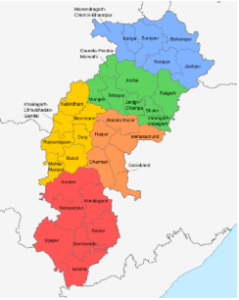
Chhattisgarh Map
Chhattisgarh is a landlocked state in Central India. Chhattisgarh is the tenth largest state in India by area, covering 135194 square kilometers. With a population of approximately 2.55 crores, it ranks sixteenth in terms of population. The state was formed on 1 November 2000 after being separated from Madhya Pradesh, with Raipur as its capital and administrative hub.
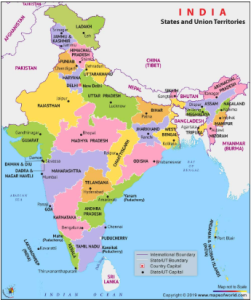
Image Credit: Maps of India
Known as Dhan Ka Katora (Rice Bowl), Chhattisgarh plays a key role in agriculture, steel, and power production. It contributes about 15% of India’s total steel output and is rich in coal reserves and forests. Over 40% of the state is under forest cover, making it the third highest in India.
Chhattisgarh borders seven states: Madhya Pradesh, Maharashtra, Andhra Pradesh, Telangana, Odisha, Jharkhand, and Uttar Pradesh. While Chhattisgarhi is widely spoken, Hindi is the official language used in administration..
Historically, the region dates back to the 3rd century BCE with the Sitabenga caves, and was ruled by various dynasties including the Haihaiyavansi for 700 years. Later, it came under Maratha and then British control as part of the Central Provinces.
One of Chhattisgarh’s standout features is its strategic geographical position. It shares borders with seven other Indian states:
Also Read: List of Indian States And Their Capitals 2025
This central location not only makes Chhattisgarh a crucial transit hub but also an area of economic significance, with easy access to both northern and southern India.
Raipur, the capital of Chhattisgarh, is a hub for trade, economy, and administration. While Chhattisgarhi is the native language, Hindi is used for official purposes. Chhattisgarh is a major rice producer due to its fertile land and is known as the “Dhan Ka Katora” (Rice Bowl) of India.
[metaslider id=”5575″]
Chhattisgarh plays a crucial role in India’s industrial economy, especially in steel production and electricity generation.
Also Read: Important Battles in Modern History
Chhattisgarh, meaning “thirty-six forts,” has historical ties to the Haihaya dynasty of Ratanpur. During British rule, the region comprised 14 princely states under the Eastern States Agency, with Raipur serving as the administrative headquarters.
Before November 1, 1956, the area that now forms Chhattisgarh was part of former Madhya Pradesh. Previously, it belonged to the Central Provinces and Berar, with Nagpur as its capital. After the Constitution of India came into effect, the state was renamedThe demand for separate statehood gained momentum in the 1990s with the formation of the Chhattisgarh Rajya Nirman Manch, led by Chandulal Chandrakar. With support from major political parties like the INC and the BJP, the movement organized rallies, strikes, and public meetings to push for statehood.
Madhya Pradesh Reorganisation Bill was passed by the National Democratic Alliance in 2000. The bill received approval from the Madhya Pradesh Assembly, Lok Sabha, and Rajya Sabha, leading to the creation of the state of Chhattisgarh on 1 November 2000. Unlike the formation of other states such as Jharkhand and Uttarakhand, Chhattisgarh’s statehood was achieved without any violence, representing a milestone in India’s democratic and federal journey.
The state legislature, known as the Chhattisgarh Legislative Assembly, consists of 91 seats, with 90 directly elected and 1 nominated. The state’s constituencies have been redefined under the Delimitation Act of 2002, influencing both state and national elections. The first assembly elections following this delimitation were held in 2008, impacting elections not only in Chhattisgarh but also in other states like Madhya Pradesh and Rajasthan.
In terms of national politics, Chhattisgarh has a total of 11 seats in the Lok Sabha. Out of these, 6 are General seats, 1 is reserved for Scheduled Castes (SC), and 4 are reserved for Scheduled Tribes (ST). The political structure also reflects a strong representation of Scheduled Tribes (ST) and Scheduled Castes (SC), with several constituencies reserved for these groups.
Legislative Body Seats in Chhattisgarh:
| Legislative Body | Seats in Chhattisgarh |
| Lok Sabha (Lower House) | 11 |
| Rajya Sabha (Upper House) | 5 |
| Legislative Assembly | 91 |
Chhattisgarh is rich in natural beauty, with many important features like rivers, mountain ranges, and dams:
Chhattisgarh is home to several important rivers that significantly influence its geography and culture. Key rivers include:
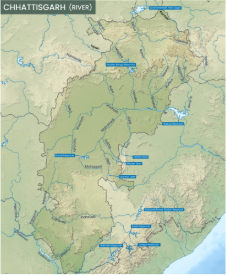
Chhattisgarh, located in central India has some notable hill ranges and passes. Here are some points about the mountain passes in Chhattisgarh:
Chhattisgarh boasts several dams that support its irrigation and power generation needs. Here are the some major dams in Chhattisgarh:
Chhattisgarh is rich in biodiversity, with several national parks and protected areas. Some of the notable ones are:
[metaslider id=”5575″]
Chhattisgarh, a melting pot of rich tribal cultures, is home to diverse tribes like the Gonds, Baiga, Korba, Abhuj Maria, Muria, Halba, and more. These communities preserve their traditional lifestyles, languages, customs, and beliefs, contributing to a vibrant cultural heritage. The state’s folk music, dances, and festivals reflect this cultural richness. “Raut Nacha,” performed by the Gonds, and “Sua Nacha,” a women’s dance, are prominent dance forms. Accompanied by lively songs, these dances narrate stories of the land, seasons, and animals, and are central to local rituals and celebrations, showcasing the deep-rooted tribal traditions.
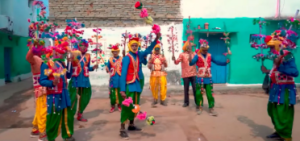
Image: Raut Nach
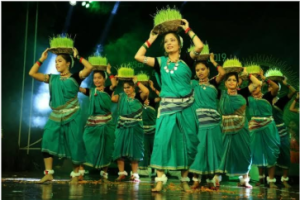
Image: Sua Nach
Chhattisgarh’s traditional arts and crafts also play a significant role in its cultural identity. From intricate bell metal work and Dokra art to the exquisite terracotta sculptures, the artisans of Chhattisgarh continue to create pieces that reflect the region’s deep connection to nature and tradition. Local festivals, such as the famous “Bastar Dussehra,” are celebrated with great enthusiasm, showcasing the state’s rich folklore and tribal customs.
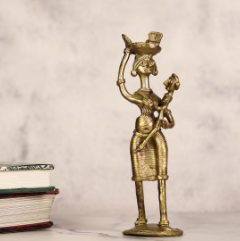
Image: Dokra Art
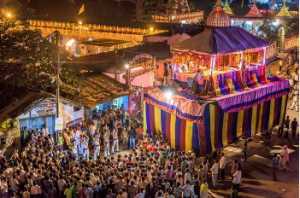
Image: Bastar Dussehra
Mining is a crucial part of Chhattisgarh’s identity, with the Chhattisgarh Mineral Development Corporation Ltd. (CMDC) leading efforts in exploration, exploitation, and trade of minerals. The state’s rich deposits of coal, iron ore, and limestone have fueled industrial growth, making it a key hub for steel, cement, and power industries.
Chhattisgarh’s supportive mineral policies attract both domestic and international investments, ensuring a secure and transparent environment for mining. With skilled labor in geophysics, mining engineering, and environmental science, the industry thrives sustainably.
Are you preparing for UPSC 2025? Join IAShub’s UPSC coaching batches to boost your preparation. Enroll now!
Related Articles |
|
|---|---|
| Dams in India | Ramsar sites in India |
| Major Rivers in India | Tiger Reserves In India |
| National Parks In India | Biosphere Reserves In India |

Chhattisgarh is rich in minerals like coal, iron ore, limestone, bauxite, and dolomite, making it a key industrial region in India.
The major tribes of Chhattisgarh include the Gonds, Baiga, Korba, Abhuj Maria, Bisonhorn Maria, and many others who maintain their unique customs and traditions.
Chhattisgarhi is the native language of the region, but Hindi is widely spoken and used for official communication across the state.
The major industries in Chhattisgarh include steel, cement, power generation, and mining, all supported by the state’s rich mineral resources.

Refine your answer writing skills and elevate your UPSC preparation with personalized support and expert feedback.
Fill out the form to get started with the program or any other enquiries !






Are you dreaming of becoming an IAS officer? Then, IAShub can be your best guide. It is one of the Best IAS Coaching in Delhi. Many students who want to clear the UPSC exam join IAShub for learning. The institute gives both online and offline classes. Their teachers are experienced and helpful. They easily explain every topic. Students also get notes, tests, and tips to do well in the exam.
IAShub is in Delhi and is trusted by many UPSC students. It offers coaching for every part of the UPSC exam – Prelims, Mains, and Interview. The classes are simple and easy to understand. The teachers are experts and guide students in the right way. IAShub is also known for its helpful notes, test series, and answer-writing practice. IAShub is the best coaching in Delhi and also gives UPSC Online Classes. This helps students from any place in India to learn. The online classes are live and also recorded. So, students can watch them anytime. These classes cover the full UPSC syllabus.
Here are some important services provided by IAShub:
The UPSC Civil Services Exam has three parts:
This exam is tough, but with the right guidance, it becomes easy to manage. Students must study smart and stay regular.
IAShub supports students from the beginning to the end. It gives the right books, tests, and notes. The classes are easy to follow, and the teachers are always ready to help. Students get personal doubt sessions too. The test series and answer checking help students learn where they need to do better. Also, free study materials save time and money.
IAShub also guides students during the final stage – the interview. Experts take mock interviews and give useful tips. This full support makes IAShub one of the best IAS coaching in Delhi.
Join 50,000+ UPSC Aspirants! 🚀
Get Free UPSC/IAS Study Materials, Daily Current Affairs, Editorial Summaries & Exam Updates.
Join Telegram Channel